Skip to content
The Edge Bench

Roundups & reviews · Chef Knives

The best Mercer knives

Mercer runs three lines at three real price points, and the gap between them is the clearest ladder in the registry: stamped Millennia, forged Genesis, forged-and-finished Renaissance. Six knives ranked.

Mercer Culinary Mercer Renaissance 8"

Our top pick · Best overall

Mercer Renaissance 8"

8.8

The best Mercer knife and the cheapest properly forged chef's knife we rank anywhere on this site. Forged X50CrMoV15 at ~58 HRC with a full bolster, full tang and taper-ground edge on a Delrin handle - the specification sheet of a German knife at the price of a good stamped one. For anyone who wants heft and a bolster without spending three figures.

$48.13Amazon

#ad · Full ranking below

By Stephen V.Updated How we review
#ad

We earn a commission when you buy through our Amazon links, at no extra cost to you. It never changes a verdict, and we say so when the cheaper knife is the better buy. How this works.

Buy the Mercer Renaissance 8" — it is the best Mercer knife, and it is for anyone who wants a genuinely forged German-style chef's knife without paying German prices. Forged X50CrMoV15 at roughly 58 HRC with a full bolster, a full tang and a taper-ground edge, at money most brands charge for a stamped blade. The budget pick is the Millennia 8"— stamped high-carbon Japanese steel at around 56 HRC with a Santoprene grip and NSF certification, and the cheapest knife on this site that we would genuinely recommend owning.

Every knife here was in stock and priced at our last price check. We do not print a number in the prose: the Quick Picks table carries the live price and the date we pulled it, with a Check price button on every row.

Mercer is the brand that culinary schools issue, and the reason is not sentiment. It runs three lines that genuinely differ, which almost no value brand does. Millenniais stamped high-carbon Japanese steel with a Santoprene over polypropylene grip and a moulded finger guard — the cheapest knife worth owning, and the one with the single most divisive ergonomic feature in the registry. Genesis is forged German steel with a bolster, a full tang and a published 15-degree edge, which is keener than the German norm. Renaissance is the same forging with a better finish and a Delrin handle. Three real steps, three real prices, and each one is a sensible place to stop.

That ladder is the actual value of the brand and it is why this page is organised around it rather than around blade shape. If you are choosing between Mercer and the other value standard, that is Victorinox vs Mercer, which is the most-read comparison on this site.

The method is on how we review: we have not hands-on tested these knives and we do not claim to have. The scores come from published specifications — steel family and hardness, edge angle where published, construction, handle material, NSF certification — and from value arithmetic against the live price. Everything sits under the chef knives hub.

The short answer

Quick picks

#KnifeBest forScorePrice
01
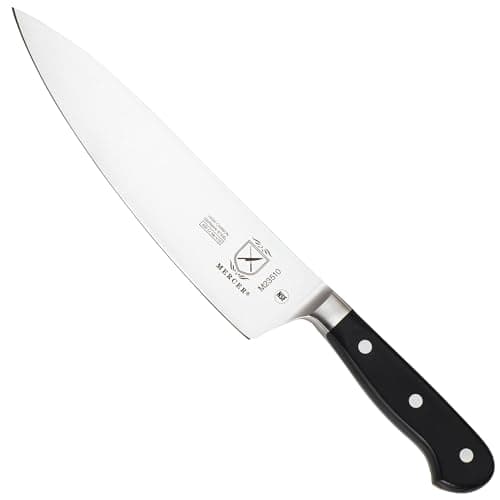
Mercer Culinary Mercer Renaissance 8"
Mercer Renaissance 8"

The best Mercer knife and the cheapest properly forged chef's knife we rank anywhere on this site. Forged X50CrMoV15 at ~58 HRC with a full bolster, full tang and taper-ground edge on a Delrin handle - the specification sheet of a German knife at the price of a good stamped one. For anyone who wants heft and a bolster without spending three figures.

Best overall
8.8
$48.13Amazon
02
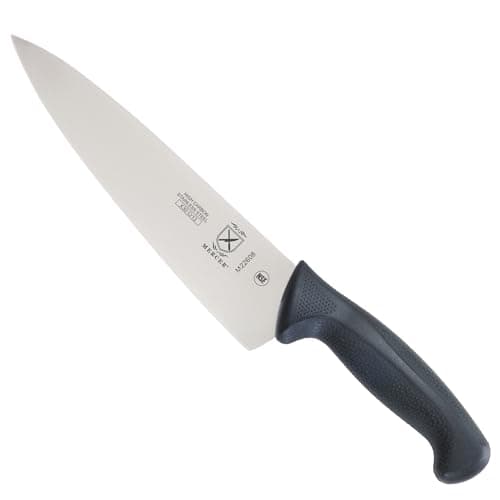
Mercer Culinary Mercer Culinary Millennia 8"
Mercer Culinary Millennia 8"

The budget pick, and the cheapest chef's knife on this site worth owning. Stamped high-carbon Japanese steel at around 56 HRC with a Santoprene and polypropylene grip and NSF certification - the culinary-school standard issue. The moulded finger guard is the one thing people either love or cannot live with.

Budget pick
7.9
$19.99Amazon
03
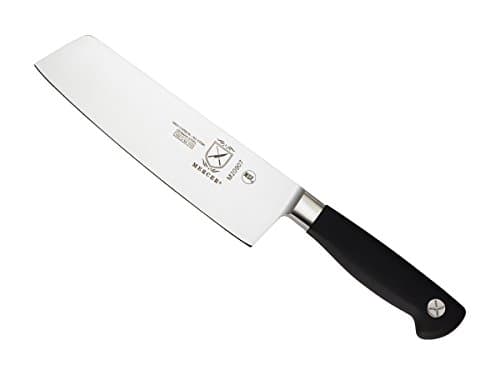
Mercer Culinary Mercer Culinary Genesis 7" Nakiri
Mercer Culinary Genesis 7" Nakiri

The best-value vegetable knife anyone makes, and the knife that most improves a week of home cooking. Forged high-carbon German steel with a full tang, a taper-ground edge and a Santoprene grip, in a flat seven-inch nakiri profile - a shape usually sold at three times this money with a Japanese badge on it.

Best for vegetables
8.7
$45.00Amazon
04
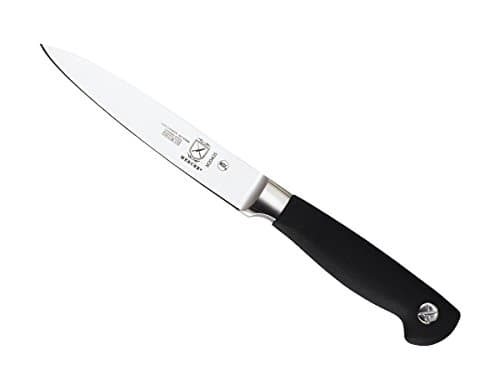
Mercer Culinary Mercer Culinary Genesis 5" Utility Knife (M20405)
Mercer Culinary Genesis 5" Utility Knife (M20405)

The most under-rated knife in the lineup, and the only one here with a published edge angle. Five inches of forged German steel at HRC 56 plus or minus one, ground to a stated 15 degrees - keener than the German standard and closer to Japanese geometry, on a knife most people never think to buy.

Best in-between knife
8.6
$23.79Amazon
05
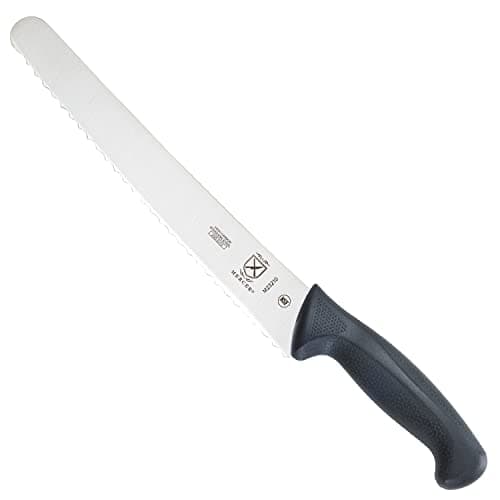
Mercer Culinary Mercer Culinary Millennia 10" Wide Wavy Edge Bread Knife
Mercer Culinary Millennia 10" Wide Wavy Edge Bread Knife

The cheapest bread knife on this site that does the job properly. Ten inches of stamped high-carbon Japanese steel with a wide wavy edge and the Santoprene grip, NSF certified - a serrated blade needs no maintenance, so the usual argument for spending more largely evaporates here.

Best bread knife
8.5
$16.15Amazon
06
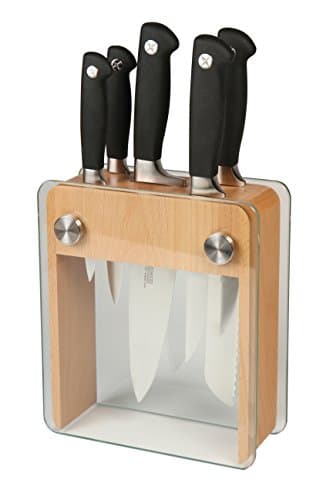
Mercer Culinary Mercer Genesis 6-Piece Forged Set
Mercer Genesis 6-Piece Forged Set

The set to buy if you want one, and the only block set we rank that is entirely forged. Six forged full-tang X50CrMoV15 pieces in a beechwood and tempered-glass block - a focused lineup that skips the filler, which is the opposite of how most fifteen-piece blocks are assembled.

Best set
8.3
$199.99Amazon

#ad · Live prices from the Amazon Product API, as of November 12, 2026. Where we have no verified live price, we show none — a gap beats a number that has rotted.

In detail

The picks, in full

01
Mercer Culinary Mercer Renaissance 8"

Best overall

Mercer Renaissance 8"

Forged X50CrMoV15~58 HRCFull bolster, full tangTaper-ground
8.8/10

The best Mercer knife and the cheapest properly forged chef's knife we rank anywhere on this site. Forged X50CrMoV15 at ~58 HRC with a full bolster, full tang and taper-ground edge on a Delrin handle - the specification sheet of a German knife at the price of a good stamped one. For anyone who wants heft and a bolster without spending three figures.

Build & construction
9.5
Cutting ability
8.5
Edge retention
8.5
Handle & ergonomics
8
Value per dollar
9.5

Pros

  • Forged construction and a full bolster at close to stamped pricing, which nothing else manages
  • Higher published hardness than any stamped knife in the lineup, at roughly 58 HRC
  • Real heft and balance for cooks who rock-chop
  • Delrin handle is tough, chemical-resistant and easy to keep clean
  • Full tang through the handle, which is the construction a bolster implies and some brands skip

Cons

  • Heavier than the stamped Millennia, which is the point and also a cost for small hands
  • Mercer publishes the steel and the hardness but not an edge angle on this line
  • The Delrin handle is durable and plain - nobody will compliment it
  • A full bolster runs to the heel, which complicates sharpening the last inch of edge

Don't buy this if…

…you want the lightest possible knife - a forged blade with a full bolster weighs noticeably more than the Millennia and that is not a flaw you can train away.

Re-scored on this page's rubric rather than carried over; it is reviewed in full at our Mercer Renaissance review and it is the forged pick on best chef knives under $100. It takes build and value on this page, which between them are the brand's whole argument.

The specification that matters is the hardness. Roughly 58 HRC is two to three points above stamped foodservice stainless, and those points are the difference between an edge that needs honing every few uses and one that holds a week of prep. Knife hardness HRC explained covers why that is not a linear scale. The full bolster is the other real difference, and it cuts both ways: full bolster vs half bolster explains why it feels better in a pinch grip and makes sharpening the heel harder.

$48.13View on Amazon

$51.256% off

Price as of November 12, 2026. Prices change — Amazon's at checkout is the one that counts.

#ad · we may earn a commission from this link to Mercer Renaissance 8"

02
Mercer Culinary Mercer Culinary Millennia 8"

Budget pick

Mercer Culinary Millennia 8"

Stamped Japanese steel~56 HRCSantoprene gripNSF certified
7.9/10

The budget pick, and the cheapest chef's knife on this site worth owning. Stamped high-carbon Japanese steel at around 56 HRC with a Santoprene and polypropylene grip and NSF certification - the culinary-school standard issue. The moulded finger guard is the one thing people either love or cannot live with.

Build & construction
7
Cutting ability
8
Edge retention
7.5
Handle & ergonomics
7
Value per dollar
10

Pros

  • By a clear margin the lowest cost of entry to a knife that actually cuts
  • Slightly harder steel than stamped Swiss stainless on the published figure, at roughly 56 HRC
  • Santoprene over polypropylene gives a secure grip that survives commercial dishwashers
  • NSF certified and the default issue at a lot of culinary programmes
  • Cheap enough to buy two and keep one sharp

Cons

  • The moulded finger guard fights a pinch grip up on the blade - the single most common complaint
  • Lighter and thinner than the forged lines, so it flexes more in heavy work
  • Handle finish is visibly the cheapest in the lineup
  • Mercer publishes the steel family and hardness but not an edge angle

Don't buy this if…

…you hold a knife in a pinch grip with thumb and forefinger on the blade - the guard sits in exactly that spot and you will notice it every day.

Re-scored here; it is reviewed in full at our Mercer Millennia review and ranked on under $50 and best for culinary school. It takes value per dollar outright — a 10 — because there is no cheaper way to own a knife with a published steel, a published hardness and NSF certification.

The guard is the thing to decide before you buy. Most trained cooks hold a chef's knife in a pinch grip, with thumb and forefinger on the blade itself, and the Millennia's moulded guard sits precisely there. For a nervous beginner it is a genuine safety feature; for anyone with the pinch grip it is a daily irritation. That is a shape rather than a defect, and how to hold a chef knife is why the grip in question is worth keeping. Try it on whatever knife you own now before you decide.

$19.99View on Amazon

$28.7831% off

Price as of November 12, 2026. Prices change — Amazon's at checkout is the one that counts.

#ad · we may earn a commission from this link to Mercer Culinary Millennia 8"

03
Mercer Culinary Mercer Culinary Genesis 7" Nakiri

Best for vegetables

Mercer Culinary Genesis 7" Nakiri

Forged high-carbon German steelFull tang, taper-ground edgeSantoprene/polypropylene gripNSF certified
8.7/10

The best-value vegetable knife anyone makes, and the knife that most improves a week of home cooking. Forged high-carbon German steel with a full tang, a taper-ground edge and a Santoprene grip, in a flat seven-inch nakiri profile - a shape usually sold at three times this money with a Japanese badge on it.

Build & construction
9
Cutting ability
9
Edge retention
8
Handle & ergonomics
8
Value per dollar
9.5

Pros

  • A forged nakiri at this price simply does not exist elsewhere in the registry
  • The flat profile gives full board contact, so nothing survives a push cut uncut
  • Tall blade makes scooping prepped vegetables off the board genuinely easy
  • Same Santoprene grip and NSF certification as the rest of the working lineup
  • Full tang and taper-ground edge are forged-knife specifications at stamped money

Cons

  • A nakiri cannot rock-chop and cannot pierce - it is a specialist, not a chef's knife
  • German steel in a Japanese shape means a wider edge than a Japanese nakiri
  • The square tip is unforgiving in a crowded sink or drawer
  • No edge angle published on this line

Don't buy this if…

…this would be your only knife - a nakiri is a brilliant second knife and a frustrating first one, because it will not break down a chicken or trim a roast.

Re-scored here; it is ranked on best nakiri knives against Shun and Zwilling nakiris with far harder steel, and on best knives for cutting vegetables.

The reason it scores so well on a brand page is that it is the clearest demonstration of what the Genesis line is for. Forged construction, full tang and a taper-ground edge in a shape that is normally a Japanese speciality, at a price where competitors sell stamped blades. The honest limit is the steel: German X50-family stainless will not take or hold the same edge as a VG-MAX core, and santoku vs nakiri plus is a santoku knife worth it cover whether this shape is the one you actually want.

$45.00View on Amazon

$53.9517% off

Price as of November 12, 2026. Prices change — Amazon's at checkout is the one that counts.

#ad · we may earn a commission from this link to Mercer Culinary Genesis 7" Nakiri

04
Mercer Culinary Mercer Culinary Genesis 5" Utility Knife (M20405)

Best in-between knife

Mercer Culinary Genesis 5" Utility Knife (M20405)

5 in forged bladeHRC 56 +/- 115 degree edgeNSF certified
8.6/10

The most under-rated knife in the lineup, and the only one here with a published edge angle. Five inches of forged German steel at HRC 56 plus or minus one, ground to a stated 15 degrees - keener than the German standard and closer to Japanese geometry, on a knife most people never think to buy.

Build & construction
9
Cutting ability
8.5
Edge retention
8
Handle & ergonomics
8.5
Value per dollar
9

Pros

  • Forged German steel with a bolster at a price most brands charge for stamped
  • HRC 56 is the easy-sharpening sweet spot - it comes back on a stone in minutes and forgives a beginner
  • A published 15 degree edge is keener than the German norm and the only stated angle in this lineup
  • Five inches covers the jobs an 8-inch blade is clumsy at and a paring knife is too small for
  • Santoprene grip, taper-ground edge and NSF certification make it a working knife rather than block filler

Cons

  • A utility knife is the third or fourth knife you need, not the first
  • Too short for a cabbage or a squash and too long for in-hand peeling
  • Narrow blade means almost no knuckle clearance on a board
  • Easy to talk yourself out of, which is why most kitchens do not have one

Don't buy this if…

…your drawer has no chef's knife and no paring knife yet - this is the knife that fills the gap between them and it is pointless without both.

Re-scored here; it is ranked on best utility knives, where the whole category sits. It is on this page because of one line on the spec sheet: Mercer publishes a 15-degree edge on it, and publishes nothing of the sort on the chef's knives.

That is worth knowing if you intend to sharpen your own knives. A stated angle means you can match the factory bevel instead of guessing, and knife sharpening anglesexplains why guessing low is the expensive mistake. Fifteen degrees per side is also keener than the ~20 degrees Western foodservice knives are ground to, which on a 56 HRC blade is a slightly aggressive choice — keen out of the box, and it will need honing sooner than a wider edge would.

$23.79View on Amazon

Price as of November 12, 2026. Prices change — Amazon's at checkout is the one that counts.

#ad · we may earn a commission from this link to Mercer Culinary Genesis 5" Utility Knife (M20405)

05
Mercer Culinary Mercer Culinary Millennia 10" Wide Wavy Edge Bread Knife

Best bread knife

Mercer Culinary Millennia 10" Wide Wavy Edge Bread Knife

Stamped high-carbon Japanese steel10 in. wide wavy edgeSantoprene textured grip, finger guardNSF certified
8.5/10

The cheapest bread knife on this site that does the job properly. Ten inches of stamped high-carbon Japanese steel with a wide wavy edge and the Santoprene grip, NSF certified - a serrated blade needs no maintenance, so the usual argument for spending more largely evaporates here.

Build & construction
7
Cutting ability
9
Edge retention
9.5
Handle & ergonomics
7
Value per dollar
10

Pros

  • Ten inches clears a full sourdough boule in one stroke
  • A wide wavy edge tears less crumb than narrow pointed serrations
  • Serrated edges stay useful for years with no sharpening at all
  • The best cost-per-year of anything in this lineup, because nothing wears out
  • Also the right tool for melon, squash skin and layer cakes

Cons

  • Stamped and thin, so the long blade flexes noticeably
  • The Millennia finger guard is present here too, with the same divisive effect
  • Essentially unsharpenable in practice
  • No use at all for anything a straight edge should do

Don't buy this if…

…you do not eat much bread - it is a single-purpose knife and it says so, and the Genesis nakiri will change more meals.

Re-scored here; it is ranked on best bread knives against Shun and Wusthof serrated blades costing several times as much.

The reason it scores well is a structural quirk of the category rather than Mercer being clever. Serrated edges are not maintained, which means the argument that usually justifies a better knife — harder steel holds a keener edge longer — does not apply. What is left is length, serration geometry and handle, and this gets all three right for very little. Serrated vs straight edge knives is why you cannot substitute, and how to sharpen a serrated knife is the job you will probably never do.

$16.15View on Amazon

Price as of November 12, 2026. Prices change — Amazon's at checkout is the one that counts.

#ad · we may earn a commission from this link to Mercer Culinary Millennia 10" Wide Wavy Edge Bread Knife

06
Mercer Culinary Mercer Genesis 6-Piece Forged Set

Best set

Mercer Genesis 6-Piece Forged Set

6 pieces incl. blockForged X50CrMoV15Full tangBeechwood & glass block
8.3/10

The set to buy if you want one, and the only block set we rank that is entirely forged. Six forged full-tang X50CrMoV15 pieces in a beechwood and tempered-glass block - a focused lineup that skips the filler, which is the opposite of how most fifteen-piece blocks are assembled.

Build & construction
9
Cutting ability
8.5
Edge retention
8
Handle & ergonomics
8
Value per dollar
8

Pros

  • Forged, full-tang blades throughout, which no comparably priced fifteen-piece set offers
  • Six pieces means every knife in it is one you will use
  • Beechwood and tempered-glass block looks clean on a counter
  • Same Genesis construction as the individual knives above, so the ladder is consistent

Cons

  • Fewer pieces than the big blocks at similar money, which looks like worse value and is not
  • The block has no in-slot sharpener, which some buyers expect at this price
  • Still the most expensive way to get a Mercer chef's knife
  • A block takes counter space a magnetic rail or in-drawer tray does not

Don't buy this if…

…you are buying your first knife - one Renaissance plus a paring knife plus a honing steel costs far less and covers more.

Re-scored here; it is ranked on best chef knife sets and on best knife sets under $200, where it is the forged option against two fifteen-piece stamped blocks.

Six forged pieces against fifteen stamped ones is the whole decision, and the arithmetic favors six more often than people expect: are knife sets worth itdoes the working. The case for a set at all is a counter block and a single purchase, which are real reasons — and if neither applies to you, buy the Renaissance on its own and put the difference into a stone.

$199.99View on Amazon

Price as of November 12, 2026. Prices change — Amazon's at checkout is the one that counts.

#ad · we may earn a commission from this link to Mercer Genesis 6-Piece Forged Set

The three lines, and which one to stop at

Millennia is stamped high-carbon Japanese steel at roughly 56 HRC, with a Santoprene over polypropylene handle and a moulded finger guard. It is the cheapest knife on this site worth owning, it is standard issue at a lot of culinary programmes, and the guard is the one thing to try before you commit.

Genesis is forged German steel with a bolster and a full tang, and on at least one piece a published 15-degree edge. This is the line that makes Mercer interesting: forged construction is normally a hundred-dollar feature and here it is not.

Renaissanceis the same forging at roughly 58 HRC with a better finish and a Delrin handle. It is the top of the ladder and still the cheapest properly forged chef's knife we rank anywhere.

Most people should stop at Genesis or Renaissance for their main knife and use Millennia for everything serrated, because a serrated edge is never maintained and the harder steel buys nothing.

Forged or stamped, in plain terms

A stamped blade is punched from rolled sheet: light, cheap, bolster-free, and perfectly capable of cutting. A forgedblade is formed from a billet: heavier, usually harder, and it can carry a bolster and a visible full tang. Forging does not make a knife sharper — the edge and the profile do the cutting either way — but it buys heft, balance and usually a better heat treatment. Stamped vs forged knives is the full argument, and full tang vs partial tang is why the tang matters more than the bolster.

What Mercer does not do

No hard Japanese steel.The hardest published figure in the lineup is around 58 HRC. A Shun runs 60–61 on a VG-MAX core and holds a finer edge far longer — see best Shun knives for the other end of the market and Japanese vs German chef knives for the trade.

No published edge angle on the chef's knives.Mercer states a 15-degree edge on the Genesis utility knife and does not publish one on the Millennia or Renaissance chef's knives. We do not invent one. Treat them as Western edges in the 15–20 degree range until Mercer says otherwise.

No presentation. Delrin, Santoprene and polypropylene are chosen for a commercial dish pit. They are the right materials and nobody will admire them, which is why best knife gifts does not lead with Mercer.

Spend the difference on upkeep

Mercer's steel is in the easy-sharpening range at 56–58 HRC, which makes the brand an unusually good match for learning to maintain your own knives. A ridged steel rod suits it — see best honing steels— and a 400/1000 water stone from best sharpening stones for beginners will reset any knife in this lineup in minutes rather than in an afternoon.

How we ranked these

Five metrics, tuned for a single-brand lineup. Build & construction reads forged versus stamped, tang, bolster and grind. Cutting ability reads geometry, blade height and published edge angle where one exists. Edge retention reads published hardness, and scores an unpublished figure as unpublished. Handle & ergonomicscovers material, grip security and — for the Millennia — the finger guard. Value per dollar is specification quality against the live price. The overall is the mean of the five to one decimal place. None of these numbers came from a test lab, because we do not have one, and how we review says so in those words.
How we picked

We did not lab-test these knives

Everyone in this category says they tested twenty knives in a professional kitchen. We have not hands-on tested any of these, and we say so. What we did instead: compiled the published specifications — steel type and hardness (HRC), edge angle, blade geometry, weight and build — applied established sharpening standards, ran the value math (spec quality ÷ live price), and scored each product against a published rubric. The scores are judgments from documented research — not measurements we took, because we do not have a test lab and we will not pretend we do. Where a number came from someone else's work, we name them in Sources.

Questions

Frequently asked

What is the best Mercer knife?
The Renaissance 8". It is forged X50CrMoV15 at roughly 58 HRC with a full bolster, a full tang and a taper-ground edge, and it is the cheapest genuinely forged chef's knife we rank anywhere on this site.
Are Mercer knives good quality?
Yes, and specifically good value. The Genesis and Renaissance lines are forged German steel with bolsters and full tangs at prices where most brands sell stamped blades, and the whole range is NSF certified. What you do not get is hard Japanese steel or a published edge angle on the chef's knives.
What is the difference between Mercer Millennia, Genesis and Renaissance?
Millennia is stamped high-carbon Japanese steel at around 56 HRC with a Santoprene grip and a moulded finger guard. Genesis is forged German steel with a bolster and full tang. Renaissance is the same forging at roughly 58 HRC with a better finish and a Delrin handle. Three real steps, not three badges.
Why do culinary schools use Mercer knives?
Cost, NSF certification and replaceability. A programme issuing knives to a hundred students needs something that survives a commercial dishwasher, meets food-equipment cleanability standards and can be replaced without an argument — see best chef knives for culinary school.
Is the Mercer Millennia finger guard a problem?
It is for anyone who uses a pinch grip, because the guard sits exactly where thumb and forefinger want to be on the blade. For a nervous beginner it is a genuine safety feature. Try the grip on a knife you already own before you decide — how to hold a chef knife.
Mercer or Victorinox?
Victorinox for the best handle and the most reliable single stamped knife; Mercer for the cheapest route to a forged blade and the deeper ladder. Both are NSF certified foodservice brands. The full comparison is Victorinox vs Mercer.
Are Mercer knives made in Germany?
Mercer publishes the steel family and construction for each line rather than a single country of manufacture across the range, and we do not assume one. Check the listing you are buying; the specification we score is the published steel, hardness and construction.

Keep reading

Receipts

Sources

We do not run a testing lab, and we do not pretend to. Where a spec or a measured number came from someone else's work — a manufacturer's page, a published standard — we name them and link them. Where we could not verify something, we say so on the page rather than quietly leaving it out. Read our full method.