A honing steel does not sharpen — it realigns an edge that has rolled over microscopically with use, which is why it belongs in your hand before most cooking sessions, not once a month. Keep up that habit and a knife stays feeling sharp far longer between actual sharpenings on a whetstone.
We ranked these on how effectively the rod trues an edge, its length and reach for a longer blade, build, and grip safety. If you are unclear on why honing and sharpening are different jobs, start with sharpening vs honing; if you own hard Japanese knives, skip to the ceramic rod, which suits their harder steel better than a traditional steel one.
If you would rather not read a ranking at all and just want the rod that matches your block, our sharpening steels and honing rods hubroutes you by steel hardness in about ten seconds — and if every knife you own is Japanese, the ceramic rods for hard steel is the page written for you.
The short answer
Quick picks
| # | Knife | Best for | Score | Price |
|---|
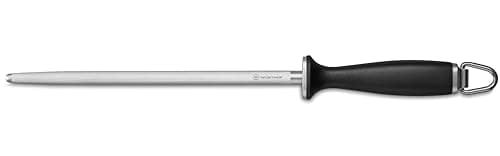
| 01 | Wusthof 10" Honing SteelThe rod to buy if you own German knives. A fine-cut, 10-inch magnetic steel with the reach for a long blade and a solid, safe handle - it trues a rolled edge in a few passes and lasts a lifetime. | Best overall | | $85.00·Amazon |
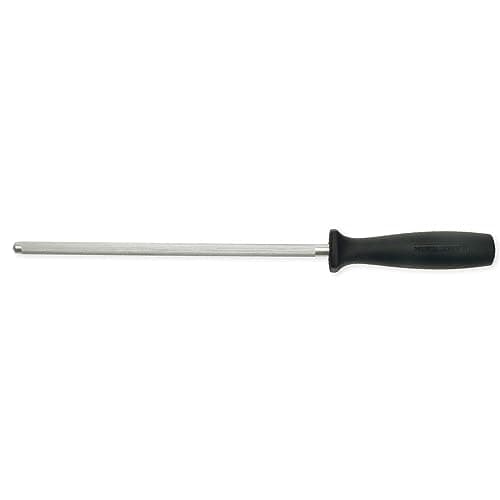
| 02 | Henckels 9" Sharpening SteelThe value rod from a trusted German name. A fine, 9-inch honing steel that does the same daily realigning job as pricier rods for less - a touch shorter, which suits smaller hands and shorter knives. | Best value | | $19.99·Amazon |
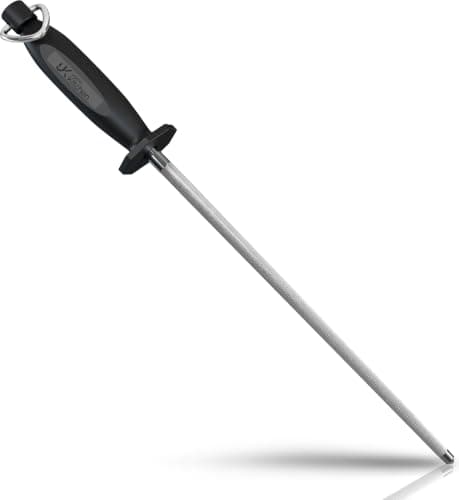
| 03 | Utopia Kitchen 10" Honing SteelThe budget rod that covers the basics. A plain 10-inch carbon-steel honing rod at a rock-bottom price - the build is not fancy, but it realigns a Western edge just fine, and any honing rod beats no honing rod. | Best budget | | $9.89·Amazon |
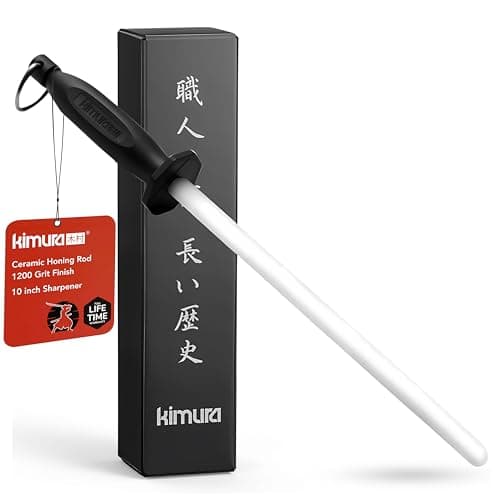
| 04 | Kimura Professional Ceramic Honing Rod, 10 inThe rod for hard Japanese steel. A 1200-grit ceramic rod that both realigns and lightly refreshes - unlike a plain steel, which only realigns - and with no ridges to catch a brittle apex. Ten inches covers everything from a paring knife to a 10-inch chef's knife. | Best ceramic (for hard steel) | | $29.99·Amazon |
#ad · Live prices from the Amazon Product API, as of October 18, 2026. Where we have no verified live price, we show none — a gap beats a number that has rotted.
In detail
The picks, in full
Best overall
Wusthof 10" Honing Steel
Fine-cut carbon steel10 in, magneticRealigns, not sharpensGerman-made
The rod to buy if you own German knives. A fine-cut, 10-inch magnetic steel with the reach for a long blade and a solid, safe handle - it trues a rolled edge in a few passes and lasts a lifetime.
- Effectiveness
- 9
- Length & reach
- 9
- Build
- 9
- Grip & safety
- 8.5
- Value
- 7
Pros
- +Long 10-inch rod comfortably hones an 8-inch chef's knife
- +Fine cut suits soft German and Western edges
- +Solid handle and guard for safe honing
Cons
- −Fine steel does little for very hard Japanese edges
- −Priced above budget rods
Don't buy this if…
…your knives are hard Japanese steel - a ceramic rod trues those better than a steel one.
Best value
Henckels 9" Sharpening Steel
Fine honing rod9 inRealigns the edgeGerman-engineered
The value rod from a trusted German name. A fine, 9-inch honing steel that does the same daily realigning job as pricier rods for less - a touch shorter, which suits smaller hands and shorter knives.
- Effectiveness
- 8.5
- Length & reach
- 8
- Build
- 8.5
- Grip & safety
- 8
- Value
- 8.5
Pros
- +Zwilling's value brand, so a trusted name at a friendlier price
- +Nine inches suits paring to standard chef's knives
- +Fine cut is right for softer Western steel
Cons
- −Nine inches is short for very long blades
- −Like any steel, does little for hard Japanese edges
Don't buy this if…
…you hone long 10-inch chef's or slicing knives - size up to a 10-inch rod for full coverage.
Best budget
Utopia Kitchen 10" Honing Steel
Carbon-steel rod10 inRealigns, not sharpensLowest cost
The budget rod that covers the basics. A plain 10-inch carbon-steel honing rod at a rock-bottom price - the build is not fancy, but it realigns a Western edge just fine, and any honing rod beats no honing rod.
- Effectiveness
- 7.5
- Length & reach
- 9
- Build
- 7
- Grip & safety
- 7.5
- Value
- 9.5
Pros
- +Full 10-inch length for very little money
- +Does the core realigning job perfectly well
- +An easy first rod to build the daily habit
Cons
- −Handle and finish feel basic
- −Coarser cut than premium fine rods
Don't buy this if…
…you want a lifetime heirloom tool - a premium German rod feels and lasts better.
Best ceramic (for hard steel)
Kimura Professional Ceramic Honing Rod, 10 in
1200-grit ceramic10 inHones and lightly refreshesSuits hard Japanese steel
The rod for hard Japanese steel. A 1200-grit ceramic rod that both realigns and lightly refreshes - unlike a plain steel, which only realigns - and with no ridges to catch a brittle apex. Ten inches covers everything from a paring knife to a 10-inch chef's knife.
- Effectiveness
- 9
- Length & reach
- 8
- Build
- 8
- Grip & safety
- 8
- Value
- 9
Pros
- +Ceramic lightly refreshes as it hones, unlike a steel
- +1200 grit is the long-established grit for keen Japanese edges
- +No ridges, so nothing to chip a brittle 61 HRC apex against
Cons
- −Ceramic can chip or crack if dropped
- −Needs occasional cleaning to clear steel residue
- −Ten inches is short if you also hone a long slicer
Don't buy this if…
…you only own soft German knives - a traditional fine steel is cheaper and does the job.
A honing rod realigns — it does not sharpen
This is the single most misunderstood tool in the kitchen. As you cut, the very tip of the edge folds over microscopically and the knife feels dull — a honing rod pushes that rolled edge back into line, restoring the bite in seconds. It removes essentially no metal. When the steel is actually worn away rather than just bent, no amount of honing helps, and you need to grind a fresh edge on a stone. If that distinction is new to you, our sharpening vs honing explainer lays it out in one screen.
Steel vs ceramic: match the rod to your knives
A traditional steel rodis ideal for softer German and Western edges — it realigns them cleanly and is nearly indestructible. A ceramic rod is finer and slightly abrasive, so it both realigns and lightly sharpens — which is exactly what a harder Japanese knife wants, since a plain steel barely touches steel that hard. If your block is mixed, a ceramic rod is the safer single choice. The whole soft-vs-hard question is the same one behind the Japanese vs German decision.
Length, and how to hone safely
The rod should be at least as long as your longest blade: a 10-inch rod comfortably hones an 8-inch chef's knife, and a 12-inch rod handles slicers. To hone, hold the rod upright with the tip on the counter, set the blade near the handle at roughly the knife's own edge angle, and draw it down and across to the tip — a few light, alternating passes per side is plenty. A solid guard between rod and handle keeps your knuckles clear. We score every rod against a published rubric rather than a lab; see how we review, or step back to the full sharpening hub.
How we picked
We did not lab-test these knives
Everyone in this category says they tested twenty knives in a professional kitchen. We have not hands-on tested any of these, and we say so. What we did instead: compiled the published specifications — steel type and hardness (HRC), edge angle, blade geometry, weight and build — applied established sharpening standards, ran the value math (spec quality ÷ live price), and scored each product against a published rubric. The scores are judgments from documented research — not measurements we took, because we do not have a test lab and we will not pretend we do. Where a number came from someone else's work, we name them in Sources.
Questions
Frequently asked
Does a honing steel actually sharpen a knife?+
No. A honing steel realigns an edge that has rolled over with use; it removes essentially no metal. Sharpening — grinding a new edge — happens on a
stone or sharpener. A ceramic rod is the exception: it hones and
lightly sharpens.
How often should I hone a knife?+
Before most cooking sessions, or whenever the knife starts to feel less crisp. Honing takes seconds and, done regularly, keeps a knife feeling sharp so you only need to sharpen it every few months.
Steel or ceramic honing rod - which should I get?+
Steel for softer German and Western knives; ceramic for harder Japanese knives, or if you own a mix. Ceramic is finer and lightly sharpens, which is what a hard,
keen 15-degree edge needs.
What length honing steel do I need?+
Choose a rod at least as long as your longest knife. A 10-inch rod is the versatile default for an 8-inch chef's knife; go to 12 inches if you hone long slicing or carving knives.
Can I hone a Japanese knife?+
Yes, but use a ceramic rod and a light touch. Hard Japanese steel barely responds to a fine steel rod and can chip if you hone aggressively — a ceramic rod realigns and gently refines it instead.
Receipts
Sources
We do not run a testing lab, and we do not pretend to. Where a spec or a measured number came from someone else's work — a manufacturer's page, a published standard — we name them and link them. Where we could not verify something, we say so on the page rather than quietly leaving it out. Read our full method.