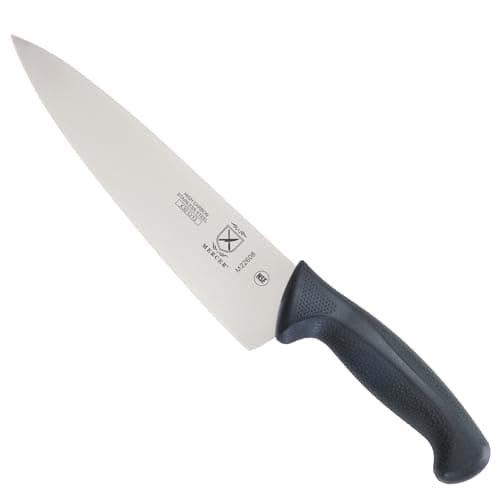
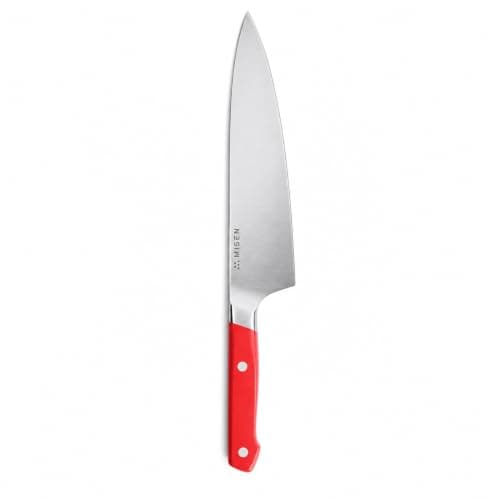
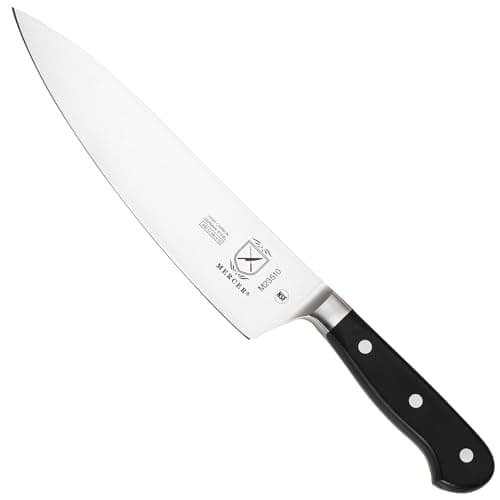
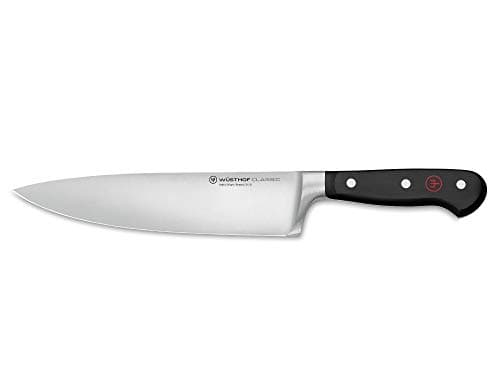
The best chef knives for beginners are not the sharpest or the most expensive - they are the ones that forgive you while you learn. A first knife gets left in a wet sink, twisted through a butternut squash, and run dull for months before anyone thinks to sharpen it. So this list is scored differently from our flagship ranking: instead of rewarding raw steel hardness, it rewards forgiveness - how well a blade survives the mistakes a new cook will absolutely make. The other four inputs, and the reasoning behind all of them, are on how we review.
That one change reorders everything. Hard, thin Japanese steel scores brilliantly on keenness and poorly on forgiveness, because at 60-plus HRC it chips when you twist it or catch a bone. Softer Western steel dulls sooner but survives the same abuse, and it takes far less skill to bring back on a stone. Price works the same way: a knife you are frightened of is a knife you use timidly, and timid cutting is how people get cut. The picks below therefore run from a culinary-school workhorse at the very bottom of the price range up to one genuinely buy-it-once forged German blade, with an honest reason - and an honest set of cons - for every place.
If you have not settled the wider question yet, our beginner's buying guide covers which three knives you actually need and why the fifteen-piece block is usually a trap; come back here for the shortlist. If price is the hard constraint, the budget roundup overlaps with this one, and everything traces back to the chef knives hub.
Why this list is scored differently
Our chef-knife rubric normally opens with edge and steel - the steel type and its Rockwell hardness, which is the best published proxy for how keen an edge gets and how long it lasts. That input rewards hard Japanese steel, and for an experienced cook it should. For a first knife it points the wrong way, because the same hardness that holds an edge is what makes a blade chip when a beginner levers it sideways out of a potato.
So on this page that input becomes forgiveness, and the other four - sharpness, handling, build and value - are unchanged. Forgiveness is a judgment from published specifications, not a measurement: softer steel in the ~55-58 HRC band scores high because it deforms rather than fractures; a wider ~20-degree factory edge scores higher than a keen ~15-degree one because it survives contact with a board, a bone or a plate; a non-slip handle scores higher than a polished one; and a low price scores high because a knife you are not afraid to use is a knife you will actually learn on. We have not hands-on tested any of these knives, and the method page says exactly what we did instead.
The three things that make a knife beginner-friendly
Almost every genuinely good beginner recommendation comes down to the same three properties. Everything else - Damascus cladding, a designer handle, a brand with a three-hundred-year history - is irrelevant in your first year.
| What matters | What to look for | Why it matters early |
|---|
| Forgiving steel | ~55-58 HRC Western stainless, ~20 deg/side edge | Rolls instead of chipping when technique slips |
| A grip that works wet | Textured or molded synthetic handle, not polished wood | Wet hands on a smooth handle is the classic beginner injury |
| An edge you can restore | Soft steel, no full bolster blocking the heel | You will dull it long before you can sharpen it well |
Notice what is not on that list: brand, blade material romance, or a high price. The single biggest determinant of how well your knife cuts in year two is whether you learned to sharpen it, which costs nothing and is covered in how to sharpen kitchen knives.
Eight inches, six inches, or a santoku?
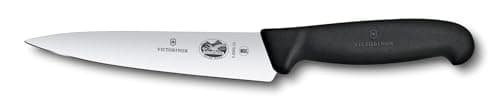
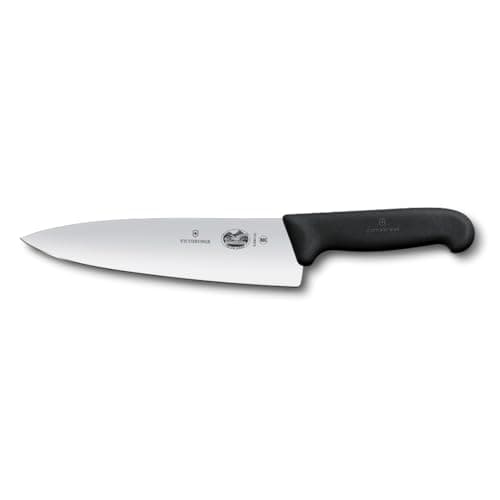
An 8-inch chef's knife is the right default for almost everyone, including beginners. It is long enough to halve a cabbage or a squash in one pass and short enough to control, and it is the size every technique video assumes. The most common beginner complaint - it feels enormous - fades within a couple of weeks, which is why we rank the 6-inch Victorinox last rather than second despite it being a fine knife.
Buy the 6-inch only if the 8-inch is genuinely unmanageable: a small hand, a small board, or a level of nervousness that would otherwise keep the knife in the drawer. A used knife beats an unused one. The other frequent question is whether to start with a santoku instead; a santoku is shorter, flatter and blunt-tipped, which some new cooks find less threatening, but it push-cuts rather than rock-chops and so it teaches a different motion. Our chef knife vs santoku comparison lays out the difference if you are weighing the two.
What we would skip
Two purchases account for most first-knife regret, and both of them are easy to talk yourself into.
- The big block set. A fifteen-piece block looks like a complete kitchen and is mostly filler - a slicer you will use twice a year, a fistful of steak knives, a pair of shears - with the budget spread so thin that the one knife you use daily is worse than a standalone knife costing the same total. If you specifically want a coordinated block, our knife sets roundup names the honest ones; otherwise buy three good knives.
- A premium hard Japanese knife as your first knife. A Shun Classic is a superb blade and a poor first one: at ~61 HRC and ~16 degrees it is thin, hard and unforgiving, it chips on the kind of twist a new cook makes weekly, and it costs enough that the chip hurts. It is a second knife, bought deliberately, once you know how you cut. Our Japanese roundup will still be there.
- Any sharpener that ignores your edge angle. A fixed 20-degree pull-through will quietly regrind a keener 15-degree Japanese edge to the wrong geometry over a few passes. Match the tool to the blade - the angles guide explains which is which in two minutes.
The upgrade that beats buying a better knife
A sharp cheap knife out-cuts a dull expensive one every single time. That sentence is the whole argument for starting at the bottom of this list rather than the top: the difference between a $25 knife and a $170 knife is far smaller than the difference between a sharp knife and a dull one, and only one of those gaps is under your control on day one.
Build the honing habit first - a honing rod realigns an edge that has rolled over and removes no metal, so it is safe to do often, and it is not the same thing as sharpening. The distinction trips up almost every beginner and is explained in sharpening vs honing. Then, a few times a year, actually sharpen: a soft-steel beginner knife is the ideal thing to learn a whetstone on, because it grinds quickly and it does not matter much if the first attempt is clumsy. Everything else - storage, boards, washing - is in our care and maintenance guide.
If the beginner in question is a child rather than an adult, the answer changes shape entirely - shorter, lighter, and usually round-tipped rather than blunt. Best knives for kids learning to cook sets out why a dull knife is the more dangerous one.
A first knife is usually also a budget knife, and the two lists overlap without being the same. If the ceiling is the binding constraint, best chef knives under $50 ranks the same forgiving steel purely on what fits inside the band.