Japanese chef knives win on keenness: harder steel, thinner blades and a narrower edge angle that slices with less effort than any German knife. The catch is that the same hardness that keeps them sharp also makes them chip-prone and less forgiving. We ranked these four on steel, sharpness, handling and value, using the method on how we review.
The Shun sets the benchmark, but you do not have to spend that much for hard steel - the value picks below get you most of the way for far less. If you are still weighing the whole category against Western knives, read Japanese vs German chef knives, and note that a keener edge means a keener sharpening angle, covered in knife sharpening angles. For the wider field, jump back to the chef knives hub, our overall ranking or our best value picks.
The short answer
Quick picks
| # | Knife | Best for | Score | Price |
|---|
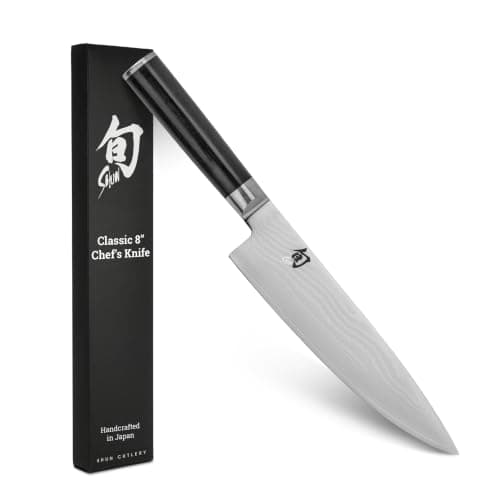
| 01 | Shun Classic 8"The Japanese benchmark. A VG-MAX core in 68-layer Damascus with a keen edge and a comfortable D-handle - the most refined, best-supported way into premium Japanese steel. | Best overall Japanese | | $140.15·Amazon |
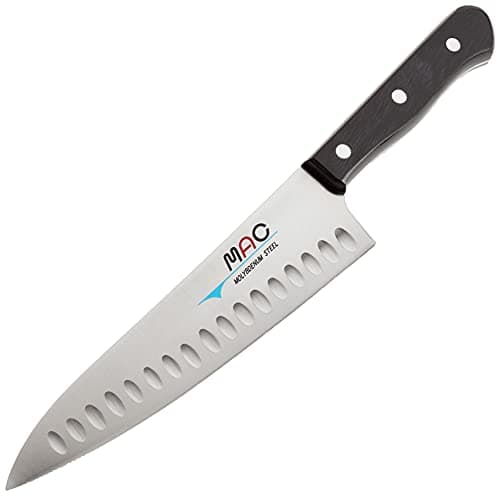
| 02 | MAC Chef Series 8" (Hollow Edge)The value Japanese pick. Thin, hard, keen and noticeably cheaper than the premium names - the knife most people should try first when leaving German steel. | Best value Japanese | | $119.95·Amazon |
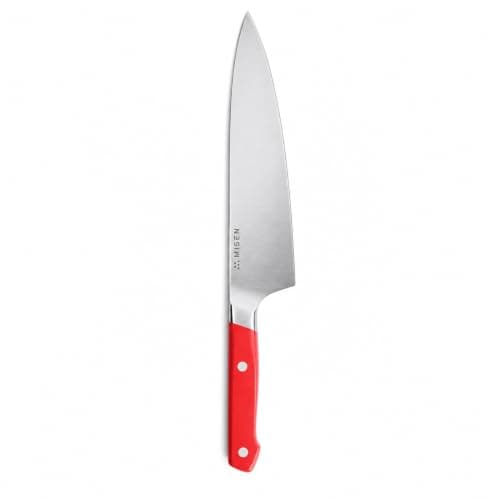
| 03 | Misen 8" Chef KnifeThe budget route to hard Japanese steel. AUS-10 at around 60-61 HRC gives real keenness and edge retention for a fraction of the premium names - steel first, polish later. | Best budget Japanese steel | | $99.00·Amazon |
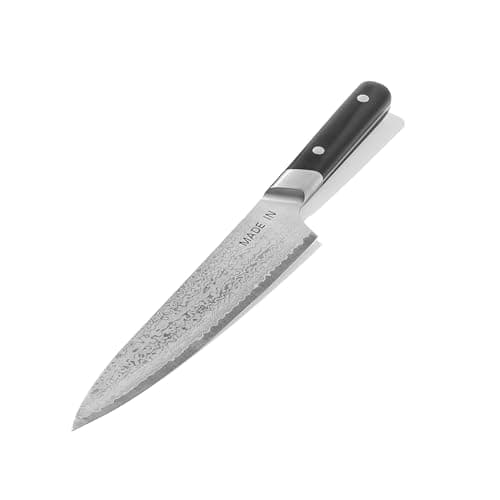
| 04 | Made In 8" Damascus GyutoThe Damascus showpiece. A VG-10 core in 66-layer Damascus, crafted in Japan - a keen, hard gyuto with the looks to match, from a modern direct-to-consumer brand. | Best Damascus | | $239.00·Amazon |
#ad · Live prices from the Amazon Product API, as of October 18, 2026. Where we have no verified live price, we show none — a gap beats a number that has rotted.
In detail
The picks, in full
Best overall Japanese
Shun Classic 8"
VG-MAX core steel68-layer Damascus clad~60-61 HRCPakkawood D-handle
The Japanese benchmark. A VG-MAX core in 68-layer Damascus with a keen edge and a comfortable D-handle - the most refined, best-supported way into premium Japanese steel.
- Edge & steel
- 9
- Sharpness
- 10
- Handling
- 9
- Build
- 9
- Value
- 7
Pros
- +Keen, hard edge that stays sharp with careful use
- +Damascus cladding and D-handle are genuinely premium
- +Light and agile for detailed work
- +Widely available service and resharpening support
Cons
- −Hard edge chips against bone or a hard board
- −Sits at the top of the price range here
Don't buy this if…
…you are rough on knives or cook a lot of bone-in food - this edge rewards care and punishes shortcuts.
Best value Japanese
MAC Chef Series 8" (Hollow Edge)
Japanese high-carbon steel~59 HRCThin, light blade~15 deg edge
The value Japanese pick. Thin, hard, keen and noticeably cheaper than the premium names - the knife most people should try first when leaving German steel.
- Edge & steel
- 8
- Sharpness
- 9
- Handling
- 9
- Build
- 8
- Value
- 9
Pros
- +Thin hard blade slices cleanly with little effort
- +Keen edge out of the box
- +Undercuts most premium Japanese knives on price
- +Hollow-edge dimples release sticky slices
Cons
- −Simpler finish than a Damascus-clad Shun
- −Harder steel still chips if abused
Don't buy this if…
…you want the looks and pedigree of a premium Japanese blade - the MAC is about performance for the money, not showroom shine.
Best budget Japanese steel
Misen 8" Chef Knife
AUS-10 Japanese steel~60-61 HRC~15 deg edgeFull tang
The budget route to hard Japanese steel. AUS-10 at around 60-61 HRC gives real keenness and edge retention for a fraction of the premium names - steel first, polish later.
- Edge & steel
- 9
- Sharpness
- 8
- Handling
- 8
- Build
- 8
- Value
- 9
Pros
- +Hard AUS-10 holds a keen edge well for the outlay
- +Full-tang build feels solid
- +Sloped bolster allows a full-blade grip
- +The lowest-cost way into genuinely hard steel
Cons
- −Fit and finish trail the premium Japanese names
- −Hard edge chips if twisted or dropped
Don't buy this if…
…you want refinement and pedigree - Misen delivers the steel, not the ceremony.
Best Damascus
Made In 8" Damascus Gyuto
VG-10 core66-layer Damascus~60-61 HRCCrafted in Japan
The Damascus showpiece. A VG-10 core in 66-layer Damascus, crafted in Japan - a keen, hard gyuto with the looks to match, from a modern direct-to-consumer brand.
- Edge & steel
- 9
- Sharpness
- 9
- Handling
- 8
- Build
- 9
- Value
- 7
Pros
- +VG-10 core takes and holds a keen edge
- +66-layer Damascus is genuinely striking
- +Gyuto profile suits push-cutting and slicing
- +Japan-crafted at a modern-brand price
Cons
- −Hard, thin edge is chip-prone against bone
- −Premium price near the top of this list
Don't buy this if…
…you want a tough do-anything knife - a gyuto this hard is for careful slicing, not heavy chopping.
Harder steel, keener angle - and the tradeoff
Japanese blades typically run around 60 to 63 on the hardness scale, against roughly 56 to 58 for German steel, and they are ground closer to 15 degrees per side rather than 20. That keener geometry is why they slice so cleanly. It is also why they chip: a hard, thin edge that meets bone, a hard board or a careless twist can lose a chip that a softer German edge would simply roll. Match the knife to how you cook. If you push and pull through vegetables and boneless proteins, a Japanese edge is a joy; if you rock-chop through everything and hit the occasional bone, a Western knife forgives more. The full comparison is in Japanese vs German chef knives.
Caring for a Japanese edge
Hard steel keeps its edge longer but is fussier to bring back. Sharpen at the angle the knife was ground for - around 15 degrees per side for most Japanese blades - because widening it to a German 20 degrees throws away the keenness you paid for. Use a stone rather than a pull-through, keep the knife off glass and stone boards, hand-wash and dry it, and store it so the edge never knocks against other steel. Our guide to knife sharpening angles explains how to hold that keener angle.
The two knives at the top of this list are worth comparing directly, because they are the same construction at very different prices: Shun vs Tojiro puts the Damascus-clad VG-MAX knife against the plain VG-10 one and the cheaper knife wins.
How we picked
We did not lab-test these knives
Everyone in this category says they tested twenty knives in a professional kitchen. We have not hands-on tested any of these, and we say so. What we did instead: compiled the published specifications — steel type and hardness (HRC), edge angle, blade geometry, weight and build — applied established sharpening standards, ran the value math (spec quality ÷ live price), and scored each product against a published rubric. The scores are judgments from documented research — not measurements we took, because we do not have a test lab and we will not pretend we do. Where a number came from someone else's work, we name them in Sources.
Questions
Frequently asked
What makes a Japanese chef's knife different?+
Harder steel, a thinner blade and a narrower edge angle - usually around 15 degrees per side against 20 for German knives. The result is a keener, cleaner slice, at the cost of being more chip-prone.
Are Japanese knives harder to maintain?+
A little. The hard edge holds longer but is fussier to sharpen and less forgiving of abuse. Keep it off hard boards and bone, hand-wash it, and sharpen at its original angle.
What angle should I sharpen a Japanese knife at?+
Around 15 degrees per side for most Japanese blades. Widening it to a Western 20 degrees throws away the keenness. See
knife sharpening angles for how to hold it.
Do I need to spend Shun money for a good Japanese knife?+
No. The MAC and the Misen deliver hard steel and a keen edge for far less than the premium names - the Shun buys refinement and pedigree on top, not a fundamentally different cut.
Can a Japanese chef's knife cut through bone?+
You should not ask it to. The hard, keen edge chips on bone - reach for a heavier Western knife or a cleaver for bone-in work and keep the Japanese blade for clean slicing.
Receipts
Sources
We do not run a testing lab, and we do not pretend to. Where a spec or a measured number came from someone else's work — a manufacturer's page, a published standard — we name them and link them. Where we could not verify something, we say so on the page rather than quietly leaving it out. Read our full method.