Skip to content
The Edge Bench

Roundups & reviews · Chef Knives

The best santoku knives, ranked

Seven santokus ranked on steel and hardness, edge geometry, weight and the value math — the short, flat, push-cutting blade that suits more home cooks than the chef's knife they actually bought.

By Stephen V.Updated How we review
#ad

We earn a commission when you buy through our Amazon links, at no extra cost to you. It never changes a verdict, and we say so when the cheaper knife is the better buy. How this works.

A santoku is a short, flat, blunt-tipped knife built to push-cut straight down rather than rock. For a lot of home cooks it is quietly the better everyday blade than the 8-inch chef's knife they own: lighter, easier to control on a crowded board, safer near your guiding knuckles, and decisively fast on vegetables. What it gives up is reach and a piercing point. The name translates roughly as "three virtues" — meat, fish and vegetables — which is marketing that happens to be accurate.

We have not hands-on tested these and we do not have a test lab. What we did is compile the published specifications — steel type and Rockwell hardness, edge angle, blade length, weight and construction — apply established sharpening standards, run the value math against the live price, and score every pick against our published rubric. If you are still deciding on shape, read chef's knife vs santoku and santoku vs gyuto first.

How we ranked these

Edge and steel— alloy and published hardness, because that decides how long the edge lasts and how it fails when it does. Sharpness— the ground edge angle and how keen the geometry is out of the box. Handling— weight, balance and handle security when wet, which matters more on a short blade than people expect. Build— forged or stamped, tang, bolster, finish. And value, computed as spec quality against the live price rather than brand feeling — which is why the ranking below does not read like a price list.

Seven inches, and why length barely varies here

Almost every santoku is 165 to 180mm, which is 6.5 to 7 inches. That is not a coincidence or a limitation: the shape only works because it is short enough to control precisely with a flat edge in full contact with the board. A 9-inch santoku would be a badly-designed gyuto. So unlike the chef's knife category, where size is a real decision, here you are choosing between steel, weight and handle rather than length.

The short answer

Quick picks

#KnifeBest forScorePrice
01
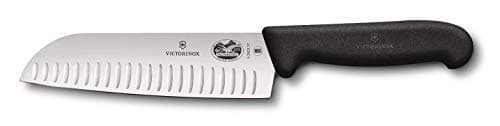
Victorinox Victorinox Fibrox Pro 7" Santoku (Granton)
Victorinox Fibrox Pro 7" Santoku (Granton)

The overall pick, for the same reason the Fibrox chef's knife tops our main roundup: it delivers the overwhelming majority of what a premium santoku offers for a fraction of the outlay, and the value math is not close. Light, grippy, NSF certified, and genuinely hard to fault at the price.

Best overall value
8.6
$52.42Amazon
02
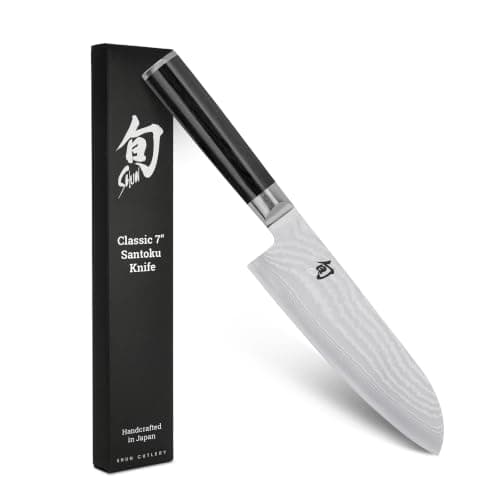
Shun Shun Classic 7" Santoku
Shun Classic 7" Santoku

The premium Japanese answer, and the sharpest knife on this page. A VG-MAX core clad in Damascus layers, run hard and ground keen - if you want the santoku experience the shape was designed around, this is it, and you pay accordingly.

Best premium Japanese
8.4
$142.41Amazon
03
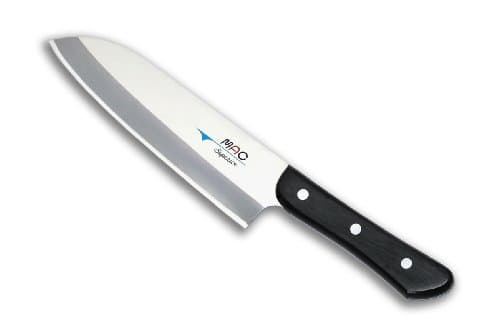
MAC MAC Superior 6.5" Santoku
MAC Superior 6.5" Santoku

The thinking cook's middle ground. MAC grinds thin and hard without the Damascus theater or the Shun price, and the Superior line has been the quiet professional favorite for years. If you want a real Japanese edge without a premium bill, start here.

Best Japanese value
8.2
$57.25Amazon
04
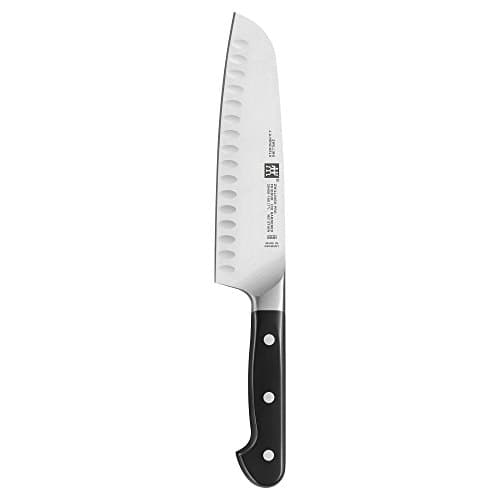
Zwilling Zwilling Pro 7" Hollow Edge Santoku
Zwilling Pro 7" Hollow Edge Santoku

The forged German take on the shape. Heavier and more substantial than everything above it, with Zwilling's FRIODUR ice-hardening and a curved bolster that does not block the heel - the santoku for someone who genuinely likes weight in a knife.

Best forged German
8.0
$149.99Amazon
05
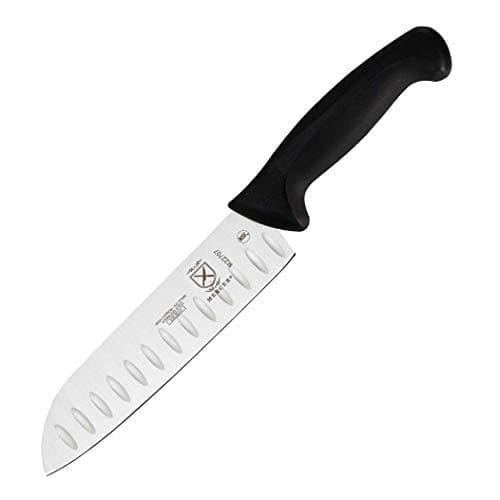
Mercer Culinary Mercer Culinary Millennia 7" Santoku (Granton)
Mercer Culinary Millennia 7" Santoku (Granton)

The budget pick, and a completely defensible one. Culinary-school standard issue: soft steel, a grippy textured handle, NSF certification and a price that makes it the obvious way to find out whether the santoku shape suits you before spending real money.

Best budget pick
7.8
$27.99Amazon
06
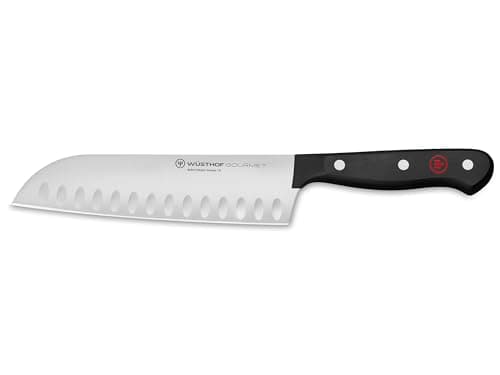
Wusthof Wusthof Gourmet 7" Hollow Edge Santoku
Wusthof Gourmet 7" Hollow Edge Santoku

Wusthof's stamped line, and the honest entry point to the brand. Same Solingen steel formula as the Classic at a fraction of the price, minus the forging and the bolster - which for a santoku, where lightness is the point, is arguably not a loss at all.

Best German entry
7.6
$100.00Amazon
07
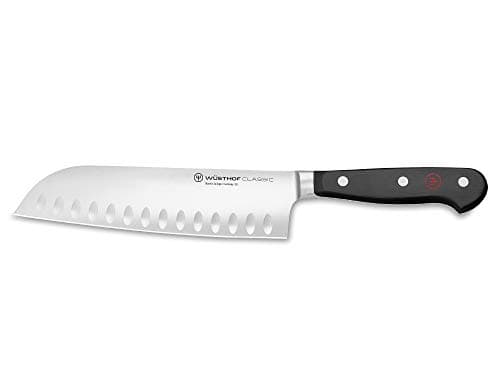
Wusthof Wusthof Classic 7" Santoku
Wusthof Classic 7" Santoku

An excellent knife and the one we would skip in this category. Everything Wusthof does well - forged Solingen steel, precise grinding, a lifetime of service - applied to a shape whose entire purpose is to be light and nimble, at a price where the Shun gives you genuinely hard Japanese steel instead.

Skip - see below
7.4
$170.00Amazon

#ad · Live prices from the Amazon Product API, as of Sep 2, 2026. Where we have no verified live price, we show none — a gap beats a number that has rotted.

In detail

The picks, in full

01
Victorinox Victorinox Fibrox Pro 7" Santoku (Granton)

Best overall value

Victorinox Fibrox Pro 7" Santoku (Granton)

Stamped X50CrMoV15~55-56 HRCGranton hollow edgeFibrox non-slip handle, NSF certified
8.6/10

The overall pick, for the same reason the Fibrox chef's knife tops our main roundup: it delivers the overwhelming majority of what a premium santoku offers for a fraction of the outlay, and the value math is not close. Light, grippy, NSF certified, and genuinely hard to fault at the price.

Edge & steel
7
Sharpness
9
Handling
9
Build
8
Value
10

Pros

  • The grippiest handle here when wet, which matters most on a short blade
  • Very light, so long vegetable prep stays comfortable
  • Granton scallops genuinely help thin slices release
  • Soft enough that honing restores the edge without a stone

Cons

  • Softer steel needs honing far more often than a hard Japanese blade
  • Stamped construction feels basic - no heft, no bolster
  • Around 20 degrees per side, so it is a Western edge in a Japanese shape

Don't buy this if…

you want the keen, hard-steel Japanese cutting feel that made you look at santokus in the first place - this is a Western knife wearing the shape.

$52.42View on Amazon

Price as of Sep 2, 2026. Prices change — Amazon's at checkout is the one that counts.

#ad · we may earn a commission from this link to Victorinox Fibrox Pro 7" Santoku (Granton)

02
Shun Shun Classic 7" Santoku

Best premium Japanese

Shun Classic 7" Santoku

VG-MAX core, Damascus cladding~60-61 HRC~16 deg per sidePakkawood D-shaped handle
8.4/10

The premium Japanese answer, and the sharpest knife on this page. A VG-MAX core clad in Damascus layers, run hard and ground keen - if you want the santoku experience the shape was designed around, this is it, and you pay accordingly.

Edge & steel
10
Sharpness
10
Handling
8
Build
9
Value
5

Pros

  • The keenest edge here by a clear margin, and it holds it
  • Hard steel means far longer between sharpenings
  • Genuinely beautiful, which is a real reason people keep using a knife
  • Light and precise despite the premium construction

Cons

  • Hard steel chips if it meets bone, frozen food or a hard board
  • Needs a stone - a honing rod does comparatively little for it
  • The D-shaped handle is contoured for right-handed use
  • The value math is the weakest here by some distance

Don't buy this if…

you are not going to learn to sharpen on a stone - this knife's advantage evaporates the moment the edge goes and you have no way to bring it back.

$142.41View on Amazon

Price as of Sep 2, 2026. Prices change — Amazon's at checkout is the one that counts.

#ad · we may earn a commission from this link to Shun Classic 7" Santoku

03
MAC MAC Superior 6.5" Santoku

Best Japanese value

MAC Superior 6.5" Santoku

High-carbon Japanese stainless~59-61 HRCThin blade stock, keen grindPakkawood handle
8.2/10

The thinking cook's middle ground. MAC grinds thin and hard without the Damascus theater or the Shun price, and the Superior line has been the quiet professional favorite for years. If you want a real Japanese edge without a premium bill, start here.

Edge & steel
8
Sharpness
9
Handling
9
Build
7
Value
8

Pros

  • Very thin behind the edge, which is what actually makes a knife feel sharp
  • Hard enough to hold an edge properly, softer than Shun so less chip-prone
  • Lighter and more nimble than any German option here
  • Long-standing professional reputation rather than a marketing push

Cons

  • 6.5 inches is short even by santoku standards
  • Plain finish - it looks like a tool, not an heirloom
  • Thin stock is less forgiving of lateral force

Don't buy this if…

you want a substantial knife in the hand - MAC's whole design philosophy is thin and light, and some cooks dislike it.

$57.25View on Amazon

Price as of Sep 2, 2026. Prices change — Amazon's at checkout is the one that counts.

#ad · we may earn a commission from this link to MAC Superior 6.5" Santoku

04
Zwilling Zwilling Pro 7" Hollow Edge Santoku

Best forged German

Zwilling Pro 7" Hollow Edge Santoku

Forged special formula steelFRIODUR ice-hardenedCurved bolster, full tangHollow (Granton) edge
8.0/10

The forged German take on the shape. Heavier and more substantial than everything above it, with Zwilling's FRIODUR ice-hardening and a curved bolster that does not block the heel - the santoku for someone who genuinely likes weight in a knife.

Edge & steel
9
Sharpness
8
Handling
8
Build
9
Value
6

Pros

  • Properly forged with a full tang - the most substantial build here
  • Curved bolster leaves the whole edge sharpenable, unlike a full bolster
  • Ice-hardening gives better edge retention than typical German steel
  • Made in a company-owned German factory, which is a real provenance claim

Cons

  • Heavy for a santoku, which works against the shape's main advantage
  • Ground at a Western angle rather than a Japanese one
  • Priced against premium Japanese knives without the hard steel

Don't buy this if…

you chose a santoku for lightness and agility - this is the heaviest knife on the page and it changes how the shape feels.

$149.99View on Amazon

Price as of Sep 2, 2026. Prices change — Amazon's at checkout is the one that counts.

#ad · we may earn a commission from this link to Zwilling Pro 7" Hollow Edge Santoku

05
Mercer Culinary Mercer Culinary Millennia 7" Santoku (Granton)

Best budget pick

Mercer Culinary Millennia 7" Santoku (Granton)

Stamped high-carbon Japanese steelSantoprene/polypropylene gripGranton hollow edgeNSF certified
7.8/10

The budget pick, and a completely defensible one. Culinary-school standard issue: soft steel, a grippy textured handle, NSF certification and a price that makes it the obvious way to find out whether the santoku shape suits you before spending real money.

Edge & steel
6
Sharpness
8
Handling
8
Build
7
Value
10

Pros

  • The cheapest genuinely usable santoku here, by a wide margin
  • Textured handle with a protective finger point - safe when wet
  • Soft steel sharpens back in minutes on any abrasive
  • The low-risk way to test the shape before committing

Cons

  • Softest steel here - it will need honing constantly
  • Fit and finish are basic; the handle is functional, not pleasant
  • Blade stock is thicker behind the edge than the Japanese picks

Don't buy this if…

you already know you like the shape and are ready to buy properly - spend a little more and get a knife you will not replace.

$27.99View on Amazon

Price as of Sep 2, 2026. Prices change — Amazon's at checkout is the one that counts.

#ad · we may earn a commission from this link to Mercer Culinary Millennia 7" Santoku (Granton)

06
Wusthof Wusthof Gourmet 7" Hollow Edge Santoku

Best German entry

Wusthof Gourmet 7" Hollow Edge Santoku

Stamped X50CrMoV15~58 HRC, laser-cut edgeHollow (Granton) edgeSynthetic riveted handle
7.6/10

Wusthof's stamped line, and the honest entry point to the brand. Same Solingen steel formula as the Classic at a fraction of the price, minus the forging and the bolster - which for a santoku, where lightness is the point, is arguably not a loss at all.

Edge & steel
7
Sharpness
8
Handling
8
Build
8
Value
7

Pros

  • Solingen steel and heat treatment at a stamped price
  • Lighter than the forged Classic, which suits the shape
  • Precision-cut edge is keener than most stamped knives
  • Wusthof's warranty and service network behind it

Cons

  • Not forged, so it lacks the heft brand buyers often expect
  • Handle is plainer and less grippy than Victorinox or Mercer
  • Sits awkwardly between the budget and the premium picks on value

Don't buy this if…

you are buying Wusthof specifically for the forged, bolstered feel - this line does not have it, and that is the whole reason it costs less.

$100.00View on Amazon

Price as of Sep 2, 2026. Prices change — Amazon's at checkout is the one that counts.

#ad · we may earn a commission from this link to Wusthof Gourmet 7" Hollow Edge Santoku

07
Wusthof Wusthof Classic 7" Santoku

Skip - see below

Wusthof Classic 7" Santoku

Forged X50CrMoV15~58 HRCPrecision Edge Technology, ~14 deg per sideFull tang, full bolster
7.4/10

An excellent knife and the one we would skip in this category. Everything Wusthof does well - forged Solingen steel, precise grinding, a lifetime of service - applied to a shape whose entire purpose is to be light and nimble, at a price where the Shun gives you genuinely hard Japanese steel instead.

Edge & steel
9
Sharpness
8
Handling
8
Build
9
Value
3

Pros

  • Superbly made - Wusthof's forging and finishing are not in question
  • Ground keener than traditional German knives at around 14 degrees per side
  • Full tang and substantial feel
  • Lifetime warranty and a real service network

Cons

  • Heavy, which works directly against why you would buy a santoku
  • Full bolster blocks the heel from ever being sharpened
  • At this price the Shun offers genuinely harder steel and a keener edge
  • The Gourmet above shares the same steel formula for far less

Don't buy this if…

value matters to you at all - this is the weakest value case on the page, and two knives above it do the job better for different reasons.

$170.00View on Amazon

Price as of Sep 2, 2026. Prices change — Amazon's at checkout is the one that counts.

#ad · we may earn a commission from this link to Wusthof Classic 7" Santoku

Do you actually want a santoku, or a shorter chef's knife?

Worth settling before you spend. A santoku is not a small chef's knife — the flat edge changes the motion. If you cut by rocking the blade through a pile of herbs with the tip on the board, a santoku will feel wrong and a 6-inch chef's knife is what you actually want. If you lift the whole blade and push it straight down, the santoku is built for you. Try the motion with whatever knife you own before buying.

Granton edges: useful, oversold

Five of the seven knives here have hollow-ground scallops along the blade. They create small air pockets so wet slices release instead of clinging, which is genuinely helpful on potato, cucumber and cured meat, and does nothing at all on herbs, onion or dry ingredients. They have no effect whatsoever on sharpness. Treat a Granton edge as a mild convenience, not a reason to pick one knife over another — and note that on very thin Japanese blades makers often omit it entirely, because a thin blade already releases well.

Hard steel or soft: the decision underneath the price

The real split on this page is not brand or country, it is hardness. The Shun and the MAC run around 59–61 HRC: they hold an edge for a long time, cut keener, and chip rather than roll when they fail, which means a honing rod does relatively little and you need a stone. The Victorinox, Mercer and the Wusthofs sit lower: they dull faster but a rod brings them straight back, so maintenance is trivial. Neither is better in the abstract. Buy hard steel only if you are willing to learn stone work — start with a beginner whetstone — and soft steel if you would rather use a rod and forget about it.

Handles, and why they matter more here

A santoku is short, which means your hand is closer to the food and there is less blade to steer with. A handle that turns in a wet grip is a bigger problem on a 7-inch knife than on a 10-inch one. That is a substantial part of why the Victorinox and Mercer score so well on handling despite being the cheapest knives here: textured synthetic grips hold when polished pakkawood does not. If your hands are small, this category is worth looking at closely — see chef knives for small hands. And if you are left-handed, note that D-shaped Japanese handles are contoured for the right hand; left-handed chef knives covers what to check.

Edge angle, and the pull-through trap

The Japanese picks here are ground around 15–16 degrees per side; the German and Swiss ones closer to 20 (the Wusthof Classic being a keener exception at around 14). That number matters the moment you sharpen. A standard 20-degree pull-through sharpener run over a 16-degree Shun grinds the shoulders of the bevel back until it is a 20-degree edge, permanently, and you have thrown away the geometry you paid for. Match the tool to the blade — knife sharpening angles explains how, and sharpening mistakes covers the rest of the ways this goes wrong.

What we would skip

The Wusthof Classic santoku, as above — a genuinely excellent knife that is the wrong purchase in this category, because you are paying premium-Japanese money for a heavy German knife in a shape designed around being light. Beyond our picks: skip any santoku under about twenty dollars from an unnamed brand, which will be soft mystery steel ground thick behind the edge, and skip "santoku sets" that bundle a santoku with a near-identical chef's knife — you are buying the same knife twice. And skip a santoku entirely as your only knife if you regularly break down whole chickens or halve squash; the blunt tip and short blade will frustrate you within a week.

How we picked

We did not lab-test these knives

Everyone in this category says they tested twenty knives in a professional kitchen. We have not hands-on tested any of these, and we say so. What we did instead: compiled the published specifications — steel type and hardness (HRC), edge angle, blade geometry, weight and build — applied established sharpening standards, ran the value math (spec quality ÷ live price), and scored each product against a published rubric. The scores are judgments from documented research — not measurements we took, because we do not have a test lab and we will not pretend we do. Where a number came from someone else's work, we name them in Sources.

Questions

Frequently asked

Is a santoku better than a chef's knife?
Neither is better — they are built around different cutting motions. A santoku push-cuts and a chef's knife rocks. The right one is whichever matches how your hand naturally moves. See chef's knife vs santoku.
What size santoku should I buy?
Almost all are 165–180mm (6.5–7 inches) and that range is right for the shape. Seven inches is the common default; 6.5 suits smaller hands and smaller boards.
Do the dimples on a santoku make it sharper?
No. A Granton or hollow edge reduces suction so thin slices release from the blade. Sharpness comes from the grind angle and the steel.
Can a santoku replace my chef's knife?
For most everyday work, yes. You lose reach and the piercing tip, so breaking down large items or anything requiring a point becomes harder.
What angle do I sharpen a santoku at?
Match what it was ground at — roughly 15–16 degrees per side for the Japanese knives here, closer to 20 for the Western ones. Never assume; check the maker's published figure.
Are Japanese santokus too delicate for everyday use?
They are fine for vegetables, herbs and boneless protein. They are not fine for bone, frozen food or hard boards, where harder steel chips instead of rolling.

Keep reading

Receipts

Sources

We do not run a testing lab, and we do not pretend to. Where a spec or a measured number came from someone else's work — a manufacturer's page, a published standard — we name them and link them. Where we could not verify something, we say so on the page rather than quietly leaving it out. Read our full method.