Skip to content
The Edge Bench

Stones, sharpeners & how-to · Sharpening

The best sharpening stones for beginners, ranked

Ranked on a different question than our main whetstone list: how fast does a first-timer actually get a sharp knife out of this stone?

By Stephen V.Updated How we review
#ad

We earn a commission when you buy through our Amazon links, at no extra cost to you. It never changes a verdict, and we say so when the cheaper knife is the better buy. How this works.

Most beginner stone advice starts with a 1000/6000 combination, and for a lot of first-time sharpeners that is the wrong stone. The knife you are about to sharpen has probably been dull for a year. A 1000-grit face will get there eventually, but "eventually" is exactly when a beginner concludes that whetstones do not work and goes back to the pull-through. A 400-grit side raises a burr in a fraction of the strokes, and a burr you can feel is the single thing that makes freehand sharpening click.

So this list is ranked on a different question than our main whetstone roundup: not which stone produces the finest edge, but which stone gets a nervous first-timer to a sharp knife fastest and most forgivingly. That means weighting coarse cutting speed, an included angle guide, a base that will not slide, and a price low enough that a mistake costs nothing. Before you buy anything, check you actually need a stone at all — sharpening vs honingis the five minute read that saves some people the purchase entirely — and once your stone arrives, work through the step-by-step how-to. If the numbers on the box mean nothing to you yet, our whetstone grits explainer is the companion piece to this page.

The short answer

Quick picks

#KnifeBest forScorePrice
01
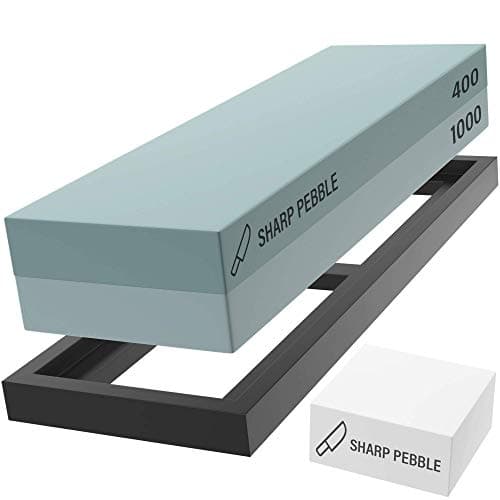
Sharp Pebble Sharp Pebble 400/1000 Whetstone Kit
Sharp Pebble 400/1000 Whetstone Kit

The right first stone for a genuinely dull knife. The 400 side raises a burr fast enough that you feel the technique working, the 1000 side refines it to a kitchen-sharp edge, and the kit ships with a flattening stone and an angle guide so nothing else is needed on day one.

Best first stone
8.2
$23.69Amazon
02
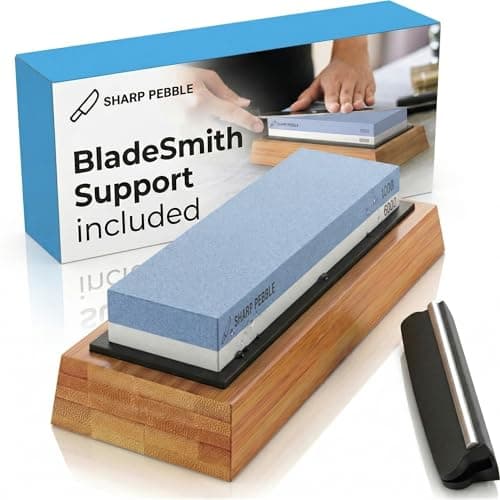
Sharp Pebble Sharp Pebble Premium 1000/6000 Whetstone
Sharp Pebble Premium 1000/6000 Whetstone

The best one-stone answer if your knives are only mildly dull. Sharpening and polishing on one block, with the same bamboo base and angle guide that make the brand's kits so beginner-friendly - just be honest with yourself about how blunt your knives really are.

Best all-in-one combo
8.3
$37.97Amazon
03
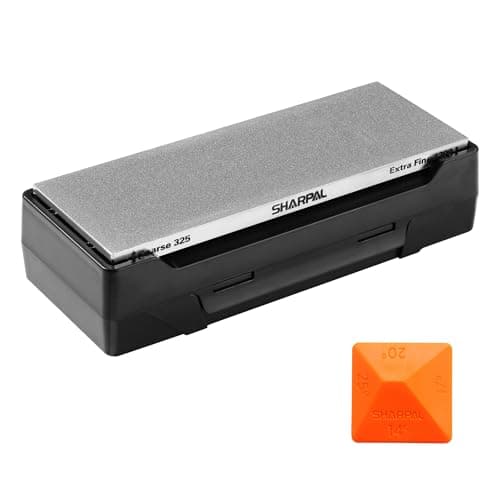
Sharpal Sharpal 162N Diamond Sharpening Stone
Sharpal 162N Diamond Sharpening Stone

The stone for a beginner who will not maintain a stone. No soaking, no flattening, no dishing - a dual-grit diamond plate that stays dead flat for life and rips through a neglected edge. You give up the polished finish, and for a first year of learning that is a fine trade.

Best zero-maintenance
8.3
$62.99Amazon
04
King King KW65 1000/6000 Combination Whetstone
King KW65 1000/6000 Combination Whetstone

The cheapest way to find out whether you enjoy this. A long-standing Japanese combination stone that costs about as much as a decent takeaway, gives lovely soft feedback, and will teach you more about angle than any guide will.

Best cheap classic
7.8
$28.00Amazon
05
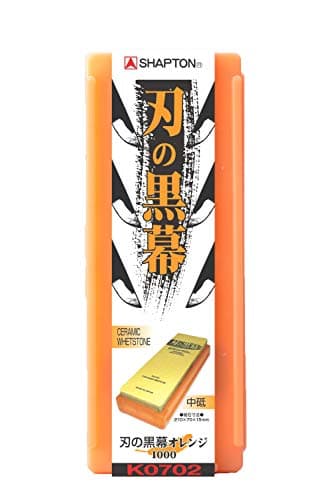
Shapton Shapton Kuromaku 1000 (Orange)
Shapton Kuromaku 1000 (Orange)

The stone that removes the soak. Splash water on it and start - no fifteen-minute wait, no bucket - and a hard ceramic binder that holds flat far longer than a soft waterstone. The step up for a beginner who has decided they are going to stick with this.

Best splash-and-go
8.2
$39.88Amazon
06
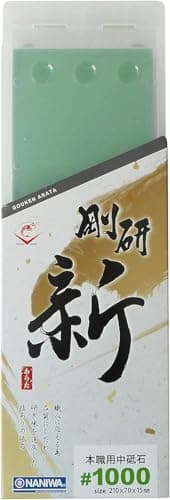
Naniwa Naniwa Goken 1000 Whetstone
Naniwa Goken 1000 Whetstone

The nicest stone here to actually use, and the one to buy when you have decided sharpening is a hobby rather than a chore. Smooth, consistent feedback and a clean 1000-grit edge - but it is a lot of stone to hand someone on day one.

Best step-up
7.8
$48.00Amazon

#ad · Live prices from the Amazon Product API, as of Sep 2, 2026. Where we have no verified live price, we show none — a gap beats a number that has rotted.

In detail

The picks, in full

01
Sharp Pebble Sharp Pebble 400/1000 Whetstone Kit

Best first stone

Sharp Pebble 400/1000 Whetstone Kit

400 + 1000 grit, two sidesFlattening stone includedAngle guide includedNon-slip base
8.2/10

The right first stone for a genuinely dull knife. The 400 side raises a burr fast enough that you feel the technique working, the 1000 side refines it to a kitchen-sharp edge, and the kit ships with a flattening stone and an angle guide so nothing else is needed on day one.

Cutting speed
9
Grit & finish
6.5
Ease of use
9
Durability
7
Value
9.5

Pros

  • 400 grit cuts fast, so a burr appears in minutes rather than in a long grind
  • 1000 side finishes to a genuinely sharp kitchen edge
  • The included flattening stone fixes the dishing every soft waterstone eventually gets
  • Cheap enough that a beginner's mistakes cost nothing

Cons

  • Tops out at 1000 grit, so no polished, refined finish
  • Water stone: needs soaking, and it dishes with use

Don't buy this if…

your knives are already fairly sharp and you only want to maintain them - a 1000/6000 combo is the better fit.

$23.69View on Amazon

$29.9921% off

Price as of Sep 2, 2026. Prices change — Amazon's at checkout is the one that counts.

#ad · we may earn a commission from this link to Sharp Pebble 400/1000 Whetstone Kit

02
Sharp Pebble Sharp Pebble Premium 1000/6000 Whetstone

Best all-in-one combo

Sharp Pebble Premium 1000/6000 Whetstone

1000 + 6000 grit comboWater stone, short soakNon-slip bamboo baseAngle guide included
8.3/10

The best one-stone answer if your knives are only mildly dull. Sharpening and polishing on one block, with the same bamboo base and angle guide that make the brand's kits so beginner-friendly - just be honest with yourself about how blunt your knives really are.

Cutting speed
7.5
Grit & finish
8.5
Ease of use
9
Durability
7.5
Value
9

Pros

  • Covers sharpening and polishing without buying two stones
  • Angle guide and stable base remove two of the three beginner variables
  • 6000 side leaves a noticeably refined edge for the money

Cons

  • 1000 grit is slow going on a badly neglected knife
  • Needs a soak before use and flattening over time

Don't buy this if…

your knives are seriously blunt - start on 400 grit or you will be at the sink a long time.

$37.97View on Amazon

$45.9917% off

Price as of Sep 2, 2026. Prices change — Amazon's at checkout is the one that counts.

#ad · we may earn a commission from this link to Sharp Pebble Premium 1000/6000 Whetstone

03
Sharpal Sharpal 162N Diamond Sharpening Stone

Best zero-maintenance

Sharpal 162N Diamond Sharpening Stone

Coarse 325 + fine 1200 gritDiamond plateNo soak requiredStays flat for life
8.3/10

The stone for a beginner who will not maintain a stone. No soaking, no flattening, no dishing - a dual-grit diamond plate that stays dead flat for life and rips through a neglected edge. You give up the polished finish, and for a first year of learning that is a fine trade.

Cutting speed
9.5
Grit & finish
6.5
Ease of use
8.5
Durability
9.5
Value
7.5

Pros

  • Nothing to learn about stone care - it never dishes and never needs flattening
  • Coarse face reprofiles a very dull or chipped knife quickly
  • Cuts hard Japanese steel that soft waterstones struggle with

Cons

  • 1200 grit is the finest it goes, so edges stay toothy rather than polished
  • Diamond gives less tactile feedback, which is how beginners learn angle

Don't buy this if…

you want to learn to feel the edge on the stone - a waterstone teaches that far better.

$62.99View on Amazon

$69.9910% off

Price as of Sep 2, 2026. Prices change — Amazon's at checkout is the one that counts.

#ad · we may earn a commission from this link to Sharpal 162N Diamond Sharpening Stone

04
King King KW65 1000/6000 Combination Whetstone

Best cheap classic

King KW65 1000/6000 Combination Whetstone

1000 + 6000 grit comboSoft Japanese water stoneRequires a soakLong-standing reference stone
7.8/10

The cheapest way to find out whether you enjoy this. A long-standing Japanese combination stone that costs about as much as a decent takeaway, gives lovely soft feedback, and will teach you more about angle than any guide will.

Cutting speed
7.5
Grit & finish
8
Ease of use
7.5
Durability
6.5
Value
9.5

Pros

  • Excellent tactile feedback - you can feel the burr forming
  • About the lowest-risk way to try freehand sharpening
  • A stone experienced sharpeners still recommend

Cons

  • Soft binder dishes quickly, so it needs frequent flattening
  • No base or angle guide in the box

Don't buy this if…

you want a stone you never have to maintain - buy the diamond plate instead.

$28.00View on Amazon

$31.2010% off

Price as of Sep 2, 2026. Prices change — Amazon's at checkout is the one that counts.

#ad · we may earn a commission from this link to King KW65 1000/6000 Combination Whetstone

05
Shapton Shapton Kuromaku 1000 (Orange)

Best splash-and-go

Shapton Kuromaku 1000 (Orange)

1000 gritHard ceramic binderSplash-and-go, no soakingStores in its own case
8.2/10

The stone that removes the soak. Splash water on it and start - no fifteen-minute wait, no bucket - and a hard ceramic binder that holds flat far longer than a soft waterstone. The step up for a beginner who has decided they are going to stick with this.

Cutting speed
8.5
Grit & finish
8
Ease of use
9
Durability
8.5
Value
7

Pros

  • No soak means you will actually use it on a weeknight
  • Hard binder dishes far less than a soft stone
  • Cuts quickly for its grit and gives a clean, consistent edge

Cons

  • Single grit, so a finishing stone is a separate purchase
  • Costs more than a combination stone that does two jobs

Don't buy this if…

you want one stone to both sharpen and polish - a 1000/6000 combo is better value.

$39.88View on Amazon

Price as of Sep 2, 2026. Prices change — Amazon's at checkout is the one that counts.

#ad · we may earn a commission from this link to Shapton Kuromaku 1000 (Orange)

06
Naniwa Naniwa Goken 1000 Whetstone

Best step-up

Naniwa Goken 1000 Whetstone

1000 gritJapanese water stoneFine, even feedbackSingle-grit finishing-capable edge
7.8/10

The nicest stone here to actually use, and the one to buy when you have decided sharpening is a hobby rather than a chore. Smooth, consistent feedback and a clean 1000-grit edge - but it is a lot of stone to hand someone on day one.

Cutting speed
8
Grit & finish
8.5
Ease of use
8
Durability
8
Value
6.5

Pros

  • Consistent, pleasant feel that makes long sessions enjoyable
  • Leaves a clean, even edge for a single-grit stone
  • Holds its surface better than a soft classic waterstone

Cons

  • The most expensive way here to own one grit
  • No base, guide or flattening stone included

Don't buy this if…

this is your first ever stone - spend less until you know you enjoy it.

$48.00View on Amazon

Price as of Sep 2, 2026. Prices change — Amazon's at checkout is the one that counts.

#ad · we may earn a commission from this link to Naniwa Goken 1000 Whetstone

Why we rank a coarse stone first for beginners

Freehand sharpening only starts to make sense when you feel a burr — the thin wire of steel that folds over the far side of the edge once you have ground all the way to it. Feel it, and you know your angle was consistent and you are done with that side. Never feel it, and you are just polishing a dull edge while wondering what everyone else is on about. A 400-grit face gets a beginner to that moment several times faster than a 1000-grit one, on a knife that has been quietly going blunt for a year. That is the whole argument for starting coarse, and it is why our number one pick here is not our number one pick on the main stone list.

The three variables that trip up first-timers

Angle, pressure, and stone movement. An angle guide fixes the first, and every kit-based pick above includes one — they are crude, they wear, and they are still worth using for a month while your hands learn what 15 or 20 degrees feels like. Pressure is the one nobody warns you about: beginners push far too hard, which rounds the edge and gouges soft stones. Use the weight of the blade plus a little, and let the abrasive do the work. Stone movement is the easiest to solve — a non-slip base or a damp towel under the stone removes it entirely, and a sliding stone is genuinely dangerous. Our angle guide covers what number to aim for on your particular knives.

Soak, splash-and-go, or diamond?

A soaking waterstone is the cheapest and gives the best feedback, at the cost of a fifteen-minute wait and periodic flattening. A splash-and-go ceramic like the Shapton removes the wait and dishes much more slowly, for more money. A diamond plate removes all maintenance permanently and cuts anything, but tops out coarse and tells your hands very little. There is no universally right answer: buy the soaker if sharpening sounds like something you would enjoy, buy the diamond plate if it sounds like a chore you want over with. The full grit reasoning lives in whetstone grits explained.

Match the stone to the knives you own

Soft German steel around 56–58 HRC comes back on almost anything, which is why a budget stone is a perfectly good match for the knives in our under-$100 roundup. Hard Japanese steel at 60–63 HRC is a different proposition: soft waterstones can glaze against it, and a keener 15° edge leaves less margin for a wobbly hand. If your knives came from our Japanese roundup, favor the diamond plate or the Shapton, and read easiest knives to sharpen for which steels forgive a beginner and which do not.

What we would skip

Skip the ultra-cheap no-name "whetstone kits" that bundle a stone, a guide, a strop and a leather case for less than the price of a single decent stone — the abrasive is usually the part they economized on, and a stone that will not cut is the fastest way to give up. Skip 3000/8000 combination stones as a first purchase; those are finishing grits, and they will not fix a dull knife. And skip an oil stone unless you have a specific reason to want one — the mess is real, and nothing about it makes learning easier.

How we picked

We did not lab-test these knives

Everyone in this category says they tested twenty knives in a professional kitchen. We have not hands-on tested any of these, and we say so. What we did instead: compiled the published specifications — steel type and hardness (HRC), edge angle, blade geometry, weight and build — applied established sharpening standards, ran the value math (spec quality ÷ live price), and scored each product against a published rubric. The scores are judgments from documented research — not measurements we took, because we do not have a test lab and we will not pretend we do. Where a number came from someone else's work, we name them in Sources.
Questions

Frequently asked

What grit should a beginner's first sharpening stone be?
If your knives are properly dull, start with a 400/1000 combination — the 400 side raises a burr fast enough that you can feel the technique working. If they are only slightly dull, a 1000/6000 combination is the better single purchase.
Do I need an angle guide?
Not forever, but for the first month it removes the hardest variable while your hands learn. Most of the kits here include one. Once holding the angle feels automatic, most people stop using it.
How long does it take to sharpen a knife on a stone?
On a 1000-grit stone, a moderately dull kitchen knife takes a few minutes per side once you know what you are doing. A badly neglected knife on the same grit can take far longer, which is exactly why we push beginners toward a coarse side. The full sequence is in our step-by-step guide.
Do whetstones need to be flattened?
Soft waterstones do — they wear into a hollow in the middle, and a hollow stone cannot make a straight edge. Hard ceramic stones dish far more slowly, and diamond plates never do. Two of the kits above include a flattening stone.
Is a whetstone better than an electric sharpener for a beginner?
Better edges, worse odds of success on the first attempt. If you want a sharp knife in ten seconds with no learning curve, an electric or guided unit from our sharpener roundup is the honest recommendation - a stone rewards practice.

Keep reading

Receipts

Sources

We do not run a testing lab, and we do not pretend to. Where a spec or a measured number came from someone else's work — a manufacturer's page, a published standard — we name them and link them. Where we could not verify something, we say so on the page rather than quietly leaving it out. Read our full method.