Skip to content
The Edge Bench

Stones, sharpeners & how-to · Sharpening

The best sharpening stones for kitchen knives

Five whetstones ranked on cutting speed, finish and value - from a beginner combo to a diamond plate that never needs flattening.

By Stephen V.Updated How we review
#ad

We earn a commission when you buy through our Amazon links, at no extra cost to you. It never changes a verdict, and we say so when the cheaper knife is the better buy. How this works.

A sharpening stone is the one tool that actually restores a dull edge — a honing steel only realigns what is already there. For most home cooks the honest answer is a single 1000/6000 combination stone: the 1000 side does the real sharpening, the 6000 side polishes, and together they handle roughly 95% of kitchen work without a drawer full of grits.

We ranked these on how fast they cut, the finish they leave, how forgiving they are to use, how well they hold flat, and value. If you are not sure you even need a stone yet, read sharpening vs honing first, and if you own hard Japanese steel the Japanese chef's knifeguide explains why a keener ~15° edge asks more of your stone than a German ~20° one. New to freehand? Our step-by-step whetstone guide walks the whole motion.

The short answer

Quick picks

#KnifeBest forScorePrice
01
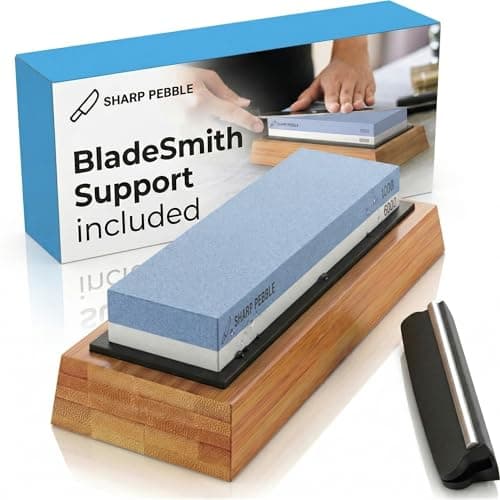
Sharp Pebble Sharp Pebble Premium 1000/6000 Whetstone
Sharp Pebble Premium 1000/6000 Whetstone

The stone to hand a first-timer. A 1000/6000 combination that sharpens and polishes on one block, with a non-slip bamboo base and an angle guide to get you cutting sooner - it needs a short soak, but nothing about it is fussy.

Best beginner combo
8.5
$39.99Amazon
02
King King KW65 1000/6000 Combination Whetstone
King KW65 1000/6000 Combination Whetstone

The stone a generation of cooks learned on. This Japanese combination stone cuts a little slower and wears a little faster than pricier options, but it is forgiving, cheap and leaves a clean edge - the classic first stone for a reason.

Best value classic
7.5
$29.34Amazon
03
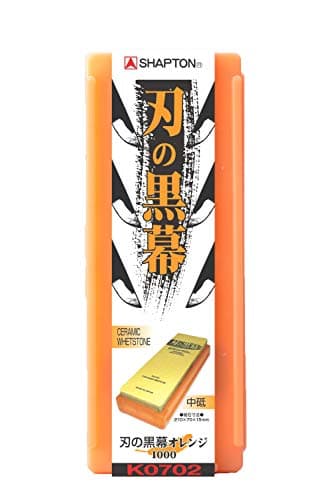
Shapton Shapton Kuromaku 1000 (Orange)
Shapton Kuromaku 1000 (Orange)

The workhorse for people who sharpen often. A hard ceramic splash-and-go stone - a quick splash of water and you are cutting, no soak - that bites fast, holds its shape and leaves a crisp 1000-grit edge. Pair it with a finer stone when you want polish.

Best splash-and-go
8.4
$40.00Amazon
04
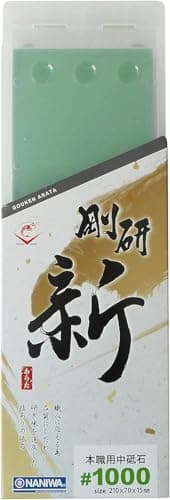
Naniwa Naniwa Goken 1000 Whetstone
Naniwa Goken 1000 Whetstone

The step up for someone who has caught the bug. A professional splash-and-go stone with a fine, consistent grit that feels smooth under the blade and leaves a noticeably even edge - more stone than a first-timer needs, and worth it once freehand clicks.

Best premium
8.2
$46.00Amazon
05
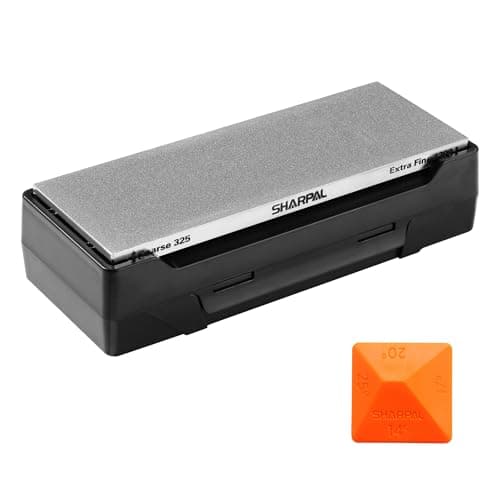
Sharpal Sharpal 162N Diamond Sharpening Stone
Sharpal 162N Diamond Sharpening Stone

The no-maintenance pick. A dual-grit diamond plate - coarse 325 on one face, fine 1200 on the other - that never needs soaking and never needs flattening because it stays dead flat for life. Fast on repairs; just not a polishing stone.

Best low-maintenance (diamond)
8.4
$62.99Amazon

#ad · Live prices from the Amazon Product API, as of Jul 19, 2026. Where we have no verified live price, we show none — a gap beats a number that has rotted.

In detail

The picks, in full

01
Sharp Pebble Sharp Pebble Premium 1000/6000 Whetstone

Best beginner combo

Sharp Pebble Premium 1000/6000 Whetstone

1000 + 6000 grit comboWater stone, short soakNon-slip bamboo baseAngle guide included
8.5/10

The stone to hand a first-timer. A 1000/6000 combination that sharpens and polishes on one block, with a non-slip bamboo base and an angle guide to get you cutting sooner - it needs a short soak, but nothing about it is fussy.

Cutting speed
8
Grit & finish
8.5
Ease of use
9
Durability
7.5
Value
9.5

Pros

  • Two grits on one block cover sharpening and polishing
  • Bamboo base and angle guide lower the learning curve
  • A genuinely low-cost way into freehand sharpening

Cons

  • Needs a short soak before every use
  • Softer surface dishes and needs flattening over time

Don't buy this if…

you want zero maintenance - a diamond plate stays flat and skips the soak entirely.

$39.99View on Amazon

$45.9913% off

Price as of Jul 19, 2026. Prices change — Amazon's at checkout is the one that counts.

#ad · we may earn a commission from this link to Sharp Pebble Premium 1000/6000 Whetstone

02
King King KW65 1000/6000 Combination Whetstone

Best value classic

King KW65 1000/6000 Combination Whetstone

1000 + 6000 grit comboMade in JapanSoaking stoneSoft, fast-cutting feel
7.5/10

The stone a generation of cooks learned on. This Japanese combination stone cuts a little slower and wears a little faster than pricier options, but it is forgiving, cheap and leaves a clean edge - the classic first stone for a reason.

Cutting speed
7
Grit & finish
7.5
Ease of use
7
Durability
6.5
Value
9.5

Pros

  • Long-proven combination at a rock-bottom price
  • Soft binder gives quick feedback for beginners
  • Made in Japan with a consistent, clean finish

Cons

  • Needs a full soak, not a quick splash
  • Softer stone dishes faster and needs flattening

Don't buy this if…

you sharpen rarely and hate upkeep - a splash-and-go or diamond stone is less fuss.

$29.34View on Amazon

$31.206% off

Price as of Jul 19, 2026. Prices change — Amazon's at checkout is the one that counts.

#ad · we may earn a commission from this link to King KW65 1000/6000 Combination Whetstone

03
Shapton Shapton Kuromaku 1000 (Orange)

Best splash-and-go

Shapton Kuromaku 1000 (Orange)

1000 grit ceramicSplash-and-go, no soakHard, fast-cuttingMade in Japan
8.4/10

The workhorse for people who sharpen often. A hard ceramic splash-and-go stone - a quick splash of water and you are cutting, no soak - that bites fast, holds its shape and leaves a crisp 1000-grit edge. Pair it with a finer stone when you want polish.

Cutting speed
9
Grit & finish
8.5
Ease of use
9
Durability
8.5
Value
7

Pros

  • No soaking - splash and start in seconds
  • Hard surface stays flatter for longer
  • Cuts quickly and gives a clean, crisp edge

Cons

  • A single 1000 grit, so no built-in polishing step
  • Hard feel gives less tactile feedback than a soft stone

Don't buy this if…

you want one stone that both sharpens and polishes - a 1000/6000 combo is the simpler buy.

$40.00View on Amazon

$41.905% off

Price as of Jul 19, 2026. Prices change — Amazon's at checkout is the one that counts.

#ad · we may earn a commission from this link to Shapton Kuromaku 1000 (Orange)

04
Naniwa Naniwa Goken 1000 Whetstone

Best premium

Naniwa Goken 1000 Whetstone

1000 gritSplash-and-goFine, consistent finishPro-grade feel
8.2/10

The step up for someone who has caught the bug. A professional splash-and-go stone with a fine, consistent grit that feels smooth under the blade and leaves a noticeably even edge - more stone than a first-timer needs, and worth it once freehand clicks.

Cutting speed
8.5
Grit & finish
9
Ease of use
8.5
Durability
8
Value
7

Pros

  • Even, predictable grit that flatters your technique
  • Splash-and-go convenience with a refined feel
  • Leaves a cleaner edge than budget 1000 stones

Cons

  • Priced well above beginner stones
  • A single grit - budget separately for a polishing stone

Don't buy this if…

you are still learning the motion - a cheaper combo stone teaches the same skill for less.

$46.00View on Amazon

Price as of Jul 19, 2026. Prices change — Amazon's at checkout is the one that counts.

#ad · we may earn a commission from this link to Naniwa Goken 1000 Whetstone

05
Sharpal Sharpal 162N Diamond Sharpening Stone

Best low-maintenance (diamond)

Sharpal 162N Diamond Sharpening Stone

Coarse 325 + fine 1200 gritDiamond plateNo soak requiredStays dead flat for life
8.4/10

The no-maintenance pick. A dual-grit diamond plate - coarse 325 on one face, fine 1200 on the other - that never needs soaking and never needs flattening because it stays dead flat for life. Fast on repairs; just not a polishing stone.

Cutting speed
9.5
Grit & finish
6.5
Ease of use
8.5
Durability
9.5
Value
8

Pros

  • Zero upkeep - no soaking, never needs flattening
  • Coarse side reprofiles a very dull or chipped edge fast
  • Diamond surface handles even the hardest steels

Cons

  • Finest side is 1200 grit, so no polished finish
  • Diamond feel is less refined than a waterstone

Don't buy this if…

you want a mirror polish - top out with a fine waterstone instead.

$62.99View on Amazon

$69.9910% off

Price as of Jul 19, 2026. Prices change — Amazon's at checkout is the one that counts.

#ad · we may earn a commission from this link to Sharpal 162N Diamond Sharpening Stone

The grit progression, without the drawer full of stones

Grit numbers describe how coarse the abrasive is: lower cuts faster and rougher, higher refines. The working range for kitchen knives is simple — around 400 coarse for repairing a chipped or badly dull edge, around 1000 medium as the everyday workhorse that does the real sharpening, and 3000–6000 fine to polish the edge to a clean, keen finish. You do not need all of them. A single 1000/6000 combination stone covers roughly 95% of home needs, which is why four of our five picks live in or around that range. Only add a coarse stone if you routinely rescue neglected knives. The wider sharpening hub ties this together with honing and angle-setting.

Soak vs splash-and-go: two ways to keep a stone wet

Every waterstone must stay wet, but they get there differently. Soaking stoneslike the King and the Sharp Pebble drink up water for a few minutes before use and stay saturated as you work — cheap and pleasant to use, but they need planning and dish faster. Splash-and-go ceramic stones like the Shapton and Naniwa take only a splash of water on the surface, so you can sharpen on a whim; they are harder and hold flat longer. A diamond platelike the Sharpal needs no soak at all and never needs flattening. Pick the routine you will actually keep up — the best stone is the one you reach for.

Match the stone to the steel you own

Any of these will sharpen any kitchen knife; the difference is finish and care. Softer Western steel takes a wider ~20° edge and is forgiving of a slightly coarse finish, while harder Japanese steel holds a keener ~15° edge that rewards a finer polishing grit — the same split behind the whole Japanese vs German decision. Whatever you buy, we score it against a published rubric rather than a lab bench; our full method is on how we review.

How we picked

We did not lab-test these knives

Everyone in this category says they tested twenty knives in a professional kitchen. We have not hands-on tested any of these, and we say so. What we did instead: compiled the published specifications — steel type and hardness (HRC), edge angle, blade geometry, weight and build — applied established sharpening standards, ran the value math (spec quality ÷ live price), and scored each product against a published rubric. The scores are judgments from documented research — not measurements we took, because we do not have a test lab and we will not pretend we do. Where a number came from someone else's work, we name them in Sources.

Questions

Frequently asked

What grit whetstone should I start with?
A 1000/6000 combination stone. The 1000 side does the actual sharpening and the 6000 side polishes, which together cover the large majority of home kitchen work. Add a coarse ~400 stone only if you regularly repair chipped or very dull edges.
Do I need to soak a whetstone?
It depends on the type. Traditional soaking stones (the King, the Sharp Pebble) need a few minutes in water first. Splash-and-go ceramic stones (Shapton, Naniwa) need only a splash on the surface, and diamond plates need no soak at all.
How often should I sharpen on a stone?
For most home cooks, a full sharpening every few months is plenty. Use a honing steelbetween sharpenings to keep the edge true — when honing no longer restores the bite, it is time for the stone.
Are diamond stones better than water stones?
They are different, not strictly better. Diamond plates cut the fastest, stay dead flat and skip the soaking — ideal for repairs and low maintenance. Fine waterstones leave a keener, more polished finished edge. Many cooks use a diamond plate for coarse work and a waterstone to finish.
Can one stone sharpen both German and Japanese knives?
Yes. The stone does not change — you do. Hold a German knife at about 20° per side and a Japanese knife at about 15°. See knife sharpening angles for how to set and hold each.

Keep reading

Receipts

Sources

We do not run a testing lab, and we do not pretend to. Where a spec or a measured number came from someone else's work — a manufacturer's page, a published standard — we name them and link them. Where we could not verify something, we say so on the page rather than quietly leaving it out. Read our full method.