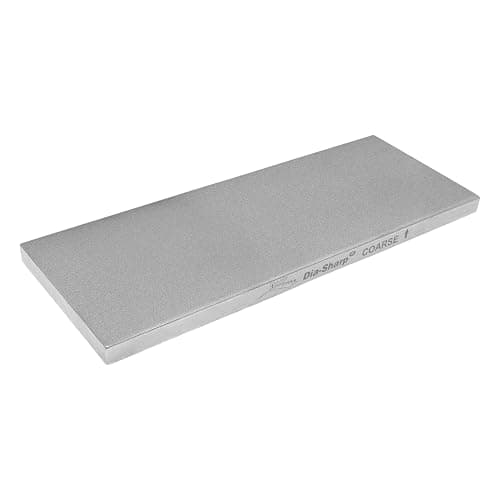
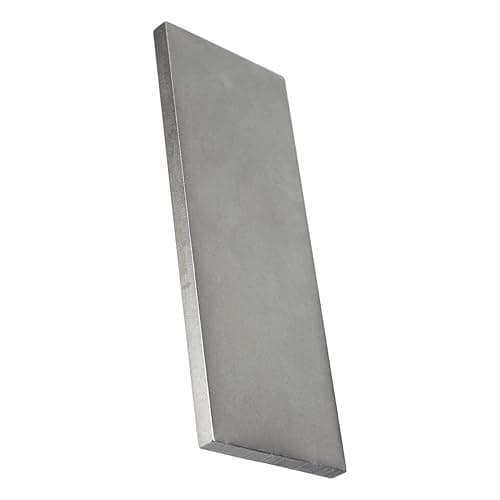
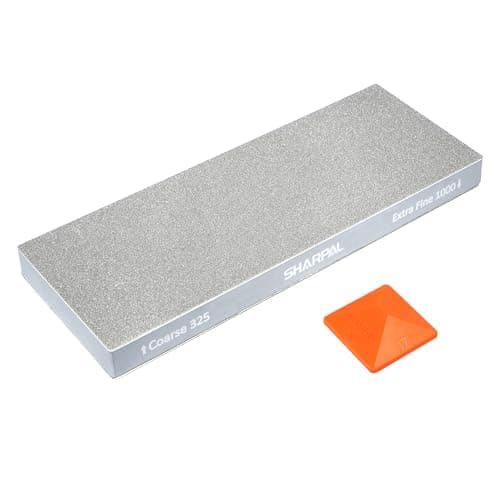
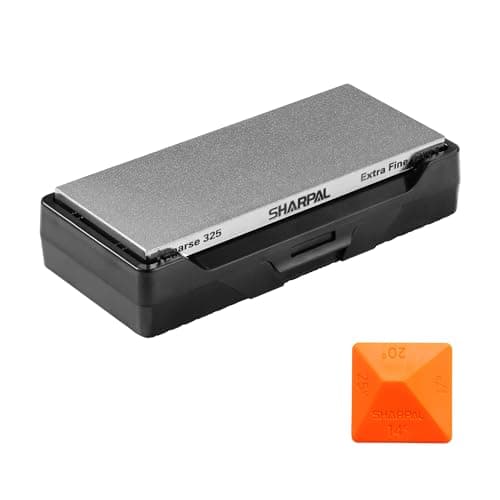
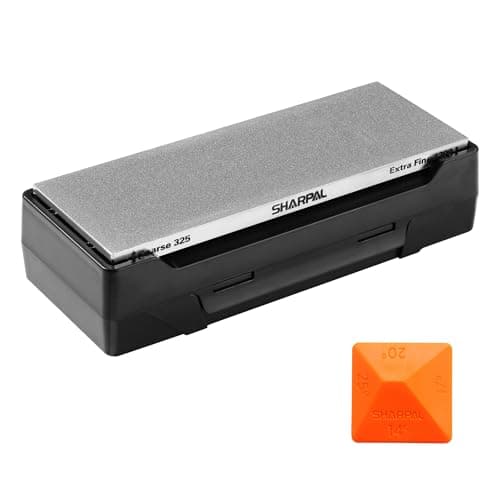
A diamond plate is a steel or aluminum substrate with industrial diamond bonded to its face. Because diamond is harder than every carbide found in kitchen knife steel, it cuts anything — high-vanadium powder steels that glaze a traditional stone, ceramic honing rods, even carbide tooling. It also stays dead flat forever, which removes the single most tedious chore in stone sharpening. What it will not do is give you the polished, refined finish a fine water stone produces, and pretending otherwise is how people end up disappointed.
If you are choosing between stone types for the first time, read the main whetstone roundup and whetstone grits explainedfirst — diamond is a specific answer to a specific problem, not a general upgrade. The technique is the same either way: how to sharpen kitchen knives.
How we ranked these
Cutting speed at the stated grit, which is where diamond earns its keep. Finish— how refined the resulting edge is, judged from the grit range offered, since diamond tops out coarser than fine water stones. Flatness and substrate rigidity, because a plate that flexes or arrives slightly bowed defeats the whole reason to buy diamond. Durability— bonding method and published grit retention, as cheap plates shed diamond in the first few sessions. And value, computed as spec quality against the live price. As always, these are judgments from documented research rather than measurements: we do not have a test lab and will not pretend we do.
Continuous or interrupted surface?
Diamond plates come with either a continuous face or a face perforated with holes. The holes clear swarf and let the plate cut faster and stay cleaner, but a narrow blade or a knife tip can catch on the edge of a hole. A continuous surface is slower to clear and kinder to small blades and pointed tips. For kitchen knives specifically, continuous is the safer default; interrupted plates make more sense for tools and heavy repair work.
Why diamond grit numbers do not match water stone grit numbers
This trips up almost everyone. Diamond plates are usually rated on a mesh scale — 325, 600, 1200 — while Japanese water stones use the JIS scale where 1000 is a mid-range stone and 6000 is a polisher. They are not the same measurement. A 1200-mesh diamond plate does not produce a 1200-JIS water stone finish; it lands somewhere in the region of a mid-range water stone in practice. More importantly, diamond cuts with fixed, exposed abrasive that leaves a deeper scratch than a friable water stone of nominally similar grit. Judge a diamond plate by what edge it produces, not by comparing its number to a stone's. Full context in whetstone grits explained.
Break-in is real and is not a defect
A new diamond plate cuts faster than it ever will again, because a proportion of the diamond particles sit proud and break away in the first few sessions. Owners regularly conclude the plate is wearing out; it is settling. After break-in the cutting rate stabilizes and stays roughly constant for years. Do not press hard to compensate — heavy pressure is what actually strips diamond from the bond and shortens the plate's life. Light pressure, let the abrasive work.
Water, or dry?
Diamond plates do not need soaking and most work dry, but a little water or a drop of dish soap in water makes a real difference: it floats the swarf off the surface so the diamonds keep contacting steel rather than grinding through metal paste. It also cuts the harsh feel. Never use oil — it traps swarf in the surface and is a nuisance to clean. Rinse and dry the plate after use, especially a steel-substrate one, which can rust.
Where a water stone still wins
Three places, and they matter. Fine finishing: nothing in diamond matches a 3000–8000 JIS water stone for a polished, keen apex, which is why serious Japanese-knife owners use diamond for repair and water stones for finishing. Feel: a soaked water stone gives tactile feedback about your angle that a hard plate does not, which makes it a better teacher. Cost: a good beginner combination water stone costs less than every plate here. If you own soft-to-medium Western knives and want to learn properly, start with a beginner water stone instead.
The two-plate versus one-plate decision
A double-sided plate is one purchase, one thing to store, and covers coarse and fine. Two single-grit DMT plates cost more, take up more room, and give you a flatter substrate, better long-term diamond retention, and the option to buy exactly the grits you use. For a home kitchen with four or five knives, double-sided is the right answer and the reason the 162N tops this list. For someone maintaining a lot of knives or doing tool work as well, the DMT pair is the better long-run system.
What we would skip
Skip credit-card-sized diamond plates for kitchen use — there is not enough surface to control an 8-inch blade, and you will round the bevel. Skip any plate that does not state its grit in a recognized unit; "coarse/fine" with no number tells you nothing and is usually a sign of unspecified abrasive quality. Skip electroplated plates sold at implausible prices, which typically shed diamond within a few sessions and end up as expensive flat steel. And skip diamond entirely if all you own is a couple of soft stamped knives — a cheap combination water stone will serve you better and cost less.
One category of knife has no alternative to the plates on this page at all: a ceramic blade is harder than every abrasive in a normal kitchen except diamond, which is why a honing rod and a water stone both do nothing for it. Are ceramic knives worth it covers that, and what to buy instead.
The job these plates are least replaceable for is repair work: rebuilding a chipped bevel consumes more water stone in one session than months of routine sharpening. How to fix a chipped knife is the procedure, and it uses two of the plates ranked here.