For most kitchens, no — and if you already own ceramic knives, the thing to buy is a diamond plate, because nothing else will sharpen them. Ceramic blades are usually zirconium dioxide, a technical ceramic that is far harder than any knife steel. Hardness is why they keep a keen edge for a long time without maintenance, and hardness is also why they chip on a bone, snap if dropped on a tile floor and cannot be brought back on a steel rod. If what you want is “stays sharp and I never think about it,” a ceramic knife delivers that until the day it does not, and then it is rubbish.
A disclosure about this page before the recommendations: we do not rank any ceramic knife. That is the same policy we apply to novelty-handled cutlery on our arthritis page— this site recommends only from specifications a maker publishes, and ceramic-knife listings almost never publish a material grade, a hardness figure or an edge angle. We will not invent numbers to fill that gap, and we will not quote a hardness for zirconia that we cannot source. What follows is the mechanisms, which are not in dispute, and then the products we can stand behind: what sharpens a ceramic knife, and what to buy instead if the appeal was really “an edge that lasts.” See how we review for the method.
What a ceramic knife is genuinely good at
Edge retention, by a wide margin. A hard ceramic edge survives contact that would roll a soft Western steel, so a ceramic paring knife in a household that never sharpens anything can stay usable for years while the steel knives in the same drawer go blunt in weeks. This is a real advantage and it is the honest reason people like them.
No iron, so no rust and no reaction.There is no iron in the blade, so it cannot corrode, cannot pit in a salty sink and cannot react with acidic food. If you have ever had a carbon-steel knife turn an apple grey, a ceramic blade will not do that — and neither will a decent stainless, which is the cheaper version of the same fix. See why does my knife rust if that is your actual problem.
Thin and light. Ceramic blades are usually ground thin and weigh very little, which cuts well through soft produce and is easy on a tired hand.
The three ways they fail
They chip, and chips are terminal in a home kitchen. Hardness without toughness means the edge has nowhere to go when it meets bone, a frozen edge or a glass board: steel rolls and comes back on a rod, ceramic takes a bite out of itself. Our why knives go dull page covers rolling versus chipping in detail; ceramic sits at the far end of that spectrum.
They break. A dropped ceramic knife can snap, typically at the tip or where the blade meets the handle. No steel knife does this.
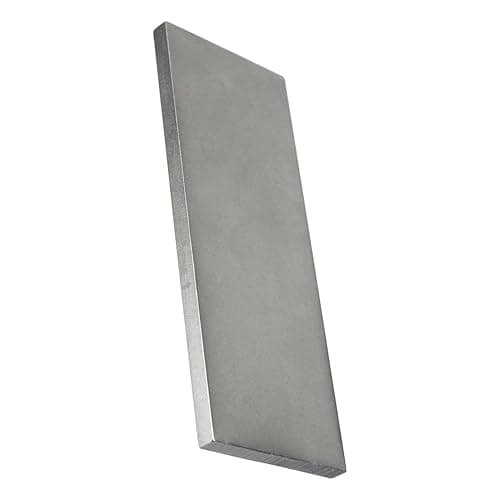
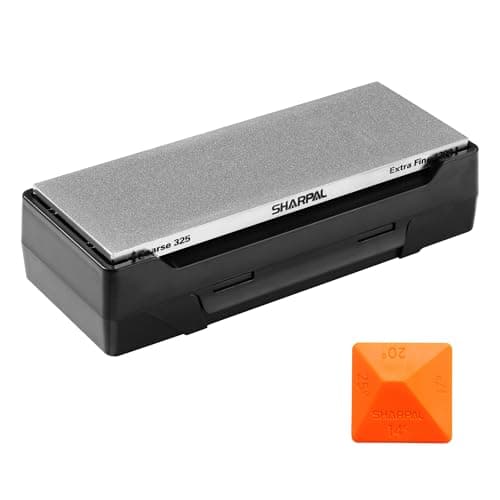
You cannot maintain them.A honing rod does nothing for ceramic — honing realigns a rolled steel edge, and a ceramic edge does not roll. Water stones and most pull-through sharpeners will not touch it either, because the abrasive is softer than the blade. The only thing harder than the blade in a normal kitchen is diamond, which is why the first pick below is a diamond plate, and why the standard advice to “send it back to the maker” exists.
When a ceramic knife is actually the right call
There is a real case, and it is narrow. A ceramic paring knife, in a household that will never own a sharpening stone and will never send a knife away, used only on soft produce, kept in a sheath or a block rather than loose in a drawer, is a sensible purchase: it will stay sharper for longer than a cheap steel knife treated the same way, and the failure modes we have listed are mostly things that happen to big knives doing hard jobs. Nobody levers a frozen chicken apart with a paring knife.
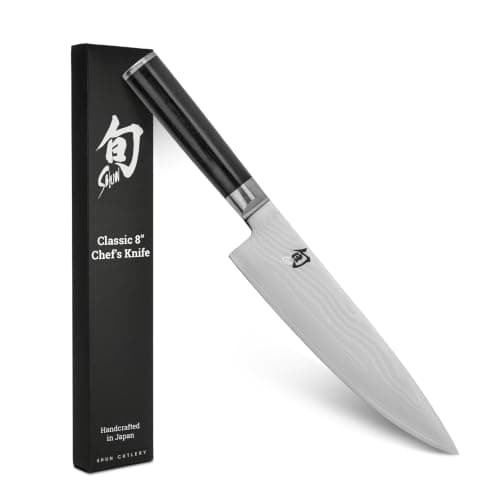
The case collapses as the knife gets bigger and the jobs get harder. A ceramic chef's knife will eventually meet a bone, a squash seed, a stone in a drawer or a tiled floor, and when it does the knife is finished. An inexpensive stainless chef's knife and a ten second honing habit survives all of that indefinitely — do you need a honing rod is the case for the habit, and best chef knives under $100 is the case for the knife.
Answers to the questions people actually ask about them
Are they sharper than steel? Out of the box, often yes, because a hard thin blade can carry a very keen edge and ceramic does not need to compromise for toughness. In six months the comparison depends entirely on whether the steel knife was maintained. A honed steel knife beats a neglected ceramic one.
Are they dishwasher safe?The material does not corrode, so the blade itself is indifferent to detergent — but a dishwasher is a place where blades knock into other things, and knocking is the one thing ceramic cannot take. The general argument is in can you put knives in the dishwasher, and it applies more strongly here, not less.
Are they safe? A ceramic edge is as sharp as any other sharp edge and should be treated the same way. The specific thing to be careful about is a chipped blade: a ceramic chip is a hard, small fragment, so if a blade breaks while you are working, discard the food rather than searching for the piece.
Can a sharpening service do them?Some will, with diamond equipment, and some decline. Ask before you drive there — local knife sharpening services covers what to ask any sharpener before you hand over a knife.