Skip to content
The Edge Bench

Decision guides · Buying Guides

Can you put knives in the dishwasher?

Technically yes on a few specific models, and the makers of almost everything else say no in writing. Here is what is actually doing the damage - it is four things, and the heat is not the main one.

By Stephen V.Updated How we review
#ad

We earn a commission when you buy through our Amazon links, at no extra cost to you. It never changes a verdict, and we say so when the cheaper knife is the better buy. How this works.

A few specific knives are rated for it by their makers — Victorinox rates several Swiss Classic and Fibrox models dishwasher safe — and almost every other maker rules it out in writing, including Mercer, Global and Kai. If a knife in your house is going into the dishwasher regardless of what any guide says, the Victorinox Swiss Classic paring knife and the Fibrox Pro chef's knife are the ones to let do it: soft stamped Swiss steel, sealed molded handles, dishwasher-rated by the manufacturer, and cheap enough that a shortened life is not a real loss. Everything forged, everything Japanese and everything with a riveted wooden handle should be hand washed, and the reason is not squeamishness.

The four separate mechanisms

"The dishwasher ruins knives" is usually explained as heat, which is the least important of the four. Here is what is actually happening, roughly in order of how much damage it does.

1. Impact. This is the big one and almost nobody names it. A dishwasher basket does not hold a knife still. Water jets move it, and the edge knocks against cutlery, crockery, the rack and the basket wall for the length of the cycle. An edge is a few microns wide at the apex; metal-on-metal contact rolls it or chips it. You are not washing a knife, you are putting it in a tumbler with other hard objects. This is why a knife can come out of a dishwasher visibly duller after a single cycle.

2. Detergent chemistry. Dishwasher detergents are strongly alkaline and many contain chlorides, which is a problem specifically because kitchen knife steels are stainlessrather than rustproof. Stainless steel resists corrosion through a thin passive chromium-oxide layer; chlorides attack that layer and cause pitting. Pitting at the edge is a permanent micro-notch. High-carbon and semi-stainless Japanese steels are worse off again, which is why Global's own care page lists bleach alongside the dishwasher in its list of things to avoid.

3. Prolonged moisture.A cycle plus a damp cool-down is an hour or more of wet. That is what swells and loosens a riveted wooden or PakkaWood handle, and what starts corrosion in the seam between blade and handle on any knife that is not sealed. It is also why NSF-certified commercial handles — Victorinox's Fibrox TPE, Mercer's Santoprene, Dexter's Sani-Safe — are molded and sealed at the blade: they are designed to be washed hard and still have nowhere for water to sit.

4. Heat. Real but minor at dishwasher temperatures. A hot cycle is not going to re-temper a blade — that needs far more heat than any domestic machine produces. What heat does do is accelerate the chemistry in point two and dry detergent residue onto the blade.

And a fifth, which is about you rather than the knife: a sharp blade pointing up in an open basket is a hazard to the next person reaching in. That is the reason most professional guidance says hand wash even where the materials would survive.

What the makers actually say

We checked the published care guidance rather than repeating folklore, and it genuinely differs between brands:

  • Victorinoxrates a number of its Swiss Classic and Fibrox knives dishwasher safe on its own product pages — including the 6" curved boning knife on our boning roundup — while still advising hand washing as the better practice.
  • Mercer Culinary rules the dishwasher out for its cutlery in its own use-and-care guidance, despite the sealed NSF plastic handles.
  • Globallists the dishwasher explicitly in its care page's list of things not to do, alongside soaking, bleach, frozen food and bones.
  • Kai (Shun) gives hand-wash guidance for the Classic line.
  • Dexter-Russell recommends hand washing its Sani-Safe range rather than rating it for the dishwasher — worth noting, because these are commercial knives built for a pot sink.

Read that list twice, because the pattern is not "cheap knives are fine and expensive ones are not". Two brands with sealed commercial plastic handles still say hand wash. The maker's rating is about the handle and steel combination, and it is the only authority worth quoting — so check the product page for the exact model you own rather than assuming the brand.

How the picks below are scored. All three are knives, scored on one rubric built for this question — dishwasher tolerance (what the maker actually rates, plus handle sealing), edge recovery (how fast you can bring it back), replaceability, build and value — and ranked by the resulting average. The published specifications are unchanged from the roundups that established them.

The short answer

Quick picks

#KnifeBest forScorePrice
01
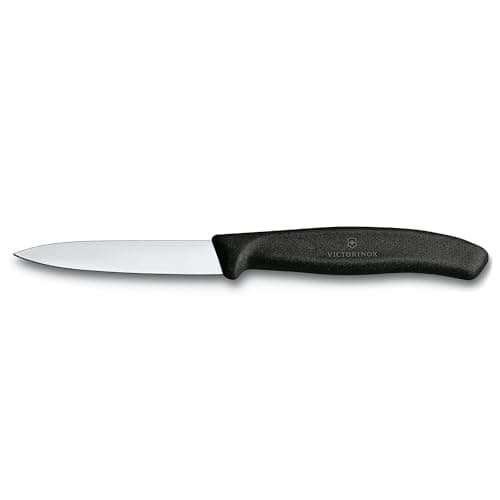
Victorinox Victorinox Swiss Classic 3.25" Paring Knife
Victorinox Swiss Classic 3.25" Paring Knife

If one knife in your kitchen is going in the dishwasher, make it this one. Victorinox rates it dishwasher safe, the molded polypropylene handle has no seams for water to sit in, the soft Swiss steel sharpens back in seconds, and it costs so little that a shortened life is not a real loss. Hand washing is still better - the maker says so too.

Best knife to let near a dishwasher
9.1
$8.00Amazon
02
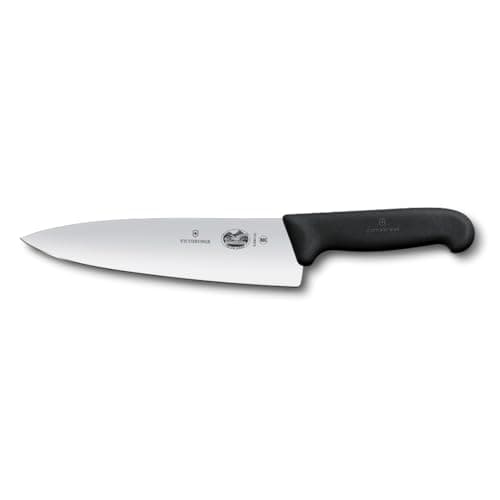
Victorinox Victorinox Fibrox Pro 8"
Victorinox Fibrox Pro 8"

The chef's knife answer to the same question. Stamped Swiss X50CrMoV15 around 55-56 HRC on a sealed textured TPE Fibrox handle, NSF certified, designed from the outset to be washed hard in a commercial kitchen. The softest steel of anything we rank, which here is the advantage: whatever a cycle does to the edge, six passes on a rod fixes.

Best chef's knife for a hard-washing household
8.9
$47.00Amazon
03
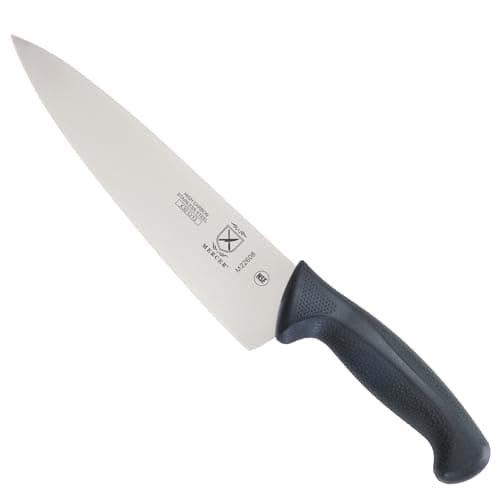
Mercer Culinary Mercer Culinary Millennia 8"
Mercer Culinary Millennia 8"

Included as the honest counter-example. It looks exactly like a dishwasher knife - sealed Santoprene handle, NSF certified, stamped soft steel, very cheap - and Mercer's own use-and-care guidance rules the dishwasher out for its cutlery anyway. If you want the Mercer, hand wash it; the maker is the authority, not the handle material.

Best cheap knife - hand wash anyway
8.6
$29.00Amazon

#ad · Live prices from the Amazon Product API, as of October 9, 2026. Where we have no verified live price, we show none — a gap beats a number that has rotted.

In detail

The picks, in full

01
Victorinox Victorinox Swiss Classic 3.25" Paring Knife

Best knife to let near a dishwasher

Victorinox Swiss Classic 3.25" Paring Knife

Stamped Swiss stainless3.25 in. spear point bladeMolded polypropylene handleDishwasher-safe (hand-wash still advised)
9.1/10

If one knife in your kitchen is going in the dishwasher, make it this one. Victorinox rates it dishwasher safe, the molded polypropylene handle has no seams for water to sit in, the soft Swiss steel sharpens back in seconds, and it costs so little that a shortened life is not a real loss. Hand washing is still better - the maker says so too.

Dishwasher tolerance
9.5
Edge recovery
9
Replaceability
10
Build
7
Value
10

Pros

  • Victorinox rates it dishwasher safe on its own product page - not an assumption
  • Molded one-piece handle with no rivets or seams, so prolonged moisture has nowhere to get in
  • Soft steel comes back in seconds on a rod or a stone if the cycle rolls the edge
  • Cheap enough to own several and replace without thinking

Cons

  • Soft steel dulls faster than a premium blade in normal use, dishwasher or not
  • A short blade loose in a basket is a hazard to the next hand in there
  • Molded handle is functional and completely charmless
  • Dishwasher-rated does not mean dishwasher-improved: it will still dull faster than if hand washed

Don't buy this if…

…you want a paring knife that feels like an object rather than a tool - this is unashamedly the latter.

$8.00View on Amazon

Price as of October 9, 2026. Prices change — Amazon's at checkout is the one that counts.

#ad · we may earn a commission from this link to Victorinox Swiss Classic 3.25" Paring Knife

02
Victorinox Victorinox Fibrox Pro 8"

Best chef's knife for a hard-washing household

Victorinox Fibrox Pro 8"

Stamped X50CrMoV15~55-56 HRC~20 deg/side edgeNSF certified
8.9/10

The chef's knife answer to the same question. Stamped Swiss X50CrMoV15 around 55-56 HRC on a sealed textured TPE Fibrox handle, NSF certified, designed from the outset to be washed hard in a commercial kitchen. The softest steel of anything we rank, which here is the advantage: whatever a cycle does to the edge, six passes on a rod fixes.

Dishwasher tolerance
9.5
Edge recovery
9
Replaceability
9.5
Build
7
Value
9.5

Pros

  • Sealed molded Fibrox handle with no rivets or absorbent material - built for a commercial pot sink
  • NSF certification means the handle is designed to be cleaned aggressively and pass inspection
  • The softest steel we rank, so a rolled edge comes straight back on a honing rod
  • Cheap enough that trading some blade life for convenience is a rational choice

Cons

  • An 8-inch blade in a dishwasher basket is a genuine hazard and will knock against everything
  • Soft steel at ~20 degrees is already the bluntest factory edge we rank - a cycle makes it worse
  • Check the exact model: Victorinox rates some knives dishwasher safe and not others
  • Utilitarian looks, no bolster, no heft

Don't buy this if…

…you want the heft and bolster of a forged knife - and if you were going to hand wash it anyway, our under-$100 roundup has keener options.

$47.00View on Amazon

Price as of October 9, 2026. Prices change — Amazon's at checkout is the one that counts.

#ad · we may earn a commission from this link to Victorinox Fibrox Pro 8"

03
Mercer Culinary Mercer Culinary Millennia 8"

Best cheap knife - hand wash anyway

Mercer Culinary Millennia 8"

Stamped Japanese steel~56 HRCSantoprene gripNSF certified
8.6/10

Included as the honest counter-example. It looks exactly like a dishwasher knife - sealed Santoprene handle, NSF certified, stamped soft steel, very cheap - and Mercer's own use-and-care guidance rules the dishwasher out for its cutlery anyway. If you want the Mercer, hand wash it; the maker is the authority, not the handle material.

Dishwasher tolerance
7
Edge recovery
9
Replaceability
10
Build
7
Value
10

Pros

  • Sealed Santoprene and polypropylene handle with a molded finger guard, built for commercial use
  • NSF certified, so the handle is designed to be cleaned properly
  • Usually the cheapest chef's knife we rank, which makes a hand-wash habit easy to sustain
  • Soft steel at around 56 HRC comes back quickly on a rod

Cons

  • Mercer's own use-and-care guidance rules out the dishwasher for its cutlery - which is why this ranks third
  • The finger guard gets in the way of a pinch grip for some cooks
  • Institutional styling, even by budget standards
  • Soft steel needs frequent honing regardless of how you wash it

Don't buy this if…

…you hold a knife in a pinch grip up on the blade - the molded guard is the thing people most often dislike here.

$29.00View on Amazon

Price as of October 9, 2026. Prices change — Amazon's at checkout is the one that counts.

#ad · we may earn a commission from this link to Mercer Culinary Millennia 8"

Which knives should never go in

KnifeDishwasher?Why
Victorinox Swiss Classic / Fibrox (rated models)Rated safe by the makerSealed molded handle, soft steel, cheap to replace
Mercer, Dexter-Russell commercial plastic handlesMaker says hand washHandle would survive; the maker still rules it out
Forged German (Wusthof, Zwilling, Henckels)NoRiveted handles, keen 14–15° edges, high replacement cost
Japanese (Shun, Global, MAC)No - makers rule it outHard brittle steel chips on impact; chlorides pit it
Any knife with a wooden or PakkaWood handleNoProlonged moisture swells and loosens the handle around the rivets
High-carbon / non-stainless bladesAbsolutely notNo passive layer to protect; they will rust in one cycle
Serrated bread knivesNoTeeth chip against crockery and cannot be easily resharpened

The ten-second alternative, which is the actual answer

Hand washing a knife is faster than loading it. Rinse under hot water with a drop of washing-up liquid, wipe the blade from spine to edge with a cloth (never along the edge toward your fingers), dry it immediately, and put it away. That is genuinely under ten seconds per knife and it is the single habit that separates a knife that lasts thirty years from one that lasts five.

The "dry it immediately" part does most of the work. Water left to evaporate is what spots a blade and starts corrosion in a seam, and it costs nothing to avoid. Never leave a knife soaking in a sink of water — it is the most common cause of a loosened handle and the second most common cause of a cut hand. Our care and maintenance guide has the full routine.

And put it away properly rather than into a drawer of loose cutlery, which does the same edge-on-metal damage as a dishwasher basket, just more slowly. Our storage roundup ranks blocks, magnetic strips, in-drawer organizers and edge guards.

If a knife has already been through the dishwasher

It is almost certainly fine, and here is the order to check. First, look for rust or pitting: small brown spots wipe off, and visible pits in the steel do not. Second, check the handle for movement at the rivets or a gap at the bolster. Third, test the edge on paper — a cycle commonly rolls an edge, which feels like sudden dullness and is a fifteen-second fix on a honing rod.

Surface rust on a stainless blade comes off with a non-abrasive cream cleaner or a cork and a little scouring powder; follow with a wash and a proper dry. If the edge is rolled rather than chipped, start with a honing rod. If it is actually chipped or will not come back, it needs a stone — and if your sharpening is not working, this diagnostic guide is the one to read.

The household compromise that actually works

If the dishwasher argument in your kitchen is really about other people, the practical fix is not a better guide — it is two tiers of knife. Keep two or three cheap dishwasher-rated Victorinox knives in the drawer for everybody, and keep the knives you care about on a magnetic strip or in a block where they are visibly not part of the general pool. It is the same logic professional kitchens use, and it costs less than one forged knife.

That is also the honest answer to why the cheapest knife on this page ranks first. It is not the best knife; it is the best knife for this specific question, which is a different thing. If you are choosing a knife you intend to keep, read how long does a chef knife last instead — the criteria invert completely.
How we picked

We did not lab-test these knives

Everyone in this category says they tested twenty knives in a professional kitchen. We have not hands-on tested any of these, and we say so. What we did instead: compiled the published specifications — steel type and hardness (HRC), edge angle, blade geometry, weight and build — applied established sharpening standards, ran the value math (spec quality ÷ live price), and scored each product against a published rubric. The scores are judgments from documented research — not measurements we took, because we do not have a test lab and we will not pretend we do. Where a number came from someone else's work, we name them in Sources.

Questions

Frequently asked

Will one dishwasher cycle ruin a good knife?
Very unlikely. One cycle will probably roll the edge — which a honing rod fixes in seconds — and may leave water spots. The damage from dishwashing is cumulative: dozens of cycles of impact, alkaline detergent and prolonged moisture is what loosens handles and pits steel. One accident is not a disaster.
What actually damages a knife in a dishwasher?
Four things, and heat is the least of them. Impact against other items as water jets move the knife around; alkaline detergents containing chlorides, which attack the passive layer that makes stainless steel stainless; an hour or more of prolonged moisture, which swells wooden handles and corrodes seams; and heat, which mainly accelerates the chemistry.
Are any knives genuinely dishwasher safe?
Some specific models, yes — Victorinox rates a number of its Swiss Classic and Fibrox knives dishwasher safe on its own product pages, and they have sealed molded handles with no rivets. Even then Victorinox advises hand washing as the better practice, because the rating is about the materials surviving, not about the edge.
Why do some plastic-handled commercial knives still say hand wash?
Because the rating covers the whole knife, not just the handle. Mercer rules out the dishwasher for its cutlery and Dexter-Russell recommends hand washing its Sani-Safe range, despite both having sealed NSF plastic handles built for a pot sink. Check the product page for the exact model rather than assuming from the material.
Can I put knives in the dishwasher if I put them in blade-down?
Blade-down is safer for your hands and does nothing about the three mechanisms that matter — the knife still moves, still meets detergent, still sits wet. If you are going to do it anyway, blade-down in a dedicated slot away from other metal is the least bad version.
How should I wash a knife instead?
Rinse under hot water with a drop of detergent, wipe the blade from spine toward edge with a cloth, dry immediately, and put it away in a block, on a magnetic strip or in an edge guard. Ten seconds. Never leave it soaking in a sink. Our care guide covers the full routine.

Keep reading

Receipts

Sources

We do not run a testing lab, and we do not pretend to. Where a spec or a measured number came from someone else's work — a manufacturer's page, a published standard — we name them and link them. Where we could not verify something, we say so on the page rather than quietly leaving it out. Read our full method.