Loose knives in a drawer is the single most common way home cooks dull good blades. Every time the drawer opens, edges knock against forks, peelers and each other, and steel that survives a whole onion perfectly happily rolls the moment it hits another piece of steel. Any of the options below fixes that. Which one you should buy depends on your counter space, your walls and whether you rent.
We ranked these on blade protection, how many knives they handle, build quality, how pleasant they are to live with, and value. This matters more if you have spent money on your knives — the hard, keen edges from our Japanese roundup chip against other metal far more readily than a soft German blade does. Storage is also the last third of the routine covered in our care and maintenance guide, after washing and honing.
Why loose-in-a-drawer is the worst option
An edge is a few microns of steel at the apex. It survives contact with food and a wooden board indefinitely, and it does not survive contact with other metal. Every drawer opening slides your chef's knife against a fork, a peeler, a can opener — and each contact rolls or nicks the apex a little more. That is why knives in a drawer feel dull within weeks of sharpening while the same knife on a magnetic strip stays keen for months. Nothing on this page is expensive, and any of it is a bigger upgrade to your day-to-day sharpness than a new knife would be.
Block, strip, drawer or guard?
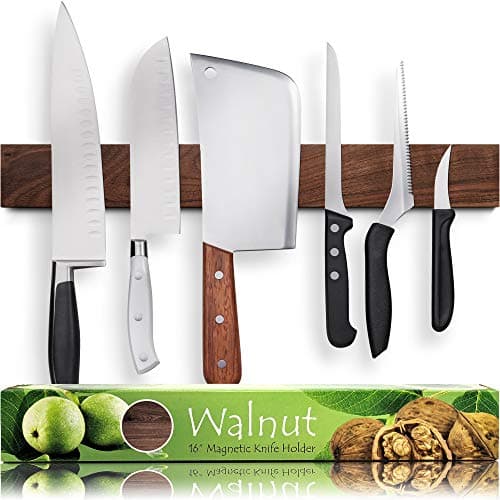
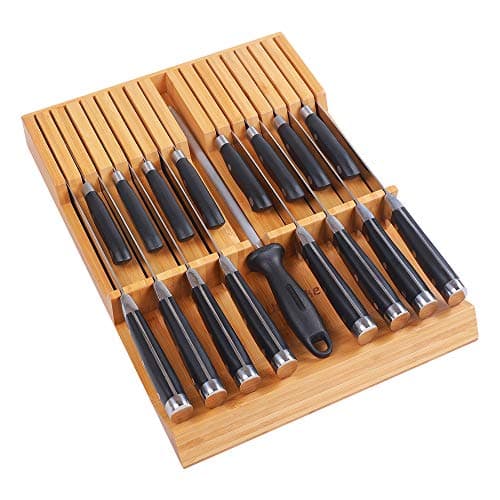
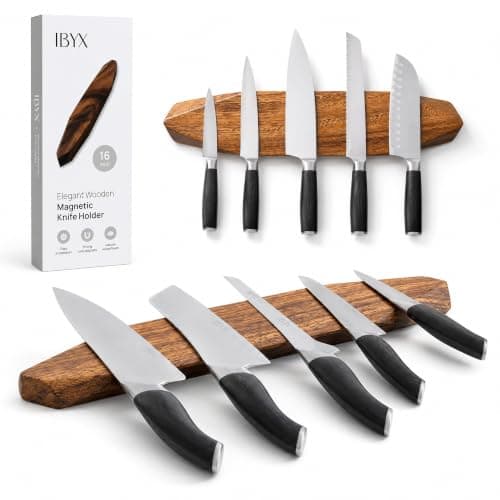
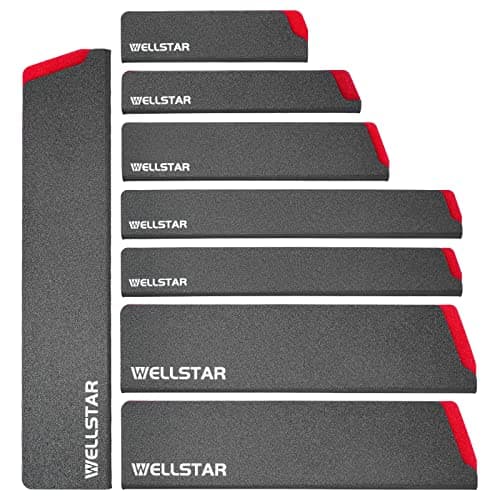
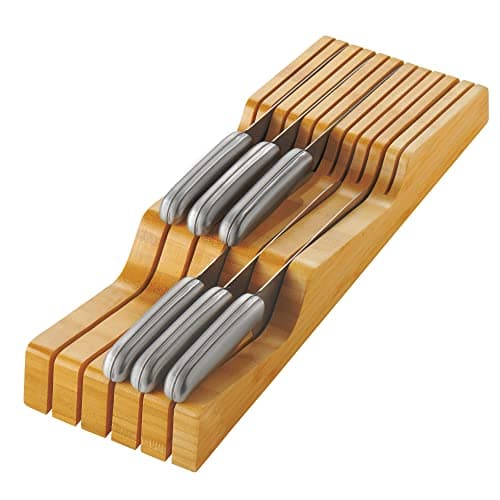
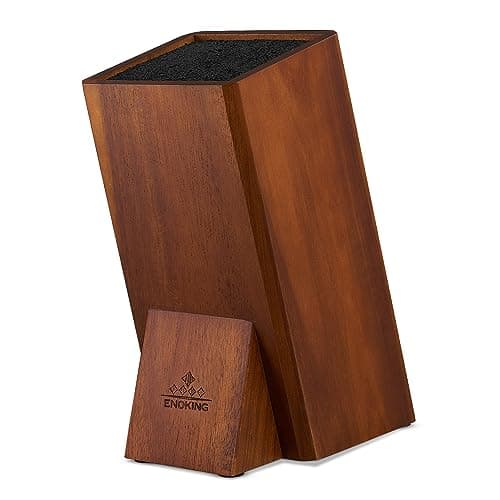
A universal block is the most flexible and the most forgiving of odd knife shapes, at the cost of counter space. A magnetic stripgives the best edge protection of all — only the flat of the blade touches anything — plus instant access and zero footprint, if you can drill and are comfortable with knives on display. An in-drawer organizer is the answer for small kitchens and households with children, trading a whole drawer for the space it saves. Edge guards are the cheapest fix and the only portable one, but they depend on you actually using them every time. Most well-run kitchens end up with two: a primary system, plus guards for the knives that travel or hibernate.
The slotted block problem
Traditional slotted wooden blocks — the kind that come with a knife set — have two flaws. First, the slots are cut for that manufacturer's knives, so anything you buy later may not fit. Second, you cannot clean inside them properly; they are enclosed, dark and occasionally damp, which is exactly the environment you would design if you wanted to grow something. If you already own one, store knives spine-down where the slot allows, and never put a wet knife away. If you are buying, a bristle block or a strip avoids the problem entirely.
Magnetic strips: wood, not bare steel
A magnetic bar with an exposed metal face will scratch a polished blade every time you place or remove it, and it is unforgiving of a slightly careless slap of steel on steel. A hardwood-faced strip with magnets behind the wood gives you the same hold with a soft contact surface. Place the knife by laying the spine against the wood first and rolling the blade flat, rather than slapping it on edge-first — a keen Japanese edge can chip against a magnet through carelessness alone. And check the load: a 16-inch strip that holds light stamped knives may struggle with a forged 10-inch blade and a cleaver at the same time.
Dry before you store, always
Every storage method on this page becomes a corrosion risk if the knife goes in damp. Bamboo and wood hold moisture against the blade, edge guards seal it in, and a slotted block never dries out at all. Hand-wash, dry immediately, then store — the routine in our care guide. This matters most for carbon steel, which will spot overnight, and least for the stainless in our budget roundup— but "stainless" means stain-resistant, not stain-proof, as the steel guide explains.
What we would skip
Skip the cheap universal blocks that use loose plastic rods rather than dense bristles — blades slip between the rods and reach the base. Skip bare metal magnetic bars if you own anything you care about. And skip buying storage that is bigger than your knife collection: a 20-slot block encourages you to fill it, and the whole argument of our knife set roundup is that most of those slots should stay empty.
How we picked
We did not lab-test these knives
Everyone in this category says they tested twenty knives in a professional kitchen. We have not hands-on tested any of these, and we say so. What we did instead: compiled the published specifications — steel type and hardness (HRC), edge angle, blade geometry, weight and build — applied established sharpening standards, ran the value math (spec quality ÷ live price), and scored each product against a published rubric. The scores are judgments from documented research — not measurements we took, because we do not have a test lab and we will not pretend we do. Where a number came from someone else's work, we name them in Sources.