The fastest way to a sharp knife is not always the best way. An electric sharpener can restore an edge in under a minute, but it grinds away metal every time; a guided system is slower yet gives you a real, whetstone-like edge; a cheap pull-through is the quickest and the crudest. The right pick depends on the knives you own and how much control you want.
We ranked these on edge quality, ease of use, speed, versatility and value. One warning up front: many pull-through and electric sharpeners are built around a fixed ~20° angle, and forcing a keener ~15° Japanese knife through one grinds its edge back to blunt Western geometry. If most of your knives are Japanese, read knife sharpening angles before you buy, and consider learning a whetstone instead. If you have not settled on a family of tool at all yet, our cross-family knife sharpener reviews score one representative from every type — stone, guided, electric, diamond plate, rod, strop and pull-through — on a single rubric.
The short answer
Quick picks
| # | Knife | Best for | Score | Price |
|---|
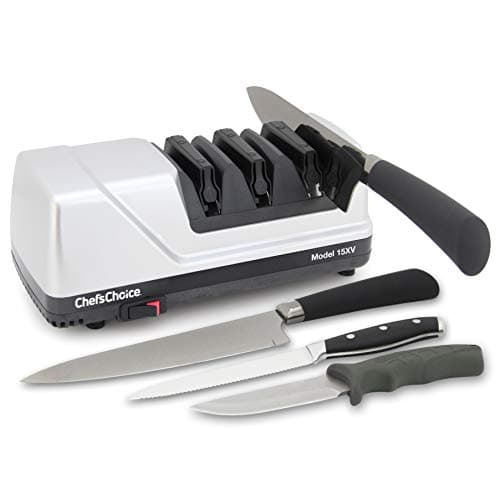
| 01 | Chef'sChoice Trizor 15XV Electric SharpenerThe electric that reviewers keep naming best overall. Three stages of 100% diamond abrasives take a tired 20-degree edge and reprofile it to a keener, longer-lasting 15-degree edge - fast, repeatable and about as foolproof as sharpening gets. | Best overall electric | | $165.99·Amazon |
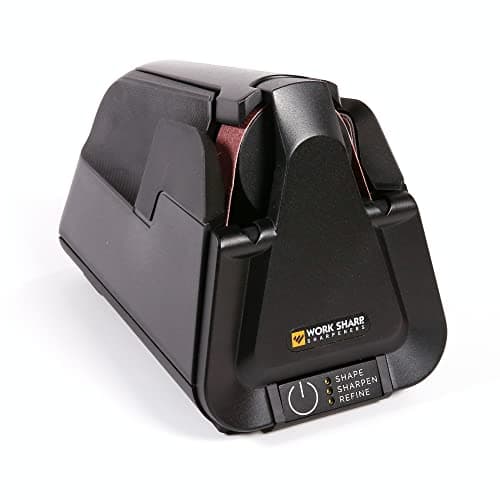
| 02 | Work Sharp Culinary E5 Electric SharpenerA friendlier take on the electric sharpener. A flexible abrasive belt follows the curve of the blade while guided slots set the angle for you, so it is quick and hard to mess up - a strong pick if you want speed without the harshness of grinding wheels. | Best belt electric | | $149.95·Amazon |
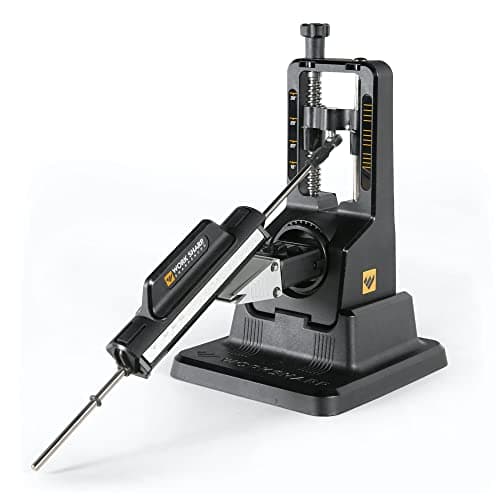
| 03 | Work Sharp Precision AdjustThe bridge to a real edge without freehand skill. A manual clamp locks the blade while you draw diamond and ceramic rods across it at a set angle, adjustable from 15 to 30 degrees - slower than an electric, but it gives you the edge a whetstone would, with the angle held for you. | Best guided system (real edges) | | $69.95·Amazon |
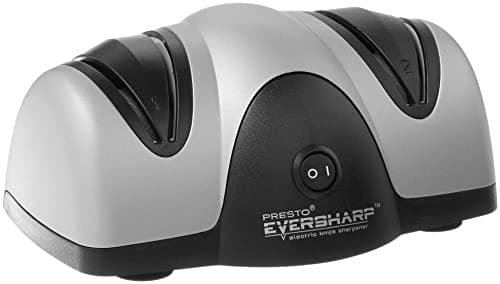
| 04 | Presto EverSharp Electric SharpenerThe budget electric that does the basic job. Two stages of sapphirite wheels put a serviceable edge on tired Western kitchen knives for very little money - not the finest result, but a big step up from a drawer full of dull blades. | Best budget electric | | $47.99·Amazon |
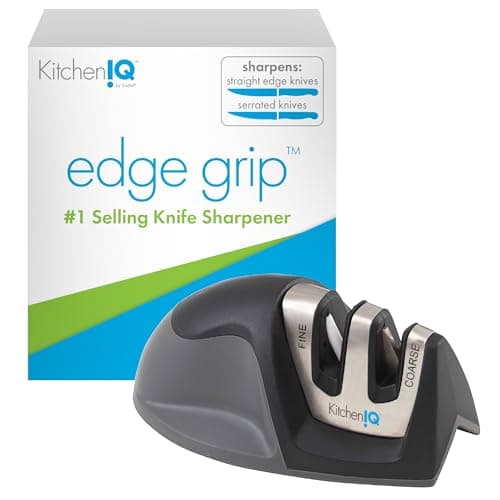
| 05 | KitchenIQ Edge Grip 2-Stage SharpenerThe cheapest way to rescue a truly dull knife. A handheld pull-through with a coarse carbide slot and a fine ceramic slot, plus a grip that sits on the counter edge - aggressive and quick, best kept for cheap Western knives you will not baby. | Best cheap pull-through | | $10.07·Amazon |
#ad · Live prices from the Amazon Product API, as of October 18, 2026. Where we have no verified live price, we show none — a gap beats a number that has rotted.
In detail
The picks, in full
Best overall electric
Chef'sChoice Trizor 15XV Electric Sharpener
3-stage electric100% diamond abrasivesConverts 20 to 15 degreesTrizor XV geometry
The electric that reviewers keep naming best overall. Three stages of 100% diamond abrasives take a tired 20-degree edge and reprofile it to a keener, longer-lasting 15-degree edge - fast, repeatable and about as foolproof as sharpening gets.
- Edge quality
- 9.5
- Ease of use
- 9
- Speed
- 9
- Versatility
- 7.5
- Value
- 7
Pros
- +Diamond stages restore a very dull edge quickly
- +Converts Western knives to a keener 15-degree edge
- +Repeatable results with almost no skill required
Cons
- −Removes more metal than a stone, shortening blade life
- −A premium price for an electric unit
Don't buy this if…
…you own thin single-bevel or delicate Japanese knives - an electric this aggressive is the wrong tool for them.
Best belt electric
Work Sharp Culinary E5 Electric Sharpener
Electric abrasive beltGuided angle slotsFlexible, follows the edgeFast honing setting
A friendlier take on the electric sharpener. A flexible abrasive belt follows the curve of the blade while guided slots set the angle for you, so it is quick and hard to mess up - a strong pick if you want speed without the harshness of grinding wheels.
- Edge quality
- 8.5
- Ease of use
- 8.5
- Speed
- 9
- Versatility
- 8
- Value
- 7.5
Pros
- +Flexible belt is gentler on the blade than fixed wheels
- +Guided angles make good results easy to repeat
- +Fast, and forgiving of a shaky hand
Cons
- −Belts wear and need occasional replacement
- −Still removes more metal than a whetstone
Don't buy this if…
…you want the absolute finest edge - a guided stone system will out-polish any belt.
Best guided system (real edges)
Work Sharp Precision Adjust
Manual fixed-angle guide15-30 degree rangeDiamond + ceramic rodsWhetstone-quality edge
The bridge to a real edge without freehand skill. A manual clamp locks the blade while you draw diamond and ceramic rods across it at a set angle, adjustable from 15 to 30 degrees - slower than an electric, but it gives you the edge a whetstone would, with the angle held for you.
- Edge quality
- 9
- Ease of use
- 7.5
- Speed
- 6.5
- Versatility
- 9.5
- Value
- 8.5
Pros
- +Locked angle produces repeatable, keen edges
- +Adjustable 15-30 degrees suits Japanese and Western knives
- +Diamond then ceramic covers sharpening and refining
Cons
- −Slower and more hands-on than an electric
- −A learning curve to clamp and stroke consistently
Don't buy this if…
…you just want to run a knife through a slot in ten seconds - a guided system asks for a few minutes of attention.
Best budget electric
Presto EverSharp Electric Sharpener
2-stage electricSapphirite wheelsFixed ~20 degree edgeLightweight and simple
The budget electric that does the basic job. Two stages of sapphirite wheels put a serviceable edge on tired Western kitchen knives for very little money - not the finest result, but a big step up from a drawer full of dull blades.
- Edge quality
- 6.5
- Ease of use
- 8.5
- Speed
- 8.5
- Versatility
- 6
- Value
- 9
Pros
- +Very inexpensive and genuinely easy to use
- +Restores a dull Western edge in under a minute
- +Compact enough to leave on the counter
Cons
- −Fixed geometry is wrong for keen Japanese edges
- −Coarser result than diamond electrics or a stone
Don't buy this if…
…you own Japanese or high-end knives - its fixed 20-degree grind will blunt their finer edge.
Best cheap pull-through
KitchenIQ Edge Grip 2-Stage Sharpener
2-stage pull-throughCoarse carbide + fine ceramicEdge-grip basePocket-money price
The cheapest way to rescue a truly dull knife. A handheld pull-through with a coarse carbide slot and a fine ceramic slot, plus a grip that sits on the counter edge - aggressive and quick, best kept for cheap Western knives you will not baby.
- Edge quality
- 5.5
- Ease of use
- 8.5
- Speed
- 8
- Versatility
- 5.5
- Value
- 9
Pros
- +Costs almost nothing and takes no skill
- +Carbide slot revives a badly dulled edge fast
- +Edge-grip base makes it steady and safe to pull
Cons
- −Carbide tears away a lot of metal each pass
- −Fixed angle is unkind to keen Japanese edges
Don't buy this if…
…you care about your knives - a pull-through is a last resort, not a maintenance habit.
Electric vs pull-through vs guided system
Three families, three trade-offs. Electric sharpenersspin abrasive wheels or belts and are the fastest, most foolproof option — but they remove the most metal, so a knife lives a shorter life. Pull-through sharpeners are handheld slots you drag the blade through: the cheapest and crudest, fine for rescue work on inexpensive knives. A guided system clamps the blade and holds a set angle while you stroke rods across it, producing an edge close to what a whetstonegives — the honest middle ground between easy and excellent. The rest of the sharpening hub covers stones and honing in the same plain-English terms.
The pull-through warning: don't feed a Japanese edge to a fixed slot
Most cheap pull-throughs and budget electrics are ground for a fixed ~20° Western edge. Run a keener ~15° Japanese knifethrough one and the carbide or wheel grinds that fine edge back to a blunter Western angle — you can undo hundreds of dollars of geometry in a few careless passes. If your knives are hard and keen, use an adjustable guided system set to 15°, a ceramic rod, or a stone. The Japanese vs German and angles guides explain why the numbers matter.
How much metal are you willing to lose?
Every sharpener removes steel; the question is how much and how often. Aggressive tools (carbide pull-throughs, coarse electrics) fix a very dull knife fast but eat the blade, while gentler ones (belts, guided rods, stones) take longer and last the knife longer. If that trade is the thing you are actually weighing, our guide to whether electric sharpeners ruin knives works through it mechanism by mechanism. Whichever you pick, a honing steel between sharpenings stretches the gap so you reach for the sharpener less. We score each tool against a published rubric, not a test bench — see how we review.
How we picked
We did not lab-test these knives
Everyone in this category says they tested twenty knives in a professional kitchen. We have not hands-on tested any of these, and we say so. What we did instead: compiled the published specifications — steel type and hardness (HRC), edge angle, blade geometry, weight and build — applied established sharpening standards, ran the value math (spec quality ÷ live price), and scored each product against a published rubric. The scores are judgments from documented research — not measurements we took, because we do not have a test lab and we will not pretend we do. Where a number came from someone else's work, we name them in Sources.
Questions
Frequently asked
Are electric knife sharpeners bad for knives?+
Not inherently, but they remove more metal than a stone, so a knife wears out sooner. A good diamond electric like the Chef'sChoice gives an excellent edge; the risk is using an aggressive, fixed-angle unit on a knife whose geometry it does not match.
What sharpener is best for Japanese knives?+
An adjustable guided system set to about 15°, a
ceramic rod, or a proper
whetstone. Avoid fixed ~20° pull-throughs and basic electrics — they blunt a keen Japanese edge rather than keeping it.
Do I still need a honing steel if I have a sharpener?+
Yes. They do different jobs: a sharpener grinds a new edge occasionally, while a
honing steel realigns the edge between sharpenings. Honing regularly means you can sharpen far less often.
How often should I use a knife sharpener?+
For a home cook, every few months is typical — you sharpen when honing no longer restores the bite. Sharpening more than you need to just wears the blade down faster.
Is a guided system better than a whetstone?+
A whetstone gives the best edge in skilled hands, but it takes practice. A guided system holds the angle for you, so it reaches most of that quality with far less skill — the best bridge for a beginner who wants a real edge.
Receipts
Sources
We do not run a testing lab, and we do not pretend to. Where a spec or a measured number came from someone else's work — a manufacturer's page, a published standard — we name them and link them. Where we could not verify something, we say so on the page rather than quietly leaving it out. Read our full method.