A decent chef's knife has enough steel in it to last thirty to fifty years of home use, and the thing most likely to end it is not the blade. If you want the knife most likely to still be sharpenable in forty years, buy the Zwilling Pro 8" — its sloped bolster is the one structural feature on a forged knife that keeps the entire edge reachable on a stone for the life of the blade. If you already own a knife you like, the honing rod further down this page will extend its life more than any replacement would.
The arithmetic is worth doing because it reframes the question. Sharpening a chef's knife on a whetstone removes a very small amount of steel each time — the kind of amount you cannot see. Do it three or four times a year, which is realistic for home cooking, and a blade with roughly two inches of height above the edge has more sharpening in it than you have years. Honing removes essentially none at all. On the numbers, nobody who uses a stone wears out a good knife.
What actually ends a chef knife, in order
1. The handle, not the blade.A riveted wooden or PakkaWood handle that has been soaked, dishwashered or left wet swells, shrinks and eventually loosens around the rivets or opens a gap at the bolster. Once water gets into that seam, the tang corrodes from the inside. This is the single most common way a perfectly good blade becomes unusable, and it is entirely about washing and drying. Molded one-piece handles — Victorinox Fibrox, Mercer Santoprene, Global's welded steel — effectively do not have this failure mode.
2. The bolster, on a full-bolster knife. A full bolster is a steel collar that runs down past the heel. Because a flat stone cannot reach behind it, the last half-inch of edge sharpens more slowly than the rest, and over decades a visible step develops. Eventually the heel stops cutting. This is a slow, structural, built-in limit, and it is why a half or sloped bolster is the genuinely longevity-relevant feature on a forged knife — a point our Classic Ikon review goes into in detail.
3. A chip or a broken tip. Sudden rather than gradual. Hard steel chips on bone, frozen food and the edge of a plate; a tip snaps when a knife is used as a pry bar or dropped point-first. Small chips grind out at the cost of some steel; a broken tip needs reprofiling. This is the failure mode that actually takes knives out of service early, and it is almost entirely about what the edge touches.
4. Metal loss from aggressive sharpening. Last, because it is the slowest. A whetstone removes very little; a coarse electric sharpener removes a great deal more per session, and a carbide pull-through scrapes metal off in visible curls. Use a coarse electric stage a few times a year for twenty years and the blade will be measurably narrower and the profile changed. Our electric sharpener guide covers that trade honestly.
So how long, realistically?
Three different answers for three different objects, and the gap between them is about construction and care rather than about brand prestige:
- A forged, full-tang knife, hand washed and stone-sharpened: decades. Wusthof and Zwilling both back their forged lines with limited lifetime warranties, and it is normal to inherit one. A knife like this is a buy-once object.
- A stamped budget knife, hand washed and honed: many years, and the limit is usually the handle or boredom rather than the steel. These are cheap enough that most people replace rather than maintain, which is a choice and not a necessity.
- Any knife that lives in a dishwasher and a cutlery drawer: a handful of years. Not because the steel gives up, but because the handle loosens, the edge is chipped by metal-on-metal contact, and nothing ever gets sharpened properly. See our dishwasher guide for the mechanisms.
The honest conclusion is that longevity is almost entirely a care question and only slightly a purchase question — which is good news, because the care costs about ten seconds a day and one rod.
How the picks below are scored. These four products do different jobs and are not competing with each other, so they are scored on one rubric built for this question — lifespan contribution, sharpenability for life, serviceability, build and value — and ranked by the resulting average, with the house tiebreak (at an equal average, the cheaper product ranks first). Published specifications are unchanged from the pages that established them.
The short answer
Quick picks
| # | Knife | Best for | Score | Price |
|---|
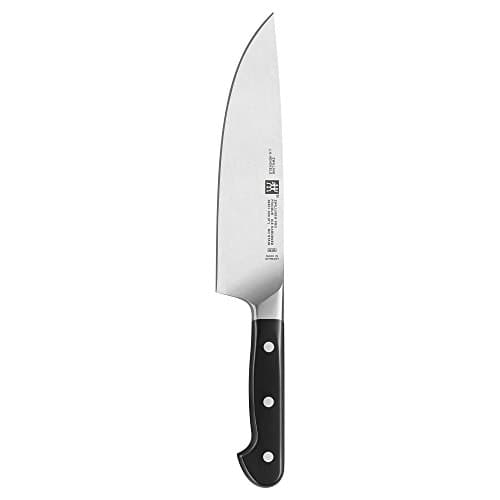
| 01 | Zwilling Pro 8"The knife most likely to still be a good knife in forty years. The curved sloped bolster keeps the entire edge on the stone for the life of the blade, which is the one structural limit a full-bolster forged knife cannot escape - and FRIODUR ice-hardening is done in Zwilling's own factory rather than outsourced. Forged, full tang, backed by a limited lifetime warranty. | Best buy-once knife | | $149.99·Amazon |
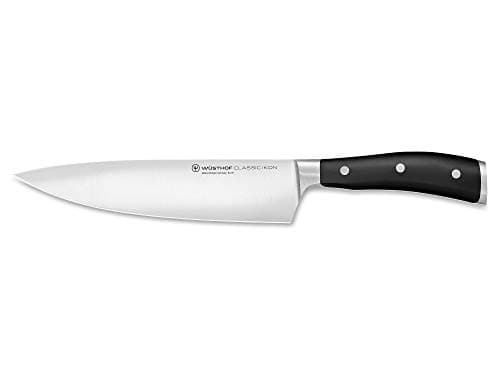
| 02 | Wusthof Classic Ikon 8"The Solingen version of the same argument, and it ties the Zwilling on our rubric. The same forged blade at 58 HRC and the same ~14-degree PEtec edge as the Classic, with a half bolster that stops short of the heel - so the whole edge reaches the stone for the life of the knife. It ranks second only on the house tiebreak, because it costs more. | Best Solingen option | | $153.45·Amazon |
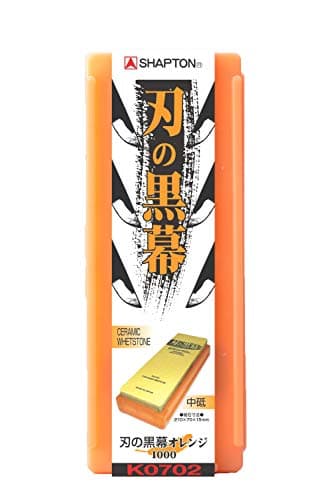
| 03 | Shapton Kuromaku 1000 (Orange)The cheapest way to add decades to a knife you already own. A stone removes a tiny fraction of the steel an electric sharpener does, which is the whole reason stone-sharpened knives outlive machine-sharpened ones. Hard splash-and-go ceramic made in Japan, and a hard binder is what holds flat against repeated use. | Best tool for extending blade life | | $38.18·Amazon |
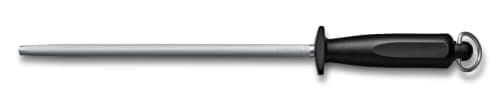
| 04 | Victorinox 10 in Kitchen Honing Steel (7.8303)The cheapest thing on this page and the one that extends a Western knife's life most per dollar, because honing removes essentially no metal at all. Victorinox's 25 cm round kitchen steel - the plain black-handled butcher's rod, item 7.8303 - trues a 56 HRC edge in six passes, and used before each session it halves how often the knife needs a stone. | Best value life extender | | $24.95·Amazon |
#ad · Live prices from the Amazon Product API, as of October 8, 2026. Where we have no verified live price, we show none — a gap beats a number that has rotted.
In detail
The picks, in full
Best buy-once knife
Zwilling Pro 8"
Forged, company-owned German factoryFRIODUR ice-hardenedCurved sloped bolsterFull tang
The knife most likely to still be a good knife in forty years. The curved sloped bolster keeps the entire edge on the stone for the life of the blade, which is the one structural limit a full-bolster forged knife cannot escape - and FRIODUR ice-hardening is done in Zwilling's own factory rather than outsourced. Forged, full tang, backed by a limited lifetime warranty.
- Lifespan contribution
- 9.5
- Sharpenability for life
- 10
- Serviceability
- 9
- Build
- 9
- Value
- 7
Pros
- +Sloped bolster means the whole edge stays sharpenable forever - the single most longevity-relevant feature on a forged knife
- +Forged full tang with no glued or pinned joint to fail
- +Ice-hardening performed in-house, and backed by Zwilling's service network and limited lifetime warranty
- +Soft enough at German hardness to roll rather than chip, which is the failure mode you can fix
Cons
- −Slightly less keen stated grind than the Wusthof Classic
- −Heavier than most cooks expect from photographs
- −Priced against Wusthof rather than against its own specification
- −A riveted handle still needs hand washing and drying, which is the first failure mode on this page
Don't buy this if…
…you will never touch a whetstone - the one clear advantage here is wasted, and the Wusthof Classic is keener out of the box.
Best Solingen option
Wusthof Classic Ikon 8"
Forged in Solingen, 58 HRCHalf bolster, heel exposed~14 deg/side PEtec edge9.1 oz, 3 mm spine, 1.75 in tall
The Solingen version of the same argument, and it ties the Zwilling on our rubric. The same forged blade at 58 HRC and the same ~14-degree PEtec edge as the Classic, with a half bolster that stops short of the heel - so the whole edge reaches the stone for the life of the knife. It ranks second only on the house tiebreak, because it costs more.
- Lifespan contribution
- 9.5
- Sharpenability for life
- 9.5
- Serviceability
- 9.5
- Build
- 9
- Value
- 7
Pros
- +Half bolster leaves the heel exposed, so the full edge stays sharpenable for decades
- +Same forged Solingen steel, published hardness and PEtec grind as the Classic
- +Contoured double-bolster POM handle - a sealed polymer rather than wood, so no swelling
- +Triple-riveted, hand-finished in Solingen, limited lifetime warranty
Cons
- −Lists above the Classic for what is, at the edge, the same blade
- −Wusthof's cheaper Classic Half Bolster offers the same exposed heel for less
- −Shallower blade than the Classic (1.75 in vs 1.9 in)
- −The heel access is worth nothing if you never use a stone, which is the whole case for it
Don't buy this if…
…you do not sharpen your own knives - you are paying a premium for a benefit you will never collect.
Best tool for extending blade life
Shapton Kuromaku 1000 (Orange)
1000 grit ceramicSplash-and-go, no soakHard binder, holds flatMade in Japan
The cheapest way to add decades to a knife you already own. A stone removes a tiny fraction of the steel an electric sharpener does, which is the whole reason stone-sharpened knives outlive machine-sharpened ones. Hard splash-and-go ceramic made in Japan, and a hard binder is what holds flat against repeated use.
- Lifespan contribution
- 9
- Sharpenability for life
- 9.5
- Serviceability
- 7.5
- Build
- 9
- Value
- 8
Pros
- +Removes a tiny fraction of the metal an electric sharpener takes per session - the single biggest lever on blade life
- +Splash-and-go means no soaking window, so it actually gets used
- +A hard binder holds flat far longer, so the stone itself lasts
- +Works on every knife you own, at whatever angle you set
Cons
- −Assumes real freehand skill - it holds no angle for you at all
- −A single 1000 grit is a working stone, not a polishing setup
- −Needs flattening eventually, which is another purchase
- −It extends blade life only if you actually learn to use it
Don't buy this if…
…you have never sharpened freehand - a guided kit will give you a better result on your first attempt, and our beginners roundup covers those.
Best value life extender
Victorinox 10 in Kitchen Honing Steel (7.8303)
Medium-fine cut steel rod10 in / 25 cmPlastic handle, guard, hang ringRealigns, does not sharpen
The cheapest thing on this page and the one that extends a Western knife's life most per dollar, because honing removes essentially no metal at all. Victorinox's 25 cm round kitchen steel - the plain black-handled butcher's rod, item 7.8303 - trues a 56 HRC edge in six passes, and used before each session it halves how often the knife needs a stone.
- Lifespan contribution
- 9
- Sharpenability for life
- 7.5
- Serviceability
- 8
- Build
- 8
- Value
- 9.5
Pros
- +Honing removes essentially no metal, so every session on a rod is a session not spent on a stone
- +Ten inches comfortably covers an 8-inch chef's knife with room at the tip
- +A medium-fine cut is exactly the aggression a 55-58 HRC Western edge wants
- +Costs a fraction of any knife here and improves all of them
Cons
- −A steel rod barely engages hard Japanese steel, so a mixed drawer needs ceramic instead
- −Cannot sharpen anything - it only realigns, which is the most misunderstood point in this category
- −Hard plastic handle rather than a textured grip, so hold it with a dry hand
- −Plain utilitarian looks - this is a working tool, not a gift
Don't buy this if…
…any knife in your block is hard Japanese steel - a ridged steel can chip a brittle 61 HRC apex instead of straightening it, and a ceramic rod is the answer.
The five habits that decide it
In rough order of how much difference they make, and none of them costs much.
Hand wash and dry immediately. This is the whole ballgame for handles and seams. Never leave a knife soaking, never put a riveted or wooden handle in a dishwasher, and dry the blade rather than letting it air-dry. See the dishwasher guide for the four mechanisms involved.
Hone before each session, sharpen a few times a year. Honing realigns and removes essentially nothing; sharpening removes metal. Getting the ratio right is what keeps a knife sharp and long-lived at the same time. Start with sharpening versus honing and how often to sharpen.
Use a soft board. Board hardness is the largest single determinant of how fast an edge dulls, which makes it the largest determinant of how often you sharpen, which makes it a longevity question. Wood and soft composite good; glass, stone, ceramic and granite terrible. Our board roundup ranks on exactly that.
Store it where nothing touches the edge. A drawer of loose cutlery does the same metal-on-metal damage as a dishwasher basket. A block, a magnetic strip, an in-drawer organizer or an edge guard all solve it — our storage roundup covers the options.
Keep it off bone, frozen food and plates. This is where chips come from, and chips are the one failure mode that genuinely shortens a blade. If you cut bone-in meat, buy a cleaver for it — our knives for cutting meat page covers which blade for which job.
Which construction lasts, and which features are marketing
| Feature | Effect on lifespan |
|---|
| Full tang, forged | Real. No glued or pinned joint to fail, and plenty of steel |
| Half or sloped bolster | Real. The whole edge stays reachable on a stone for the life of the knife |
| Full bolster | A genuine long-term limit: a step eventually develops at the heel |
| Molded one-piece handle | Real. Removes the commonest failure mode entirely |
| Riveted wooden handle | Negative unless hand washed and dried, every time |
| High hardness (60+ HRC) | Mixed. Longer between sharpenings; chips rather than rolls |
| Damascus cladding | Cosmetic. The core steel does the work |
| Lifetime warranty | Useful, and read the exclusions - most exclude misuse and normal wear |
The pattern worth noticing is that two of the three features that genuinely matter are about sharpenability over decades rather than about toughness. A knife does not usually break; it becomes unsharpenable at the heel, or its handle fails. That is why the two knives at the top of this page are both chosen for their bolster geometry rather than for their steel. See full tang versus partial tang and stamped versus forged for the construction detail.
When to repair, and when to replace
Repair or service it if the edge is chipped, the tip is broken, the profile has developed a recurve, or the heel has a step. All four are jobs for a coarse stone with patience or a professional sharpener, and all four leave a perfectly good knife afterwards. Our guide to choosing a sharpener covers what to ask.
Replace it if the handle is loose or the tang is corroded, because that is a structural failure that cannot be fixed at home and is rarely worth fixing elsewhere. Replace it too if the knife was never right for your hand — a knife you avoid using has already reached the end of its useful life, whatever condition the steel is in. Our how to choose a chef knife guide is the place to start over.
And if a knife has simply been sharpened for thirty years and is now visibly narrower than it was, that is not a fault. That is a knife that did its job, and it is a far rarer outcome than the internet implies.
How we picked
We did not lab-test these knives
Everyone in this category says they tested twenty knives in a professional kitchen. We have not hands-on tested any of these, and we say so. What we did instead: compiled the published specifications — steel type and hardness (HRC), edge angle, blade geometry, weight and build — applied established sharpening standards, ran the value math (spec quality ÷ live price), and scored each product against a published rubric. The scores are judgments from documented research — not measurements we took, because we do not have a test lab and we will not pretend we do. Where a number came from someone else's work, we name them in Sources.
Questions
Frequently asked
How often do you need to replace a chef knife?+
A forged, full-tang knife that is hand washed and sharpened on a stone should not need replacing in your lifetime, and Wusthof and Zwilling both back their forged lines with limited lifetime warranties. A knife that lives in a dishwasher and a cutlery drawer will realistically last a handful of years — and it is the handle and the chipped edge that end it, not worn-out steel.
Does sharpening wear out a knife?+
On a whetstone, not within any realistic timeframe — a stone removes a very small amount of steel per session, and a few sessions a year on a blade with two inches of height is not a meaningful withdrawal. Coarse electric sharpeners and carbide pull-throughs remove substantially more, which is the honest case against them. See
do electric sharpeners ruin knives.
What usually kills a chef knife first?+
The handle. A riveted wooden or PakkaWood handle that has been soaked or dishwashered swells, loosens around the rivets and lets water into the tang seam, and that is not repairable at home. Second is a chipped edge or broken tip from bone, frozen food or a plate. The blade running out of steel is a distant fourth.
Do expensive knives last longer than cheap ones?+
Construction lasts longer, and construction correlates with price without being the same thing. A forged full-tang knife with a sloped bolster has more decades in it than a stamped knife with a riveted handle. But a cheap molded-handle Victorinox that is hand washed will outlive a premium forged knife that lives in a dishwasher, every time. Care beats price.
Can a chipped knife be saved?+
Usually yes. A small chip grinds out on a coarse stone at the cost of a little steel; a larger one or a broken tip needs reprofiling and is a job for a professional sharpener. A loose handle or a corroded tang is the case where replacement is the honest answer.
Is a lifetime warranty on a knife worth anything?+
It is worth reading. Most limited lifetime warranties cover manufacturing defects and explicitly exclude misuse and normal wear — which means the dishwasher damage and the chipped edge, the two things most likely to happen, are usually not covered. The more useful thing a long-established brand gives you is a service and resharpening network and available spares.
Receipts
Sources
We do not run a testing lab, and we do not pretend to. Where a spec or a measured number came from someone else's work — a manufacturer's page, a published standard — we name them and link them. Where we could not verify something, we say so on the page rather than quietly leaving it out. Read our full method.