If you have spent money on a good knife and you cut on glass, you have wasted it. The surface a blade lands on hundreds of times per meal is the largest single influence on how long an edge survives, and it is the part of the setup people think about least. Board material is not a lifestyle choice — it is a hardness comparison, and hardness is the whole story.
The principle is simple. A cutting surface softer than knife steel lets the edge sink in fractionally and come out unharmed. A surface harder than knife steel abrades the apex on every stroke, rounding it in a way no honing rod can undo. Wood and soft plastics are softer than steel. Glass, stone, ceramic and — critically — bamboo are not, or not by enough.
How we ranked these
We do not have a test lab and claim no hands-on testing — our method is published. Boards are scored on published material and construction, the hardness that material implies relative to knife steel, size and usable working area, hygiene and maintenance requirements, and value against the live price. The metric labels below are the same five we use for knives, applied to what a board does: how kind it is to an edge, how well it holds food still, how it handles, how it is built, and what it costs.
End grain, edge grain and face grain
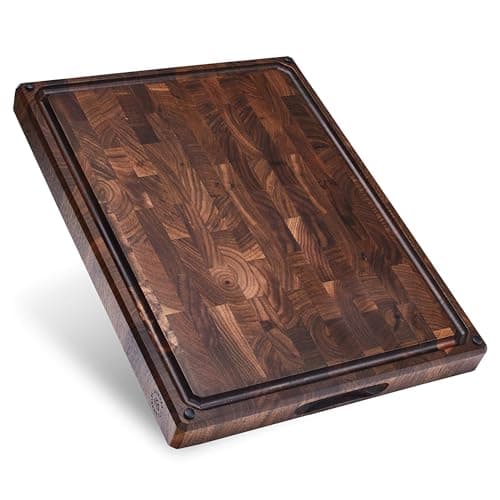
Wooden boards come in three constructions and they are not equivalent. End grain presents the cut ends of the wood fibers upward — the blade enters between the fibers like bristles in a brush, and the wood partially closes behind it. This is the kindest surface to an edge and the most expensive to make, because it is many small blocks glued together. Edge grain presents the long sides of the fibers; the blade cuts across them rather than between them. Still good, cheaper, more prone to showing knife marks. Face grain is a flat plank — attractive, poor as a cutting surface, better as a serving board.
Why bamboo is the trap
Bamboo boards are everywhere, cheap and marketed as the sustainable choice. Bamboo is a grass, not a timber, and it is meaningfully harder than the hardwoods used for good boards — it also contains silica, which is abrasive. Boards are made by gluing strips together, so the blade also periodically meets a glue line harder than the surrounding material. The result is a surface that dulls knives noticeably faster than maple or walnut while feeling perfectly pleasant to use, which is what makes it a trap rather than an obvious mistake.
Glass, granite, marble and ceramic are worse and more obviously so — those are all dramatically harder than knife steel and will visibly damage an edge within a handful of cuts. If you own a decorative stone or glass board, it is a serving platter.
The short answer
Quick picks
| # | Knife | Best for | Score | Price |
|---|
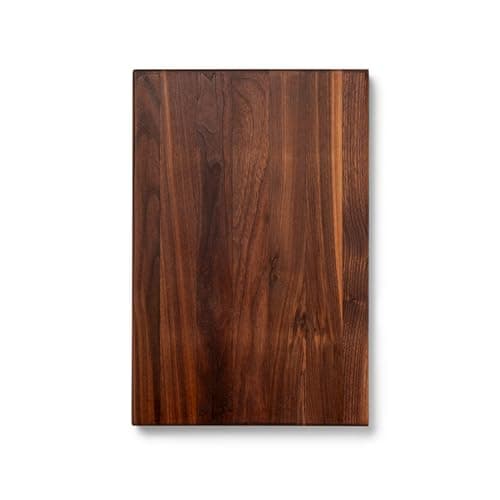
| 01 | Sonder Los Angeles Alfred End-Grain Walnut BoardEnd-grain walnut is the best cutting surface a home kitchen can have, and this is the accessible version of it. The blade enters between the fibers rather than across them, so edge wear is about as low as a hard surface gets - and the board itself closes up rather than scarring. | Best overall for edge preservation | | $179.99·Amazon |
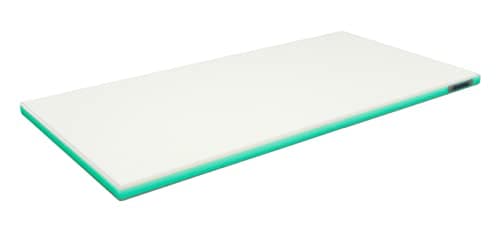
| 02 | Hasegawa Karugaru Soft Cutting Board (500 x 250mm)The board Japanese professional kitchens standardized on, and the choice if edge preservation is the only thing you care about. A soft polyethylene cutting surface is gentler on a keen Japanese edge than any hardwood, and it can be sanded flat when it eventually scars. | Best for hard Japanese knives | | $116.23·Amazon |
| 03 | John Boos R-Board Walnut 18 x 12The edge-grain compromise from the best-known name in American butcher block. Not as kind to an edge as end grain and not as cheap as plastic, but a genuinely durable hardwood board at a sane price, from a maker whose boards routinely last decades. | Best edge-grain hardwood | | $193.95·Amazon |
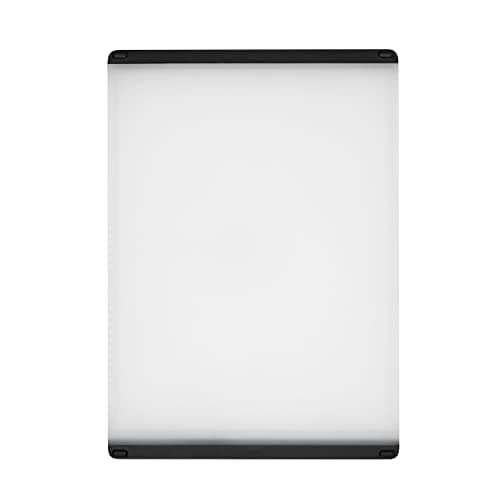
| 04 | OXO Good Grips Plastic Utility Cutting BoardThe board every kitchen should own regardless of what else is on the counter, because raw meat belongs on something you can put through a dishwasher. Soft polypropylene is kind to edges, the non-slip edges keep it planted, and it costs almost nothing. | Best value and raw-meat board | | $20.61·Amazon |
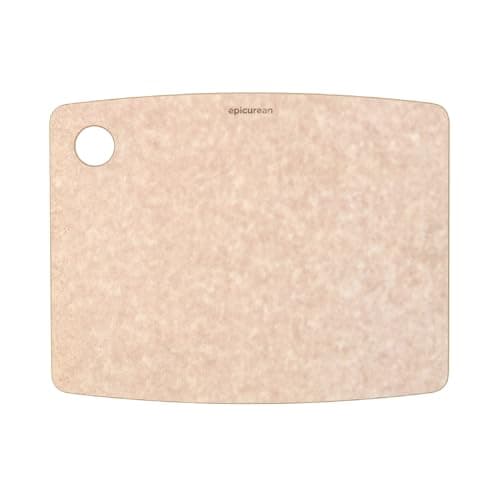
| 05 | Epicurean Kitchen Series Cutting Board 14.5 x 11.25The low-maintenance option: a compressed wood-fiber composite that is dishwasher safe, needs no oiling, and will not warp or crack. The trade is real - it is harder than hardwood and therefore less kind to an edge - but for people who will not maintain wood it is a sensible compromise. | Best low-maintenance board | | $33.00·Amazon |
#ad · Live prices from the Amazon Product API, as of October 18, 2026. Where we have no verified live price, we show none — a gap beats a number that has rotted.
In detail
The picks, in full
Best overall for edge preservation
Sonder Los Angeles Alfred End-Grain Walnut Board
End-grain walnut17 x 13 x 1.5 inReversible with juice grooveRequires oiling
End-grain walnut is the best cutting surface a home kitchen can have, and this is the accessible version of it. The blade enters between the fibers rather than across them, so edge wear is about as low as a hard surface gets - and the board itself closes up rather than scarring.
- Edge kindness
- 10
- Grip & stability
- 9
- Handling
- 6
- Build
- 9
- Value
- 7
Pros
- +End-grain construction is the kindest common surface to a knife edge
- +Self-healing - knife marks close rather than accumulating
- +Heavy enough to stay put without a cloth underneath
- +Walnut is softer than maple, so gentler again on steel
Cons
- −Needs regular mineral-oil treatment or it will dry and split
- −Heavy to lift and awkward to store
- −Never dishwasher safe, and must never be soaked
- −Costs several times what a plastic board does
Don't buy this if…
…you will not oil it every month or two - a neglected end-grain board cracks along its glue lines and that is terminal.
Best for hard Japanese knives
Hasegawa Karugaru Soft Cutting Board (500 x 250mm)
Soft polyethylene cutting surface500 x 250 mmMade in JapanResurfaceable
The board Japanese professional kitchens standardized on, and the choice if edge preservation is the only thing you care about. A soft polyethylene cutting surface is gentler on a keen Japanese edge than any hardwood, and it can be sanded flat when it eventually scars.
- Edge kindness
- 10
- Grip & stability
- 8
- Handling
- 9
- Build
- 8
- Value
- 6
Pros
- +Softer than wood, so the lowest edge wear of anything here
- +Light for its size - genuinely easy to move and wash
- +Can be sanded back flat when the surface scars
- +Non-porous surface, straightforward to sanitize
Cons
- −Expensive for what looks like a plastic board
- −Softness means it scars visibly faster than hardwood
- −Not dishwasher safe at high temperatures - heat can warp it
- −Plain utilitarian appearance
Don't buy this if…
…you want a board you can leave out on a counter as a nice object - this is a professional tool and looks like one.
Best edge-grain hardwood
John Boos R-Board Walnut 18 x 12
Edge-grain walnut18 x 12 inReversibleRequires oiling
The edge-grain compromise from the best-known name in American butcher block. Not as kind to an edge as end grain and not as cheap as plastic, but a genuinely durable hardwood board at a sane price, from a maker whose boards routinely last decades.
- Edge kindness
- 8
- Grip & stability
- 9
- Handling
- 6
- Build
- 9
- Value
- 7
Pros
- +Walnut is softer than maple, so kinder to steel than most hardwood boards
- +Edge grain is far cheaper than end grain and still good to knives
- +Substantial enough not to slide around
- +John Boos boards are widely reported to last for decades with care
Cons
- −Edge grain shows knife marks that do not close the way end grain does
- −Needs oiling and must never be soaked or put in a dishwasher
- −Heavy and awkward to wash in a small sink
Don't buy this if…
…you want the very best surface for a keen Japanese edge - end grain or soft polyethylene both beat it.
Best value and raw-meat board
OXO Good Grips Plastic Utility Cutting Board
PolypropyleneNon-slip edgesDishwasher safeLight and thin
The board every kitchen should own regardless of what else is on the counter, because raw meat belongs on something you can put through a dishwasher. Soft polypropylene is kind to edges, the non-slip edges keep it planted, and it costs almost nothing.
- Edge kindness
- 9
- Grip & stability
- 8
- Handling
- 9
- Build
- 6
- Value
- 10
Pros
- +Soft plastic is genuinely kind to a knife edge
- +Dishwasher safe - the right answer for raw protein
- +Non-slip edges keep it stable without a cloth
- +Cheap enough to own two and color-code them
Cons
- −Scars quickly and those grooves eventually harbor residue
- −Light enough to move if you are working hard
- −Consumable - it is a two-to-three-year board, not a lifetime one
- −Thin, so it offers no cushioning under heavy chopping
Don't buy this if…
…you want one board for everything - this is the hygiene board, and a wooden one alongside it is a better setup.
Best low-maintenance board
Epicurean Kitchen Series Cutting Board 14.5 x 11.25
Wood-fiber composite14.5 x 11.25 inDishwasher safeMade in the USA
The low-maintenance option: a compressed wood-fiber composite that is dishwasher safe, needs no oiling, and will not warp or crack. The trade is real - it is harder than hardwood and therefore less kind to an edge - but for people who will not maintain wood it is a sensible compromise.
- Edge kindness
- 6
- Grip & stability
- 6
- Handling
- 9
- Build
- 8
- Value
- 9
Pros
- +Dishwasher safe with no oiling, warping or cracking
- +Non-porous and easy to sanitize
- +Thin and light, easy to store and handle
- +Far kinder to knives than glass, stone or ceramic
Cons
- −Harder than hardwood - it dulls edges faster than wood or plastic
- −Thin and light enough to slide without a cloth underneath
- −Dark surface makes it hard to see what you are doing with dark food
Don't buy this if…
…edge preservation is your priority - this board trades some of it for convenience, and that trade is the whole product.
What we would skip
Bamboo. Harder than the hardwoods used for good boards, silica-bearing and therefore abrasive, and glued in strips so the blade periodically meets a hard glue line. It is cheap and it looks like wood, and it will dull your knives faster than the plastic board it costs the same as.
Glass, granite, marble and ceramic. All dramatically harder than knife steel. These damage an edge within a handful of cuts and there is no version of this that is acceptable for a knife you care about. They are serving platters.
Boards with feet or handles that lift them. A board that rocks is a safety problem, and most of these designs prioritize photography over stability.
Very thin flexible mats as a primary board. They are genuinely useful for transferring chopped food and hopeless as a cutting surface — no stability, no cushioning, and they slide.
What size, actually
Bigger than you think. The most common board complaint is running out of room, and food pushed to the edge is food that ends up on the counter. Around 18 x 12 inches is a sensible minimum for real cooking with an 8-inch knife; smaller boards force you to work in the middle and crowd the guiding hand. Depth matters as much as width — a board narrower than about 12 inches leaves nowhere to put what you have already cut.
The two-board setup
The best arrangement in most kitchens is not one board but two: a wooden or soft-poly board for vegetables and general prep, and a cheap dishwasher-safe plastic one for raw meat and fish. That solves the hygiene question without compromising the surface you use most, and it costs less than a single premium board.
Looking after a wooden board
Wash by hand with soap and water, never soak, never put it in a dishwasher, and stand it on edge to dry rather than laying it flat — a board dried flat traps moisture underneath and warps. Oil it with food-grade mineral oil whenever it starts to look dry, which in practice is monthly at first and less often as it saturates. Never use vegetable or olive oil; they go rancid.
Wood is not the hygiene risk it is often assumed to be — the fibers draw bacteria below the surface where they do not survive well — but a board with deep grooves is harder to clean whatever it is made of. A wooden board can be sanded flat again; a plastic one that has scarred badly should be replaced.
What the board buys you
Moving from glass or bamboo to end-grain wood or soft polyethylene can multiply the interval between sharpenings — the difference is that large. It is the highest-return change available to anyone who has already bought a decent knife, and it costs less than upgrading the knife would. The mechanism is in why knives go dull, and the maintenance side is in knife care and maintenance.
How we picked
We did not lab-test these knives
Everyone in this category says they tested twenty knives in a professional kitchen. We have not hands-on tested any of these, and we say so. What we did instead: compiled the published specifications — steel type and hardness (HRC), edge angle, blade geometry, weight and build — applied established sharpening standards, ran the value math (spec quality ÷ live price), and scored each product against a published rubric. The scores are judgments from documented research — not measurements we took, because we do not have a test lab and we will not pretend we do. Where a number came from someone else's work, we name them in Sources.
Questions
Frequently asked
What is the best cutting board material for knives?+
End-grain hardwood and soft polyethylene are the two kindest common surfaces. Both are softer than knife steel, so the edge sinks in fractionally rather than being abraded. Edge-grain wood and soft plastic are close behind.
Are bamboo cutting boards bad for knives?+
Yes, comparatively. Bamboo is harder than the hardwoods used in good boards and contains abrasive silica, and strip-glued construction adds hard glue lines. It dulls knives noticeably faster than maple or walnut.
Is wood or plastic better for cutting boards?+
Both are good for edges. Wood is nicer to use and repairable but needs oiling and hand-washing; plastic is dishwasher safe and cheap but scars and is a consumable. The best setup is one of each — wood for prep, plastic for raw meat.
Do glass cutting boards really ruin knives?+
Yes, quickly. Glass is far harder than knife steel, so every stroke abrades the apex. The same applies to granite, marble and ceramic. Use them as serving platters.
How often should I oil a wooden cutting board?+
Whenever the surface starts to look dry or pale — monthly when the board is new, less often as it saturates. Use food-grade mineral oil, never vegetable or olive oil, which go rancid.
Receipts
Sources
We do not run a testing lab, and we do not pretend to. Where a spec or a measured number came from someone else's work — a manufacturer's page, a published standard — we name them and link them. Where we could not verify something, we say so on the page rather than quietly leaving it out. Read our full method.