Skip to content
The Edge Bench

Roundups & reviews · Chef Knives

The best kitchen knives, ranked by the job they do

Not one knife — the short lineup that covers a real kitchen. Ranked on steel and edge geometry, handling and the value math, with the block set we would not buy.

By Stephen V.Updated How we review
#ad

We earn a commission when you buy through our Amazon links, at no extra cost to you. It never changes a verdict, and we say so when the cheaper knife is the better buy. How this works.

"Best kitchen knives" is a plural question, and almost every answer to it is a block set — fifteen pieces, a lump of wood, and eleven blades you will never take out. The honest answer is shorter and cheaper: four knives cover essentially everything a home kitchen does, a fifth keeps them cutting, and everything beyond that is either a specialist tool for a job you actually do or a filler piece sold to make a box look generous.

The four are a chef's knife (roughly 90% of the board work), a paring knife (the in-hand jobs a board knife cannot do), a serrated bread knife (anything with a crust or a skin that a straight edge slides off), and — optionally but usefully — a santoku as the lighter vegetable-first second blade. If you want that argument in full, read what knives a kitchen actually needs, and are knife sets worth it for the economics of buying them boxed instead of one at a time.

How we ranked these

We have not hands-on tested these knives and we do not run a test lab — our published methodsays so in those words. What we do is compile the manufacturer's stated specifications (steel alloy, Rockwell hardness, ground edge angle, construction, weight), apply established sharpening and food-safety standards, and run the value math against the live price. That last step is why this page reads differently from most: judged on specification-per-dollar rather than brand feel, the winning lineup is not the expensive one.

Edge and steel — the alloy and its published hardness, because that decides how long an edge lasts and whether it rolls or chips when it fails. Sharpness — the ground angle and how keen the geometry is out of the box. Handling — weight, balance and how secure the grip stays with wet hands, which is a safety property before it is a comfort one. Build — stamped or forged, tang, bolster, finish. And value, computed against the live price.

Why one lineup, not one brand

There is no rule that your knives must match, and matching costs money for nothing. A paring knife spends its life doing low-force work in your hand, so hard steel and a forged bolster buy you almost nothing there; a bread knife is a serrated blade you will never sharpen at home, so the sensible move is to buy a competent one cheaply and replace it in a decade. The chef's knife is the only piece where spending more reliably changes your day, because it is the one you hold for twenty minutes at a stretch. Build the lineup by job and the total lands well under what a mid-tier block set costs.

One more structural point before the picks: a knife lineup is a maintenance commitment, not a purchase. Every blade below goes dull, and the cheapest way to keep four knives cutting is a honing rod used weekly plus a stone (or a sharpener) a few times a year. Skip that and the expensive lineup performs worse in six months than a modest one that gets honed. Start at how often to sharpen knives and how to use a honing steel.

The short answer

Quick picks

#KnifeBest forScorePrice
01
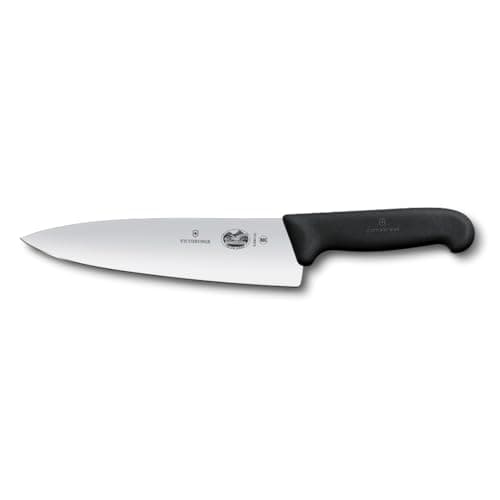
Victorinox Victorinox Fibrox Pro 8"
Victorinox Fibrox Pro 8"

The knife the whole lineup should be built around. Softer Swiss steel that honing genuinely restores, a textured handle that stays secure when wet, NSF certification, and a value score nothing here comes close to. It is the standing recommendation of nearly every serious reviewer for a reason.

Best chef's knife - the anchor of the lineup
8.2
$47.22Amazon
02
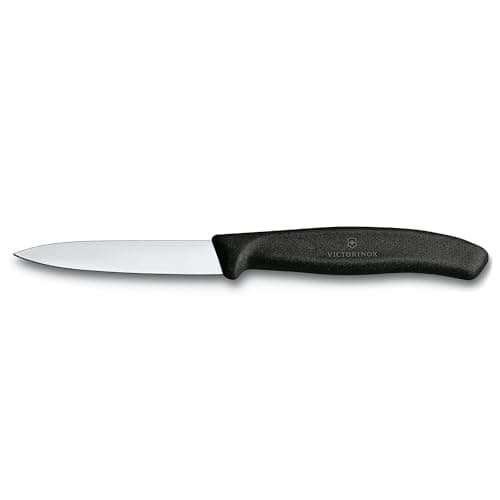
Victorinox Victorinox Swiss Classic 3.25" Paring Knife
Victorinox Swiss Classic 3.25" Paring Knife

The correct amount of money to spend on a paring knife. In-hand work is low-force by chef's-knife standards, so hardness and construction matter far less here than a comfortable molded handle and a thin, keen blade - both of which this has at a price that makes owning two sensible.

Best paring knife
7.8
$8.00Amazon
03
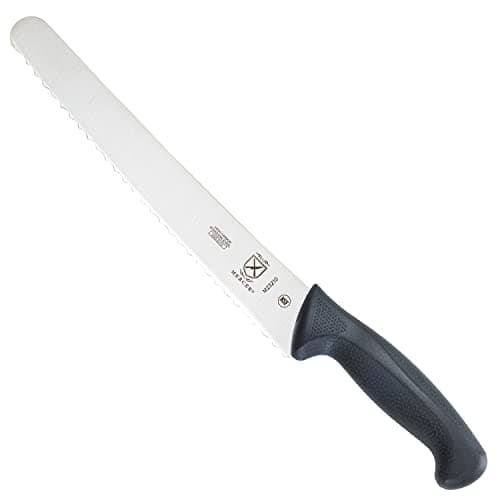
Mercer Culinary Mercer Culinary Millennia 10" Wide Wavy Edge Bread Knife
Mercer Culinary Millennia 10" Wide Wavy Edge Bread Knife

A serrated blade is the one knife in the lineup you will never sharpen at home, so buy competence and stop. Ten inches of wide wavy edge clears a sourdough boule in one pass, the Santoprene grip has a real finger guard, and it is NSF certified for commercial kitchens.

Best bread knife
7.8
$16.15Amazon
04
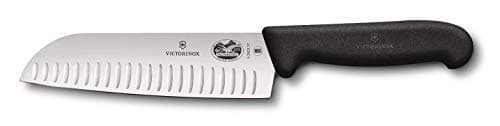
Victorinox Victorinox Fibrox Pro 7" Santoku (Granton)
Victorinox Fibrox Pro 7" Santoku (Granton)

The optional fourth knife, and the one most people are surprised to use daily. Shorter and flatter than the chef's knife, so it push-cuts vegetables faster and feels safer on a crowded board - and the Granton scallops genuinely help thin slices release instead of clinging.

Best second knife for vegetables
8.4
$52.42Amazon
05
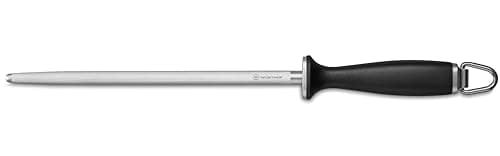
Wusthof Wusthof 10" Honing Steel
Wusthof 10" Honing Steel

The cheapest performance upgrade in this entire lineup. It does not sharpen - it straightens an edge that has rolled over from use, which is what has actually happened to your knife most of the time it feels dull. Ten seconds a week keeps softer Western steel cutting like new.

Best maintenance piece - buy this with the chef's knife
8.2
$85.00Amazon

#ad · Live prices from the Amazon Product API, as of Sep 2, 2026. Where we have no verified live price, we show none — a gap beats a number that has rotted.

In detail

The picks, in full

01
Victorinox Victorinox Fibrox Pro 8"

Best chef's knife - the anchor of the lineup

Victorinox Fibrox Pro 8"

Stamped X50CrMoV15~55-56 HRC~20 deg/side edgeLight ~7.4 oz
8.2/10

The knife the whole lineup should be built around. Softer Swiss steel that honing genuinely restores, a textured handle that stays secure when wet, NSF certification, and a value score nothing here comes close to. It is the standing recommendation of nearly every serious reviewer for a reason.

Edge & steel
7
Sharpness
8
Handling
9
Build
7
Value
10

Pros

  • Soft enough that a honing rod brings the edge back, no stone required
  • The most secure wet grip of any knife at this price
  • Light enough for long prep sessions without wrist fatigue
  • Cheap enough that a lineup built around it stays affordable

Cons

  • Loses its edge faster than hard Japanese steel - honing is not optional
  • Stamped, bolsterless build feels utilitarian rather than special
  • The wide Western edge angle is a blunter geometry than a Japanese grind

Don't buy this if…

you want a knife that feels like an heirloom - this is a tool that performs, not an object you display.

$47.22View on Amazon

Price as of Sep 2, 2026. Prices change — Amazon's at checkout is the one that counts.

#ad · we may earn a commission from this link to Victorinox Fibrox Pro 8"

02
Victorinox Victorinox Swiss Classic 3.25" Paring Knife

Best paring knife

Victorinox Swiss Classic 3.25" Paring Knife

Stamped Swiss stainless3.25 in. spear point bladeMolded polypropylene handleDishwasher-safe (hand-wash still advised)
7.8/10

The correct amount of money to spend on a paring knife. In-hand work is low-force by chef's-knife standards, so hardness and construction matter far less here than a comfortable molded handle and a thin, keen blade - both of which this has at a price that makes owning two sensible.

Edge & steel
6
Sharpness
8
Handling
9
Build
6
Value
10

Pros

  • Light and precise in the hand, which is the entire job
  • Cheap enough to own a spare rather than hunt for the one in the drawer
  • Thin stock takes a keen edge easily
  • Simple molded handle with nothing to trap food

Cons

  • Soft steel dulls quickly on citrus and tomato skin
  • No bolster or heft - it will never feel premium
  • Genuinely dangerous if used on a board like a miniature chef's knife

Don't buy this if…

you want one paring knife for life - this is closer to a consumable, and treating it as one is the point.

$8.00View on Amazon

Price as of Sep 2, 2026. Prices change — Amazon's at checkout is the one that counts.

#ad · we may earn a commission from this link to Victorinox Swiss Classic 3.25" Paring Knife

03
Mercer Culinary Mercer Culinary Millennia 10" Wide Wavy Edge Bread Knife

Best bread knife

Mercer Culinary Millennia 10" Wide Wavy Edge Bread Knife

Stamped high-carbon Japanese steel10 in. wide wavy edgeSantoprene textured grip, finger guardNSF certified
7.8/10

A serrated blade is the one knife in the lineup you will never sharpen at home, so buy competence and stop. Ten inches of wide wavy edge clears a sourdough boule in one pass, the Santoprene grip has a real finger guard, and it is NSF certified for commercial kitchens.

Edge & steel
7
Sharpness
8
Handling
8
Build
7
Value
9

Pros

  • Long enough to cross a large loaf without sawing back and forth
  • Wavy scallops bite crust instead of skidding off it
  • Grippy handle with a guard - meaningful on a sawing motion
  • Also the right knife for tomatoes, citrus and layer cakes

Cons

  • Serrations cannot be honed and are awkward to sharpen at home
  • Stamped build, no heft, no bolster
  • Ten inches is a lot of knife for a shallow drawer

Don't buy this if…

you bake rarely and slice nothing with a skin - this is the one piece of the lineup you can genuinely defer.

$16.15View on Amazon

Price as of Sep 2, 2026. Prices change — Amazon's at checkout is the one that counts.

#ad · we may earn a commission from this link to Mercer Culinary Millennia 10" Wide Wavy Edge Bread Knife

04
Victorinox Victorinox Fibrox Pro 7" Santoku (Granton)

Best second knife for vegetables

Victorinox Fibrox Pro 7" Santoku (Granton)

Stamped X50CrMoV15~55-56 HRCGranton hollow edgeFibrox non-slip handle, NSF certified
8.4/10

The optional fourth knife, and the one most people are surprised to use daily. Shorter and flatter than the chef's knife, so it push-cuts vegetables faster and feels safer on a crowded board - and the Granton scallops genuinely help thin slices release instead of clinging.

Edge & steel
7
Sharpness
9
Handling
9
Build
7
Value
10

Pros

  • Flat edge makes full board contact, so push cuts sever cleanly
  • Lighter and shorter than the 8-inch chef's knife - easier on small boards
  • Same forgiving steel, so one honing routine covers both
  • Blunt sheepsfoot tip is safer near a guiding hand

Cons

  • No point, so it cannot pierce or do fine tip work
  • Too short to break down anything large
  • A Western edge angle in a Japanese shape - not the keen grind the shape was designed for

Don't buy this if…

you already own a chef's knife you are happy with and prep small volumes - this is a genuine convenience, not a gap.

$52.42View on Amazon

Price as of Sep 2, 2026. Prices change — Amazon's at checkout is the one that counts.

#ad · we may earn a commission from this link to Victorinox Fibrox Pro 7" Santoku (Granton)

05
Wusthof Wusthof 10" Honing Steel

Best maintenance piece - buy this with the chef's knife

Wusthof 10" Honing Steel

Fine-cut carbon steel10 in, magneticRealigns, not sharpensGerman-made
8.2/10

The cheapest performance upgrade in this entire lineup. It does not sharpen - it straightens an edge that has rolled over from use, which is what has actually happened to your knife most of the time it feels dull. Ten seconds a week keeps softer Western steel cutting like new.

Edge & steel
8
Sharpness
7
Handling
8
Build
9
Value
9

Pros

  • Restores a rolled edge in seconds without removing meaningful metal
  • Long enough for an 8-inch blade in one stroke
  • Magnetic rod holds the filings it lifts
  • Turns soft steel's biggest weakness into a non-issue

Cons

  • Does nothing for a genuinely blunt edge - that needs a stone
  • Steel ridges are too aggressive for very hard Japanese blades
  • Requires a consistent angle, which takes a little practice

Don't buy this if…

your knives are hard Japanese steel at 60+ HRC - a ceramic rod or a stone is the right tool there instead.

$85.00View on Amazon

Price as of Sep 2, 2026. Prices change — Amazon's at checkout is the one that counts.

#ad · we may earn a commission from this link to Wusthof 10" Honing Steel

What we would skip

The 15-piece block set. It is the default answer to "best kitchen knives" and it is the worst-value way to buy them. You are paying for a wooden block, six steak knives you will use twice a year, a pair of shears and a utility knife nobody reaches for — and the money that went into filler came out of the chef's knife, which is the only piece that matters. Set makers hit a price point by thinning the steel and simplifying the grind on the blades you actually use. Buy four good knives separately, store them on a magnetic strip or in-drawer tray, and you will spend less and cut better.

Also skip anything sold on the strength of a coating or a color. Non-stick colored blades are stamped soft steel with a paint layer that chips and prevents proper honing; they exist because they photograph well. And skip "never needs sharpening" claims outright — that phrase describes a serrated edge that will still go dull, just more slowly and with no way to bring it back.

The fifth and sixth knives, if you want them

A nakiri is the specialist upgrade over a santoku if you prep large volumes of vegetables — a completely flat edge and no point, which is either exactly right or useless depending on your cooking. A boning or filleting knife earns its place only if you break down whole chickens or fish regularly. A long carving knife matters twice a year, which is why our carving set guide treats it as a seasonal purchase rather than a lineup piece. Most of what fills the rest of a knife block is there to fill it.

Steel choice across a lineup

Mixing hardness across your knives is fine and often smart. Softer Western steel around 55–58 HRC is forgiving, cheap and restored by a honing rod; harder Japanese steel at 60–63 HRC holds a keener edge much longer but chips rather than rolls and wants a stone. Putting the hard steel where it pays — the chef's knife, which you hold longest and want sharpest — and softer steel everywhere else is a perfectly rational lineup. What is not rational is buying hard steel across the board and then maintaining none of it. Read Japanese vs German chef knives before you commit either way.

Where the money actually goes

Across this lineup the chef's knife is the only slot where a bigger budget changes your daily experience, and even there the returns flatten fast: the widely repeated finding among serious reviewers is that a good 8-inch knife in the mid-price band delivers the overwhelming majority of what a flagship gives a home cook. Our under-$100 roundup and best-for-the-money list reach that conclusion from different directions. If you want to spend more anyway — and there are good non-performance reasons to — the flagship tier is where that money goes.

How we picked

We did not lab-test these knives

Everyone in this category says they tested twenty knives in a professional kitchen. We have not hands-on tested any of these, and we say so. What we did instead: compiled the published specifications — steel type and hardness (HRC), edge angle, blade geometry, weight and build — applied established sharpening standards, ran the value math (spec quality ÷ live price), and scored each product against a published rubric. The scores are judgments from documented research — not measurements we took, because we do not have a test lab and we will not pretend we do. Where a number came from someone else's work, we name them in Sources.
Questions

Frequently asked

How many kitchen knives do I actually need?
Three cover almost everything: an 8-inch chef's knife, a paring knife and a serrated bread knife. A santoku or nakiri is a genuinely useful fourth if you prep a lot of vegetables. Anything past that is a specialist tool you should buy when a specific job keeps annoying you, not in advance.
Are matching knife sets worth it?
Rarely. A set hits its price by spending less on each blade, and most of the pieces are filler. The exception is a small forged set of four to six real knives from a brand you would have bought individually — that can beat piecemeal pricing. We work through the maths in are knife sets worth it.
Do the knives in my kitchen have to be the same brand?
No, and there is no performance reason to match them. Buying by job rather than by brand usually gets you a better chef's knife for the same total spend, because you stop paying premium prices for a paring knife that does low-force work.
What is the one upgrade that makes the biggest difference?
Maintenance, not money. A honing rod used weekly and a stone or sharpener a few times a year keeps a modest lineup cutting better than an expensive one that is never touched. Start with how to sharpen kitchen knives.
Can I put kitchen knives in the dishwasher?
You can, and you should not. Detergent is abrasive and alkaline, the heat cycle is hard on handle materials, and blades knock against everything else in the basket. Hand-wash and dry immediately — it takes fifteen seconds and it is the single biggest factor in how long an edge and a handle last. See knife care and maintenance.

Keep reading

Receipts

Sources

We do not run a testing lab, and we do not pretend to. Where a spec or a measured number came from someone else's work — a manufacturer's page, a published standard — we name them and link them. Where we could not verify something, we say so on the page rather than quietly leaving it out. Read our full method.