Skip to content
The Edge Bench

Roundups & reviews · Chef Knives

The best paring knives, ranked

Six paring knives ranked on blade shape, grip and value — the one category where the cheapest pick genuinely wins, and the expensive one is the knife we tell you to skip.

By Stephen V.Updated How we review
#ad

We earn a commission when you buy through our Amazon links, at no extra cost to you. It never changes a verdict, and we say so when the cheaper knife is the better buy. How this works.

The paring knife is the one place in the kitchen where our value math points somewhere uncomfortable for the premium brands: the cheapest knife on this page is also the best one. That is not contrarianism, it is what the work demands. A paring knife does light, in-hand cutting — hulling, coring, peeling, trimming, segmenting — where the loads are tiny and edge retention barely matters. What matters is a comfortable grip, a blade short enough to control precisely, and a price low enough that you can own two or three so there is always a clean one.

We have not lab-tested these; our methodis compiled published specifications, established standards and value math, and we say so plainly. If you are working out what to buy first, the honest answer is a chef's knife — see chef's knife vs paring knife and what a kitchen actually needs.

How we ranked these

Edge and steel from published alloy and hardness, weighted lower here than in any other category because the loads are so light. Sharpness from grind angle and blade thinness. Handling— the dominant criterion, because a paring knife is held in your hand next to your thumb and a grip that turns when wet is a safety problem, not an annoyance. Build. And value, which in a category where excellent knives cost under fifteen dollars does a lot of work.

Three blade shapes, and which you want

A spear point is the default: a symmetrical blade with the point on the centerline, good at everything. A sheepsfoothas a straight edge and a blunt end — better for cutting on a board, safer, worse at piercing. A bird's beak curves inward to follow a rounded surface, which suits peeling round produce and decorative work and is otherwise a specialist. Buy a spear point first. Add a small serrated blade second, because tomatoes and peppers defeat a straight edge unless it is freshly sharpened.

The short answer

Quick picks

#KnifeBest forScorePrice
01
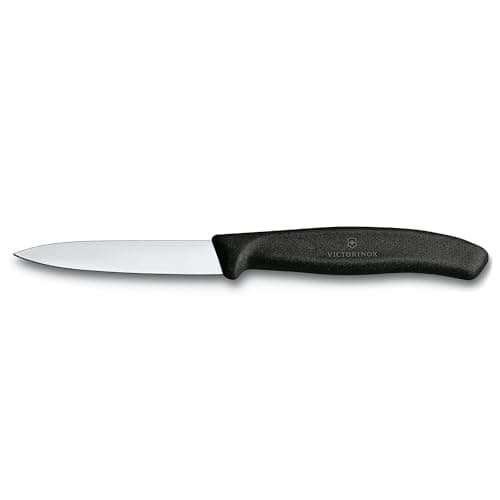
Victorinox Victorinox Swiss Classic 3.25" Paring Knife
Victorinox Swiss Classic 3.25" Paring Knife

The overall pick and the cheapest knife on this page, which is not a coincidence. Swiss-made, properly ground, with a grippy molded handle - it does everything a paring knife needs to do, and costs so little you can own three and keep one in the fruit bowl.

Best overall
8.6
$8.00Amazon
02
Victorinox Victorinox Swiss Classic 3.25" Serrated Paring Knife
Victorinox Swiss Classic 3.25" Serrated Paring Knife

The one most kitchens are actually missing. Identical to the pick above with a serrated edge, which transforms it on tomatoes, peppers and citrus - anything with a slick skin over soft flesh, where a straight edge skates before it bites.

Best serrated (tomatoes)
8.4
$11.51Amazon
03
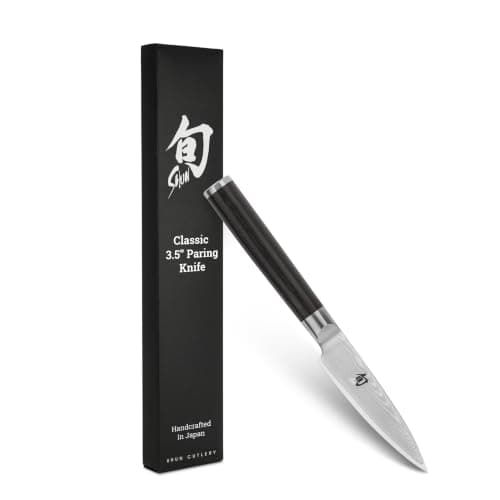
Shun Shun Classic 3.5" Paring Knife
Shun Classic 3.5" Paring Knife

The premium pick, included honestly rather than enthusiastically. VG-MAX at 60+ HRC ground at around 16 degrees produces the keenest paring edge here by a long way - and on work this light, most people will struggle to notice, which is the whole problem with expensive paring knives.

Best premium
8.0
$88.95Amazon
04
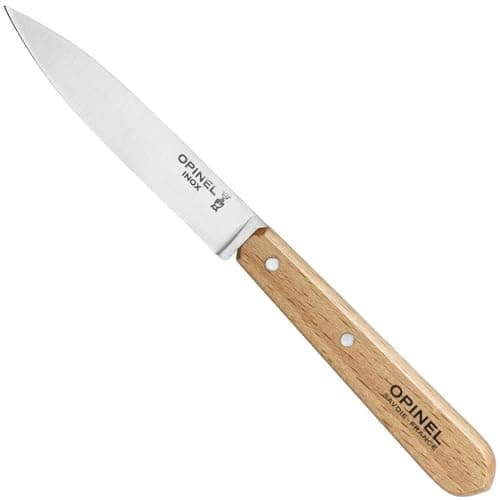
Opinel Opinel No. 112 Essential Paring Knife
Opinel No. 112 Essential Paring Knife

The one with character. Sandvik 12C27 stainless and a hornbeam handle from a French maker that has been doing this since 1890 - it feels considerably nicer in the hand than its price suggests, and takes a genuinely fine edge.

Best wood handle
7.8
$18.00Amazon
05
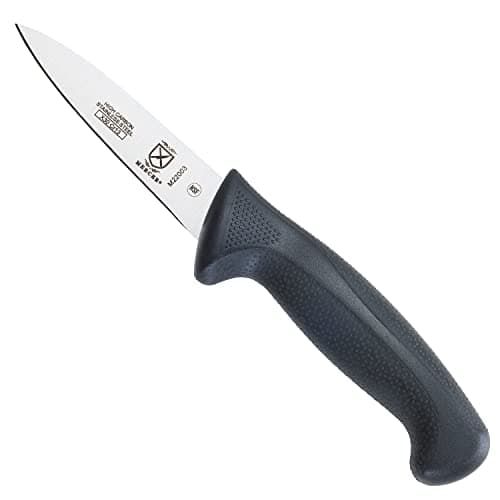
Mercer Culinary Mercer Culinary Millennia 3.5" Paring Knife
Mercer Culinary Millennia 3.5" Paring Knife

The culinary-school standard, and a completely reasonable alternative to the top pick. Slightly longer blade, textured Santoprene grip with a protective finger point, NSF certified - if you prefer 3.5 inches to 3.25, buy this instead.

Best alternative
7.6
$10.19Amazon
06
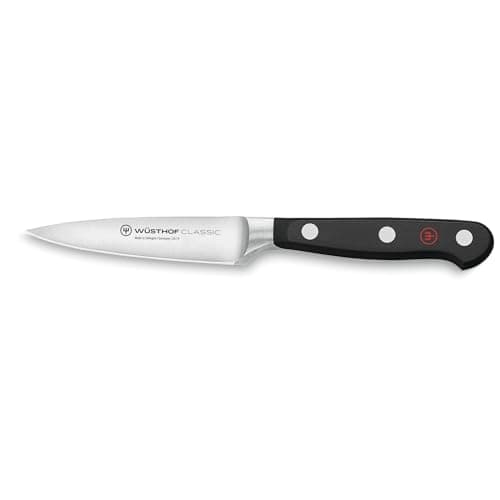
Wusthof Wusthof Classic 3.5" Paring Knife
Wusthof Classic 3.5" Paring Knife

The one we would skip. A beautifully made forged Solingen paring knife that is objectively excellent and objectively the worst value on this page - it costs roughly ten times the top pick to do work that barely taxes an edge.

Skip - see below
7.2
$95.00Amazon

#ad · Live prices from the Amazon Product API, as of Sep 2, 2026. Where we have no verified live price, we show none — a gap beats a number that has rotted.

In detail

The picks, in full

01
Victorinox Victorinox Swiss Classic 3.25" Paring Knife

Best overall

Victorinox Swiss Classic 3.25" Paring Knife

Stamped Swiss stainless3.25 in. spear point bladeMolded polypropylene handleDishwasher-safe (hand-wash still advised)
8.6/10

The overall pick and the cheapest knife on this page, which is not a coincidence. Swiss-made, properly ground, with a grippy molded handle - it does everything a paring knife needs to do, and costs so little you can own three and keep one in the fruit bowl.

Edge & steel
7
Sharpness
9
Handling
9
Build
8
Value
10

Pros

  • Genuinely excellent for a price that makes every alternative hard to justify
  • Light and precise - the blade almost disappears in the hand
  • Grippy handle that stays secure with wet or greasy fingers
  • Cheap enough to own several, which is how paring knives should be bought

Cons

  • Soft steel dulls faster than a premium blade, though it sharpens back in seconds
  • Molded handle is functional and completely charmless
  • Not a knife anyone will admire on your counter

Don't buy this if…

you want a paring knife that feels like an object rather than a tool - this is unashamedly the latter.

$8.00View on Amazon

Price as of Sep 2, 2026. Prices change — Amazon's at checkout is the one that counts.

#ad · we may earn a commission from this link to Victorinox Swiss Classic 3.25" Paring Knife

02
Victorinox Victorinox Swiss Classic 3.25" Serrated Paring Knife

Best serrated (tomatoes)

Victorinox Swiss Classic 3.25" Serrated Paring Knife

Stamped Swiss stainless3.25 in. serrated bladeMolded polypropylene handleWavy edge
8.4/10

The one most kitchens are actually missing. Identical to the pick above with a serrated edge, which transforms it on tomatoes, peppers and citrus - anything with a slick skin over soft flesh, where a straight edge skates before it bites.

Edge & steel
7
Sharpness
9
Handling
9
Build
8
Value
9

Pros

  • Bites through tomato and pepper skin that defeats a straight edge
  • Serrations dull extremely slowly - this knife stays useful for years
  • Same grip and price advantages as the straight-edge version
  • Owning both versions still costs less than one mid-range paring knife

Cons

  • Serrated edges cannot practically be sharpened at home
  • Less precise than a straight edge for peeling and fine trimming
  • Leaves a slightly ragged cut face on soft fruit

Don't buy this if…

you only want one paring knife - buy the straight-edge version first and add this second.

$11.51View on Amazon

Price as of Sep 2, 2026. Prices change — Amazon's at checkout is the one that counts.

#ad · we may earn a commission from this link to Victorinox Swiss Classic 3.25" Serrated Paring Knife

03
Shun Shun Classic 3.5" Paring Knife

Best premium

Shun Classic 3.5" Paring Knife

VG-MAX core, Damascus cladding~60-61 HRC~16 deg per sidePakkawood D-shaped handle
8.0/10

The premium pick, included honestly rather than enthusiastically. VG-MAX at 60+ HRC ground at around 16 degrees produces the keenest paring edge here by a long way - and on work this light, most people will struggle to notice, which is the whole problem with expensive paring knives.

Edge & steel
10
Sharpness
9
Handling
8
Build
9
Value
4

Pros

  • Genuinely the keenest edge on this page
  • Holds it far longer than any of the budget picks
  • Beautiful, and part of a coherent set if you own other Shuns
  • Excellent balance for in-hand work

Cons

  • Costs more than ten of the top pick, for light work that barely taxes an edge
  • Hard steel chips if dropped or twisted, and paring knives get dropped
  • Pakkawood is slipperier than a textured synthetic grip when wet
  • D-shaped handle is contoured for right-handed use

Don't buy this if…

you are buying on performance per pound - the honest answer in this category is that the Victorinox does nearly the same job for a small fraction of the money.

$88.95View on Amazon

Price as of Sep 2, 2026. Prices change — Amazon's at checkout is the one that counts.

#ad · we may earn a commission from this link to Shun Classic 3.5" Paring Knife

04
Opinel Opinel No. 112 Essential Paring Knife

Best wood handle

Opinel No. 112 Essential Paring Knife

Sandvik 12C27 stainlessHornbeam wood handleThin ground bladeMade in France
7.8/10

The one with character. Sandvik 12C27 stainless and a hornbeam handle from a French maker that has been doing this since 1890 - it feels considerably nicer in the hand than its price suggests, and takes a genuinely fine edge.

Edge & steel
8
Sharpness
8
Handling
8
Build
7
Value
8

Pros

  • Sandvik 12C27 is a genuinely good, easily-sharpened stainless
  • Wood handle is warm and comfortable in a way molded plastic is not
  • Thin blade that takes a keen edge with very little effort
  • Costs barely more than the budget picks

Cons

  • Untreated wood needs hand-washing and drying, and will not survive a dishwasher
  • Smooth wood is less secure than a textured grip when wet
  • Blade is thinner and more flexible than some people like

Don't buy this if…

you want a knife you can throw in the dishwasher and forget - the wood handle needs the same care as a good chopping board.

$18.00View on Amazon

Price as of Sep 2, 2026. Prices change — Amazon's at checkout is the one that counts.

#ad · we may earn a commission from this link to Opinel No. 112 Essential Paring Knife

05
Mercer Culinary Mercer Culinary Millennia 3.5" Paring Knife

Best alternative

Mercer Culinary Millennia 3.5" Paring Knife

Stamped high-carbon Japanese steel3.5 in. bladeSantoprene textured grip, finger guardNSF certified
7.6/10

The culinary-school standard, and a completely reasonable alternative to the top pick. Slightly longer blade, textured Santoprene grip with a protective finger point, NSF certified - if you prefer 3.5 inches to 3.25, buy this instead.

Edge & steel
6
Sharpness
8
Handling
8
Build
7
Value
9

Pros

  • Textured grip with a finger point - the safest handle here
  • Slightly longer blade suits larger hands better than 3.25 inches
  • NSF certified, which is a real hygiene standard rather than a marketing badge
  • Sharpens back in seconds on any abrasive

Cons

  • Soft steel needs frequent touch-ups
  • Bulkier handle reduces the fine control the shorter picks give
  • Basic finish throughout

Don't buy this if…

you want maximum precision for delicate in-hand work - the shorter, slimmer Victorinox is more nimble.

$10.19View on Amazon

Price as of Sep 2, 2026. Prices change — Amazon's at checkout is the one that counts.

#ad · we may earn a commission from this link to Mercer Culinary Millennia 3.5" Paring Knife

06
Wusthof Wusthof Classic 3.5" Paring Knife

Skip - see below

Wusthof Classic 3.5" Paring Knife

Forged X50CrMoV15~58 HRCFull tang, full bolsterPrecision Edge Technology
7.2/10

The one we would skip. A beautifully made forged Solingen paring knife that is objectively excellent and objectively the worst value on this page - it costs roughly ten times the top pick to do work that barely taxes an edge.

Edge & steel
9
Sharpness
8
Handling
8
Build
9
Value
2

Pros

  • Superb build - forged, full tang, beautifully finished
  • Substantial and balanced in a way no budget paring knife is
  • Lifetime warranty and a real service network
  • Matches the rest of a Classic set, if you own one

Cons

  • Roughly ten times the price of a knife that does the same job
  • Full bolster blocks the heel from sharpening, on a blade this short
  • Heavier than ideal for delicate in-hand work
  • Losing or damaging it hurts in a way losing a $8 knife does not

Don't buy this if…

you are buying on value at all - and in this category, more than any other on this site, you should be. Buy the top pick and put the difference into your chef's knife.

$95.00View on Amazon

Price as of Sep 2, 2026. Prices change — Amazon's at checkout is the one that counts.

#ad · we may earn a commission from this link to Wusthof Classic 3.5" Paring Knife

Why our value math is brutal in this category

Value on this site is spec quality divided by live price, and paring knives expose what that really means. A premium chef's knife earns its money on geometry and edge retention because you push it through dense material for long sessions. A paring knife faces almost none of that: the work is light, brief and in your hand. So the spec advantage of a $95 forged blade over an $8 stamped one is real but nearly invisible in use, while the price difference is enormous. That is why the ranking above looks upside-down compared to most review sites, and we would rather show you the math than the brand ladder. The same logic in more detail is in are expensive chef knives worth it.

Buy two or three, not one

This is the genuinely useful advice nobody gives. Paring knives are the most-used and least-available knife in a kitchen — there is always one in the sink when you need it. At these prices, owning a straight-edge, a serrated, and a spare costs less than a single mid-range knife and removes the friction entirely. Keep one where you prep fruit, one with the rest of the knives, and stop treating a $10 tool as a considered purchase.

Grip matters more than steel here

You hold a paring knife in a pencil or thumb-braced grip, with the food in your other hand and the edge traveling toward your thumb. If the handle turns because it is wet or greasy, that is not an inconvenience, it is how people cut themselves. Textured synthetic handles — the Victorinox and Mercer here — hold when smooth polished wood or pakkawood does not. That is the single strongest practical argument for the budget picks over the premium ones, and it is worth more than any hardness figure.

Blade length: 3, 3.25 or 3.5 inches

Shorter is more controllable and better for delicate in-hand work; longer gives more reach on a board and suits larger hands. Three and a quarter inches is the sweet spot for most people and is what our top pick uses. Under three inches starts to feel fiddly; over four inches you are into utility-knife territory, which is a different and mostly unnecessary tool — see why, and see the utility knife roundup for the one version of it that earns a place next to a paring knife.

Sharpening a paring knife

The same as any straight edge, just with a shorter stroke — and because the blade is short and light, most people find a guided system easier than freehand for these. Soft steel like the Victorinox and Mercer comes back in under a minute on any medium stone. Serrated paring knives are effectively unserviceable at home; treat them as long-lived consumables. Method in how to sharpen kitchen knives, and the serrated caveat in how to sharpen a serrated knife.

What we would skip

The Wusthof Classic, as above — an excellent knife bought in the wrong category. Beyond our picks: skip paring knife "sets" of six identical blades in different colors, which are restaurant color-coding tools sold to home cooks who will use one. Skip ceramic paring knives, which are brittle, chip when dropped and cannot be sharpened at home. And skip bird's beak knives as a first purchase — they are genuinely good at turning vegetables and decorative work, and genuinely worse at everything a paring knife is normally asked to do.

How we picked

We did not lab-test these knives

Everyone in this category says they tested twenty knives in a professional kitchen. We have not hands-on tested any of these, and we say so. What we did instead: compiled the published specifications — steel type and hardness (HRC), edge angle, blade geometry, weight and build — applied established sharpening standards, ran the value math (spec quality ÷ live price), and scored each product against a published rubric. The scores are judgments from documented research — not measurements we took, because we do not have a test lab and we will not pretend we do. Where a number came from someone else's work, we name them in Sources.

Questions

Frequently asked

How much should I spend on a paring knife?
Very little. Excellent options exist under fifteen dollars, and the performance gap up to a premium forged model is small because the work is so light. Put the saved money into your chef's knife.
What size paring knife is best?
Around 3.25 inches for most people. Shorter is more precise for in-hand work; 3.5 inches suits larger hands and board work slightly better.
Do I need a serrated paring knife too?
If you cut tomatoes, peppers or citrus, yes — a serrated edge bites through slick skins that defeat a straight edge. Both together still cost less than one mid-range knife.
What is a bird's beak paring knife for?
The inward-curving blade follows a rounded surface, which suits peeling round produce, turning vegetables and decorative work. It is a specialist, not a first paring knife.
Can I put a paring knife in the dishwasher?
Some are rated for it, but we would not. Heat, detergent and knocking against other items dull the edge and damage handles — and wooden handles will be ruined.
Should I buy a paring knife or a utility knife?
A paring knife. A utility knife sits between paring and chef's knife sizes and for most people duplicates one of them.

Keep reading

Receipts

Sources

We do not run a testing lab, and we do not pretend to. Where a spec or a measured number came from someone else's work — a manufacturer's page, a published standard — we name them and link them. Where we could not verify something, we say so on the page rather than quietly leaving it out. Read our full method.