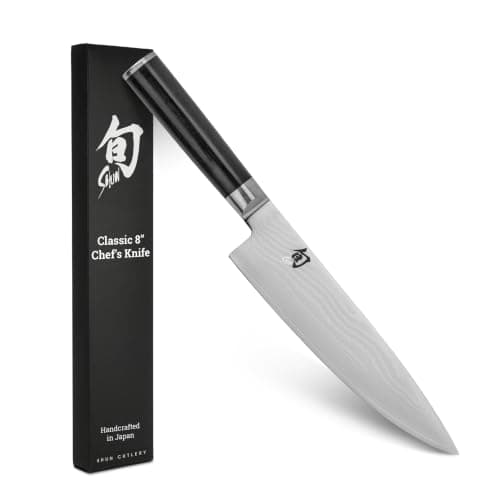
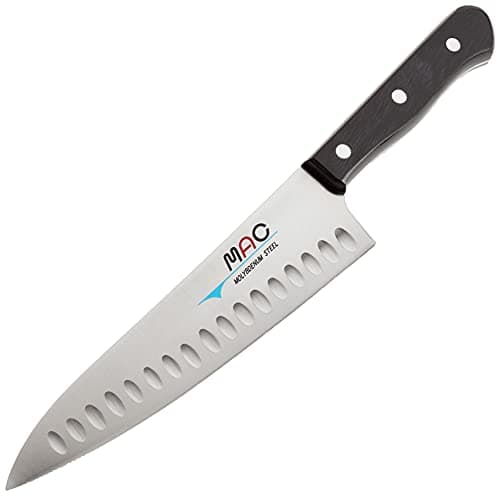
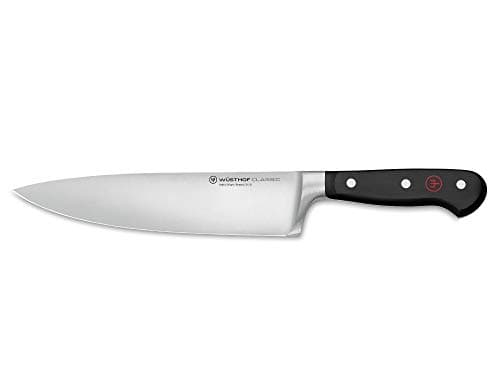
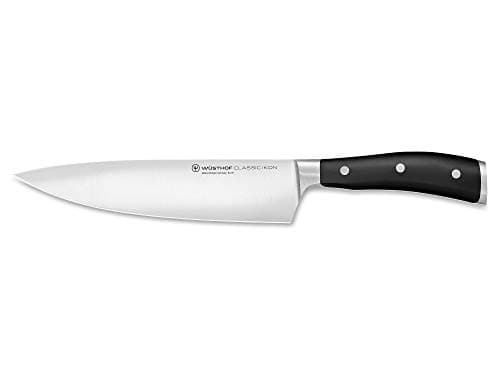
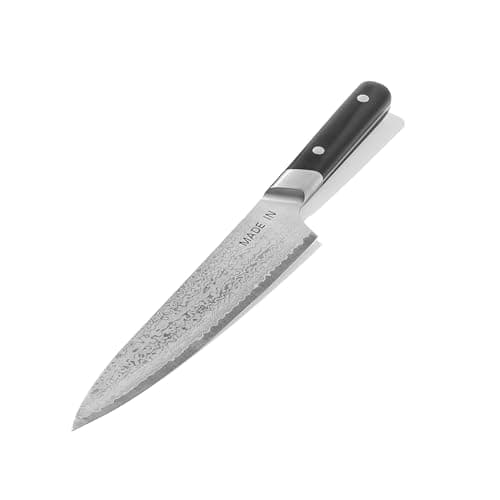
Every category has a top shelf, and knives have a particularly seductive one: hand-finished Damascus cladding, cores of powder or high-alloy stainless run to 60–61 HRC, grinds taken to 15° and finer. It is genuinely good engineering. It is also the tier where the performance-per-dollar curve has flattened almost completely, and any list that will not say so is selling you something.
So here is the honest framing before the ranking. Between a $30 knife and a $120 knife there is a large, obvious, everyday difference — in edge retention, in how cleanly the blade parts an onion, in how the handle behaves when wet. Between a $120 knife and a $350 one there is a real but much smaller difference, concentrated in how long the edge lasts and how thin the blade is behind the edge. Above that, you are buying finish, materials, provenance and pleasure. Those are legitimate things to buy. They are not a better cut.
If your question is really "what should I buy", start at the best chef knives or best for the money. If your question is "what is the best there is, and is it worth it", keep reading — and also read are expensive chef knives worth it, which is the same question answered from the other end.
How we ranked these
We have not hands-on tested these knives and we run no lab — the method is published. Each pick is scored on published steel and hardness, ground edge angle, handling (weight, balance, grip geometry), build quality, and value computed against the live price. In this tier the value column does most of the separating, because the top four are close enough on cutting specification that price becomes the differentiator that actually varies.
What separates a flagship from a very good knife
Three things, in descending order of how much you will notice them. First, thinness behind the edge — not the edge angle everyone quotes, but how quickly the blade thickens above it. A thin grind glides through a potato where a thick one wedges and cracks it. This is the single biggest real-world difference and it is almost never in a spec sheet. Second, steel quality and hardness— a fine-grained high-alloy core taken to 60–61 HRC holds a keen apex for weeks of use where softer steel needs a rod every few days. Third, fit and finish — a rounded spine and choil that stop a pinch grip biting into your fingers over a long prep session, handle scales that meet the tang flush, an even grind on both sides.
Notice what is not on that list: Damascus layer count. Cladding is a structural and cosmetic layer around a core; the core does the cutting. A 66-layer and a 33-layer knife with the same VG-10 core cut identically. Damascus steel knives explained goes through what the pattern does and does not tell you.
What we would skip
Skip anything sold as a flagship on the strength of layer count alone — "67-layer Damascus" on a listing that never names the core steel or its hardness is a decorative claim about the part of the knife that does not cut. Skip "super-steel" branding without an alloy designation. And skip the flagship knife-block set entirely: at this tier you are paying premium prices for a bread knife you will never sharpen and steak knives you use twice a year. Buy the one great chef's knife and fill the rest of the lineup cheaply.
We have also deliberately not ranked the hand-forged, single-maker Japanese knives that sit above everything here. They are real and they are wonderful, but they are typically carbon steel that rusts if you look at it wrong, sold in small batches with no consistent listing, and recommending one on published specification alone would be dishonest.
Is the top tier worth it?
For most home cooks, in pure cutting terms, no — and every serious reviewer who has run the comparison says some version of the same thing. What the money genuinely buys is edge retention (fewer sharpening sessions), a thinner grind (less wedging on dense produce), and the comfort of a well-finished spine over a long prep session. If you cook daily and maintain your knives, those add up to something real. If you cook twice a week and own no stone, a flagship will spend most of its life duller than a mid-priced knife that gets honed.
There is also a non-performance case, and it is not silly: people use tools they enjoy using. A knife that feels good in the hand gets picked up more often, and cooking more is worth more than any specification. Just buy it knowing that is the reason.
If you buy at this tier, budget for maintenance
A 60–61 HRC blade will not respond to a steel rod the way a German knife does. The correct kit is a 1000/6000 whetstone and the patience to learn it, or a guided angle systemif freehand is not for you. Sharpen at the angle the knife was ground to — putting a Japanese edge through a 20° Western pull-through quietly destroys the geometry you paid for. See knife sharpening angles.
How we picked
We did not lab-test these knives
Everyone in this category says they tested twenty knives in a professional kitchen. We have not hands-on tested any of these, and we say so. What we did instead: compiled the published specifications — steel type and hardness (HRC), edge angle, blade geometry, weight and build — applied established sharpening standards, ran the value math (spec quality ÷ live price), and scored each product against a published rubric. The scores are judgments from documented research — not measurements we took, because we do not have a test lab and we will not pretend we do. Where a number came from someone else's work, we name them in Sources.