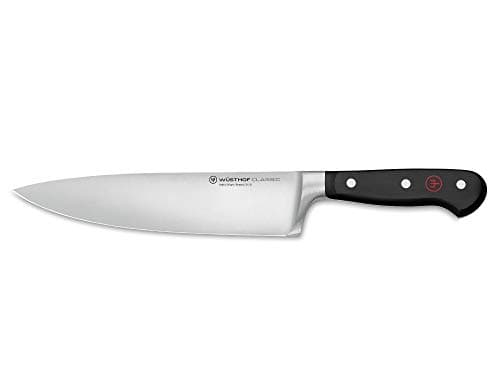
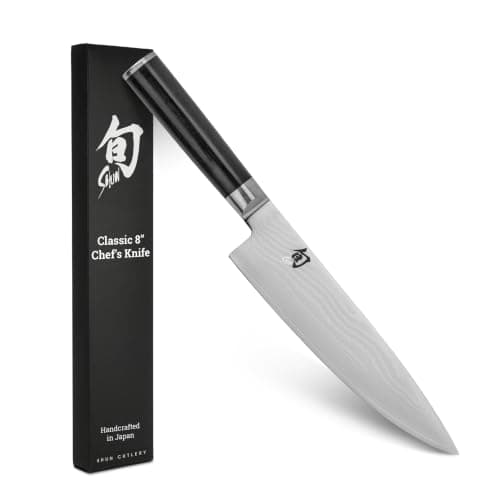
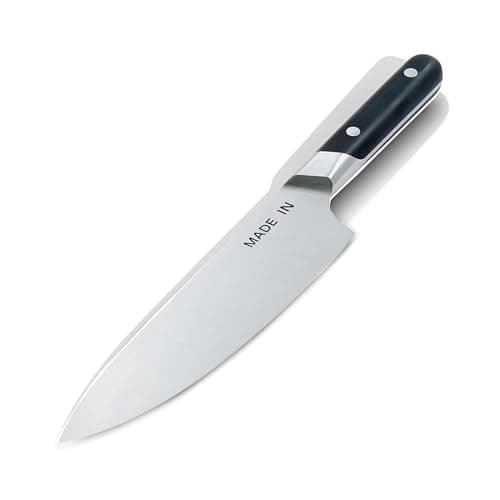
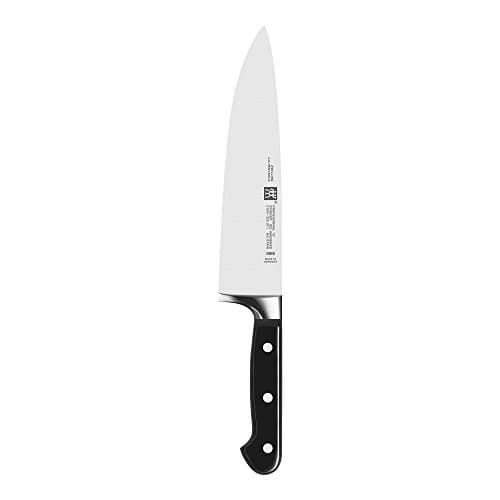
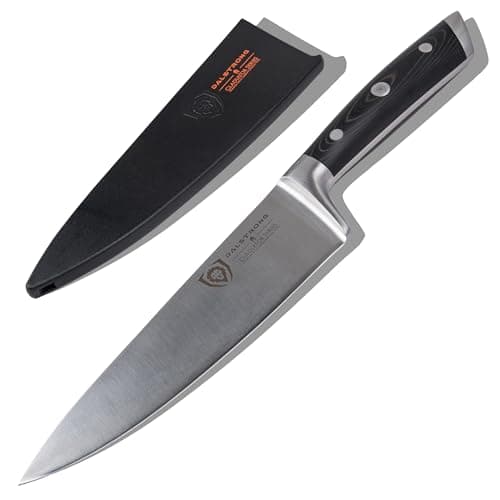
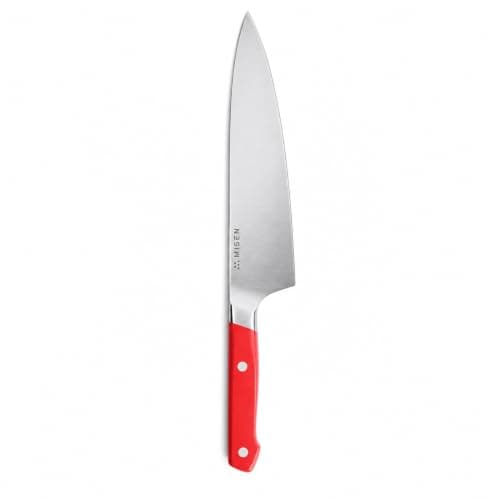
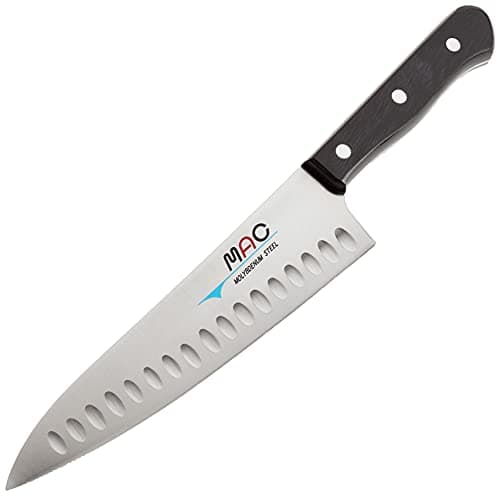
Under $200 is where the interesting decisions live. Below $100 you are mostly choosing between competent tools, and the honest answer is nearly always the cheapest good one — which is why our under-$100 roundup and value rankingboth land on a stamped Swiss workhorse. In the $100–$200 band you are choosing a philosophy: harder Japanese steel with a keener grind, or a forged German blade with heft and durability. Both are genuinely good. Neither is a compromise.
We ranked these on edge and steel, out-of-the-box sharpness, handling, build, and value, using published manufacturer specifications and the value math described on how we review. One caveat worth stating plainly: prices in this band move, and a knife that sits at $186 today can cross $200 next month. The live prices on this page are pulled from Amazon and date-stamped — treat the boundary as approximate and the ranking as the point. If you already know which side of the German / Japanese line you fall on, the Japanese roundup and German roundup go deeper on each.
What the money between $100 and $200 actually buys
Three things, in order of how much they matter. Steel hardness: moving from ~56 HRC to ~60 HRC roughly doubles how long an edge stays keen, which is the most noticeable everyday upgrade. Geometry: thinner blades behind the edge, and a keener factory grind around 15 degrees rather than 20, mean less force per cut — this is why a MAC feels so different from a Wusthof even when both are freshly sharpened. Construction and finish: forging, full tangs, bolster design, handle material. Only the first two change how the knife cuts. The third changes how it feels, which is a real thing to buy, as long as you know that is what you are buying. We make the same argument at greater length in are expensive chef knives worth it.
The decision that comes before the price
Everything on this page splits into two camps, and picking the camp first makes the shortlist obvious. German and Western forged knives — Wusthof, Zwilling, Made In, Dalstrong — run softer steel around 56–58 HRC at a wider edge angle. They are heavier, tougher, forgiving of bone and hard boards, and easy to bring back on any stone. Japanese knives — MAC, Shun, and the AUS-10 Misen — run 59–61 HRC at a keener ~15 degrees. They cut with less effort and hold it longer, and they chip if you treat them like a German knife. If that framing is new to you, read Japanese vs German and knife steel types explained before you spend anything.
What you should also budget for
A $150 knife that never gets sharpened is worse in month six than a $45 knife that does. If you are spending in this band, allow another $30–$70 for a stone from our whetstone roundup or a guided system, and know that hard Japanese steel wants a diamond or hard ceramic abrasive rather than a soft waterstone. Budget a couple of minutes for storage too: a keen edge stored loose in a drawer will be duller in a week than one on a magnetic strip is in three months, which is the whole point of our knife storage roundup.
Where the boundary bites
Two of these knives live close enough to $200 that a price move can push them over, and both are worth watching rather than chasing. The Shun in particular swings, and the honest advice is that if it crosses the line, the MAC at the top of this list is the better knife for less money anyway — the Shun is on this page for how it feels, not for how it scores. Live prices on this page are pulled from Amazon and stamped with the date checked; when we cannot verify a current price, we show none rather than an old one.
What we would skip in this band
Skip the $150–$200 "Damascus" knives from brands you have not heard of. Above about $120 the pattern is usually the main thing being sold, and a laser-etched finish over ordinary stainless is common at this price. Skip the Zwilling Four Star, which reviewers repeatedly flag as the weak link in an otherwise strong range — the Professional S above is the Zwilling worth owning. And skip buying a second chef's knife in this band because the first one is dull. Buy a stone.
How we picked
We did not lab-test these knives
Everyone in this category says they tested twenty knives in a professional kitchen. We have not hands-on tested any of these, and we say so. What we did instead: compiled the published specifications — steel type and hardness (HRC), edge angle, blade geometry, weight and build — applied established sharpening standards, ran the value math (spec quality ÷ live price), and scored each product against a published rubric. The scores are judgments from documented research — not measurements we took, because we do not have a test lab and we will not pretend we do. Where a number came from someone else's work, we name them in Sources.