Skip to content
The Edge Bench

Roundups & reviews · Chef Knives

MAC Chef Series 8-inch review: the gateway Japanese knife

A thin, light blade with a keener edge than a German forging, at a price that makes the jump to Japanese steel easy. Here is the payoff, and the extra care it takes.

By Stephen V.Updated How we review
#ad

We earn a commission when you buy through our Amazon links, at no extra cost to you. It never changes a verdict, and we say so when the cheaper knife is the better buy. How this works.

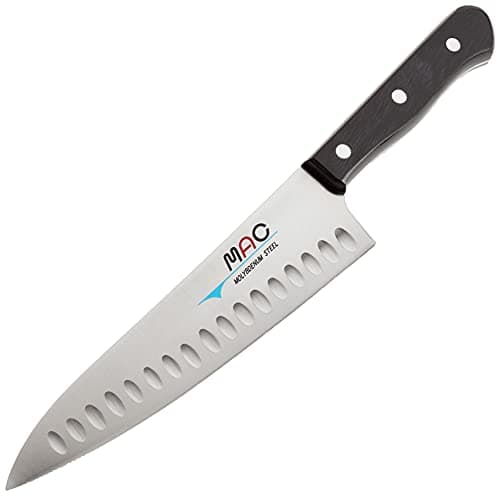
The MAC Chef Series 8-inch is the knife most often handed to someone as their first "real" Japanese blade, and the compiled specs explain why: high-carbon Japanese steel at around 59 HRC, a thin, light blade, an edge ground to roughly 15 degrees, and a hollow-edge (dimpled) grind meant to release sticky food. It is harder and keener than a German forging without carrying a premium-Japanese price. We have not cooked with this unit; the assessment below comes from published specifications and the value math we run on every pick, as described in how we review.

The appeal is the cut. A thinner blade at a steeper ~59 HRC hardness takes and holds a keener edge than a softer German knife, so it falls through onions and tomatoes with noticeably less effort, and the light weight makes long prep less tiring. The cost is care: harder steel is more brittle, so this is not the knife for frozen food, bones, or careless board contact, and the keener edge wants honing and periodic sharpening at the Japanese ~15-degree angle to stay at its best. If you are weighing this leap generally, our Japanese vs German comparison frames it; for the wider field of thin, keen blades, see the best Japanese chef knives. When you are ready to spend up, the Shun Classic is the premium next step.

01
MAC MAC Chef Series 8" (Hollow Edge)

Best gateway Japanese

MAC Chef Series 8" (Hollow Edge)

Japanese high-carbon~59 HRC~15 deg edgeHollow-edge, thin blade
8.3/10

The gateway Japanese knife: a thin, light blade with a keener edge and harder steel than a German forging, at a price that makes the jump easy. Buy it if you want a keener cut and will hand-wash and hone it, not if you abuse your knives.

Edge & steel
8
Sharpness
8.5
Handling
8.5
Build
8
Value
8.5

Pros

  • Thin ~59 HRC blade takes a keener edge than a softer German knife
  • Light and agile, so easier on the hand over long prep
  • Hollow-edge dimples help release sticky slices like potato and cucumber
  • Made in Japan with a strong reputation as a value gateway blade

Cons

  • Harder steel is more brittle, so no bones, frozen food, or careless twisting
  • Keener edge needs honing and ~15-degree sharpening to stay at its best
  • No full bolster or German heft for cooks who like weight behind a cut

Don't buy this if…

you are hard on your knives or want a do-anything blade for bones and frozen food, because a tough German forging survives that abuse better.

MAC has built its reputation on exactly this kind of knife: a thin, light Japanese blade that outcuts heavier Western knives without demanding a premium price, which is why reviewers so often name a MAC as the "gateway" to Japanese steel. The high-carbon stainless runs around 59 HRC — harder than a German blade's ~56-58 but a touch softer than a ~61 HRC Shun — which is a deliberate middle ground: keen enough to feel the difference, forgiving enough to survive a home kitchen. The hollow-edge grind adds dimples along the blade that trap little pockets of air to reduce suction, so thin, starchy slices fall away instead of clinging.

On value math this is one of the strongest cases in the category: you get genuine Japanese keenness and a thin, agile blade for meaningfully less than the Damascus-clad premium tier. What you accept in return is a maintenance step up from a Victorinox or a Wusthof. Harder steel chips more readily, so it wants a soft cutting board, hand-washing, and honing before use, plus periodic sharpening held near 15 degrees per side. Give it that and it stays keener, longer, than a German knife; treat it like a pry bar and it will let you know.

$114.95View on Amazon

Price as of Jul 19, 2026. Prices change — Amazon's at checkout is the one that counts.

#ad · we may earn a commission from this link to MAC Chef Series 8" (Hollow Edge)

Who the MAC Chef Series is for

This is the knife for the cook who has outgrown a soft budget blade and wants to feel what keener steel does, but is not ready to spend premium-Japanese money or fuss over a delicate Damascus edge. It rewards careful hands: hand-washing, a wood or poly board, and a honing habit. If that describes you, it is one of the best value picks in the best Japanese chef knives and a mainstay of our best-for-the-money list.

Alternatives worth a look

Not sure the leap from Western steel is worth it? Read Japanese vs German, or compare it to the forged all-rounder in our Wusthof Classic review. Ready to go further up the Japanese ladder for a harder edge and Damascus cladding? The Shun Classic 8-inch is the natural next rung.

How we picked

We did not lab-test these knives

Everyone in this category says they tested twenty knives in a professional kitchen. We have not hands-on tested any of these, and we say so. What we did instead: compiled the published specifications — steel type and hardness (HRC), edge angle, blade geometry, weight and build — applied established sharpening standards, ran the value math (spec quality ÷ live price), and scored each product against a published rubric. The scores are judgments from documented research — not measurements we took, because we do not have a test lab and we will not pretend we do. Where a number came from someone else's work, we name them in Sources.

Questions

Frequently asked

Is the MAC Chef Series a good first Japanese knife?
Yes — it is the archetypal gateway. At around 59 HRC it is keener than a German blade but not as brittle as the hardest Japanese steel, so it teaches you Japanese sharpness and care without the premium price or the fragility of a ~61 HRC edge.
What does the hollow edge (dimples) actually do?
The dimples, called a Granton or hollow edge, create small air pockets that reduce suction between the blade and wet, starchy food. Thin slices of potato, cucumber, or apple release more cleanly instead of sticking. It is a real convenience, not a gimmick, though it does not affect sharpness.
Can I use it on bones or frozen food?
No. The harder ~59 HRC steel is keener but more brittle than a German blade, so bones, frozen food, and twisting cuts risk chipping the edge. Use a tough Western knife or a cleaver for those jobs and keep this one for produce, boneless proteins, and precision work.
How do I keep it sharp?
Hone lightly before use and sharpen periodically at about 15 degrees per side — the Japanese standard the blade ships with. Our sharpening-angles guide shows how to match that angle so you keep the keen edge rather than grinding it away.

Keep reading

Receipts

Sources

We do not run a testing lab, and we do not pretend to. Where a spec or a measured number came from someone else's work — a manufacturer's page, a published standard — we name them and link them. Where we could not verify something, we say so on the page rather than quietly leaving it out. Read our full method.