Skip to content
The Edge Bench

Roundups & reviews · Chef Knives

Shun Classic 8-inch review: the entry to premium Japanese

VG-MAX steel, 68-layer Damascus cladding, and a ~16-degree edge that slices like glass. Here is the keenness it buys, and the careful handling the hard steel demands.

By Stephen V.Updated How we review
#ad

We earn a commission when you buy through our Amazon links, at no extra cost to you. It never changes a verdict, and we say so when the cheaper knife is the better buy. How this works.

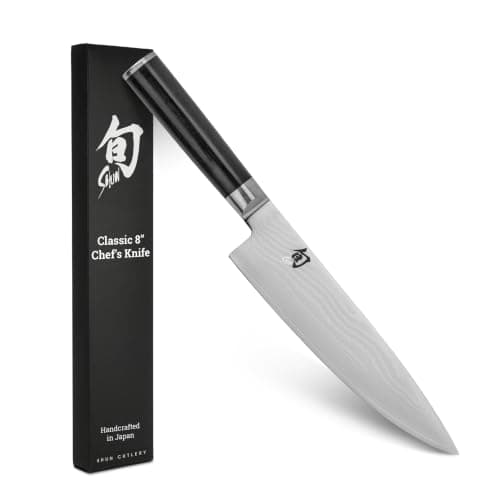
The Shun Classic 8-inch is the knife most people mean when they say "my first nice Japanese knife." The compiled specs are the draw: a VG-MAX steel core hardened to around 60-61 HRC, wrapped in 68 layers of Damascus cladding, ground to a keen ~16-degree double bevel, on a Pakkawood D-shaped handle, made in Seki, Japan. It is the default step into premium Japanese steel, and it looks the part. We have not cooked with this unit; what follows is compiled from published specifications and the value math we apply to every pick, the same method in how we review.

At ~61 HRC the Shun holds a keen edge far longer than a German knife and slices delicate produce with almost no effort — the payoff for the hard steel and thin ~16-degree grind. The same hardness is the catch: hard steel is brittle, so it chips if you hit bone, twist through squash, or let it clatter in a drawer, and it wants sharpening at a careful low angle to preserve that edge. Match it to careful hands, not a busy line cook who abuses knives. If you are choosing between this and a tougher Western blade, our Japanese vs German comparison lays out the trade; for the broader premium field, see the best Japanese chef knives. If the Shun is more knife than you need yet, the MAC Chef Series is the gentler gateway.

01
Shun Shun Classic 8"

Best entry-premium Japanese

Shun Classic 8"

VG-MAX core~60-61 HRC~16 deg double bevel68-layer Damascus
8.4/10

The default entry to premium Japanese: a very keen ~61 HRC VG-MAX blade in 68-layer Damascus that slices delicate food effortlessly and holds its edge for ages. Buy it for careful hands and precision work, not for bones, frozen food, or a rough kitchen.

Edge & steel
9.5
Sharpness
9
Handling
8
Build
9
Value
6.5

Pros

  • Very keen ~16-degree edge slices delicate produce with almost no effort
  • Hard VG-MAX steel at ~61 HRC holds its edge far longer than German steel
  • 68-layer Damascus cladding is genuinely striking, not just marketing
  • Light Pakkawood D-handle and thin blade suit precise, controlled cuts

Cons

  • Hard steel is brittle, so it chips on bone, frozen food, or careless contact
  • Premium price sits well above value-tier and gateway Japanese blades
  • D-shaped handle is optimized for right-handed use

Don't buy this if…

you are rough on your knives or want one tough blade for every job, because a German forging or a gateway Japanese knife shrugs off abuse this one will not.

Shun is Kai's premium line out of Seki, Japan, a city with centuries of blade-making history, and the Classic is its flagship — the knife that put Japanese Damascus in front of Western home cooks. The VG-MAX core is a high-carbon stainless hardened to around 60-61 HRC and clad in 68 layers of softer Damascus steel; the cladding is partly cosmetic and partly practical, protecting the brittle hard core while producing that rippled pattern. The edge is ground to roughly 16 degrees per side — slightly more obtuse than some Japanese knives, a deliberate nod to a little more durability — and the blade is thin and light behind it. The Pakkawood D-handle is compact and shaped to sit in a right-handed pinch grip.

On value math the Shun is honest about what it is: a premium blade, priced well above the value tier, that you buy for keenness, edge retention, and craftsmanship rather than for a bargain. At ~61 HRC it stays scary-sharp far longer than a German knife and glides through tomatoes and fish, but the hardness that buys that edge also makes it chip-prone — hit a bone or twist it in a hard squash and you can take a bite out of the edge. It also wants careful sharpening: keep close to 16 degrees, ideally on a whetstone at the right angle, since a coarse pull-through can wreck a blade this fine. Give it careful hands and it rewards them; give it a rough kitchen and it will not last.

$189.95View on Amazon

Price as of Jul 19, 2026. Prices change — Amazon's at checkout is the one that counts.

#ad · we may earn a commission from this link to Shun Classic 8"

Who the Shun Classic is for

The Shun is for the cook who wants the keenest everyday edge and will look after it: someone who hand-washes, uses a wood or soft-poly board, keeps the blade off bone and frozen food, and is willing to sharpen carefully on a stone. In careful hands it is a joy and holds its edge for ages. In a rough kitchen it is the wrong tool. If that fits you, it sits near the top of the best Japanese chef knives.

Alternatives worth a look

Want most of the Japanese keenness with more forgiveness and a friendlier price? The MAC Chef Series is the gateway step below it. Prefer toughness and heft for a knife that takes abuse? Read our Wusthof Classic review, or settle the whole question with Japanese vs German.

How we picked

We did not lab-test these knives

Everyone in this category says they tested twenty knives in a professional kitchen. We have not hands-on tested any of these, and we say so. What we did instead: compiled the published specifications — steel type and hardness (HRC), edge angle, blade geometry, weight and build — applied established sharpening standards, ran the value math (spec quality ÷ live price), and scored each product against a published rubric. The scores are judgments from documented research — not measurements we took, because we do not have a test lab and we will not pretend we do. Where a number came from someone else's work, we name them in Sources.

Questions

Frequently asked

Does the Shun Classic chip easily?
It can. At around 60-61 HRC the VG-MAX steel is hard and keen, and hard steel is brittle — hitting bone, cutting frozen food, or twisting through dense squash can chip the fine edge. Keep it to produce and boneless proteins on a soft board and it holds up well; treat it like a tough Western knife and it will chip.
What edge angle is the Shun Classic, and how do I sharpen it?
Shun grinds the Classic to about 16 degrees per side. Keep close to that when you sharpen, ideally on a whetstone rather than a coarse pull-through that can damage a fine blade. Our sharpening-angles guide covers holding the low angle a hard Japanese edge needs.
Is the Shun Classic worth it over a cheaper Japanese knife?
It depends on your hands. You are paying premium money for harder steel, longer edge retention, and Damascus craftsmanship over a gateway blade like the MAC Chef Series. If you sharpen carefully and want the keenest everyday edge, the step up is real; if you are rough on knives, the extra outlay buys fragility you will not enjoy.
Is the handle okay for left-handed cooks?
The D-shaped Pakkawood handle is contoured for a right-handed pinch grip, so many left-handed cooks find it less comfortable. It is usable either way, but if you are left-handed, a symmetrical-handle Japanese knife may suit you better — worth checking before you commit.

Keep reading

Receipts

Sources

We do not run a testing lab, and we do not pretend to. Where a spec or a measured number came from someone else's work — a manufacturer's page, a published standard — we name them and link them. Where we could not verify something, we say so on the page rather than quietly leaving it out. Read our full method.