Skip to content
The Edge Bench

Roundups & reviews · Chef Knives

Wusthof Classic 8-inch review: the forged German all-rounder

Solingen-forged, full-bolster, and built to take a beating. Here is where its heft and durable edge win, and where a keener Japanese blade pulls ahead.

By Stephen V.Updated How we review
#ad

We earn a commission when you buy through our Amazon links, at no extra cost to you. It never changes a verdict, and we say so when the cheaper knife is the better buy. How this works.

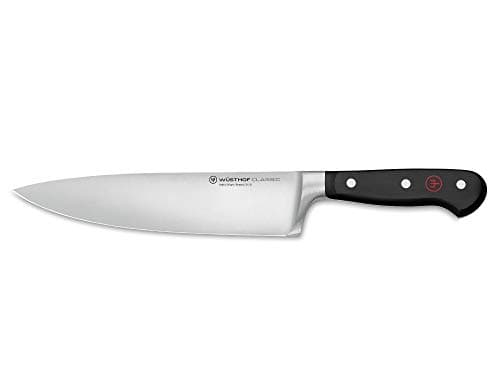
The Wusthof Classic 8-inch is the knife most reviewers name when someone asks for "the one chef knife to buy," and for good reason: it is forged in Solingen, Germany from X50CrMoV15 stainless at around 58 HRC, with a full bolster, a full tang, and Wusthof's Precision Edge ground to roughly 14 degrees per side — keener than the old ~20-degree German standard. We have not cooked with this unit; the read below is compiled from published specifications and the value math we apply to every pick, the method behind how we review.

What you are paying for is heft and durability. A forged German blade has weight and balance that a light stamped knife cannot match, the bolster gives a knuckle guard and a pinch-grip anchor, and the ~58 HRC steel holds a working edge respectably while staying tough enough to survive squash, bone-in poultry, and everyday board abuse. The trade against a Japanese blade is keenness and agility: at ~58 HRC and ~14 degrees it is neither as hard nor as thin as a Shun Classic, so it will not fall through a tomato quite as effortlessly, and it asks more of your forearm over a long prep. If that Western-versus-Japanese choice is the real question for you, our Japanese vs German breakdown is the place to settle it; if you just want the shortlist, start with best chef knives.

01
Wusthof Wusthof Classic 8"

Best forged all-rounder

Wusthof Classic 8"

Forged X50CrMoV15~58 HRC~14 deg/side edgeFull bolster & tang
8.1/10

The default forged German all-rounder: heavy enough to power through hard produce, tough enough to shrug off board abuse, and keener than the old German standard thanks to a ~14-degree edge. Buy it if you want one durable knife for everything and do not mind the weight.

Edge & steel
8
Sharpness
8
Handling
8.5
Build
9
Value
7

Pros

  • Forged Solingen build with real heft and balance behind every cut
  • Precision Edge at ~14 deg/side is keener than the old ~20 deg German norm
  • Full bolster gives a knuckle guard and a secure pinch grip
  • Tough enough at ~58 HRC for squash, bone-in poultry and daily abuse

Cons

  • Heavier than a Japanese blade, so more forearm work over long prep
  • Not as keen or as thin as a hard ~60-plus HRC Japanese knife
  • Full bolster makes full-blade sharpening and heel use harder

Don't buy this if…

you want the lightest, keenest blade on the board, because a thin Japanese knife slices with less effort, though it needs more careful handling.

Wusthof has forged in Solingen for generations, and the Classic line is its most-recommended chef knife for a reason: it is the safe default that rarely disappoints. Forging hammers the blade from a single billet, which is what gives it the weight, balance, and full bolster a stamped knife lacks; the X50CrMoV15 stainless is tempered to around 58 HRC, and the Precision Edge is ground to roughly 14 degrees per side rather than the ~20 degrees older German knives shipped with — a meaningful step toward Japanese keenness while keeping Western toughness. The triple-riveted POM handle is synthetic, durable, and dishwasher-tolerant, though hand-washing any good knife is the smarter habit.

On value math it sits in the mid-to-premium band: you are paying more than a stamped workhorse for a genuinely forged blade that will outlast decades of use, but less than a premium Japanese Damascus knife. The ~58 HRC steel is the honest center of it — it holds a usable edge well enough for a home cook and, being softer than Japanese steel, is easy to bring back on a stone, yet it will not stay scary-sharp as long as a ~61 HRC blade. Match it to the cook who wants one durable knife for everything and values a forgiving edge over the last few percent of sharpness.

$170.00View on Amazon

Price as of Jul 19, 2026. Prices change — Amazon's at checkout is the one that counts.

#ad · we may earn a commission from this link to Wusthof Classic 8"

Who the Wusthof Classic is for

Reach for the Classic if you want a single do-everything knife that will forgive you: a home cook who rock-chops, breaks down hard squash, and occasionally forgets to baby the edge. The heft does real work on dense produce, the bolster keeps knuckles safe, and the softer German steel means a beginner can learn to sharpen without fear of chipping. If you have decided Western over Japanese, this is the shortlist-topper — see the full field in best chef knives.

Alternatives worth a look

Curious what the weight buys you against a lighter, keener blade? Compare it to the gateway Japanese pick in our MAC Chef Series review, or read Japanese vs German to see the whole trade laid out. If a forged German feel matters but budget is tight, the value benchmark in our Victorinox Fibrox Pro review is the cheaper starting point.

How we picked

We did not lab-test these knives

Everyone in this category says they tested twenty knives in a professional kitchen. We have not hands-on tested any of these, and we say so. What we did instead: compiled the published specifications — steel type and hardness (HRC), edge angle, blade geometry, weight and build — applied established sharpening standards, ran the value math (spec quality ÷ live price), and scored each product against a published rubric. The scores are judgments from documented research — not measurements we took, because we do not have a test lab and we will not pretend we do. Where a number came from someone else's work, we name them in Sources.

Questions

Frequently asked

Is the Wusthof Classic 8-inch worth the money?
For a forged German blade built to last decades, most reviewers say yes. The value math puts it in the mid-to-premium band — more than a stamped workhorse, less than a Japanese Damascus knife — and you are paying for heft, a full bolster, and a durable edge rather than marketing. If you want most of the performance for less, a stamped knife gets you closer than you might expect.
How sharp is the Classic compared with a Japanese knife?
Wusthof grinds the Classic to about 14 degrees per side, keener than the old ~20-degree German standard but still less acute than a Japanese blade at ~15 degrees on much harder steel. In practice it slices cleanly but takes a little more effort through delicate produce than a thin ~61 HRC knife like the Shun Classic.
Can I put it in the dishwasher?
The synthetic POM handle tolerates it, but you should not. Dishwasher heat, detergent, and jostling dull the edge and can pit the steel over time. Hand-wash and dry any good knife immediately — it takes seconds and protects the edge you paid for.
What sharpening angle should I use on it?
Stick close to the ~14 degrees per side Wusthof grinds it at, or the ~15-20 degree Western range if you are freehand. Our guide to sharpening angles explains how to match the angle to the factory edge so you are not fighting the geometry.

Keep reading

Receipts

Sources

We do not run a testing lab, and we do not pretend to. Where a spec or a measured number came from someone else's work — a manufacturer's page, a published standard — we name them and link them. Where we could not verify something, we say so on the page rather than quietly leaving it out. Read our full method.