Skip to content
The Edge Bench

Roundups & reviews · Chef Knives

Victorinox Fibrox Pro 8-inch review: the value benchmark, honestly

A light, stamped, soft-steel blade that outperforms its price. Here is the compiled-spec case for buying it, and the honest case for buying something keener.

By Stephen V.Updated How we review
#ad

We earn a commission when you buy through our Amazon links, at no extra cost to you. It never changes a verdict, and we say so when the cheaper knife is the better buy. How this works.

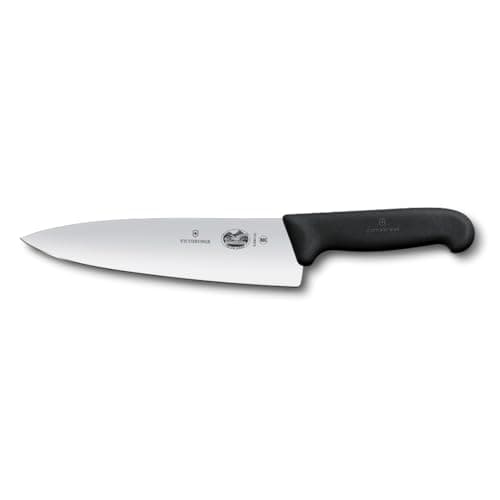
The Victorinox Fibrox Pro 8-inch is the knife almost every reviewer reaches for when they need a baseline — the blade a pricier pick has to beat to justify itself. It is stamped rather than forged, runs a soft European X50CrMoV15 stainless at around 55-56 HRC, and weighs only about 7.4 ounces, which is why it feels so different from a heavy German forging. We have not cooked with this unit; what follows is compiled from published specs and the value math we run on every pick, the same method we lay out in how we review. Read alongside our best chef knives for the money roundup, it is the reference point the whole list is measured against.

The honest case is simple: a light stamped blade with a thin edge does most of what a home cook needs, and the soft steel that keeps it off the premium tier is also what makes it trivially easy to resharpen. The trade is edge retention — softer steel rolls sooner, so you will hone it more often — and a stamped blade with no bolster lacks the heft and balance some cooks want behind a cut. If you want a keener factory edge, better retention, and a forged feel, that is a real reason to spend up: see our best chef knives shortlist, or step to the forged German all-rounder in our Wusthof Classic 8-inch review. For everyone else, the value math here is hard to beat.

01
Victorinox Victorinox Fibrox Pro 8"

Best value benchmark

Victorinox Fibrox Pro 8"

Stamped X50CrMoV15~55-56 HRC~20 deg/side edgeLight ~7.4 oz
7.8/10

The budget benchmark for a reason: a light, grippy, easy-to-sharpen blade that handles the bulk of home prep and asks almost nothing to maintain. Buy it if value and low fuss matter more than a keen factory edge or a forged feel.

Edge & steel
6.5
Sharpness
7.5
Handling
8.5
Build
7
Value
9.5

Pros

  • Light and nimble at about 7.4 oz, so far less hand fatigue over long prep
  • Grippy, textured Fibrox handle stays secure with wet or oily hands
  • Soft steel takes an edge back easily on a stone or pull-through
  • NSF-certified with a lifetime warranty, made in Switzerland

Cons

  • Soft steel at ~55-56 HRC dulls faster than a hard Japanese blade
  • Stamped, bolster-free build lacks the heft and balance of a forging
  • Wide ~20 deg/side edge is durable but not especially keen out of the box

Don't buy this if…

you want the longest edge retention or the balanced heft of a forged knife, because a harder Japanese blade or a German forging serves you better.

Victorinox has made this blade for professional and home kitchens for decades, and America's Test Kitchen has named the Fibrox Pro its standing budget pick across multiple updates — the clearest signal that a stamped knife can hold its own against forgings that cost several times as much. Stamping means the blade is cut from a rolled sheet rather than hammered from a billet, which keeps it thin and light and drops the price; the European X50CrMoV15 stainless sits around 55-56 HRC, softer than a Japanese blade but tough and forgiving. The textured Fibrox handle is the other half of the story: it is grippy when wet, comfortable across hand sizes, and the reason line cooks trust it through a long shift.

Run the value math and the appeal is obvious — you are paying budget money for roughly the cutting performance a mid-price knife delivers, minus the edge retention and the forged heft. The soft steel is a genuine two-way trait: it rolls and dulls sooner, so you will reach for a honing rod more often, but it also comes back to sharp in a few passes on a stone at the right angle, so upkeep is easy even for a beginner. If your goal is the most knife for the least money and you do not mind honing regularly, this is the one to beat. If you want a keener edge that stays keen, that is exactly where spending more starts to earn its keep.

$47.10View on Amazon

Price as of Jul 19, 2026. Prices change — Amazon's at checkout is the one that counts.

#ad · we may earn a commission from this link to Victorinox Fibrox Pro 8"

Who the Fibrox Pro is for

This is the knife for the cook who wants one dependable blade without overthinking it: a first-apartment starter, a culinary student on a budget, or a busy kitchen that runs the knife hard and does not want to baby an expensive edge. It rewards anyone happy to hone often and resharpen occasionally, and it is forgiving of the board contact and bone-adjacent tasks that would chip a harder blade. If low fuss and value are your priorities, you can stop here — the whole point of the best-for-the-money list is that this blade anchors it.

Alternatives worth a look

Want more edge retention and a forged feel without going Japanese? The Wusthof Classic 8-inch is the classic step up, with a bolster and harder steel. Prefer a keener, lighter blade and are willing to take more care of it? Read our best chef knives shortlist for the Japanese options. Either way, the Fibrox is the value line every one of those has to clear to be worth the extra outlay.

How we picked

We did not lab-test these knives

Everyone in this category says they tested twenty knives in a professional kitchen. We have not hands-on tested any of these, and we say so. What we did instead: compiled the published specifications — steel type and hardness (HRC), edge angle, blade geometry, weight and build — applied established sharpening standards, ran the value math (spec quality ÷ live price), and scored each product against a published rubric. The scores are judgments from documented research — not measurements we took, because we do not have a test lab and we will not pretend we do. Where a number came from someone else's work, we name them in Sources.

Questions

Frequently asked

Is the Victorinox Fibrox Pro a good knife for beginners?
Yes. It is light, grippy, and the soft steel is easy to resharpen, so beginners can learn to hone and sharpen on a knife that forgives mistakes — and it costs little enough that early nicks do not sting. Pair it with a honing rod and you have a complete starter setup.
Why does the Fibrox dull faster than pricier knives?
Its European stainless runs around 55-56 HRC, softer than the 60-plus HRC steel in Japanese blades. Softer steel rolls and wears sooner, so the edge needs honing more often — but the same softness makes it quick to bring back to sharp on a stone.
Stamped vs forged: does it matter here?
Stamping keeps the Fibrox thin, light, and cheap, and for most home prep that is a feature, not a flaw. What you give up is the heft, balance, and bolster of a forged knife like the Wusthof Classic. If you rock-chop for hours or want weight behind the blade, a forging feels better in hand.
What angle should I sharpen it at?
Victorinox grinds this edge at roughly 20 degrees per side, the Western standard. Keep to about 20 degrees when you sharpen and you preserve the durable, forgiving edge it ships with. Our guide to knife sharpening angles walks through matching the angle to the blade.

Keep reading

Receipts

Sources

We do not run a testing lab, and we do not pretend to. Where a spec or a measured number came from someone else's work — a manufacturer's page, a published standard — we name them and link them. Where we could not verify something, we say so on the page rather than quietly leaving it out. Read our full method.