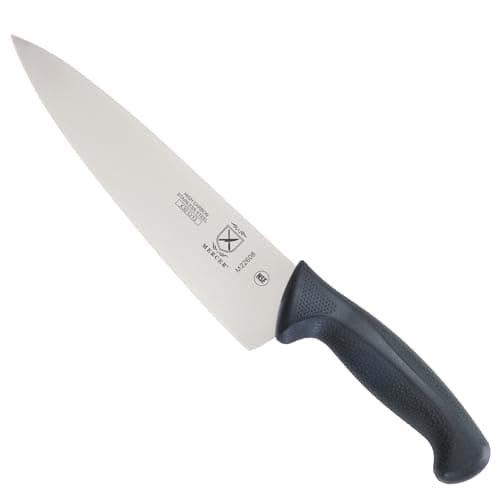
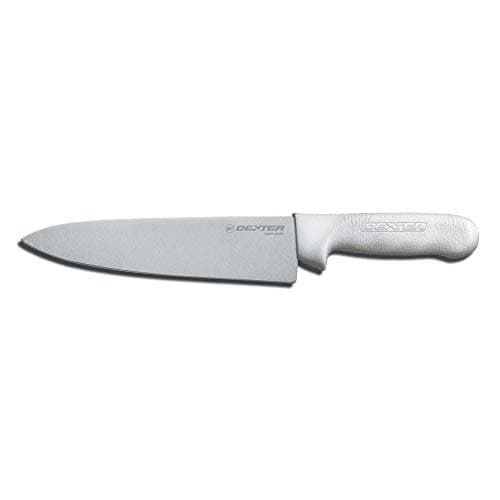
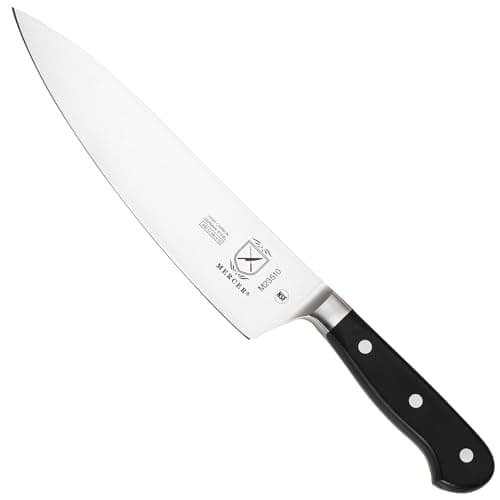
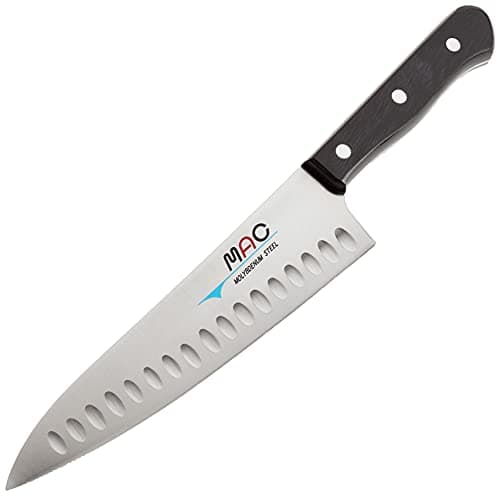
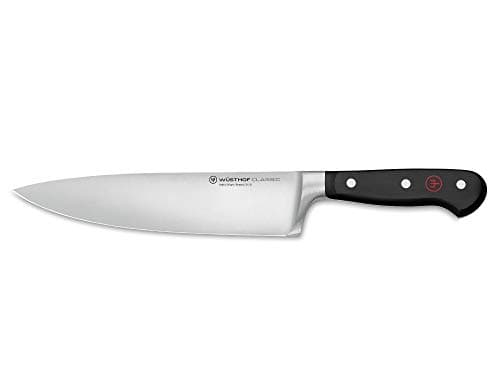
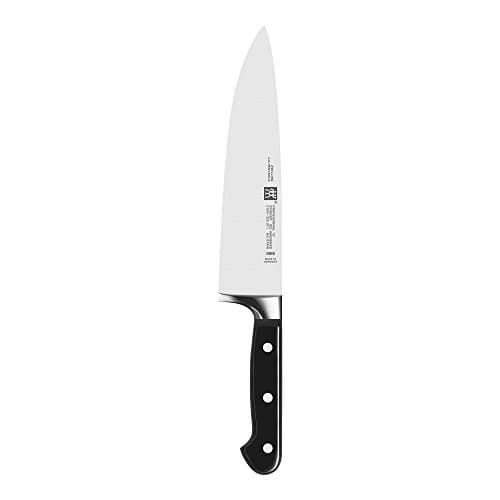
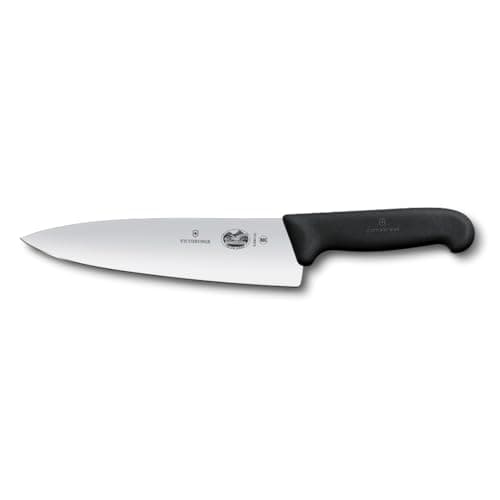
Professional kitchens rank knives on a different list of criteria than home cooks do, and it is worth understanding even if you never work a service. A commercial knife has to grip when your hands are wet and greasy, pass NSF sanitation requirements, take a hundred honing passes a week without complaint, survive being dropped, and cost little enough that losing one is annoying rather than devastating. Elegance is not on the list.
That is why the same handful of unglamorous knives show up in kitchen after kitchen, and why several of them also top our home ranking and value ranking. We ranked these on edge and steel, sharpness, handling under real conditions, build, and value, from published specifications and the method on how we review. If you are buying for a home kitchen and want the same durability without the institutional looks, the German and sub-$200 lists are the better starting point.
What a professional kitchen actually rewards
Grip when wet. Fibrox and Santoprene handles are textured for a reason: hands in a commercial kitchen are wet, oily or gloved almost constantly, and a smooth riveted handle that feels lovely in a showroom becomes a liability at speed. NSF certification. Health inspectors care about seamless handle-to-blade junctions and non-porous materials, which rules out most wooden handles regardless of quality. Weight. Two ounces is nothing for twenty minutes and a great deal across twelve hours. Replacement cost. Knives disappear in shared kitchens, and the expected cost of that is a real factor. None of those criteria appear on a consumer roundup, which is why the professional answer often looks unglamorous.
Why soft steel wins in a commercial kitchen
It looks like a downgrade and it is not. A soft blade at 55–56 HRC rolls rather than chips, and a rolled edge comes back with five seconds on a steel — which is exactly the maintenance model a busy kitchen can actually sustain. A hard Japanese blade holds its edge longer but, when it finally goes, needs a stone and ten quiet minutes that do not exist during service. Add the risk of chipping against a hotel pan or a frozen product and the calculation gets clearer. That is why the hard-steel picks here are personal knives rather than station knives — the reasoning is the same one in easiest knives to sharpen.
Honing is the whole professional routine
Professionals do not sharpen more than home cooks. They hone constantly and sharpen occasionally, which is why their knives always feel sharp. A few light passes on a rod before each task keeps a soft edge straight indefinitely, and the actual stone work happens on a day off. Nothing on this page performs the way it should without that habit — learn it from how to use a honing steel and pick a rod from our honing steel roundup. It is the single largest difference between a professional's knife and an identical one in a home drawer.
What professionals buy that home cooks skip
A long slicer, a 10-inch chef's knife for volume work, a cheap paring knife bought in multiples, and a knife roll with edge guards. That shape of kit is also what culinary programs put on their tool lists, which our best chef knives for culinary school guide covers knife by knife. Notice what is missing: sets, blocks, decorative blades, and duplicate mid-size knives. A working kit is three or four blades bought individually and replaced when they wear out. If you are building a home kitchen on the same principle, our knife set roundup makes the argument against blocks, and knife storage covers guards and strips.
Should a home cook buy a professional knife?
Often, yes — with one caveat. The durability, grip and low cost translate perfectly to a home kitchen, and the Victorinox has topped our main ranking for exactly that reason. What does not translate is the aesthetic: these are plain plastic-handled tools, and if you want a knife that is pleasant to look at and hold, that is a legitimate thing to want and you should read the under-$200 list instead. Buying a beautiful knife is fine. Pretending it is a performance decision is not.
What we would skip
Skip any knife marketed as "professional" that has a decorative handle, a non-NSF wood scale, or a Damascus pattern — in this context those are consumer features wearing a chef's jacket. Skip 10-inch blades as a first professional knife; 8 inches is the standard for a reason and the extra length is harder to control at speed. And skip anything that cannot be honed back quickly, because in a working kitchen an edge you cannot restore in seconds is an edge you stop restoring.
The two brands at the top of this page are the ones most working kitchens actually choose between, and we have run them head to head on both of the knives people buy from them — the 8-inch chef's knife and the flexible fillet — in Victorinox vs Dexter-Russell. The margins are small enough that the deciding factor turns out to be the handle and the sanitation, not the steel.