Skip to content
The Edge Bench

Stones, sharpeners & how-to · Sharpening

How long does a whetstone last?

Years, for a home cook - and the stone almost never dies of sharpening. It dies of being flattened, dropped, or stored wet.

By Stephen V.Updated How we review
#ad

We earn a commission when you buy through our Amazon links, at no extra cost to you. It never changes a verdict, and we say so when the cheaper knife is the better buy. How this works.

For a home cook sharpening a few knives every couple of months, a water stone lasts years — and when it finally goes, sharpening will not be what killed it. The arithmetic is not close: putting an edge on a kitchen knife removes a vanishing amount of stone. What removes stone is flattening, which is the maintenance you do to correct the dish that sharpening wears into the surface, and each flattening takes off far more material than the sharpening that made it necessary. A diamond plate is a different object entirely: it does not get thinner, it gets slower, and it will outlive a water stone several times over.

No maker publishes a lifespan figure, so we are not going to print one. What we can do is tell you what consumes a stone, what the end actually looks like, and which failure modes are your fault and therefore avoidable. That is the rest of this page.

What actually wears a stone out

Flattening, by a wide margin.A water stone wears unevenly — you sharpen mostly in the middle, so the middle goes concave. A dished stone cannot produce a consistent bevel, so you flatten it back with a coarse diamond plate or a flattening stone. Every flattening removes a layer across the whole surface, and that layer is thicker than the sum of what sharpening took out. If you flatten diligently, you will flatten your stone to death long before you sharpen it to death. How to flatten a whetstone is the procedure.

Grit.Coarse stones wear fastest, because coarse abrasive is held in a softer binder by design — the whole point is that spent abrasive sheds to expose fresh grit. A 1000-grit stone wears noticeably faster than a 6000-grit finishing stone, and a 400 or 220 wears faster still. On a combination stone like a 1000/6000, the coarse side is the side that will run out.

Binder type.Makers publish this and it matters. A hard ceramic binder — Shapton's Kuromaku line, for instance — holds its shape longer and needs flattening less often, which is the real lifespan advantage. Softer resin-bonded Japanese water stones cut faster and dish faster. Those two properties are the same property seen from two sides.

What you sharpen.Hard Japanese steel at 60+ HRC is slower to abrade and loads the surface differently from soft 55 HRC stainless. Rebuilding a chipped bevel on a coarse stone consumes more stone in one session than a year of routine sharpening — which is exactly why how to fix a chipped knife recommends a diamond plate for that job rather than your good water stone.

The three things that actually kill stones early

These are the real-world causes, and all three are preventable.

Dropping it. A water stone is a brittle bonded abrasive. Dropped on a tile floor it cracks, and a cracked stone with the halves glued back together will not stay flat. This is the most common premature death by a long way.

Storing it soaked, or freezing it.Leaving a soaking stone permanently in water encourages the binder to break down and lets it grow things; freezing a saturated stone will crack it as the water expands. The rule is simple: soak only as long as you need, then let it dry fully before it goes in a cupboard, and never store it in a garage that freezes. This is the answer to “how long can you leave a whetstone in water” — for the session, not between sessions.

Letting it dry out while dished and then forcing it.A hard dry stone with a concave face is where people press harder, chase the burr, and dig a groove that then has to be flattened out — removing a lot of material to fix a problem that a splash of water and five strokes on a flattening plate would have prevented.

Soaking and drying, since that is the same question

Soaking stones— the traditional Japanese water stones, including the KING 1000/6000 — want to be submerged until they stop bubbling. That is usually a matter of minutes rather than hours, and the stone tells you when it is done: when air stops coming out, it is saturated. Keep the surface wet while you work.

Splash-and-go stones— Shapton Kuromaku, Naniwa Goken and most hard-binder ceramics — need no soak at all. Wet the surface, sharpen, re-wet as needed. This is the single biggest convenience difference between stone types and the reason splash-and-go stones get used more often by people who own both.

Drying matters more than people think. Let a stone air-dry completely before storing it, on its side or on a rack rather than flat in a puddle. A stone that has been put away damp is the one that smells, grows a bloom and eventually crumbles at the edges. Give it a day if the air is humid.

Diamond platesneed neither. Use them with water or a little dish soap to carry the swarf away, rinse, wipe, store dry. They do not soak, do not dish and do not need flattening — which is most of their appeal.

How a diamond plate ends, which is differently

A diamond plate is monocrystalline diamond bonded to a flat steel substrate. It does not get thinner with use in any meaningful way, and it never needs flattening. What happens instead is that it slows down: the exposed diamond crystals gradually fracture and dull, or the surface loads with metal swarf, and the plate stops cutting as aggressively as it did new.

Two consequences. First, the famous “break-in” period is real — a new plate feels aggressive for the first few uses as the tallest crystals shear off, and then settles into the cutting rate it will hold for a long time. That initial drop is not the plate wearing out. Second, because the failure mode is slowing rather than thinning, a plate that has gone slow can often be cleaned rather than replaced. Scrub it with a brush and dish soap or a household cleaner to clear the loaded metal, and a surprising amount of cutting speed comes back.

A home-use diamond plate kept clean and not used as a pry bar should outlast several water stones. It is also the plate you use to flatten those water stones, which is the one job that genuinely consumes a plate's surface faster than sharpening does.

How to tell your stone is finished

It is too thin to flatten again. The honest end point for a water stone. Once a stone is thin enough to flex or to feel fragile in your hands, flattening it once more leaves nothing behind. Most stones are 15 to 25 mm when new and the last few millimetres are not worth working with.

It is cracked. Replace it. A cracked stone will not stay flat and the crack catches an edge.

It glazes immediately and will not release fresh grit.On an old soft stone this sometimes means the binder has degraded. Try flattening first — a glazed surface is usually just a surface — and if it glazes again within a few strokes, the stone is done.

It will not cut even after cleaning (diamond plates). A clean plate that still skates over the steel has lost its exposed diamond. That is the end for a plate, and it takes a long time to get there.

What is not an end-of-life sign: a dished surface, a glazed surface, a stone that has stopped making the slurry it used to, or a stone that no longer sharpens as well as you remember. All four of those are usually flattening and technique, and why is my knife still dull after sharpening covers the technique half.

The short answer

Quick picks

#KnifeBest forScorePrice
01
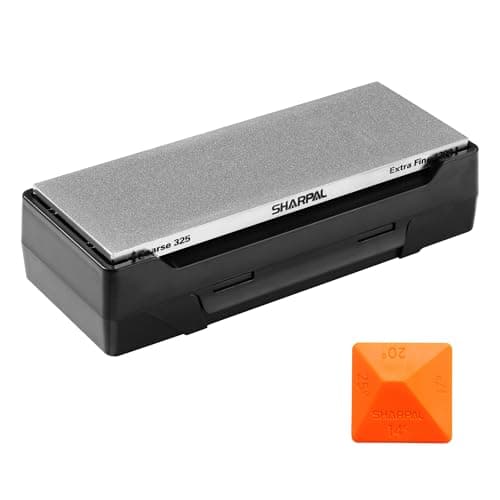
SHARPAL SHARPAL 162N Double-Sided Diamond Stone 8" x 3"
SHARPAL 162N Double-Sided Diamond Stone 8" x 3"

The longest-lived option, and the one to buy if lifespan is the thing you are optimising. Monocrystalline diamond on a flat substrate, coarse on one face and fine on the other, with an 8 by 3 inch working surface. It never dishes, never needs flattening, and loses cutting speed rather than thickness - so cleaning it recovers most of what use takes away.

Best lifespan
9.2
$69.99Amazon
02
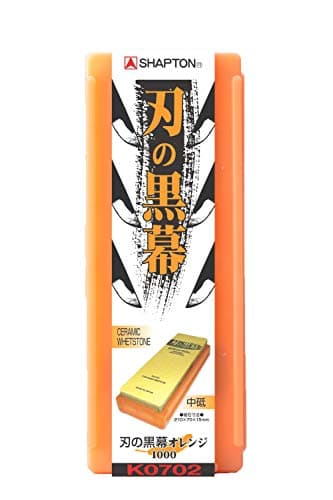
Shapton Shapton Kuromaku 1000 (Orange)
Shapton Kuromaku 1000 (Orange)

The longest-lived water stone, and the pick if you want a stone's feel with a plate's durability. A 1000-grit ceramic in a hard binder that holds its shape far better than a soft resin-bonded stone, splash-and-go with no soaking, made in Japan. It needs flattening far less often, which is the only lifespan variable that really matters.

Best long-life water stone
8.0
$33.88Amazon
03
KING KW65 1000/6000 Combination Whetstone

The cheapest honest way to own both grits, and the stone most people's first whetstone is. A traditional Japanese soaking water stone with 1000 on one face and 6000 on the other, on a plastic base. It wears faster than either option above - which, at this price, is a trade a lot of people should take.

Best cheap replacement
7.6
Check price →

#ad · Live prices from the Amazon Product API, as of October 17, 2026. Where we have no verified live price, we show none — a gap beats a number that has rotted.

In detail

The picks, in full

01
SHARPAL SHARPAL 162N Double-Sided Diamond Stone 8" x 3"

Best lifespan

SHARPAL 162N Double-Sided Diamond Stone 8" x 3"

Double-sided, coarse + fine diamond8 x 3 in. working surfaceMonocrystalline diamond on a flat substrateNon-slip base included
9.2/10

The longest-lived option, and the one to buy if lifespan is the thing you are optimising. Monocrystalline diamond on a flat substrate, coarse on one face and fine on the other, with an 8 by 3 inch working surface. It never dishes, never needs flattening, and loses cutting speed rather than thickness - so cleaning it recovers most of what use takes away.

Lifespan
10
Cost over time
9
Cutting speed
9
Maintenance burden
10
Value
8

Pros

  • Never dishes and never needs flattening, which removes the main thing that consumes a stone
  • Loses cutting speed rather than material, and a scrub with soap recovers much of it
  • Two grits in one plate covers both repair and routine sharpening
  • A large 8 by 3 inch face, so long blades do not run off the end
  • Doubles as the plate you flatten your water stones with

Cons

  • Leaves a coarser finish than a fine water stone, so a keen polished edge wants a finishing stone after
  • Feels aggressive for the first few uses while the tallest crystals shear off - that is break-in, not wear
  • Diamond is unforgiving of a wobbling angle, so technique shows more than on a soft stone
  • No maker publishes a lifespan figure for these, including this one

Don't buy this if…

…you want the polished finish of a high-grit Japanese water stone - a diamond plate is the durable workhorse, not the finisher.

Re-scored on this page's rubric — Lifespan, Cost over time, Cutting speed, Maintenance burden, Value — rather than carried over from best diamond sharpening stones, where it is judged against other plates, or from are ceramic knives worth it, where it is the only thing that will sharpen a ceramic blade.

It takes lifespan and maintenance burden with 10s, and those two scores are the same fact stated twice: the reason it lasts is that the wear mechanism that kills water stones does not apply to it. If you are reading a page called “how long does a whetstone last” because you have worn one out and are annoyed, this is the honest answer to the underlying question. For the full field of plates, see best sharpening stones.

$69.99View on Amazon

Price as of October 17, 2026. Prices change — Amazon's at checkout is the one that counts.

#ad · we may earn a commission from this link to SHARPAL 162N Double-Sided Diamond Stone 8" x 3"

02
Shapton Shapton Kuromaku 1000 (Orange)

Best long-life water stone

Shapton Kuromaku 1000 (Orange)

1000 grit ceramicSplash-and-go, no soakHard binder, holds flatMade in Japan
8.0/10

The longest-lived water stone, and the pick if you want a stone's feel with a plate's durability. A 1000-grit ceramic in a hard binder that holds its shape far better than a soft resin-bonded stone, splash-and-go with no soaking, made in Japan. It needs flattening far less often, which is the only lifespan variable that really matters.

Lifespan
8
Cost over time
8
Cutting speed
8
Maintenance burden
8.5
Value
7.5

Pros

  • A hard ceramic binder dishes much more slowly, so it needs flattening far less often
  • Splash-and-go - no soaking, so no soaked-storage failure mode at all
  • Gives the feedback and the finish of a proper water stone, which a diamond plate does not
  • Comes in a case that doubles as a base, which also protects it from the drop that kills most stones
  • 1000 grit is the one stone to own if you only own one

Cons

  • Still dishes eventually and still needs a flattening plate - just less often
  • A hard binder cuts slightly slower than a soft stone of the same grit
  • Single grit, so a coarse repair or a fine polish needs another stone
  • No published lifespan figure, like every stone

Don't buy this if…

…the recipient has never sharpened freehand - a combination stone with an angle guide teaches the skill, and this does not.

Re-scored here; it is also ranked at best sharpening stones and appears as a gift pick on best gifts for chefs, where it is judged on presentation rather than longevity.

It is on this page because it is the answer for anyone who has read the section above and decided they still want a stone rather than a plate — which is a reasonable thing to want, because the feedback a water stone gives you under the blade is genuinely useful when you are learning. The hard binder is the whole lifespan argument: less dishing means less flattening, and less flattening is the only lever on a water stone's life that you actually control. Grit choice is at whetstone grits explained.

$33.88View on Amazon

$39.8915% off

Price as of October 17, 2026. Prices change — Amazon's at checkout is the one that counts.

#ad · we may earn a commission from this link to Shapton Kuromaku 1000 (Orange)

03

Best cheap replacement

KING KW65 1000/6000 Combination Whetstone

1000/6000 combinationJapanese water stonePlastic base includedSoaking stone
7.6/10

The cheapest honest way to own both grits, and the stone most people's first whetstone is. A traditional Japanese soaking water stone with 1000 on one face and 6000 on the other, on a plastic base. It wears faster than either option above - which, at this price, is a trade a lot of people should take.

Lifespan
6
Cost over time
8
Cutting speed
8.5
Maintenance burden
6
Value
9.5

Pros

  • Two grits in one stone - a working edge and a polished finish without buying twice
  • Soft binder cuts quickly and gives generous feedback, which is good for learning
  • The cheapest stone on this page by a wide margin, so wearing it out is not a disaster
  • A long-standing default recommendation for a first water stone

Cons

  • Softest binder here, so it dishes fastest and needs flattening most often - the main lifespan cost
  • A soaking stone, which means the soaked-storage failure mode applies and drying matters
  • The 1000 side will wear out long before the 6000 side, because that is the side you use
  • Thinner per grit than a single-grit stone of the same total thickness

Don't buy this if…

…you want to sharpen tonight with no practice - a guided system is the more honest purchase.

Re-scored here; it is the stone-on-its-own pick at knife sharpening kit for beginners and ranked at best sharpening stones for beginners.

It scores lowest on lifespan and it is still the right answer for a lot of people, which is the kind of result a lifespan rubric should be allowed to produce. A soft combination stone dishes fast and needs flattening often, and it costs little enough that replacing it every few years is not a meaningful expense. The genuine warning is about the combination part: you will use the 1000 side far more, so that side thins while the 6000 side stays almost new, and the stone becomes unusable with most of one grit left on it.

Check price on Amazon →

We don't have a verified live price for this right now, so we aren't showing one.

#ad · we may earn a commission from this link to KING KW65 1000/6000 Combination Whetstone

How many sharpenings is that, roughly?

We are not going to give you a number, because nobody can honestly give you one — it depends on grit, binder, steel, how much pressure you use, how dished you let the stone get, and above all how often you flatten. What we can give you is the right way to think about it: count flattenings, not sharpenings. Each flattening is a measurable slice off the stone. If you flatten every few sessions, that is your clock. If you are using a hard-binder stone and flattening rarely, the clock runs years slower.

For context on the other side of the equation: putting a working edge on a kitchen knife on a 1000 stone takes a couple of minutes and removes an amount of steel you can barely see. The stone loses correspondingly little. Sharpening is not the expensive operation here.

Should you buy a water stone or a diamond plate?

Diamond plate if durability, zero maintenance and a single purchase are what you want, if you have hard Japanese steel to sharpen, or if you need to repair chips. It is the lower total cost over a decade and it is the plate you need anyway to flatten water stones.

Water stoneif you want to learn freehand properly. A stone gives feedback a plate does not — you can feel the burr form, feel the angle go wrong, hear the change in the sound — and that feedback is most of what learning to sharpen consists of. A hard-binder splash-and-go stone is the version of this with the fewest lifespan problems.

Honestly, both, eventually, in that order: a plate for repair and flattening, a 1000-grit stone for routine work, and a finishing stone only if you decide you enjoy this. The whole field is at best sharpening stones and best diamond sharpening stones. And if you have read this far and concluded you would rather not maintain an abrasive at all, that is a completely legitimate conclusion — best sharpening systems ranks the guided units that hold the angle for you.

Five habits that double a stone's life

Use the whole surface.Deliberately work at the ends and edges of the stone, not just the middle. This is the single biggest lever and it costs nothing — a stone that wears evenly needs flattening far less often.

Use less pressure. Pressure does not speed sharpening up much and it digs into the surface and tears abrasive out. Let the stone cut.

Flatten early and lightly. Five strokes on a plate when the stone is barely dished removes a fraction of what it takes to rescue a badly dished stone later. Counter-intuitively, flattening more often removes less material in total.

Keep repair work off your good stone.Rebuilding a chipped bevel or reprofiling an edge belongs on a coarse diamond plate. One repair session on a 1000 water stone costs you more stone than months of routine sharpening — see how to fix a chipped knife.

Store it dry, on its side, somewhere it cannot fall. Dropping and damp storage between them account for most stones that die young.

How often should you use a whetstone at all?

Less often than people assume, because a honing rod should be doing most of the work. A rod straightens an edge that has rolled over; a stone removes metal to create a new edge. If you hone regularly you will reach for the stone a few times a year per knife rather than monthly, and your stone lasts proportionally longer. Sharpening vs honing is the distinction and how often to sharpen knives is the cadence.

How we scored these three

Five metrics built for the question. Lifespanreads the published construction — binder hardness, abrasive type, substrate, thickness — against the wear mechanisms described above. Cost over time is price against expected working life rather than price alone. Cutting speed is how fast it removes steel, which trades against lifespan rather than adding to it. Maintenance burden covers flattening, soaking and drying. Valueis all of it against the live price. The overall is the mean to one decimal place. No maker publishes a lifespan figure and we have not measured one, so these are judgments from construction and from the arithmetic of material removal — how we review says exactly what that means.
How we picked

We did not lab-test these knives

Everyone in this category says they tested twenty knives in a professional kitchen. We have not hands-on tested any of these, and we say so. What we did instead: compiled the published specifications — steel type and hardness (HRC), edge angle, blade geometry, weight and build — applied established sharpening standards, ran the value math (spec quality ÷ live price), and scored each product against a published rubric. The scores are judgments from documented research — not measurements we took, because we do not have a test lab and we will not pretend we do. Where a number came from someone else's work, we name them in Sources.

Questions

Frequently asked

How long does a whetstone last?
For a home cook sharpening a few knives every couple of months, years — and it will not be sharpening that ends it. Flattening removes far more material than sharpening does, so how often you flatten is the real clock. No maker publishes a lifespan figure.
How long does a diamond sharpening stone last?
Longer than several water stones. A diamond plate does not get thinner or need flattening; it gradually loses cutting speed as the exposed crystals dull or the surface loads with metal. A scrub with a brush and dish soap recovers much of that.
How long should I soak a whetstone?
Until it stops bubbling — usually minutes, not hours. Splash-and-go stones such as Shapton Kuromaku and Naniwa Goken need no soak at all, just a wet surface. Never store a stone submerged between sessions.
Can you leave a whetstone in water permanently?
Don't. Permanent submersion degrades the binder and lets the stone grow a bloom, and a saturated stone left somewhere that freezes will crack. Soak for the session, then air-dry fully before storing.
How long does a whetstone take to dry?
Hours, and up to a day in humid air. Dry it on its side or on a rack rather than flat in a puddle, and make sure it is completely dry before it goes in a cupboard — a stone put away damp is the one that smells and crumbles at the edges.
How do I know when to replace a whetstone?
When it is too thin to flatten again, when it is cracked, or when it glazes within a few strokes even straight after flattening. A dished surface, a glazed surface or a stone that seems to have stopped working are usually flattening and technique rather than the end of its life.
Does sharpening hard Japanese knives wear a stone out faster?
Somewhat — hard steel abrades more slowly and loads the surface differently. The bigger factor by far is repair work: rebuilding a chipped bevel consumes more stone in one session than months of routine sharpening, which is why that job belongs on a coarse diamond plate.
Which side of a combination stone wears out first?
The coarse side, because it is the side you use and because coarse abrasive is held in a softer binder by design. On a 1000/6000 you will generally wear the 1000 face out with most of the 6000 still untouched.

Keep reading

Receipts

Sources

We do not run a testing lab, and we do not pretend to. Where a spec or a measured number came from someone else's work — a manufacturer's page, a published standard — we name them and link them. Where we could not verify something, we say so on the page rather than quietly leaving it out. Read our full method.