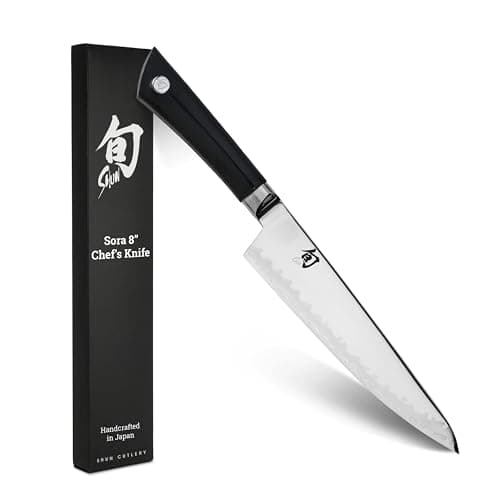
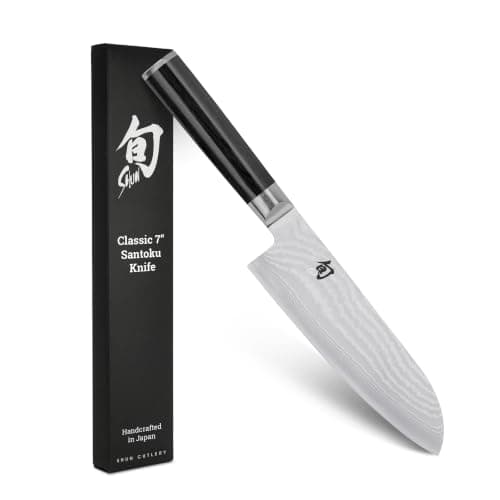
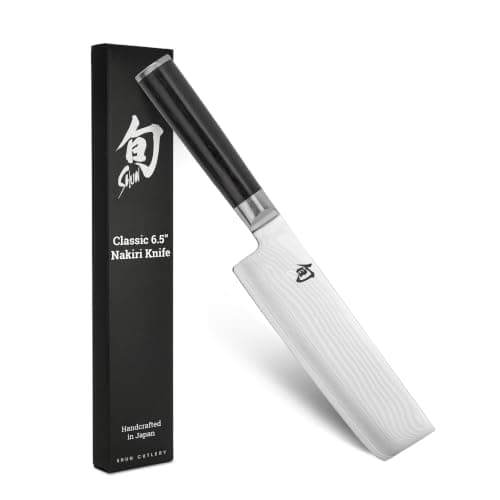
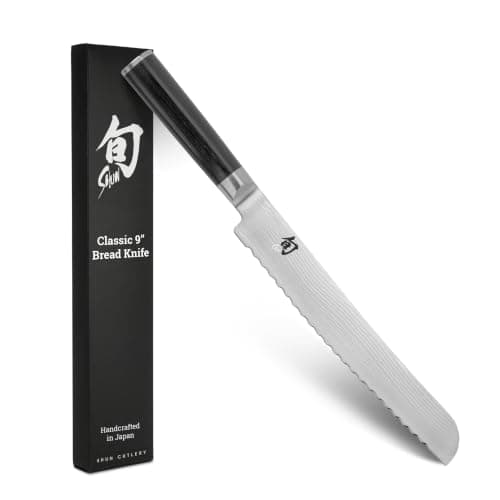
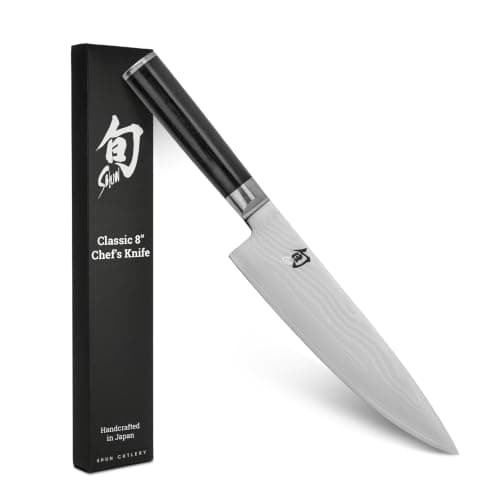
Buy the Shun Classic 8" — it is the best Shun knife and the right first purchase for anyone who has decided they want a hard Japanese edge. A VG-MAX core at roughly 60–61 HRC, clad in 68 layers of Damascus, ground to about 16 degrees per side, on a D-shaped pakkawood handle. It cuts cleaner through dense produce than any Western knife here and it holds that edge far longer. The budget pick is the Shun Sora 8"— a VG10 cutting edge laser-welded to a 420J stainless upper, which is the cheapest honest route into the brand and the one to take if the Classic is more than you want to spend.
Every knife here was in stock and priced at our last price check. We do not print a number in the prose: the Quick Picks table carries the live price and the date we pulled it, with a Check price button on every row.
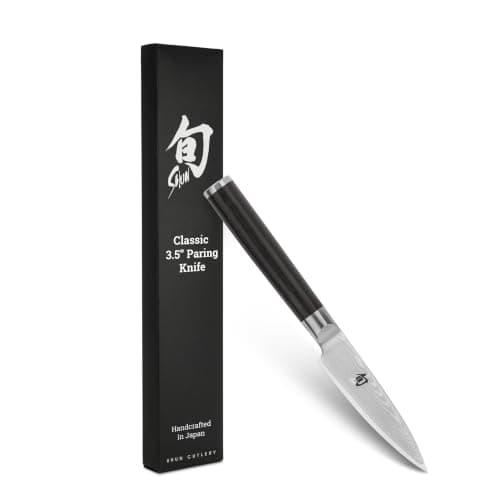
The single most useful thing to know about Shun is that the Classic line is one specification applied to every shape. Chef's knife, santoku, nakiri, paring knife, bread knife, vegetable cleaver — all VG-MAX core, all roughly 60–61 HRC, all about 16 degrees per side, all Damascus-clad with the same D-shaped pakkawood handle. So once you have decided the Classic steel suits you, choosing between Shun knives is purely a question of shape. That is the structure of this page.
It is also why the honest warning belongs up front. Sixty-one HRC is hard, and hard steel chips rather than bends. A ridged steel honing rod will damage these knives. A fixed-angle electric sharpener will reprofile them. A glass or stone cutting board will micro-chip the edge in a single session. Bones, frozen food and twisting cuts are out. If that list sounds like a lot of rules, a Western knife from best German chef knives will make you happier, and we would rather say so here than after you have bought one.
The method is on how we review: we have not hands-on tested these knives and we do not claim to have. The scores come from published specifications — core steel, hardness, edge angle, cladding, handle material and geometry — and from value arithmetic against the live price. Everything sits under the chef knives hub.
Classic or Sora?
Classicis the line Shun is known for: a VG-MAX core at roughly 60–61 HRC, clad in Damascus, ground to about 16 degrees per side, on a D-shaped pakkawood handle. Every shape in the line shares that specification, so the only decision left is geometry.
Sorais the working line. A VG10 cutting edge is laser-welded to a 420J stainless upper — Kai's Composite Blade Technology — and the handle is textured polymer. You keep a hard Japanese edge steel and give up the Damascus, the pakkawood, some blade stiffness and the looks. It is the cheapest honest route into the brand and we do not treat it as a lesser knife, only a plainer one.
What 61 HRC actually demands
This is the part that decides whether you should own a Shun at all. Hard steel does not bend back, it breaks, which changes four habits.
Hone on ceramic, never on a ridged steel rod.A ridged rod works by catching a rolled edge and bending it, and at 61 HRC the edge chips instead — best ceramic honing rods is the shortlist and grooved vs smooth honing steel is why.
Sharpen at the knife's own angle.Shun publishes about 16 degrees per side. A fixed-angle electric sharpener set to a Western 20 will reprofile the blade and keep going — best knife sharpeners for Japanese knives exists for exactly this problem.
Use a wood or soft-plastic board.Glass, stone, bamboo and ceramic will micro-chip a thin hard edge in one session — best cutting boards for knives.
Keep it away from bones, frozen food and levering.And out of the dishwasher, which is true of every knife and especially this one — can you put knives in the dishwasher.
The D-shaped handle and left hands
Classic handles are contoured asymmetrically, which is comfortable in a right hand and noticeable in a left one. It is not unusable left-handed — the blade itself is a symmetrical double bevel — but the handle is the part you feel, and it is worth knowing before you buy rather than after. Left-handed chef knivescovers the options. The Sora's polymer handle is not handed, which is a genuine point in its favor.
Damascus is cladding, not performance
The 68 layers on a Classic blade are a soft stainless jacket around the hard VG-MAX core. They protect the core, they look like that, and they contribute almost nothing to how the knife cuts. The core steel, the hardness and the 16-degree grind are what you are paying for. Damascus steel knives explained is the honest version of a claim most of this market makes badly.
How we ranked these
Five metrics, tuned for a single-brand premium lineup. Steel & hardness reads the published core steel and HRC. Cutting ability reads grind, published edge angle, blade stock and profile. Build & finish covers cladding, handle material and construction. Versatilityis how many jobs the shape genuinely covers, which is what separates a chef's knife from a nakiri. Value per dollar is specification quality against the live price, and it is the metric that pushes the bread knife and the paring knife down the page even though both are excellent objects. The overall is the mean of the five to one decimal place. None of these numbers came from a test lab, because we do not have one, and how we review says so in those words.