Skip to content
The Edge Bench

Roundups & reviews · Chef Knives

Alternatives to Wusthof

Wusthof Classic is forged Solingen steel at ~58 HRC with a full bolster and a published 14-degree edge. Five knives that match one of those properties or undercut the price, ranked - and an honest note on when to just buy the Wusthof.

Zwilling Zwilling Professional S 8"

Our top pick · Closest match overall

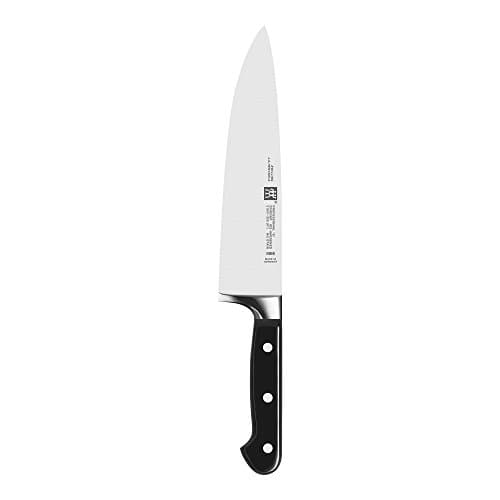
Zwilling Professional S 8"

8.8

The closest alternative there is, and the one to buy if you want the same category of knife for less. Forged in a company-owned German factory, FRIODUR ice-hardened to ~57 HRC, full bolster, full tang, published ~15 degree per side edge. It matches Wusthof on construction, origin, hardness band and grind - and undercuts it.

$120.00Amazon

#ad · Full ranking below

By Stephen V.Updated How we review
#ad

We earn a commission when you buy through our Amazon links, at no extra cost to you. It never changes a verdict, and we say so when the cheaper knife is the better buy. How this works.

Buy the Zwilling Professional S 8" — it is the closest alternative to a Wusthof Classic, and it is for someone who wants the same kind of knife rather than a cheaper kind of knife. Forged in a company-owned German factory, FRIODUR ice-hardened to roughly 57 HRC, with a full bolster, a full tang and a published ~15 degree per side edge — which is the Wusthof specification, point for point, from a different Solingen house. The budget pick is the Victorinox Fibrox Pro 8", which matches nothing about a Wusthof except the thing that actually cuts, and costs a small fraction of it.

Every knife here was in stock and priced at our last price check. We do not print a number in the prose: the Quick Picks table carries the live price and the date we pulled it, with a Check price button on every row.

What Wusthof is actually known for

You cannot pick a sensible alternative without naming what you are replacing, so here is the Wusthof Classic 8-inch from the maker's own published specification: forged X50CrMoV15 at roughly 58 HRC, a full bolster and full tang, and an edge ground to about 14 degrees per side. Three of those four matter.

The 14-degree edge is the genuinely unusual one. The German norm is closer to 20 degrees per side, and Wusthof grinds narrower, which is why a Classic arrives sharper out of the box than most Western knives and why it feels keener than its hardness alone would suggest. The full bolster gives the most secure pinch grip of any Western knife in our registry, at the cost of making the last inch of edge awkward to sharpen. And the forged full tang is where the heft and balance come from. Add the deepest range of spares, service and matching pieces of any brand we rank, and that is the product.

So an alternative has to say which of those it is matching. Nothing on this page matches all of them — if you want all of them, buy the Wusthof, and best German chef knives is where it wins. What the page below does is tell you honestly which property each alternative keeps and which it drops.

The method is on how we review: we have not hands-on tested these knives and we do not claim to have. The scores come from published specifications and from value arithmetic against the live price. Everything sits under the chef knives hub.

The short answer

Quick picks

#KnifeBest forScorePrice
01
Zwilling Zwilling Professional S 8"
Zwilling Professional S 8"

The closest alternative there is, and the one to buy if you want the same category of knife for less. Forged in a company-owned German factory, FRIODUR ice-hardened to ~57 HRC, full bolster, full tang, published ~15 degree per side edge. It matches Wusthof on construction, origin, hardness band and grind - and undercuts it.

Closest match overall
8.8
$120.00Amazon
02
Mercer Culinary Mercer Renaissance 8"
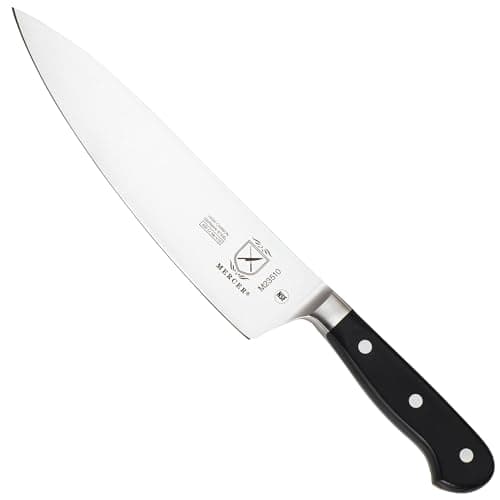
Mercer Renaissance 8"

The alternative that keeps the forging and drops the badge. Forged X50CrMoV15 at ~58 HRC with a full bolster, full tang and taper-ground edge - the same steel family and the same published hardness as a Wusthof Classic, on a Delrin handle, for a fraction of the money. This is the value answer to the question.

Best forged value
8.4
$48.13Amazon
03
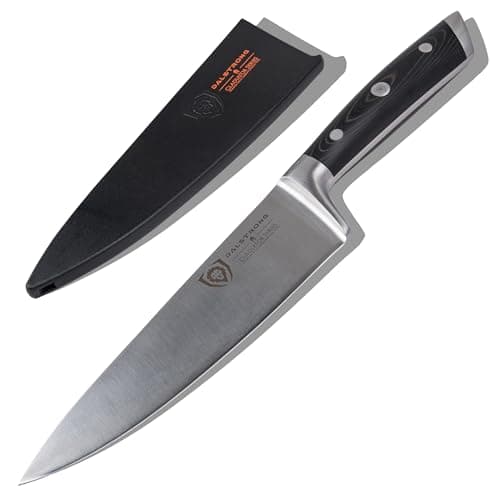
Dalstrong Dalstrong Gladiator Series 8"
Dalstrong Gladiator Series 8"

The alternative for someone whose complaint about Wusthof is the handle or the look rather than the steel. Forged ThyssenKrupp German steel at ~56+ HRC with a stated 16-18 degrees per side and a G-10 composite handle - a harder, grippier handle material than a riveted synthetic, at well under Classic money.

Best handle upgrade
8.4
$79.00Amazon
04
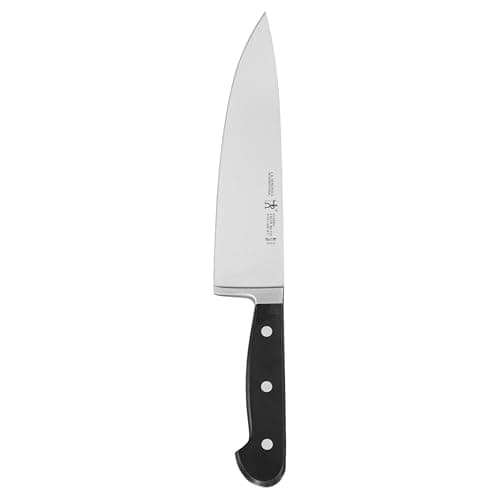
Henckels HENCKELS Classic 8"
HENCKELS Classic 8"

The alternative that keeps the shape and the price drop and asks you to read the label. Fully forged with a full bolster in German stainless at 55-58 HRC, triple-riveted and dishwasher rated - but made in Spain and described by its own maker as German engineered, which is a different claim from German made. Buy it knowingly.

Best forged lookalike
7.7
$78.95Amazon
05
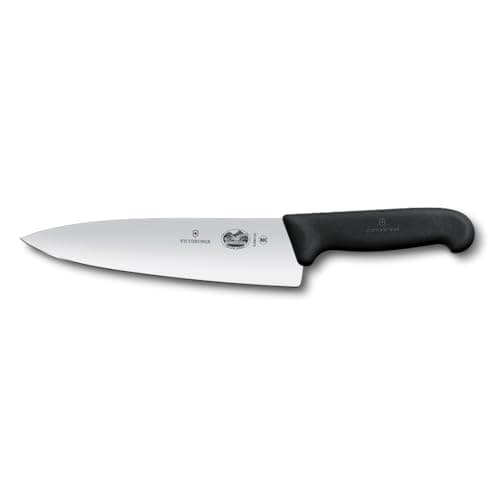
Victorinox Victorinox Fibrox Pro 8"
Victorinox Fibrox Pro 8"

The budget pick, and the knife that answers the question underneath the question. It matches nothing about a Wusthof - not forged, no bolster, soft mid-50s steel, a 20-degree edge - and it cuts food just as well for a small fraction of the price. If your real complaint about Wusthof is what it costs, this is the honest answer.

Budget pick
7.1
$48.20Amazon

#ad · Live prices from the Amazon Product API, as of November 12, 2026. Where we have no verified live price, we show none — a gap beats a number that has rotted.

In detail

The picks, in full

01
Zwilling Zwilling Professional S 8"

Closest match overall

Zwilling Professional S 8"

Forged, company-owned German factoryFRIODUR ice-hardened, ~57 HRC~15 deg/side edgeFull bolster, full tang
8.8/10

The closest alternative there is, and the one to buy if you want the same category of knife for less. Forged in a company-owned German factory, FRIODUR ice-hardened to ~57 HRC, full bolster, full tang, published ~15 degree per side edge. It matches Wusthof on construction, origin, hardness band and grind - and undercuts it.

Match on construction
9.5
Match on edge geometry
9
Edge retention
8.5
Handle & ergonomics
8.5
Value per dollar
8.5

Pros

  • The only knife here that matches Wusthof on every structural property: forged, German-made, full bolster, full tang
  • A published ~15 degree edge, which is within a degree of the Classic's 14 and far keener than the German norm
  • FRIODUR ice-hardening is a documented heat-treatment process with a published hardness, not a marketing word
  • Zwilling's own service and spares network is as deep as Wusthof's
  • Costs meaningfully less than the Classic at our last price check

Cons

  • Roughly 57 HRC against the Classic's ~58 - a small real difference in edge retention
  • The full bolster brings the same sharpening problem at the heel
  • Heavier than anything stamped, which is the point and a cost for small hands
  • Looks and feels like a Wusthof, so nobody will think you traded up

Don't buy this if…

…you specifically want the Classic's 14-degree grind and the Wusthof spares catalogue - this is a near-match, not an identical one, and the gap is small enough that brand loyalty is a legitimate tie-break.

Re-scored on this page's rubric rather than carried over; it is reviewed in full at our Zwilling Professional S review, and the head-to-head is Wusthof vs Zwilling.

The reason it wins a page about alternatives is that it is not really an alternative in kind — it is the same kind of knife from the other Solingen house. Both are forged X50-family German stainless with a full bolster and a full tang; both publish a hardness in the high 50s; both grind narrower than the German standard. The remaining differences are a point of hardness and the handle shape, and neither is the sort of thing that changes what you can do with the knife. If your reason for looking past Wusthof is price rather than principle, this is the end of the search.

The sibling to know about is the Zwilling Pro, which replaces the full bolster with a curved sloped one — the same forging with the heel problem solved, if that is the Wusthof trait you are trying to escape rather than keep.

$120.00View on Amazon

$169.9929% off

Price as of November 12, 2026. Prices change — Amazon's at checkout is the one that counts.

#ad · we may earn a commission from this link to Zwilling Professional S 8"

02
Mercer Culinary Mercer Renaissance 8"

Best forged value

Mercer Renaissance 8"

Forged X50CrMoV15~58 HRCFull bolster, full tangTaper-ground
8.4/10

The alternative that keeps the forging and drops the badge. Forged X50CrMoV15 at ~58 HRC with a full bolster, full tang and taper-ground edge - the same steel family and the same published hardness as a Wusthof Classic, on a Delrin handle, for a fraction of the money. This is the value answer to the question.

Match on construction
9
Match on edge geometry
7
Edge retention
8.5
Handle & ergonomics
8
Value per dollar
9.5

Pros

  • Matches the Classic's published hardness at roughly 58 HRC, which no other knife here does
  • Same steel family, forged, with a full bolster and a full tang
  • Costs a small fraction of a Wusthof Classic at our last price check
  • Delrin handle is tougher and more chemical-resistant than a riveted synthetic one
  • Mercer is a foodservice brand with NSF-certified lines and genuine commercial credibility

Cons

  • Mercer publishes no edge angle on this line, so the Classic's 14 degrees has no counterpart figure
  • Finish and handle are plainly built to a price - this is a working knife, not an heirloom
  • Nothing like Wusthof's spares, service or matching-piece catalogue
  • Full bolster again, with the same awkwardness sharpening the heel

Don't buy this if…

…the knife is a gift or a counter piece - it has the specification of a Wusthof and the presentation of a kitchen tool, and that is the trade.

Re-scored here; it is reviewed in full at our Mercer Renaissance review and it tops best Mercer knives.

On paper this is the closest match in the registry on the two specifications that are hardest to fake: forged construction and published hardness. Roughly 58 HRC is the Classic's own figure. What is missing is the grind: Wusthof states 14 degrees per side and Mercer states nothing for this line, so we score that gap as a gap rather than assuming the generous reading. In practice a taper-ground forged blade in the high 50s will take whatever edge you put on it, and if you own a stone you can grind it to 15 degrees yourself in one session.

$48.13View on Amazon

$51.256% off

Price as of November 12, 2026. Prices change — Amazon's at checkout is the one that counts.

#ad · we may earn a commission from this link to Mercer Renaissance 8"

03
Dalstrong Dalstrong Gladiator Series 8"

Best handle upgrade

Dalstrong Gladiator Series 8"

Forged ThyssenKrupp steel~56+ HRC16-18 deg/side edgeG-10 handle
8.4/10

The alternative for someone whose complaint about Wusthof is the handle or the look rather than the steel. Forged ThyssenKrupp German steel at ~56+ HRC with a stated 16-18 degrees per side and a G-10 composite handle - a harder, grippier handle material than a riveted synthetic, at well under Classic money.

Match on construction
8.5
Match on edge geometry
8
Edge retention
7.5
Handle & ergonomics
9
Value per dollar
9

Pros

  • A stated 16-18 degrees per side is keener than the German norm, if not quite the Classic's 14
  • G-10 is a harder, grippier and more stable composite than a riveted synthetic handle
  • Forged full-tang build at a price where some brands sell stamped
  • NSF certified and widely available
  • Looks and feels more expensive than its price band, which is the real reason people buy it

Cons

  • Roughly 56+ HRC is the softest published figure of the three forged knives here
  • Dalstrong has no service or spares network comparable to Wusthof or Zwilling
  • The styling is assertive in a way that will not suit everyone
  • A stated range rather than a single figure on both hardness and angle, which is a weaker specification

Don't buy this if…

…edge retention is the property you care about - two knives above publish a higher hardness, and a point or two of HRC is the thing you notice across a week of prep.

Re-scored here; it is reviewed in full at our Dalstrong Gladiator review and the head-to-head is Dalstrong vs Wusthof, which is the page to read if this is the trade you are weighing.

Its claim on this page is narrow and real: it is the handle. G-10 is a glass-epoxy laminate that is harder, more dimensionally stable and grippier when wet than the riveted synthetic handles the German houses use, and for some hands that single difference is worth more than a point of hardness. Knife handle materials covers why. What you give up is the published hardness and the service network, and both of those are genuine Wusthof strengths rather than marketing.

$79.00View on Amazon

Price as of November 12, 2026. Prices change — Amazon's at checkout is the one that counts.

#ad · we may earn a commission from this link to Dalstrong Gladiator Series 8"

04
Henckels HENCKELS Classic 8"

Best forged lookalike

HENCKELS Classic 8"

Fully forged, full bolsterGerman stainless, 55-58 HRCMade in Spain, "German engineered"Triple-riveted, dishwasher safe
7.7/10

The alternative that keeps the shape and the price drop and asks you to read the label. Fully forged with a full bolster in German stainless at 55-58 HRC, triple-riveted and dishwasher rated - but made in Spain and described by its own maker as German engineered, which is a different claim from German made. Buy it knowingly.

Match on construction
8.5
Match on edge geometry
6.5
Edge retention
7
Handle & ergonomics
8
Value per dollar
8.5

Pros

  • Genuinely fully forged with a full bolster, which is the Wusthof silhouette and feel
  • Published hardness band of 55-58 HRC overlaps the Classic's figure at the top end
  • Triple-riveted handle is the conventional German construction and it is solid
  • Costs well under a Wusthof Classic while looking very like one on a rail
  • Part of the same corporate family as Zwilling, with reasonable availability and support

Cons

  • Made in Spain, and the maker's own phrasing is "German engineered" rather than German made
  • A 55-58 HRC band is a wide specification - the bottom of it is softer than every forged knife above
  • No published edge angle, so there is no counterpart to the Classic's 14 degrees
  • Easy to confuse with the forged Zwilling J.A. Henckels line, which is a different tier

Don't buy this if…

…Solingen manufacture is part of what you are buying - this knife is honest about being engineered in Germany and made elsewhere, and if that distinction matters to you it is the wrong knife.

Re-scored here; the head-to-head is Wusthof vs Henckels, and the tier confusion is addressed in Zwilling vs Henckels.

We have included it because it is the knife most people actually end up comparing to a Wusthof in a shop, and because the specification deserves to be stated plainly rather than glossed. It is fully forged with a full bolster, which is the real thing and not a cosmetic imitation. The maker publishes a 55–58 HRC band rather than a figure, and describes the knife as German engineered while listing manufacture in Spain. None of that makes it a bad knife; all of it makes it a knife you should buy with your eyes open, which is why it sits fourth rather than second.

$78.95View on Amazon

Price as of November 12, 2026. Prices change — Amazon's at checkout is the one that counts.

#ad · we may earn a commission from this link to HENCKELS Classic 8"

05
Victorinox Victorinox Fibrox Pro 8"

Budget pick

Victorinox Fibrox Pro 8"

Stamped X50CrMoV15~55-56 HRC~20 deg/side edgeLight ~7.4 oz, NSF certified
7.1/10

The budget pick, and the knife that answers the question underneath the question. It matches nothing about a Wusthof - not forged, no bolster, soft mid-50s steel, a 20-degree edge - and it cuts food just as well for a small fraction of the price. If your real complaint about Wusthof is what it costs, this is the honest answer.

Match on construction
4
Match on edge geometry
5.5
Edge retention
6.5
Handle & ergonomics
9.5
Value per dollar
10

Pros

  • The cheapest knife here by a wide margin and the one professional kitchens buy by the case
  • Fibrox handle is the single best wet grip in the category at any price
  • Light enough for an hour of prep without fatigue, where a forged German knife is not
  • Soft steel comes straight back on a honing rod with no technique to learn
  • Swiss made, NSF certified, lifetime warranty against defects

Cons

  • Stamped, with no bolster, no full tang to see and none of the heft a Wusthof is bought for
  • ~20 degrees per side against the Classic's 14 - it will never feel as keen out of the box
  • ~55-56 HRC means honing is a habit rather than an occasional chore
  • It is plainly a tool, and anyone shopping Wusthof for the object will be disappointed

Don't buy this if…

…you want heft, a bolster and a knife that feels like an object - this is the most capable cheap knife there is and it is not a Wusthof substitute in any sense except cutting.

Re-scored here; it is reviewed in full at our Victorinox Fibrox Pro review, it tops best Victorinox knives, and the head-to-head is Victorinox vs Wusthof.

It scores lowest on this page and it is still the right recommendation for a lot of people, which is a result worth stating plainly rather than burying. The rubric here measures how closely a knife matches Wusthof, and this one barely tries: it is stamped, soft and wide-angled. What it does is cut food, and what a blade does to food is decided by geometry and sharpness rather than by forging. A honed Victorinox outcuts a neglected Wusthof, and it is not close — are expensive chef knives worth it is the longer version of that argument.

$48.20View on Amazon

Price as of November 12, 2026. Prices change — Amazon's at checkout is the one that counts.

#ad · we may earn a commission from this link to Victorinox Fibrox Pro 8"

Which Wusthof property are you replacing?

This is the only question that matters, and it has four possible answers.

The whole package — forged, German, bolstered, keen. Buy the Zwilling Professional S. It is the other Solingen house doing the same thing for less, and Wusthof vs Zwilling is the full comparison.

The forging and the hardness, not the badge.Buy the Mercer Renaissance. It is the only knife here that matches the Classic's published ~58 HRC, and it costs a fraction of it.

The handle. Buy the Dalstrong. G-10 is a genuinely better handle material than a riveted synthetic in wet hands, and knife handle materials explains the difference.

Just the cutting, at a tenth of the price. Buy the Victorinox and a honing rod. You will cut as well and own neither the heft nor the bolster.

When to just buy the Wusthof

Three cases, and we would rather name them than pretend the brand has no advantages.

You want the 14-degree grind out of the box.Wusthof publishes the narrowest factory edge of any Western knife we rank. Everything else here is 15 degrees, 16–18 degrees, 20 degrees or unpublished. You can regrind any of them on a stone; you cannot buy them that way.

You want the catalogue. Spares, matching pieces, service, and a range deep enough that you can furnish a kitchen over a decade and have it all match. Zwilling is the only brand here that comes close.

The knife is a gift or an heirloom.A Mercer Renaissance has the specification and the presentation of a tool. That is the right call for a working kitchen and the wrong one for a wedding present — see best knife gifts.

What none of these are

None of them is a Japanese knife.Every knife on this page is Western geometry in X50-family stainless or close to it, in the mid-to-high 50s HRC. If what you actually want is a thinner, harder, keener blade, you are not looking for a Wusthof alternative at all — you are looking at Japanese chef knives, and Japanese vs German chef knives is the decision. The trade there is real: harder steel chips rather than bends and wants different care.

None of them changes the maintenance story.German stainless in the high 50s rolls rather than chips, which means a ridged steel rod every few uses and a stone a few times a year keeps any knife on this page performing — best honing steels and how often to sharpen knives cover it, and the full bolster on three of these five makes the heel the fiddly part.

How we ranked these

Five metrics, built for the specific question this page asks. Match on construction scores forged versus stamped, tang, bolster and country of manufacture against the Wusthof Classic. Match on edge geometryscores the published edge angle against the Classic's 14 degrees per side, and penalises an unpublished figure rather than assuming one. Edge retention reads published hardness. Handle & ergonomics covers material, grip security and balance. Value per dollar is specification quality against the live price. The overall is the mean of the five to one decimal place, which is why the budget pick scores lowest and is still the right knife for many readers. None of these numbers came from a test lab, because we do not have one, and how we review says so in those words.

And if this page has talked you back into the original, the range itself is ranked at best Wusthof knives— seven knives across the Classic, Classic Ikon and Gourmet lines, ordered by what the two specifications that actually differ between those lines buy you.
How we picked

We did not lab-test these knives

Everyone in this category says they tested twenty knives in a professional kitchen. We have not hands-on tested any of these, and we say so. What we did instead: compiled the published specifications — steel type and hardness (HRC), edge angle, blade geometry, weight and build — applied established sharpening standards, ran the value math (spec quality ÷ live price), and scored each product against a published rubric. The scores are judgments from documented research — not measurements we took, because we do not have a test lab and we will not pretend we do. Where a number came from someone else's work, we name them in Sources.

Questions

Frequently asked

What is the best alternative to Wusthof?
The Zwilling Professional S 8". It is forged in a company-owned German factory, FRIODUR ice-hardened to roughly 57 HRC, with a full bolster, a full tang and a published ~15 degree per side edge — the Wusthof specification from the other Solingen house, for less.
What knives are comparable to Wusthof?
Forged German stainless with a bolster and a full tang in the high 50s HRC. In our registry that means the Zwilling Professional S and Pro, the Mercer Renaissance, the Dalstrong Gladiator and the HENCKELS Classic. Everything else is a different kind of knife.
Is there a cheaper knife as good as a Wusthof?
The Mercer Renaissance matches the Classic's published hardness of roughly 58 HRC, is forged with a full bolster and a full tang, and costs a fraction of it. What it does not publish is an edge angle, and what it does not have is Wusthof's finish or spares catalogue.
What is the difference between Wusthof and Zwilling?
Less than the price gap suggests. Both are forged Solingen German stainless with full bolsters and full tangs; Wusthof publishes ~58 HRC and a 14-degree edge, Zwilling publishes FRIODUR ice-hardening at ~57 HRC and ~15 degrees. See Wusthof vs Zwilling.
Is HENCKELS the same as Wusthof?
No. HENCKELS Classic is fully forged with a full bolster in German stainless at a published 55–58 HRC, and its own listing describes it as German engineered with manufacture in Spain. That is a legitimate knife and a different claim from Solingen manufacture.
Should I buy a Japanese knife instead of a Wusthof?
Only if you will change how you treat it. A 60–61 HRC Japanese blade is thinner, keener and holds its edge far longer, and it chips rather than bends — no ridged honing rod, no glass boards, no bones. See Japanese vs German chef knives.
Why is Wusthof so expensive?
Forging, Solingen manufacture, a narrower factory grind than the German norm, and a spares and service catalogue that has to be maintained. Those are real costs. Whether they are worth the gap over a Zwilling or a Mercer is the question this page exists to answer, and the answer depends on which of them you want.

Keep reading

Receipts

Sources

We do not run a testing lab, and we do not pretend to. Where a spec or a measured number came from someone else's work — a manufacturer's page, a published standard — we name them and link them. Where we could not verify something, we say so on the page rather than quietly leaving it out. Read our full method.