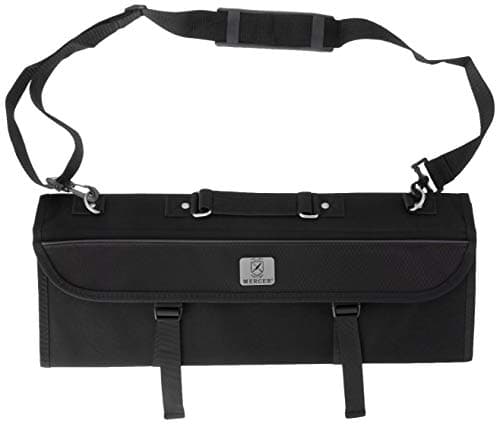
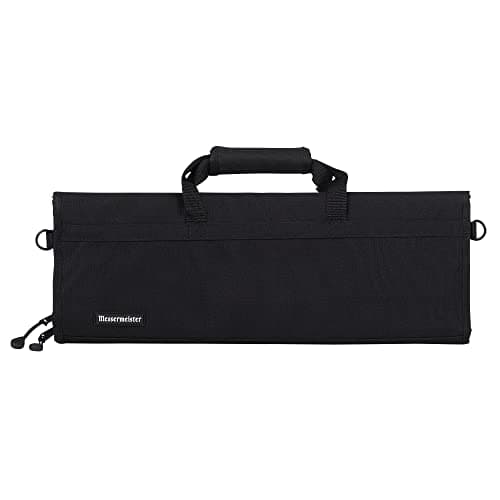
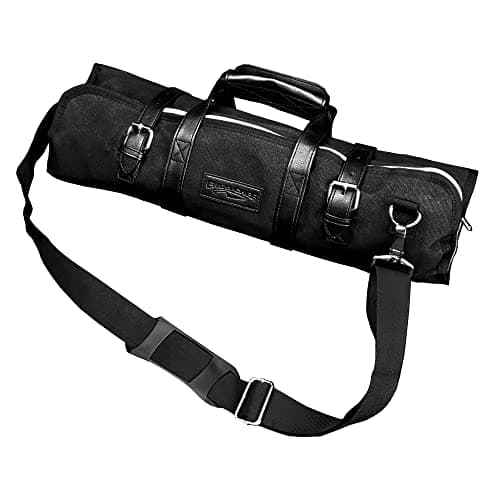
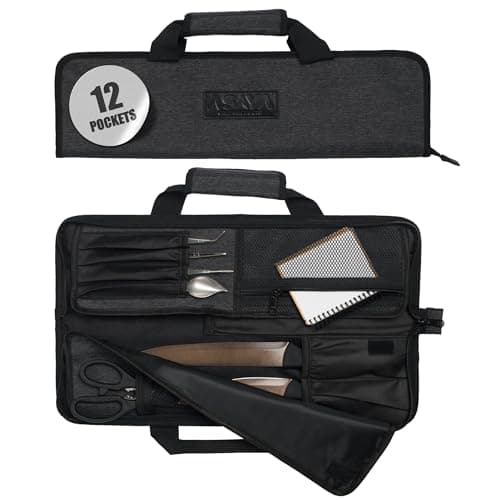
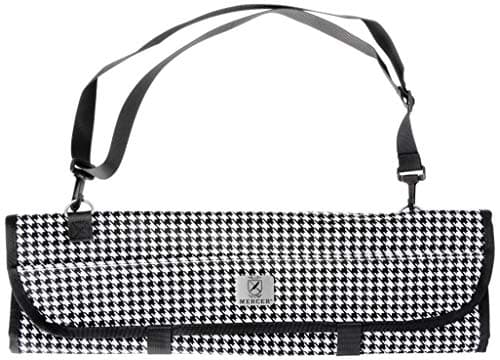
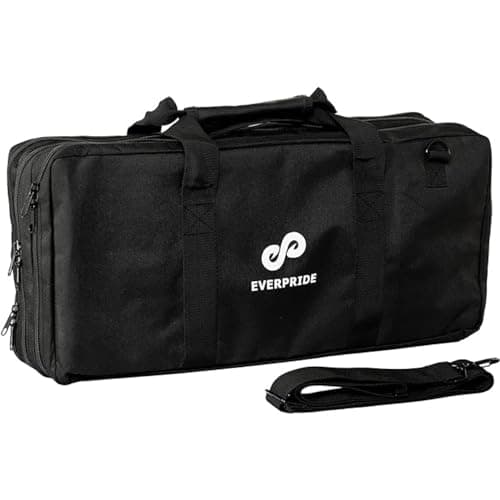
If you are going to culinary school or carrying a full kit, buy the EVERPRIDE bag — it is the most capacity available for the money and that is the metric that decides this category. If you carry four to six knives and want the thing to outlast the job, buy the Mercer Culinary 10-Pocket case, which is the structured foodservice standard. Those two answers cover nearly everyone, and the four below them exist for specific reasons rather than to pad a list.
A knife roll has exactly one job: move knives without an edge touching anything. Everything that goes wrong with one goes wrong in that sentence. A slot too shallow lets a tip ride out and sit against a zipper. A flap that is not long enough lets two blades meet. A closure that can work loose in a car trunk turns the whole bag into a bad idea. And a bag that is two inches shorter than your longest knife is simply the wrong bag, no matter how good the material is.
An honesty note that this page needs more than most.A knife has published specifications — steel, hardness, angle, weight — and we judge knives against them. A bag has almost none. What follows is judged from the maker's and retailer's published capacity, dimensions, material and closure description, set against the failure modes this category is well known for. We have not handled every bag here and we are not going to pretend otherwise; see how we review. Where a claim is the maker's rather than ours, we say so.
The three buyers, because they want different objects
The culinary student. You have a long required kit list, most of it inexpensive, and you are carrying all of it several times a week for two years. Capacity and price win; a bag that does not survive graduation has still done its job. A backpack or satchel style with 15 to 20 slots plus room for a peeler, a steel, a thermometer and a notebook is the right shape. The knives that usually fill it are in best chef knives for culinary school.
The working cook.You carry a curated handful — a chef's knife, a paring knife, a serrated, maybe a boner and a steel — every shift, for years. Durability and carry comfort win, capacity does not. A structured case or a good waxed-canvas roll with six to ten slots is the right shape, and it is worth paying for a closure you trust.
The private chef or caterer. Your knives are the expensive ones, they travel in a car with boxes on top of them, and they go into kitchens you have never seen. Protection and structure win outright. This is the case for a hard-lined case rather than a soft roll, and for a bag whose exterior pocket keeps a steel and a towel away from the blades.
What we scored, and why
Blade protection. Does each knife sit in its own full-depth slot, is there a flap that covers the edges before the bag folds, and is there structure between the blades and the outside world. Soft nylon with shallow pockets is the weakest version of this; a rigid lining is the strongest.
Capacity and fit. Slot count is the easy half. The half people get wrong is length: a 12-inch slicer or a long honing steel will not go into a bag built around a 10-inch maximum, and the published maximum blade length matters more than the number of pockets. If you own a bread knife or a brisket slicer, check this before anything else.
Carry comfort. A full kit is heavy and awkward. A removable shoulder strap, a real handle, and in the student case a backpack harness are the difference between a bag you take and a bag you leave.
Build and closure. Zippers and the stitching around them are where these bags fail, almost without exception, and a roll that relies on a single tie is a roll that will eventually come open. Snap-lock straps, double zippers and reinforced pocket mouths all earn points here.
Value. Capacity and durability against the live price, the same way we score everything else on this site.
Never store knives in a roll
This is the most expensive mistake in the category and it has nothing to do with which bag you buy. A roll is a transport device. Knives left in one between shifts — especially knives that went in slightly damp, or next to a towel that did — sit in trapped humidity against fabric, and that is the exact condition that pits and spots stainless steel. Carbon steel is worse. The fix is free: unroll the bag when you get home, let the knives and the roll dry separately, and store the knives on a strip, in a block or in a drawer tray.
That is what best knife storageis for — it ranks the at-home options, which is a genuinely different problem from this page. The corrosion mechanism is in why does my knife rust, and the daily routine is in knife care and maintenance. If a blade has already been chipped or marked in transit, how to fix a chipped knife covers the repair.
The best knife roll for Japanese knives
Elasticized or deep full-length pockets, a flap that covers the edges before the roll folds, and ideally edge guards on top of all of that. The reason is hardness. A German knife at 55-57 HRC that knocks against a zipper rolls its edge and comes back on a honing rod in seconds. A Japanese blade at 60-63 HRC does not roll — it chips, and a chip is a stone-and-patience repair rather than a ten-second one. The hardness argument is in knife hardness HRC explained.
Of the bags here, the Messermeister's elasticized reinforced pockets and the Mercer case's hook-and-loop tabs are the two configurations that keep a blade seated rather than sliding, and sliding is what causes contact. Add individual edge guards to anything hard regardless of which bag you choose: it is a few dollars against a knife that may have cost two hundred. Single-bevel Japanese knives deserve extra care for the same reason — see single bevel vs double bevel knives.
Also check length honestly. A 240mm gyuto or a sujihiki is longer than most bags built around a Western 8-inch chef's knife expect, and the Messermeister's published 18-inch capacity is the only figure on this page that clearly accommodates them.
Knife roll brands worth knowing
The honest version: there are very few specialist knife-roll brands and most bags in this category are made to similar patterns in similar factories. What differentiates them is whether a knife company specified the pockets or a bag company did.
Knife makers who also make bags— Mercer Culinary, Messermeister, Ergo Chef, Dalstrong — tend to get the pocket depth, the flap and the blade-length allowance right, because those are the details you notice if you make knives. All three of the top-built options on this page come from that group.
Bag specialists and own-label sellers— EVERPRIDE, Asaya, and a long tail of similar names — compete on capacity and price, and that is a legitimate thing to compete on when the buyer is a student. Judge them on published capacity, material and whether the listing is specific about what it includes, not on the brand name.
What to be wary of:listings that photograph the bag full of knives without clearly saying the knives are not included; “leather” that turns out to be a trim detail on a synthetic shell; and any listing with no availability status, which is a deliberate exclusion on this site — we dropped one well-known roll from this page for exactly that reason. The general checklist for reading a product listing honestly is in how to tell if a knife is good quality, and the channel-specific version is in best chef knives on Amazon.
Do knife rolls come with knives?
Almost never, and every bag on this page is supplied empty. “Knife roll set” is a common search and it usually turns up either an empty roll photographed full, or a cheap knife set bundled with a cheap roll — which is the worst of both, because the roll outlives the knives by years. Buy the bag and the knives separately.
If you are starting from nothing, the sequence that actually works is: buy three good knives, buy a bag that fits them with room for two more, and add knives over time. The three knives are argued out in what knives a kitchen actually needs, the school kit list in best chef knives for culinary school, and if you are buying this as a gift, best gifts for chefs covers the pairing.
Measure before you buy
Two numbers, both easy to get wrong. Your longest blade, plus its handle. Lay your bread knife or slicer on a tape measure, tip to butt, and compare that with the bag's published maximum — not with its pocket count. Your real kit count, plus two. Count what you carry now and add room, because kits grow and a full bag is a bag where blades touch.
Everything else — material, color, strap style, whether it is a roll or a case — is preference, and preference is fine. Those two numbers are not preference. A beautiful roll that is an inch too short for your serrated knife is a bag you will stop using, and the knives in a full kitchen kit vary far more in length than most bag listings assume.
One category of knife that travels more than any other, and is worth a note here: fillet knives. They are long, narrow and flexible, which means they need a full-depth pocket or a sheath rather than a shallow slot — and two of the knives we rank in the best knives for cutting fish ship with one in the box precisely because they are expected to leave the kitchen. If your kit is mostly fish knives, buy for blade length first and pocket count second.