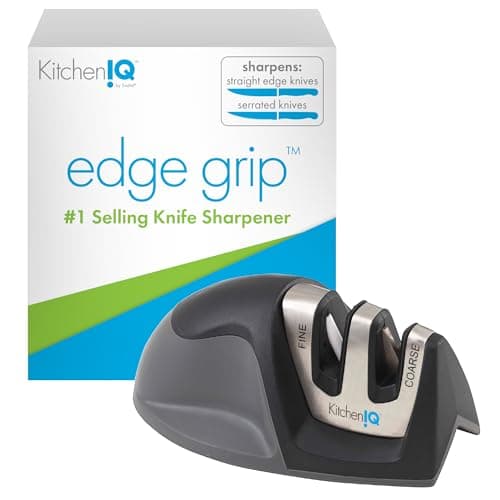
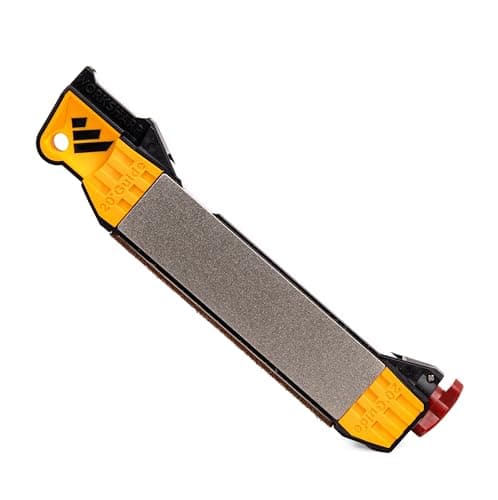
Buy the Work Sharp Guided Field Sharpener — it is the best knife sharpener under fifty dollars, and it is for anyone who wants to learn to sharpen properly without committing to a bench setup. Coarse and fine diamond plates, two ceramic rods, a leather strop and moulded 20- and 25-degree guides, in something the size of a phone. That is a complete progression from repair to polish, with the angle held for you. The budget pick is the KitchenIQ Edge Grip 2-Stage— the cheapest thing here that genuinely does the job, which in its case is “make a dull stamped knife cut again in thirty seconds” and nothing more ambitious than that.
Every sharpener here was inside the band at our last price check. We do not print a number in the prose, because prices move and a sentence cannot: the Quick Picks table carries the live price and the date we pulled it, with a Check price button on every row. If a pick has drifted over fifty dollars by the time you read this, the table says so rather than the page pretending otherwise.
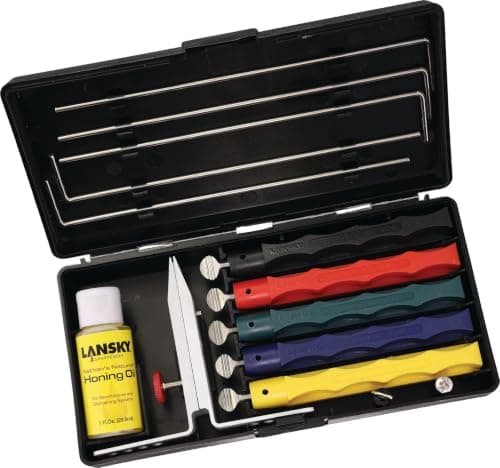
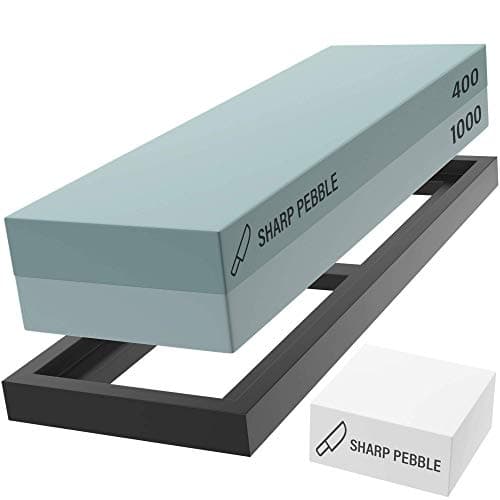
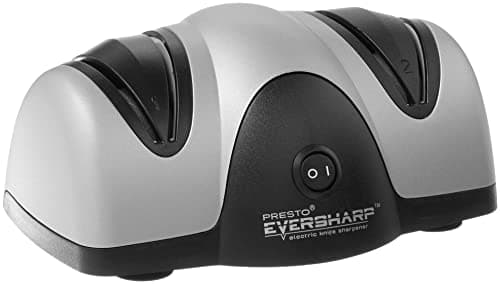
The useful thing about this band is that it contains five genuinely different formats, not five versions of one product. A guided pocket kit, a clamp system, a two-stage electric, a double-sided water stone and a pull-through all cost under fifty dollars, and they fail in completely different ways. That is the real decision on this page, and it comes down to one question: how much do you want the tool to hold the angle for you? Freehand on a stone gives the best edge and asks the most. A clamp holds the angle exactly and is slow. An electric holds it for you and takes metal off whether you wanted it to or not. A pull-through holds nothing and takes the most metal of all.
What fifty dollars cannot buy is covered at the end of the page, honestly: no motorised belt, no premium clamp system, no large flat diamond bench plate and no set of Japanese waterstones. Our best sharpening systems page is where the band above lives, and it is the page most readers of this one should check next.
The method is on how we review: we have not hands-on tested these and we do not claim to have. The scores come from published specifications — abrasive type and grit, guide angles, stage count, included accessories — and from value arithmetic against the live price. Everything sits under the sharpening hub.
Five formats, one question
Under fifty dollars you are not choosing between better and worse versions of one tool. You are choosing a format, and the question that decides it is how much you want the tool to hold the angle for you.
A clamp system holds it exactly. You get the most repeatable bevel available at this money and you pay in time. A guided pocket kit holds it closely enough, at two preset angles, and gives you a full abrasive progression in one object. A water stone holds nothing and gives you the best edge of all, once you can hold the angle yourself. An electric decides the angle for you and applies it whether or not it suits your knife. A pull-through holds nothing, decides everything and removes the most metal per use of anything here.
Abrasive matters more than grit number
Three abrasives appear in this band and they are not interchangeable. Diamond cuts everything, including the high-vanadium powder steels a waterstone struggles with, which is why the winner uses it. Alumina-oxide ceramic is what the Lansky hones and most water stones are made of: ample for kitchen stainless, slow on modern folder steels. Carbideis not an abrasive at all — it is two hard blades that scrape metal off. It is the fastest and the crudest, and it belongs in an emergency rather than in a routine. Knife steel types explained is why the steel in your knife decides this and not your preference.
What fifty dollars cannot buy
A motorised belt or a premium guided-rod system.The Work Sharp Precision Adjust and the KME sit above this band, and they are the answer if you intend to sharpen other people's knives or a collection of folders. Best sharpening systems ranks them.
A large flat diamond bench plate.An 8 x 3 inch diamond plate is the most pleasant way to sharpen a kitchen knife and it starts just above fifty dollars — see best diamond sharpening stones.
A fine finishing stone. The 1000-grit side of the stone here is a working finish. A 3000 or 6000 stone is where an edge starts to feel keen rather than merely sharp, and that is a second purchase.
Confidence on a Japanese knife. Only the Lansky offers an angle under 20 degrees. If your knives are 15- or 16-degree Japanese blades, read best knife sharpeners for Japanese knives before you spend anything on this page.
Spend part of the fifty on a honing rod instead
The highest-return advice here: most knives that feel blunt are not blunt, they are rolled, and a rod fixes that in under a minute. If you sharpen three times a year and hone every few uses, you will have sharper knives than someone who sharpens monthly and never hones — and the rod costs a fraction of the sharpener. Sharpening vs honing is the distinction, best ceramic honing rods is the shortlist if any of your knives are hard, and our honing rods roundup covers the rest of the category.
How we ranked this band
Five metrics, weighted for what goes wrong with a cheap sharpener. Angle control is how closely the tool fixes the bevel, and what angles it offers. Abrasive rangereads the number and type of stages — a single coarse abrasive cannot finish an edge. Edge quality is the best result the format can produce in competent hands. Ease of use is setup, cleanup and how likely the thing is to actually get used. Value is specification quality against the live price. The overall is the mean of the five to one decimal place, which is why the stone with the best edge does not win and the pull-through with the best convenience finishes last. None of these numbers came from a test lab, because we do not have one, and how we review says so in those words.
Two of the things this band cannot buy arrive just above it, and they are now ranked together: best knife sharpeners under $100 is the band where an adjustable guided-rod system and a multi-stage diamond electric both become available, which is the point at which you stop choosing between formats and start choosing one.