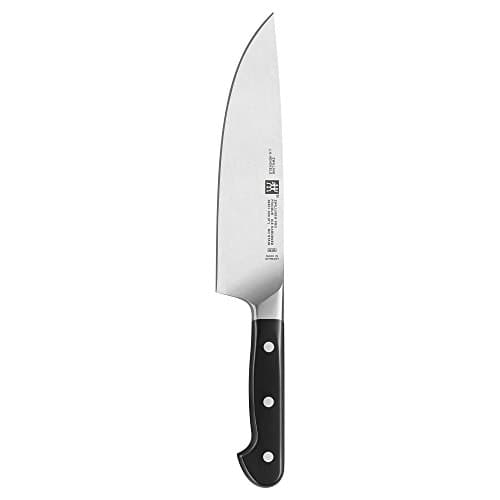
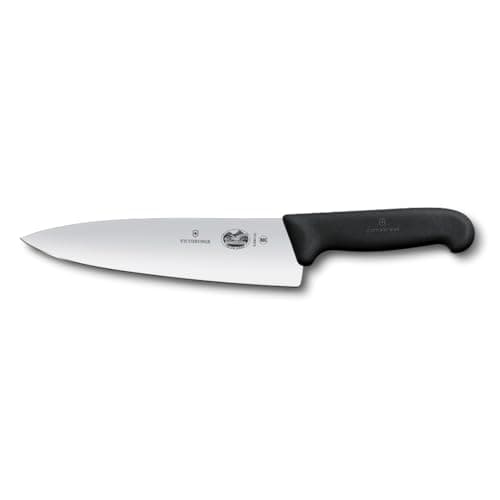
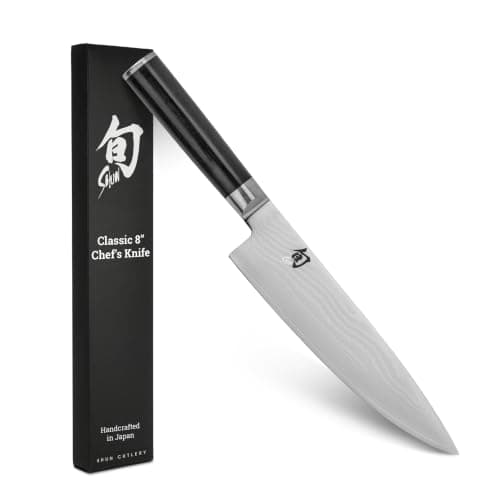
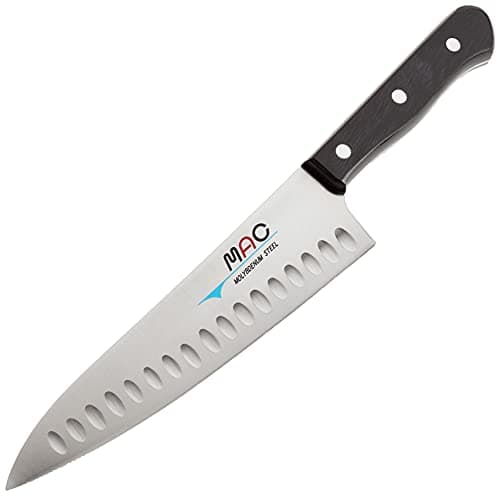
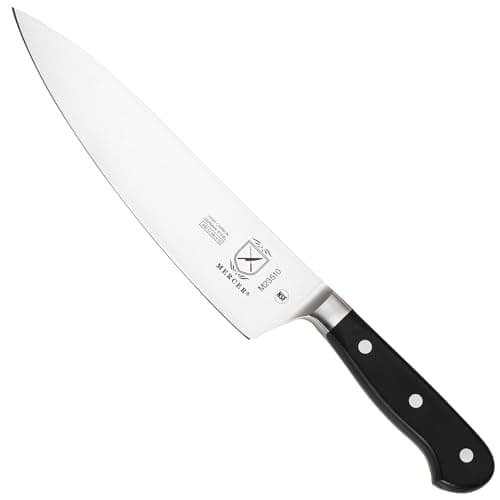
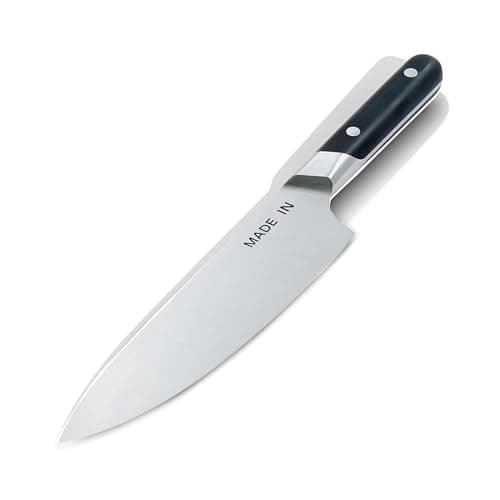
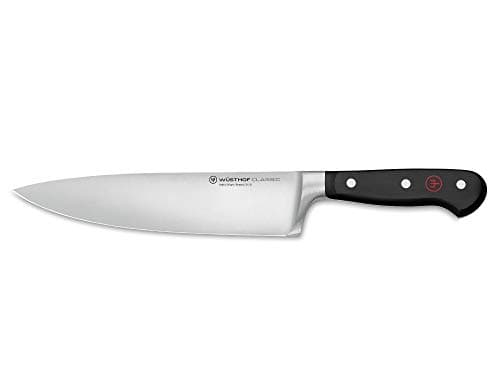
Nobody really buys a brand. You buy a set of engineering decisions that a brand happens to make consistently — a steel alloy, a hardness target, an edge angle, a construction method and a price band — and those decisions determine whether the knife suits you. Framed that way, "which brand is best" stops being a loyalty question and becomes a matching problem: German makers bet on toughness and forgiveness, Japanese makers bet on hardness and keenness, Swiss and American commercial makers bet on cost and grip, and the direct-to-consumer newcomers bet on cutting the retail margin.
Below is what each of the major brands actually commits to, and the single knife from each that best represents that commitment. This is a brand map, not a ranking of seven equivalent things — the scores compare each knife on the same rubric, but a Victorinox scoring high on value and a Shun scoring high on edge are answering different questions.
How we ranked these
We do not have a test lab and we do not claim hands-on testing — our method is published. Each pick is scored on edge and steel (published alloy and Rockwell hardness), sharpness (ground edge angle and geometry), handling (weight, balance, wet grip), build (forged or stamped, tang, bolster) and valuecomputed against the live price. Where a brand's reputation and its published specifications disagree, we go with the specifications.
The three families, before the names
German / Solingen— Wusthof, Zwilling, Henckels, Messermeister. Softer stainless around 56–58 HRC, forged with a full tang and usually a bolster, and historically ground near 20° per side though several lines have moved keener. Heavy, tough, forgiving, happy to be rock-chopped and honed weekly. These are the knives that survive an inexperienced user.
Japanese— Shun, MAC, Global, Tojiro, Miyabi. Harder steel at 59–63 HRC ground near 15° or keener, thinner stock, lighter in the hand. They cut more cleanly and stay sharp longer, and they chip instead of rolling when abused. They ask for a stone rather than a rod, and they hate bones, frozen food and glass boards.
Commercial and value — Victorinox, Mercer, Dexter-Russell. Stamped rather than forged, softer steel, textured NSF-certified handles, built to be cheap enough that a restaurant can replace them without a conversation. This family wins the value math outright and loses on feel. Stamped vs forged explains why that construction gap matters less than the marketing implies.
The direct-to-consumer names — Made In, Misen, Dalstrong — are not a fourth family technically; they source from the same Solingen, Thiers and Seki supply chains and compete by removing a layer of retail markup. Judge them on their published specs like anyone else.
What we would skip
Skip any brand whose marketing leads with the number of Damascus layers, the words "surgical steel", or a hardness figure with no alloy attached. Layer count is a cladding decision with no bearing on the cutting edge — the core steel does the work. "Surgical stainless" is not a specification; it is a phrase. And an HRC number quoted without naming the steel is unverifiable by design, because hardness only means something in the context of the alloy that was hardened.
Be careful too with names that appear across dozens of unrelated product categories on a marketplace. A house brand attached to knives, spatulas, blenders and phone cases is a label applied to whatever a factory offered, not a maker with a metallurgy program behind it. Our guide to buying chef knives on Amazon covers how to tell those apart from the real thing.
Brands we deliberately did not rank here
Henckels (the International line) sits below Zwilling and is worth knowing about mainly because the two names get confused constantly — Zwilling J.A. Henckels and Henckels International are different tiers under the same parent, and our Wusthof vs Henckels comparison ranks the entry-tier Classic and names the country it is actually made in. Global is a genuine Japanese classic whose one-piece hollow steel handle divides people completely; it is a hold-it-first shape, and our Global G-2 reviewexplains why its published 56–58 HRC also makes it the exception to the Japanese-hardness rule above. Dalstrong makes some knives that specification out well and some lines reviewers consistently warn about, so the brand cannot be recommended as a whole — our Gladiator review covers the one that does hold up, and the full chef knife reviews index lists every model we have worked through. Misen built its reputation on AUS-10 at 60–61 HRC at an aggressive price, and has since moved its range to AICHI ACUTO440 — a higher-chromium steel it publishes much less about, which is a step backwards for anyone buying on specification; the AUS-10 knife we scored is covered in Misen vs Made In.
How to choose between two brands you like
Line up three numbers and one fact. The numbers: steel alloy, published Rockwell hardness, and ground edge angle per side. The fact: whether you will sharpen it yourself. If the answer to the fact is no, buy softer steel from anyone — a 58 HRC German knife that gets honed beats a 61 HRC Japanese knife that does not. If the answer is yes, harder steel repays you every week. Everything else — bolster style, handle material, cladding pattern, country of origin — is preference, and preference is a legitimate reason to spend money as long as you know that is what you are buying.
For head-to-head detail on the closest pairings, we have Wusthof vs Zwilling, Shun vs Wusthof and Victorinox vs Mercer.
Two brand questions come up more than the rest, and both turn out to be about a brand's own cheaper line rather than its rival: Dalstrong vs Wusthof, where the Gladiator ties Wusthof's stamped Gourmet rather than competing with the forged Classic, and Zwilling vs Henckels, which are two tiers of one company.