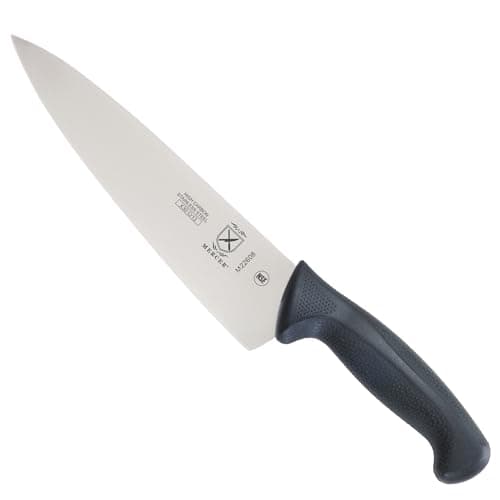
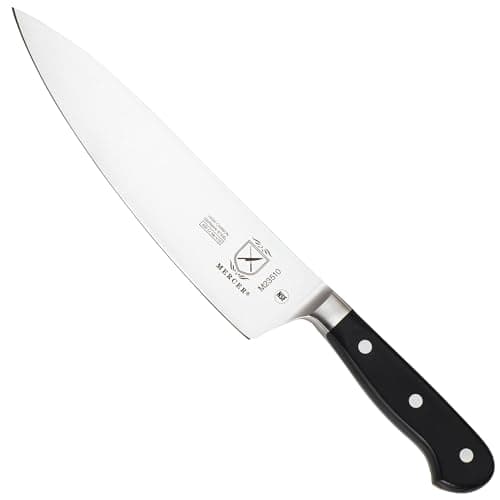
The Mercer Renaissance 8-inch is the best alternative to the Victorinox Fibrox Pro, and it is for the reader whose only real objection to the Fibrox is that it feels and looks like catering equipment. It keeps the same steel family — X50CrMoV15 — and roughly the same price, and adds what the Fibrox deliberately leaves out: forged construction, a published 58 HRC, a full bolster, a full tang and a taper-ground blade. The budget pick is the Mercer Millennia 8-inch, which is the closest match to what a Fibrox actually is — stamped, light, NSF certified, grippy when wet — for considerably less money.
One thing to be straight about before the rankings. The Victorinox Fibrox Pro 8-inch is our own Best Overall pick on best chef knives. This is not a page arguing that it is a bad knife, because we do not think that. People search for alternatives to good products for specific reasons, and this page is organized around those reasons rather than around a complaint. There is a section near the bottom naming three cases where you should buy the Fibrox anyway.
We do not print a price in the prose. The Quick Picks table carries the live price and the date we pulled it, with a Check price button on every row.
What the Fibrox Pro actually is, from its published specification
Everything below is ranked against four properties, taken from Victorinox's own published specification rather than from opinion.
Stamped X50CrMoV15 at a published 55–56 HRC. The same steel family Wusthof and Zwilling use, in the softer end of the German hardness band, in a blade cut from rolled sheet rather than forged from a billet. Soft enough to sharpen on anything and to come back on a rod; soft enough that it will not hold an edge as long as a harder steel.
A roughly 20-degree-per-side edge. Published, which is more than most makers offer. A conservative, durable Western bevel.
About 7.4 ounces, with no bolster. Light. The blade is thin, the handle is hollow-feeling, and there is no mass behind the heel. This is the single property people most often want to change.
NSF certification and a textured TPE Fibrox handle. The genuinely distinctive part. The handle grips harder the wetter and greasier your hands get, and the certification means a sealed joint with nowhere for protein to lodge. This is also the property that makes the knife look like a tool rather than an object.
So why do people look for an alternative?
Read against those four specifications, the reasons are specific and they are the structure of this page.
You want it to feel like a knife. Seven and a half ounces of thin stamped steel with a plastic handle does not feel like a serious object, and a forged knife with a bolster does. This is not vanity: mass genuinely does chopping work for you, and many cooks prefer it. The Mercer Renaissance answers this directly.
You want it to hold an edge longer.A published 55–56 HRC is the soft end of German. A harder steel — 58 HRC forged, or a Japanese-style 60-plus — holds a keen edge through more work.
You want a thinner, keener factory edge. Twenty degrees a side is durable and it is not keen. A 15- to 18-degree factory grind cuts noticeably differently.
You want it to look like something. The honest reason, and it is a perfectly good one. A knife on a magnetic strip in your own kitchen is allowed to be pleasant to look at.
How we ranked them
Five metrics, applied identically to all six, scored as judgments from published specifications rather than lab measurements — how we review sets out the basis.
Match on grip & weightis how close it comes to the Fibrox's light, wet-grippy handling — which matters because some readers want to keep that and others want to escape it, and the scores let you read either way. Steel & edge is hardness and factory grind. Build is construction. Origin & certification is published manufacture and any hygiene standard, which is where the Fibrox is genuinely strong. Value is what you get for the money.
Pick by the reason you are here
It feels cheap and you want a real knife in your hand. The Mercer Renaissance 8-inch. Forged, bolstered, a published 58 HRC, roughly Fibrox money. This is the answer for most readers.
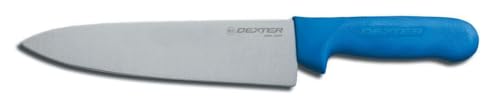
You would rather buy American.The Dexter-Russell Sani-Safe 8-inch cook's knife. Keeps the certification and the wet grip, published manufacture in Massachusetts, costs less.
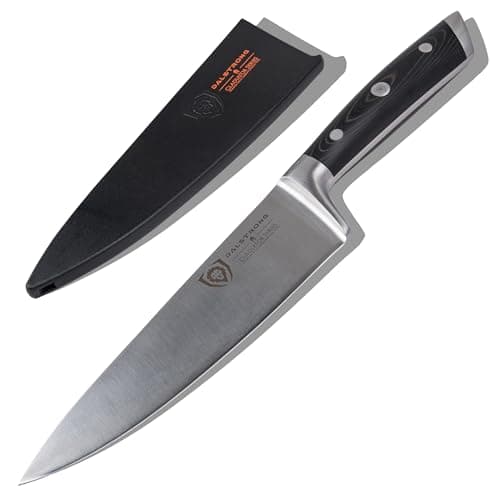
You want a keener factory edge.The Dalstrong Gladiator, with its published 16–18 degree grind — as long as you will hone it.
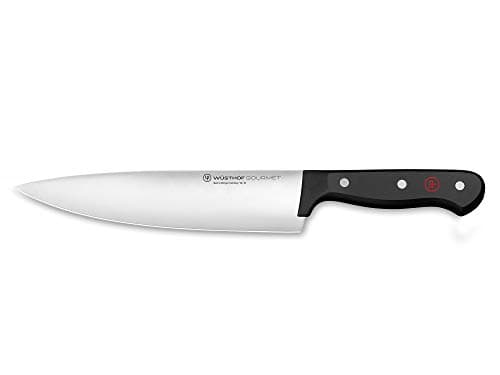
You want Solingen, and you liked the light blade. The Wusthof Gourmet.
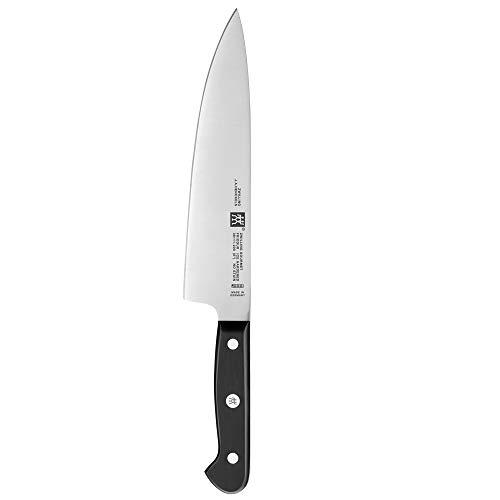
You sharpen your own knives and hate bolsters. The Zwilling Gourmet. No bolster, exposed full tang, named heat treatment.
You just want to spend less. The Mercer Millennia. Same formula, lower price.
Three reasons to keep the Fibrox anyway
The handle is genuinely the best wet grip here. This is not nostalgia. A textured TPE handle grips harder as your hands get wetter and greasier, which is the condition a knife is actually used in when you are breaking down a chicken. Every forged alternative on this page trades that away for rivets and looks.
Nothing here beats it on disclosure for the money. Victorinox publishes a steel designation, a hardness band, a weight, an edge angle and a country. Of the six alternatives above, two publish no hardness figure, three publish no edge angle and one publishes no origin. A specification you can read is worth something.
A 20-degree bevel at 55–56 HRC is the most forgiving combination on this page. It is the setup least likely to chip on a bone, least likely to be ruined by a careless sharpener, and easiest to bring back on a rod. If you are not going to maintain your knives carefully, that conservatism is a feature and the keener alternatives here will disappoint you faster.
What none of these alternatives give you
A hard Japanese edge. Everything on this page is a Western knife in the 55–58 HRC band, because that is the honest comparison set for a Fibrox at this price. If what you actually want is a 60-plus HRC blade with a 15-degree grind, that is a different purchase and a different page: best Japanese knives under $100 is where it starts, and Japanese vs German chef knives explains what changes when you cross over.