Skip to content
The Edge Bench

Stones, sharpeners & how-to · Sharpening

The best Work Sharp sharpeners, ranked

Work Sharp's whole idea is that the tool should hold the angle instead of your hands. What separates its five products is how it holds it, and whether a motor does the work.

Work Sharp Work Sharp Precision Adjust Elite

Our top pick · A mixed drawer of knives at different angles

Work Sharp Precision Adjust Elite

8.7

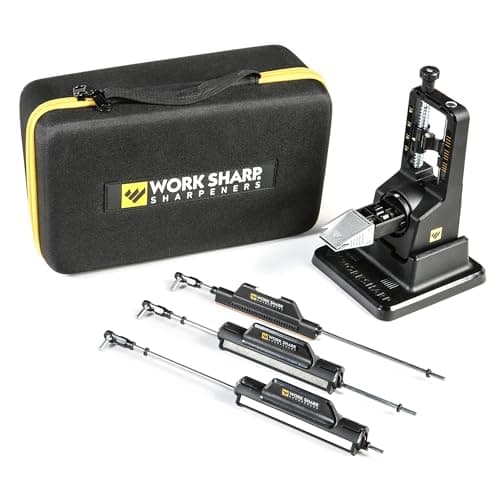
The best Work Sharp sharpener and the one that serves a whole collection. The same clamped mechanism as the standard Precision Adjust - 15 to 30 degrees in one-degree increments - with seven abrasives, a leather strop and a carry case, so one tool covers a repair grind and a finished edge without buying a second thing.

$129.95Amazon

#ad · Full ranking below

By Stephen V.Updated How we review
#ad

We earn a commission when you buy through our Amazon links, at no extra cost to you. It never changes a verdict, and we say so when the cheaper knife is the better buy. How this works.

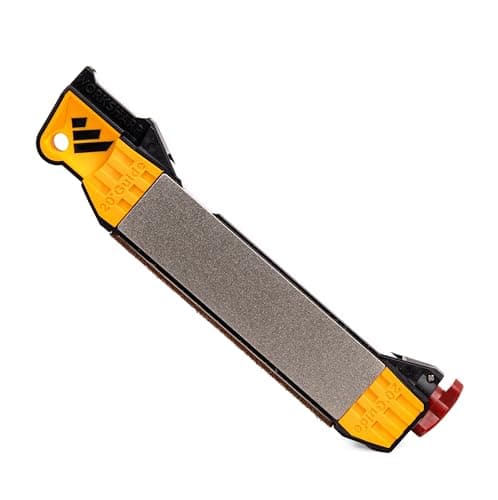
The Work Sharp Precision Adjust Elite is the best Work Sharp sharpener, and it is for the person who owns a drawer full of knives at different angles. It clamps the blade and sets the bevel anywhere from 15 to 30 degrees in one-degree increments, then gives you seven abrasives and a leather strop to work through, so a Japanese gyuto and a German chef's knife each get the angle they were ground at. The budget pick is the Work Sharp Guided Field Sharpener— the cheapest thing Work Sharp makes that genuinely removes steel, with molded 20 and 25 degree guides, coarse and fine diamond plates, two ceramic rods and a strop in something the size of a phone.

If you own fewer than six knives and they are all kitchen knives, buy the standard Precision Adjust ranked second instead. It is the same clamp and the same angle range; what you are giving up is abrasive grades you will probably never reach for. That is the single most useful sentence on this page and we would rather say it than sell you the top of the range.

We do not print a price in the prose, because prices move and a sentence cannot. The Quick Picks table carries the live price and the date we pulled it, with a Check price button on every row.

Work Sharp is three mechanisms, not one product line

This is the thing that makes the brand confusing in a listing search, and it is the organizing fact for the whole page. Work Sharp does not sell five versions of one sharpener. It sells three genuinely different machines that happen to share a philosophy.

A clamped guided-rod system. The Precision Adjust and the Precision Adjust Elite. The knife is held still in a clamp; an abrasive on a pivoting rod is set to a numbered angle and you draw it along the edge. This is the mechanism that produces the most repeatable bevel of anything the brand makes, and it is the only one where you choose the angle rather than accept it.

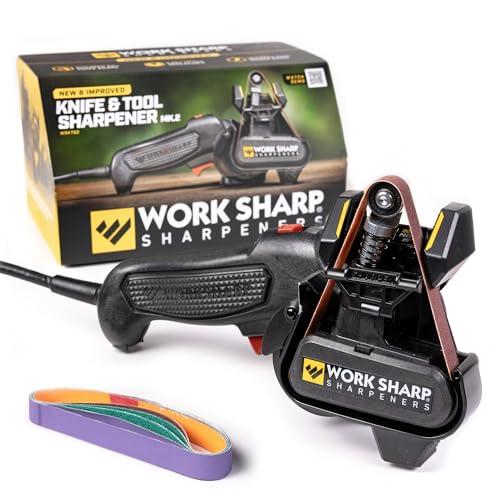
A motorized flexible belt.The Knife & Tool Sharpener Mk.2. An abrasive belt runs past a guide at a fixed angle. The important property is that a flexible belt follows the curve of an edge rather than fighting it, which is why a belt machine handles a recurved hunting blade or a lawnmower blade that a wheel-based electric cannot. It is also the fastest way to ruin a thin knife if you lean on it.

Molded-guide hand tools. The Guided Field Sharpener and the kitchen ceramic honing rod. No clamp, no motor: the angle is molded into the plastic body so the blade physically cannot sit at the wrong angle. These are the cheapest things here and the two most likely to be used weekly rather than twice a year.

How we ranked them

Five metrics, the same five for every product, and they are judgments from published specifications rather than lab measurements — how we review says so in those words.

Angle control is the one that matters most and it is the one Work Sharp exists to solve. A sharpener that imposes its own angle will, over a few sharpenings, regrind your knife to that angle whether you wanted it or not. A continuously adjustable clamp cannot do that to you. Knife sharpening angles is the page that explains why 15 degrees and 20 degrees are not interchangeable.

Abrasive range is how far the tool can take a blade: whether it can both reset a damaged bevel and finish the edge properly, or only one of the two. Edge quality is the finish the tool is capable of at its best. Ease of use is how likely it is that the thing comes out of the cupboard at all. Value is what the capability costs against the alternatives.

The short answer

Quick picks

#KnifeBest forScorePrice
01
Work Sharp Work Sharp Precision Adjust Elite
Work Sharp Precision Adjust Elite

The best Work Sharp sharpener and the one that serves a whole collection. The same clamped mechanism as the standard Precision Adjust - 15 to 30 degrees in one-degree increments - with seven abrasives, a leather strop and a carry case, so one tool covers a repair grind and a finished edge without buying a second thing.

A mixed drawer of knives at different angles
8.7
$129.95Amazon
02
Work Sharp Work Sharp Precision Adjust
Work Sharp Precision Adjust

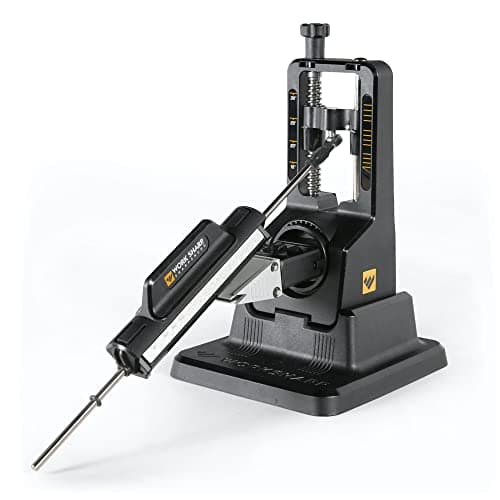
The Work Sharp most people should actually buy. A clamp holds the blade while you set the angle anywhere from 15 to 30 degrees, with coarse and fine diamond plus a ceramic finish - a whetstone-class edge without learning to hold an angle freehand.

The one to buy for a kitchen
8.7
$69.95Amazon
03
Work Sharp Work Sharp MK2 Electric Knife Sharpener
Work Sharp MK2 Electric Knife Sharpener

The Work Sharp for a household that will never sharpen anything by hand. Flexible abrasive belts and two speeds take kitchen knives, pocket knives and garden tools on one machine, and a belt follows a curved edge instead of fighting it - which no wheel-based electric can do.

A household that never sharpens
8.2
$89.95Amazon
04
Work Sharp Work Sharp Guided Field Sharpener
Work Sharp Guided Field Sharpener

The budget pick and the cheapest Work Sharp that genuinely removes steel. Coarse and fine diamond plates, two ceramic rods, a leather strop and molded 20 and 25 degree guides in something the size of a phone - a complete sharpening progression for pocket money.

Budget pick and the complete cheap kit
8.1
$39.95Amazon
05
Work Sharp Work Sharp Kitchen Ceramic Honing Rod (Angle Guided)
Work Sharp Kitchen Ceramic Honing Rod (Angle Guided)

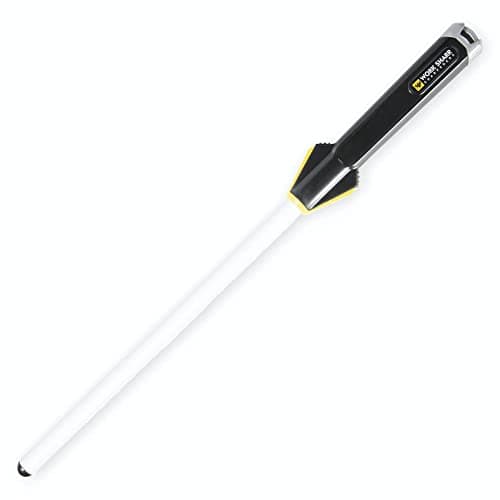
Not a sharpener, and the most useful thing on this page anyway. Honing fails because the angle wanders, not because the rod was cheap - this one molds a 20-degree guide into the body so the blade cannot sit wrong. Twenty seconds a week here means the clamped systems above come out far less often.

Keeping an edge rather than fixing one
7.9
$29.95Amazon

#ad · Live prices from the Amazon Product API, as of November 23, 2026. Where we have no verified live price, we show none — a gap beats a number that has rotted.

In detail

The picks, in full

01
Work Sharp Work Sharp Precision Adjust Elite

A mixed drawer of knives at different angles

Work Sharp Precision Adjust Elite

15-30 deg, 1 deg incrementsSeven abrasivesLeather strop includedCarry case
8.7/10

The best Work Sharp sharpener and the one that serves a whole collection. The same clamped mechanism as the standard Precision Adjust - 15 to 30 degrees in one-degree increments - with seven abrasives, a leather strop and a carry case, so one tool covers a repair grind and a finished edge without buying a second thing.

Angle control
9.5
Abrasive range
9.5
Edge quality
9
Ease of use
7.5
Value
8

Pros

  • One-degree increments across a 15-to-30-degree range - the finest angle resolution of anything here, and the reason a Japanese and a German knife can share one tool
  • Seven abrasive grades means a chipped edge and a finished edge are the same session rather than two purchases
  • The leather strop is the step most consumer sharpeners omit, and it is what turns a sharp edge into a keen one
  • The clamp holds the blade, so repeatability does not depend on your hands being steady
  • Carry case keeps the abrasives together, which is the practical reason kits survive in a cupboard

Cons

  • It costs roughly double the standard Precision Adjust for abrasive grades most kitchen cooks will never select
  • Clamped systems are slow by design - this is ten minutes per knife, not ninety seconds
  • The clamp has to be re-seated for a long blade, and a 10-inch slicer is awkward in any clamp of this class
  • No motor, so a genuinely blunt, abused knife is real physical work

Don't buy this if…

…you own four kitchen knives and nothing else - the standard Precision Adjust ranked below is the same mechanism for less money, and the abrasives you are paying extra for will stay in the case.

It wins on the two metrics the brand is built around, and it wins them on published numbers rather than impressions: a one-degree increment across a 15-to-30-degree range, and the widest abrasive ladder of anything Work Sharp sells. Nothing else here lets you set a number and come back to the same number next year.

The honest case against it is the standard Precision Adjust sitting directly below, which shares the clamp, the rod and the entire angle mechanism. The Elite's advantage is entirely in the box, not in the design. If your knives are kitchen knives that need maintaining rather than rescuing, that advantage is theoretical.

Where it genuinely earns the money is a mixed collection — a hard Japanese knife at 15 degrees a side, German knives around 20, and a pocket knife at 25 or 30. Setting each to its own number and recording it is the difference between maintaining three different edges and slowly converting all of them to whatever your sharpener prefers.

$129.95View on Amazon

Price as of November 23, 2026. Prices change — Amazon's at checkout is the one that counts.

#ad · we may earn a commission from this link to Work Sharp Precision Adjust Elite

02
Work Sharp Work Sharp Precision Adjust

The one to buy for a kitchen

Work Sharp Precision Adjust

Manual fixed-angle guide15-30 degree rangeDiamond + ceramic rodsWhetstone-quality edge
8.7/10

The Work Sharp most people should actually buy. A clamp holds the blade while you set the angle anywhere from 15 to 30 degrees, with coarse and fine diamond plus a ceramic finish - a whetstone-class edge without learning to hold an angle freehand.

Angle control
9.5
Abrasive range
8
Edge quality
8.5
Ease of use
8
Value
9.5

Pros

  • The same angle mechanism as the Elite at roughly half the price - the capability that matters is not the part you pay extra for
  • Diamond for shaping and ceramic for finishing is the complete progression a kitchen knife actually needs
  • Already the top pick on our guided-systems roundup, so this is a consistent verdict rather than a new one
  • Compact enough to live in a kitchen drawer, which is most of why it gets used
  • Abrasives are replaceable, so the frame outlives its consumables

Cons

  • Fewer abrasive grades than the Elite - a badly chipped edge is slow going
  • No strop in the box, so the final polishing step is a separate purchase
  • Plastic frame flexes more than the metal-framed systems in its price class
  • Still a clamped manual system: minutes per knife, and the clamp needs re-seating on long blades

Don't buy this if…

…you want the machine to do the work - the Mk.2 belt sharpener below is the Work Sharp for a household that is never going to sit down with a sharpener at all.

This ties the Elite on the rubric and sits second on a stated tie-break: the Elite takes the position on abrasive range, which is the one metric where the extra money buys something real. On every other count they are the same tool, and the value score here is the highest on the page.

It is also the pick that already carries our vote elsewhere. It is ranked first on best knife sharpeners under $100 and it is the recommendation on best knife sharpeners for Japanese knives, because a 15-degree setting is the whole requirement for a hard Japanese edge and almost no consumer electric offers one.

What you should be clear about before buying either Precision Adjust: this is a deliberate, slow tool. If the honest answer to "will you spend eight minutes on a knife" is no, the money is better spent on the belt machine below or on the honing rod at the bottom of this page, which takes twenty seconds and prevents the problem instead of fixing it.

$69.95View on Amazon

Price as of November 23, 2026. Prices change — Amazon's at checkout is the one that counts.

#ad · we may earn a commission from this link to Work Sharp Precision Adjust

03
Work Sharp Work Sharp MK2 Electric Knife Sharpener

A household that never sharpens

Work Sharp MK2 Electric Knife Sharpener

Flexible abrasive belt systemTwo speeds, guided angleHandles kitchen, pocket and outdoor bladesReplaceable belts
8.2/10

The Work Sharp for a household that will never sharpen anything by hand. Flexible abrasive belts and two speeds take kitchen knives, pocket knives and garden tools on one machine, and a belt follows a curved edge instead of fighting it - which no wheel-based electric can do.

Angle control
6.5
Abrasive range
8.5
Edge quality
8
Ease of use
9.5
Value
8.5

Pros

  • A flexible belt conforms to a curved or recurved edge, so it sharpens shapes a slotted electric physically cannot reach
  • Genuinely fast - this is the one tool here that turns a drawer of blunt knives into a sharp drawer in one sitting
  • Two speeds and guided angles make it the most forgiving Work Sharp for someone who has never sharpened anything
  • Handles garden tools and axes as well as kitchen knives, which no other pick here attempts
  • Belts are consumable and cheap, so the machine does not degrade with use

Cons

  • A powered belt removes metal fast, and fast removal on a thin Japanese knife is how blades get ruined
  • The angle is guided rather than chosen - you accept the machine's geometry rather than preserving your knife's
  • Noisy, and it throws metal dust, so it is a garage job rather than a kitchen-counter job
  • Convex-ish edge from a flexible belt is excellent in use but harder to maintain on a flat stone later

Don't buy this if…

…your best knife is a hard, thin Japanese knife - use the Precision Adjust at 15 degrees instead, and keep belts away from it entirely.

It scores lowest on angle control and highest on ease of use, and that trade is the entire reason to buy it. A guided belt machine gives you a sharp knife in ninety seconds without any skill at all; what it does not give you is a say in the geometry. Over several years of use it will converge your whole collection on its own angle.

For a lot of households that is a perfectly good deal. The sharpest knife in a kitchen is the one that got sharpened, and a tool that gets used four times a year beats a clamped system that gets used once. Do electric knife sharpeners ruin knives is the page that puts that trade in proportion without either scaremongering or pretending there is no cost.

The belt mechanism also deserves credit on its own terms. Slotted electrics and pull throughs work on a straight line and struggle the moment an edge curves. A flexible belt simply bends to the blade. That is a real engineering advantage and it is why this machine handles the outdoor and garden blades that nothing else here will touch.

$89.95View on Amazon

Price as of November 23, 2026. Prices change — Amazon's at checkout is the one that counts.

#ad · we may earn a commission from this link to Work Sharp MK2 Electric Knife Sharpener

04
Work Sharp Work Sharp Guided Field Sharpener

Budget pick and the complete cheap kit

Work Sharp Guided Field Sharpener

20 and 25 deg molded guides220 + 600 grit diamond platesTwo ceramic rodsLeather strop, 4.6 oz
8.1/10

The budget pick and the cheapest Work Sharp that genuinely removes steel. Coarse and fine diamond plates, two ceramic rods, a leather strop and molded 20 and 25 degree guides in something the size of a phone - a complete sharpening progression for pocket money.

Angle control
7.5
Abrasive range
8.5
Edge quality
7.5
Ease of use
8
Value
9

Pros

  • The cheapest thing Work Sharp makes that can actually reset a bevel rather than just maintain one
  • A full progression - coarse diamond, fine diamond, ceramic, strop - in one 4.6 oz object
  • Molded 20 and 25 degree guides mean the angle is held by the tool, which is the whole brand idea at its lowest price
  • Diamond plates cut hard steels that a carbide pull-through cannot touch
  • Small enough that it lives in a drawer or a pack and is therefore actually to hand

Cons

  • Two fixed angles only - 20 and 25 degrees, so a 15-degree Japanese edge is out of reach
  • The plates are small, so a long kitchen blade takes many passes and consistency is on you
  • Not a kitchen-shaped tool: it is designed around outdoor and pocket knives and it shows
  • Finishes at a ceramic rod rather than a fine stone, so the top end of edge quality is capped

Don't buy this if…

…your knives are all kitchen knives and you want one bevel angle done properly - put the money toward the Precision Adjust, which can be set to the angle your knives were actually ground at.

This is the budget pick because it is the cheapest Work Sharp product that does the job the page is about. The ceramic honing rod below costs less, but honing and sharpening are not the same job — a rod realigns an edge and removes almost nothing, which is why it cannot rescue a blunt knife. If "sharpener" has to mean "takes metal off," this is the floor of the range.

What you get for the money is unreasonably complete: both diamond grits, both ceramic rods and a strop. Laid out as separate purchases that is four items. The compromise is surface area — these plates are a fraction of a bench stone, so a 10-inch chef knife is a lot of careful passes.

Treat the 20 and 25 degree guides as the real constraint. They are correct for most German and American kitchen knives and for almost every pocket knife, and they are wrong for a hard Japanese knife ground nearer 15. How to sharpen a knife without a stone covers where tools in this class fit.

$39.95View on Amazon

Price as of November 23, 2026. Prices change — Amazon's at checkout is the one that counts.

#ad · we may earn a commission from this link to Work Sharp Guided Field Sharpener

05
Work Sharp Work Sharp Kitchen Ceramic Honing Rod (Angle Guided)

Keeping an edge rather than fixing one

Work Sharp Kitchen Ceramic Honing Rod (Angle Guided)

9 in ceramic abrasiveBuilt-in 20-degree guideRoughly 1200 grit equivalentRated for serrated too
7.9/10

Not a sharpener, and the most useful thing on this page anyway. Honing fails because the angle wanders, not because the rod was cheap - this one molds a 20-degree guide into the body so the blade cannot sit wrong. Twenty seconds a week here means the clamped systems above come out far less often.

Angle control
9
Abrasive range
5
Edge quality
7.5
Ease of use
9.5
Value
8.5

Pros

  • The molded 20-degree guide removes the single thing that makes home honing useless - a wandering angle
  • Ceramic at roughly 1200 grit equivalent refines an edge rather than just pushing it straight, which a smooth steel does not do
  • Twenty seconds of work, so it is the only tool here with a realistic chance of weekly use
  • Rated for serrated edges as well, which most rods are not
  • Cheapest product in the Work Sharp range and the one with the highest chance of being used

Cons

  • It is a honing rod: it cannot rescue a blunt knife, and treating it as a sharpener is the usual disappointment
  • Fixed at 20 degrees, so it is the wrong tool for a 15-degree Japanese edge
  • Ceramic chips if dropped on a hard floor, unlike a steel rod
  • Scores lowest here precisely because it is doing a smaller job than everything above it

Don't buy this if…

…your knives are already blunt - a rod will do nothing for them. Sharpen first with one of the picks above, then buy this to keep that edge.

It finishes last and it is still the product on this page we would most like people to own, because it addresses the cause rather than the symptom. Almost every knife that arrives at a sharpener was allowed to get blunt over months when twenty seconds a week would have kept it keen.

The angle guide is the design decision worth paying for. A bare rod asks you to hold roughly 20 degrees freehand while moving quickly, which almost nobody does consistently, and a honing stroke at the wrong angle is actively harmful — it rounds the apex you were trying to straighten. Molding the angle into the body means the common failure cannot happen. How to use a honing steel and sharpening vs honing are the two pages that make the distinction properly.

One limit stated plainly: it is a 20-degree guide. On a Japanese knife ground nearer 15 degrees a side it will contact the shoulder rather than the apex, and best honing rods for Japanese knives is the right page for that case.

$29.95View on Amazon

Price as of November 23, 2026. Prices change — Amazon's at checkout is the one that counts.

#ad · we may earn a commission from this link to Work Sharp Kitchen Ceramic Honing Rod (Angle Guided)

Which Work Sharp should you actually buy?

You own four to six kitchen knives. The standard Precision Adjust, plus the ceramic honing rod. That pair costs less than the Elite and covers maintaining and rescuing both.

You own a mixed collection at different angles. The Precision Adjust Elite. The one-degree increments stop being a specification and start being the point.

Nobody in the house will ever sit down with a sharpener. The Mk.2. Accept that it imposes its angle and enjoy sharp knives.

You want the cheapest thing that really sharpens. The Guided Field Sharpener. Complete progression, phone-sized, two fixed angles.

Your knives are hard Japanese knives. The Precision Adjust set to 15 degrees, and nothing with a motor.

The one specification to check before you buy any of them

The angle your knives were actually ground at. It is the only number that decides whether a sharpener is right or wrong for you, and it is the number most people never look up. German and American kitchen knives are commonly finished near 20 degrees a side; many Japanese knives are nearer 15; pocket knives are often 25 or more. A tool that cannot reach your number will quietly convert your knife to its own over a few years.

That is the whole reason the two clamped systems sit at the top of this page and the belt machine does not, despite the belt machine being far easier to live with.

What Work Sharp does not sell

There is no Work Sharp bench whetstone, and no Work Sharp product in this range reaches the very fine finishing grits. If you want a mirror-polished edge off a 6000-grit stone, that is a different purchase entirely — best sharpening stones for beginners is where that starts, and alternatives to Work Sharp ranks the systems that go finer and wider than this range does.

The one most people buy

Of the five above, the standard Precision Adjust ranked second is the one we recommend to most households — and it is the one worth reading about on its own before you spend anything. Our Work Sharp Precision Adjust review covers the clamp, the real time cost per knife, the serrated-edge capability, and when the Elite is genuinely worth the step up.
How we picked

We did not lab-test these knives

Everyone in this category says they tested twenty knives in a professional kitchen. We have not hands-on tested any of these, and we say so. What we did instead: compiled the published specifications — steel type and hardness (HRC), edge angle, blade geometry, weight and build — applied established sharpening standards, ran the value math (spec quality ÷ live price), and scored each product against a published rubric. The scores are judgments from documented research — not measurements we took, because we do not have a test lab and we will not pretend we do. Where a number came from someone else's work, we name them in Sources.

Questions

Frequently asked

Is the Precision Adjust Elite worth the extra over the standard Precision Adjust?
Only if you will use the extra abrasives. The clamp, the rod and the whole 15-to-30-degree angle mechanism are shared, so the Elite buys you abrasive grades and a strop rather than better geometry. For four to six kitchen knives, the standard model plus a honing rod is the better use of the same money.
Will the Work Sharp Mk.2 ruin a Japanese knife?
It can, and the mechanism is why: a powered belt removes metal quickly and the angle is guided rather than chosen, so a thin, hard blade both loses material fast and ends up at the machine's geometry rather than its own. For a hard Japanese edge, use the Precision Adjust set to 15 degrees.
Is the Work Sharp ceramic honing rod a sharpener?
No, and that distinction matters. It realigns and lightly refines an edge that is still fundamentally sharp; it cannot restore a blunt one. Sharpen with one of the other picks, then use the rod weekly to make that sharpening last months instead of weeks.
Can the Guided Field Sharpener sharpen kitchen knives?
Yes, with one caveat: its molded guides are 20 and 25 degrees, which suits most German and American kitchen knives and does not suit a 15-degree Japanese edge. The small plate area also means a 10-inch blade takes patience.

Keep reading

Receipts

Sources

We do not run a testing lab, and we do not pretend to. Where a spec or a measured number came from someone else's work — a manufacturer's page, a published standard — we name them and link them. Where we could not verify something, we say so on the page rather than quietly leaving it out. Read our full method.