Skip to content
The Edge Bench

Stones, sharpeners & how-to · Sharpening

How to sharpen a knife without a stone

Whetstones are the best tool and not the only one. Four alternatives that genuinely work, ranked by how much blade they cost you — plus the improvised methods that do not.

By Stephen V.Updated How we review
#ad

We earn a commission when you buy through our Amazon links, at no extra cost to you. It never changes a verdict, and we say so when the cheaper knife is the better buy. How this works.

A whetstone gives the best result, the most control and the longest blade life, and we would rather you learned one — the method is in how to sharpen kitchen knives. But "the best method" is not much use if you will not do it, and a knife sharpened adequately every three months beats a knife sharpened perfectly never. So here are the alternatives that genuinely work, honestly ranked, with what each one costs your knife.

One thing first, because it saves most people the trouble: if your knife merely feels dull, it may not need sharpening at all. Softer Western steel rolls over microscopically under use, and ten seconds on a honing rod stands it back up. Try that before you remove any metal — why knives go dull explains how to tell the difference.

The four methods, best to worst for your blade

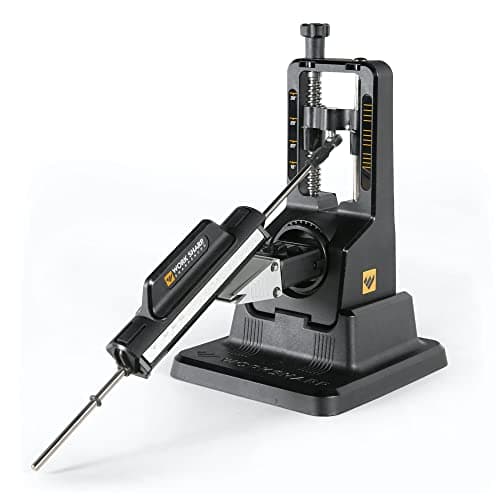
1. Guided angle system.A clamp or jig holds the knife at a set angle while you draw abrasive rods or plates along it. You choose the angle — 15° for a Japanese knife, closer to 20° for a Western one — and the jig removes the hand-skill problem entirely. Results are close to whetstone quality, metal removal is controlled, and it works on any steel. It is slower than an electric and requires a little setup, which is the only real cost.

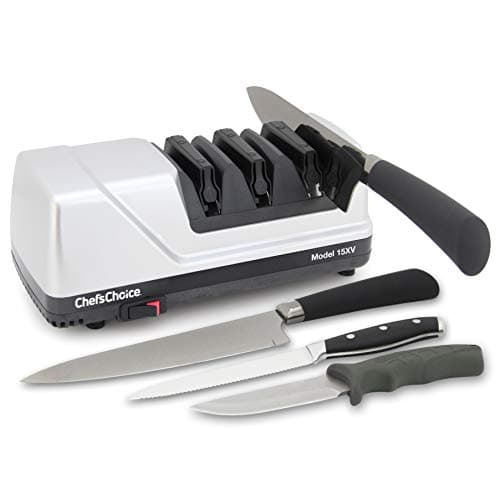
2. Electric sharpener with adjustable stages.Motorized abrasive wheels at a fixed angle. A good one produces a genuinely sharp edge in under a minute and handles knives that have been neglected for years. The cost is metal: an electric removes considerably more steel than a stone or a guided system, and a knife sharpened this way every few months narrows visibly over a decade. Choose one whose angle matches your knives — a 20°-only machine will regrind Japanese edges.

3. Manual pull-through. Carbide and ceramic slots you draw the blade through. Cheap, instant, and the carbide stage in particular tears metal away rather than grinding it, leaving a rough edge that feels aggressive and dulls fast. It works, in the sense that a dull knife will cut afterwards. Use the ceramic stage where possible and treat the carbide stage as a last resort for a truly wrecked edge.

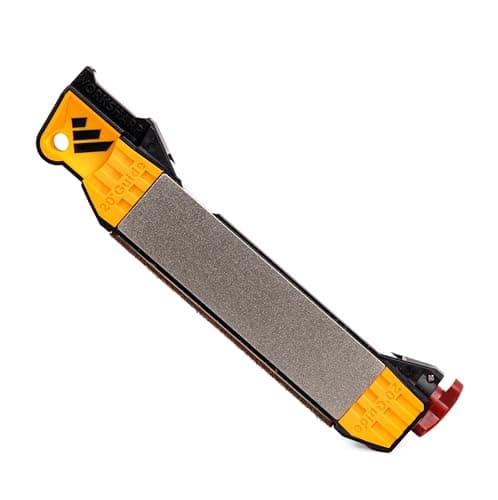
4. Field sharpener. A compact block combining diamond plates, ceramic rods and often a strop, with molded angle guides. Designed for outdoors, perfectly usable in a kitchen, and the most portable option. It takes more strokes than the others and the guides are coarser than a proper jig, but it produces a real edge and it fits in a drawer.

Whichever you use, the same three rules apply

Match the angle to the knife.This is the mistake that does permanent damage. Running a 15° Japanese edge through a 20° device does not sharpen it — it grinds a new, blunter bevel, and every subsequent pass reinforces it. See knife sharpening angles.

Use light pressure and few passes.Every device removes metal. The instinct to keep going until it "feels really sharp" is how blades get narrow. Two or three controlled passes, then test.

Finish fine, not coarse. A coarse edge cuts aggressively for a day and then collapses. Always end on the finest stage the device offers, and strop on the back of a leather belt if you have one — it is free and it measurably refines the apex.

What does not work

The bottom of a ceramic mug. The unglazed foot ring is abrasive, and it will put a crude edge on a truly blunt knife in an emergency. It is uncontrolled, it scratches the blade, and there is no angle guidance at all. Emergency only.

A second knife. Rubbing two blades together is the classic film image and it does nothing useful — at best it realigns like a bad honing rod, at worst it damages both edges.

Sandpaper on a flat surface. This one genuinely works and is essentially an improvised stone, but wet-and-dry paper on a glass plate is fiddly, and at that point a cheap whetstone costs about the same and works far better.

A car window, a stone step, a brick. These will remove metal. They will also destroy the geometry of the blade, and there is no version of this that ends well for a knife you care about.

The short answer

Quick picks

#KnifeBest forScorePrice
01
Work Sharp Work Sharp Precision Adjust
Work Sharp Precision Adjust

The closest thing to whetstone results without whetstone skill. A clamp holds the blade while you set the angle anywhere from 15 to 30 degrees, so a Japanese knife gets a Japanese edge and a German one gets a German edge - which no fixed-angle device can do.

Best overall no-stone method
8.6
$69.95Amazon
02
Chef'sChoice Chef'sChoice Trizor 15XV Electric Sharpener
Chef'sChoice Trizor 15XV Electric Sharpener

The fast answer, and the one that rescues genuinely neglected knives. Three diamond stages convert a 20-degree Western edge to a keener 15-degree one, which is a real upgrade for German steel - at the cost of removing more metal than any other method here.

Best for speed and neglected edges
8.2
$165.99Amazon
03
Work Sharp Work Sharp Guided Field Sharpener
Work Sharp Guided Field Sharpener

Everything you need in something the size of a phone: coarse and fine diamond plates, two ceramic rods, a leather strop and molded 20- and 25-degree guides. Not the finest edge available, but a complete sharpening progression in a drawer.

Best compact all-in-one
8.2
$39.95Amazon
04
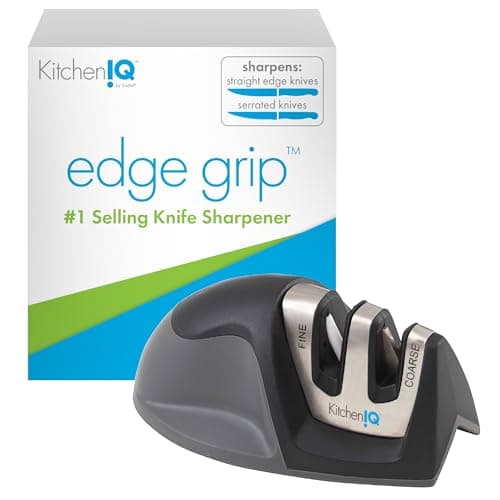
KitchenIQ KitchenIQ Edge Grip 2-Stage Sharpener
KitchenIQ Edge Grip 2-Stage Sharpener

The honest budget option, included because pull-throughs are what most people actually reach for and it is better to recommend a decent one than pretend nobody uses them. Coarse carbide for emergencies, fine ceramic for touch-ups, and an edge-grip base that stops it sliding.

Best cheap emergency option
7.0
$10.07Amazon

#ad · Live prices from the Amazon Product API, as of Sep 2, 2026. Where we have no verified live price, we show none — a gap beats a number that has rotted.

In detail

The picks, in full

01
Work Sharp Work Sharp Precision Adjust

Best overall no-stone method

Work Sharp Precision Adjust

Manual fixed-angle guide15-30 degree rangeDiamond + ceramic rodsWhetstone-quality edge
8.6/10

The closest thing to whetstone results without whetstone skill. A clamp holds the blade while you set the angle anywhere from 15 to 30 degrees, so a Japanese knife gets a Japanese edge and a German one gets a German edge - which no fixed-angle device can do.

Edge & steel
9
Sharpness
9
Handling
8
Build
8
Value
9

Pros

  • Angle is yours to choose - correct for both Japanese and Western knives
  • Removes far less metal than an electric sharpener
  • Diamond then ceramic gives a genuinely refined finish
  • Repeatable results with no acquired hand skill

Cons

  • Slower than an electric - a few minutes per knife
  • Setup and clamping add friction to a quick touch-up
  • Awkward on very long or very short blades

Don't buy this if…

you want to sharpen a knife in thirty seconds between prep tasks - this is a sit-down job, not a quick pass.

$69.95View on Amazon

Price as of Sep 2, 2026. Prices change — Amazon's at checkout is the one that counts.

#ad · we may earn a commission from this link to Work Sharp Precision Adjust

02
Chef'sChoice Chef'sChoice Trizor 15XV Electric Sharpener

Best for speed and neglected edges

Chef'sChoice Trizor 15XV Electric Sharpener

Three-stage electricConverts to 15 deg edgeDiamond abrasivesHandles straight and serrated
8.2/10

The fast answer, and the one that rescues genuinely neglected knives. Three diamond stages convert a 20-degree Western edge to a keener 15-degree one, which is a real upgrade for German steel - at the cost of removing more metal than any other method here.

Edge & steel
8
Sharpness
9
Handling
9
Build
8
Value
7

Pros

  • Restores a badly dulled knife in about a minute
  • Converts Western knives to a keener 15-degree geometry
  • Guided slots remove the angle problem entirely
  • A serrated stage, which most devices lack

Cons

  • Removes substantially more steel than a stone or guided system
  • Fixed geometry - it imposes its angle on every knife
  • Bulky on a counter and not cheap

Don't buy this if…

your knives are thin Japanese blades you want to keep for decades - the metal this removes is metal you do not get back.

$165.99View on Amazon

Price as of Sep 2, 2026. Prices change — Amazon's at checkout is the one that counts.

#ad · we may earn a commission from this link to Chef'sChoice Trizor 15XV Electric Sharpener

03
Work Sharp Work Sharp Guided Field Sharpener

Best compact all-in-one

Work Sharp Guided Field Sharpener

20 and 25 deg molded guides220 + 600 grit diamond platesTwo ceramic rodsLeather strop, 4.6 oz
8.2/10

Everything you need in something the size of a phone: coarse and fine diamond plates, two ceramic rods, a leather strop and molded 20- and 25-degree guides. Not the finest edge available, but a complete sharpening progression in a drawer.

Edge & steel
8
Sharpness
8
Handling
8
Build
8
Value
9

Pros

  • A full progression - coarse, fine, ceramic, strop - in one small tool
  • Molded guides make the angle repeatable without a clamp
  • Tiny and needs no power or water
  • The strop is a genuinely useful finishing step most kits omit

Cons

  • Guides are 20 and 25 degrees - too wide for Japanese knives
  • Small plates mean many more strokes than a bench stone
  • Coarse grit is aggressive if you get carried away

Don't buy this if…

your knives are Japanese at around 15 degrees - the built-in guides will regrind them to a Western angle.

$39.95View on Amazon

Price as of Sep 2, 2026. Prices change — Amazon's at checkout is the one that counts.

#ad · we may earn a commission from this link to Work Sharp Guided Field Sharpener

04
KitchenIQ KitchenIQ Edge Grip 2-Stage Sharpener

Best cheap emergency option

KitchenIQ Edge Grip 2-Stage Sharpener

2-stage pull-throughCoarse carbide + fine ceramicEdge-grip basePocket-money price
7.0/10

The honest budget option, included because pull-throughs are what most people actually reach for and it is better to recommend a decent one than pretend nobody uses them. Coarse carbide for emergencies, fine ceramic for touch-ups, and an edge-grip base that stops it sliding.

Edge & steel
5
Sharpness
7
Handling
8
Build
6
Value
9

Pros

  • Costs almost nothing and lives in a drawer
  • The ceramic stage is genuinely useful for a quick touch-up
  • Edge-grip base makes it far safer than a handheld pull-through
  • Instant results on a badly dull budget knife

Cons

  • The carbide stage tears metal rather than grinding it
  • Fixed Western angle - wrong for Japanese knives
  • The edge it leaves is coarse and does not last

Don't buy this if…

you own a knife you care about - a pull-through is a tool for rescuing cheap blades, not for maintaining good ones.

$10.07View on Amazon

Price as of Sep 2, 2026. Prices change — Amazon's at checkout is the one that counts.

#ad · we may earn a commission from this link to KitchenIQ Edge Grip 2-Stage Sharpener

Which method suits you

You own Japanese knives:a guided system you can set to 15°. Nothing with a fixed Western angle should touch them. You own Western knives and want it done fast: an electric sharpener, used two or three times a year rather than monthly. You want one tool for everything and have a drawer, not a counter: a field sharpener. You want to spend almost nothing: a two-stage pull-through, using the ceramic side, on knives that are cheap enough not to mind.

The honest cost comparison

Every method here removes metal — that is what sharpening is. What differs is how much. A whetstone or a guided system removes the least, because you control the pressure and stop when the burr forms. An electric removes the most, because a motorized wheel does not know when to stop and the fixed geometry means it often has to reshape the whole bevel. Over ten years and thirty sharpenings, that difference is visible as blade width.

Which is not an argument against electrics — it is an argument for using them sparingly and honing in between. Every one of these methods lasts longer if you hone weekly with a rod matched to your steel.

Test the result properly

Not on your thumb. Slice a sheet of printer paper held vertically by one corner: a properly sharp knife cuts cleanly through with no tearing and no sawing. A tomato is the practical version — a sharp edge parts the skin on the first draw without pressure. If you have to press, you are not finished, or the edge you produced is coarse.

And if none of these appeal, sending knives out is a completely legitimate answer — how to find a good local sharpening service.
How we picked

We did not lab-test these knives

Everyone in this category says they tested twenty knives in a professional kitchen. We have not hands-on tested any of these, and we say so. What we did instead: compiled the published specifications — steel type and hardness (HRC), edge angle, blade geometry, weight and build — applied established sharpening standards, ran the value math (spec quality ÷ live price), and scored each product against a published rubric. The scores are judgments from documented research — not measurements we took, because we do not have a test lab and we will not pretend we do. Where a number came from someone else's work, we name them in Sources.

Questions

Frequently asked

Can you sharpen a knife without a whetstone?
Yes. Guided angle systems, electric sharpeners, field sharpeners and pull-throughs all remove metal and create a new edge. A guided system gets closest to whetstone quality; an electric is fastest; a pull-through is cheapest and hardest on the blade.
Does sharpening a knife on a mug really work?
The unglazed foot ring of a ceramic mug is abrasive enough to put a crude edge on a blunt knife, so yes, in an emergency. There is no angle control and it scratches the blade — it is a last resort, not a method.
Are pull-through sharpeners bad for knives?
The carbide stage is aggressive and tears metal rather than grinding it, leaving a coarse edge that dulls quickly. The ceramic stage is much gentler. They also impose a fixed Western angle, which is wrong for Japanese knives.
Do electric knife sharpeners ruin knives?
Not if used correctly and infrequently. They do remove more steel than any other method, so a knife sharpened electrically every month will narrow noticeably over years. Hone weekly and sharpen two or three times a year instead.
What is the fastest way to sharpen a kitchen knife?
A three-stage electric sharpener — under a minute per knife, including badly neglected ones. The trade is metal removal and a fixed edge angle you do not control.

Keep reading

Receipts

Sources

We do not run a testing lab, and we do not pretend to. Where a spec or a measured number came from someone else's work — a manufacturer's page, a published standard — we name them and link them. Where we could not verify something, we say so on the page rather than quietly leaving it out. Read our full method.