Buy the Victorinox Fibrox 6-inch curved boning knife, semi-stiff. It costs about twenty-six dollars and it is what most professional kitchens actually reach for. Breaking down a whole chicken is a sequence of small, sighted cuts along bone, plus two joints you separate rather than chop, plus one backbone that genuinely wants cutting through. A narrow curved blade with a point does the first two; shears or a cleaver do the third. This page is for anyone buying a bird whole because it is cheaper and better and then fighting it with the wrong knife.
The wrong knife, almost always, is a chef's knife. It is too tall to see past, too wide to follow a joint, and ground too thin at the edge to survive being driven into a hip socket — the chips people put in their good knife usually happen here. The right shape is narrow, pointed and curved, in the band of stiffness that is firm enough to steer but not so rigid that it cannot ride a rib cage. Every pick below is scored on five metrics that apply to all four: how well it fits the job it is here for, how much control it gives near bone, how secure the grip is with chicken fat on your hands, how maintainable the edge is, and value. We work from published specifications and the value math, as how we review sets out. We have not cooked with these and we do not have a test lab.
The two-tool answer, if you want it in one line
A curved semi-stiff boning knife for everything except the backbone, and either poultry shears or a small cleaver for the backbone. That is the whole kit, and you can be under sixty dollars for both. Everything else on this page is a refinement of that, and the Japanese pick at the bottom is a warning rather than a recommendation.
The short answer
Quick picks
| # | Knife | Best for | Score | Price |
|---|
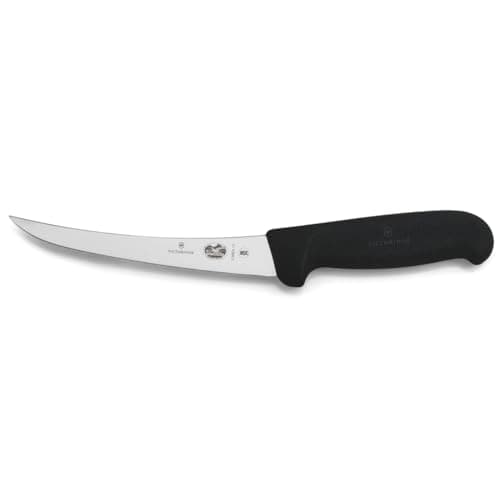
| 01 | Victorinox Fibrox 6" Curved Boning Knife, Semi-Stiff (5.6603.15)The overall pick and the correct band for poultry. A 5.9-inch curved blade at 3.4 ounces on Victorinox's textured TPE handle - semi-stiff means it is firm enough to drive through a joint and compliant enough to ride a rib cage, which is exactly the compromise a chicken asks for. Swiss made, dishwasher safe and covered by the lifetime warranty. | Best overall | | $32.42·Amazon |
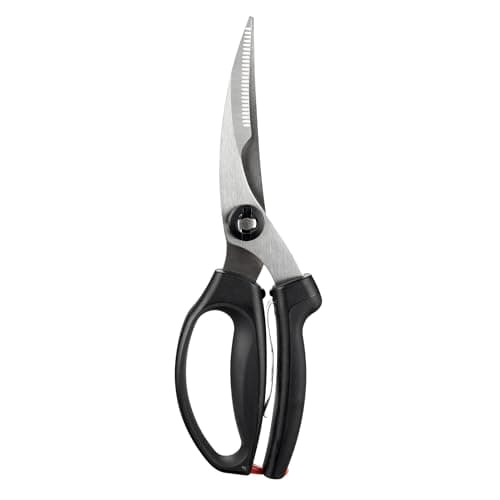
| 02 | OXO Good Grips Spring-Loaded Poultry ShearsThe easiest route, and the only tool here that spatchcocks a bird without technique. Curved micro-serrated 4-inch blades with a notch that holds bone instead of letting it skate, spring loading so the blades reopen themselves, a bolster that stops a wet hand sliding forward, and a lock for the drawer. | Best for the backbone and spatchcocking | | $29.66·Amazon |
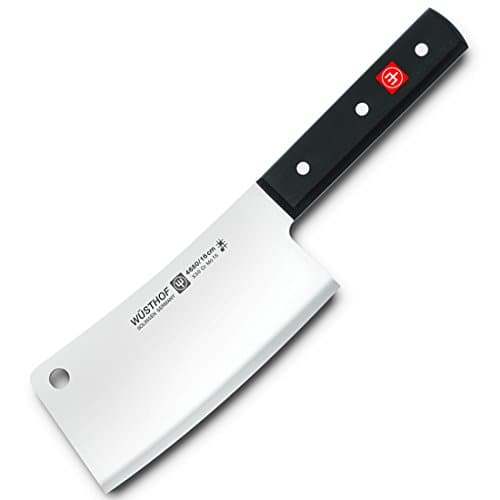
| 03 | Wusthof Classic 6-Inch CleaverThe pick if you want to go through bone with a knife rather than around it. A 6 by 2.8-inch forged blade at 58 HRC, made in Solingen, which Wusthof itself rates for ribs, racks and bones - so the bone question is answered by the maker rather than inferred. At 6 inches it is controllable enough to place a cut rather than aim at one. | Best for cutting through bone | | $125.00·Amazon |
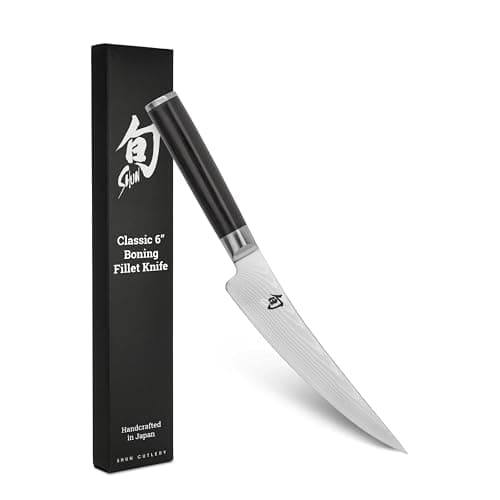
| 04 | Shun Classic 6" Boning & Fillet Knife (DM0743)The finest object here and the worst value, and we are keeping it last on purpose. A 6-inch VG-MAX core clad in 69-layer Damascus, ground to 16 degrees, 4.2 ounces, made in Japan. Shun's own specification calls the blade curved and RIGID, which makes it excellent at close controlled work against bone and - despite the name on the box - not a fillet knife. | Best Japanese, if you already own the cheap one | | $145.43·Amazon |
#ad · Live prices from the Amazon Product API, as of October 18, 2026. Where we have no verified live price, we show none — a gap beats a number that has rotted.
In detail
The picks, in full
Best overall
Victorinox Fibrox 6" Curved Boning Knife, Semi-Stiff (5.6603.15)
5.9 in curved bladeSemi-stiff3.4 ozSwiss made
The overall pick and the correct band for poultry. A 5.9-inch curved blade at 3.4 ounces on Victorinox's textured TPE handle - semi-stiff means it is firm enough to drive through a joint and compliant enough to ride a rib cage, which is exactly the compromise a chicken asks for. Swiss made, dishwasher safe and covered by the lifetime warranty.
- Job fit
- 8.5
- Control near bone
- 9
- Grip when greasy
- 9.5
- Edge maintenance
- 8.5
- Value
- 10
Pros
- +Semi-stiff is the one flex band that handles jointing and skin-and-silverskin work without being wrong at either
- +The Fibrox TPE handle is the best wet grip here, which matters more on a greasy bird than any blade property
- +3.4 ounces is light enough to steer by feel, which is how this cut is made
- +Victorinox rates it dishwasher safe and backs it with a lifetime warranty
- +Cheap enough that a chipped tip is annoying rather than expensive
Cons
- −Victorinox's own product page describes the curve and purpose but publishes no stiffness rating - the semi-stiff designation comes from the model number and foodservice listings
- −No published steel designation, hardness or edge angle, so the geometry is less verifiable than the German and Japanese knives here
- −Will not cut a backbone - you still need shears or a cleaver for that one cut
- −Stamped blade and molded handle look exactly as inexpensive as they are
Don't buy this if…
…you know your job is filleting fish - a semi-stiff blade will not follow a rib cage the way a properly flexible one does, and our boning roundup ranks the flexible options.
Re-scored on this page's five-metric rubric, not carried over from our boning knife roundup, where it also wins but against a field judged on flex suitability across fish, poultry and red meat. Here the field is one bird, and it wins the three metrics that decide the bird: fit, control and grip. Job fit is 8.5 rather than higher only because it cannot do the backbone, which is a real gap and the reason this page recommends two tools.
If you have never jointed a bird before, a cheap knife is the right knife to learn on, and this is a cheap knife that professionals use. Keep the point sharp and let the blade find the gap rather than forcing it — the cuts that chip tips are the ones aimed at bone instead of between it.
$32.42·View on Amazon$40.0019% off
Price as of October 18, 2026. Prices change — Amazon's at checkout is the one that counts.
#ad · we may earn a commission from this link to Victorinox Fibrox 6" Curved Boning Knife, Semi-Stiff (5.6603.15)
Best for the backbone and spatchcocking
OXO Good Grips Spring-Loaded Poultry Shears
4 in curved bladesBone-holding notchSpring-loaded + safety lockComes apart
The easiest route, and the only tool here that spatchcocks a bird without technique. Curved micro-serrated 4-inch blades with a notch that holds bone instead of letting it skate, spring loading so the blades reopen themselves, a bolster that stops a wet hand sliding forward, and a lock for the drawer.
- Job fit
- 9
- Control near bone
- 7
- Grip when greasy
- 9
- Edge maintenance
- 7.5
- Value
- 8.5
Pros
- +The notch grips the bone rather than letting it slide, which is what makes cutting through a spine safe rather than alarming
- +Spring loading removes the reopening effort, which is the thing that makes shears tiring
- +The bolster and handle loop stop a greasy hand sliding onto the blade
- +Comes apart for cleaning, which on a raw-poultry tool is not optional
- +Needs no skill at all - this is the pick if the knife is the part that worries you
Cons
- −OXO recommends hand washing and sanitizing rather than the dishwasher
- −The curve that makes it good on bone makes it clumsy at the close trimming work
- −Micro-serrations cannot be honed or practically sharpened
- −A near-single-purpose tool at a general-purpose price
Don't buy this if…
…you want one tool for the whole job - shears cannot do the sighted close work around the oyster and the thigh joint, and the knife above can do everything except the spine.
Re-scored here; it wins the poultry section of our kitchen shears roundup, which judges shears against shears. On this page it is second, and for a lot of households it is the first thing to buy rather than the second: spatchcocking is the single most useful thing you can do to a chicken before roasting it, and this does that in two cuts with no learning curve.
Best for cutting through bone
Wusthof Classic 6-Inch Cleaver
6 x 2.8 in bladeForged, 58 HRCHigh-carbon stainlessMade in Solingen
The pick if you want to go through bone with a knife rather than around it. A 6 by 2.8-inch forged blade at 58 HRC, made in Solingen, which Wusthof itself rates for ribs, racks and bones - so the bone question is answered by the maker rather than inferred. At 6 inches it is controllable enough to place a cut rather than aim at one.
- Job fit
- 8.5
- Control near bone
- 7.5
- Grip when greasy
- 8
- Edge maintenance
- 9
- Value
- 5.5
Pros
- +Wusthof rates it for ribs, racks and bones, which is a maker's statement rather than a guess
- +58 HRC forged steel holds an edge longer than anything else on this page
- +Six inches is the most controllable chopper we rank - you can place a cut on a joint rather than swing at it
- +Height and mass turn a backbone into one deliberate stroke
- +Solingen-forged with a limited lifetime warranty
Cons
- −Roughly five times the winner, for a tool that does one of the bird's cuts
- −Wusthof says hand wash and dry immediately - it is not set-and-forget
- −Hard 58 HRC steel is less tolerant of hitting bone at a bad angle than softer blades
- −Useless for the close sighted work, so it is never a one-tool answer
Don't buy this if…
…your only reason for wanting it is the chicken spine - shears do that cut for a quarter of the money and are safer doing it.
Re-scored on this page's rubric; it is the premium German pick in our cleaver roundup, which is the page to read if a cleaver is what you are actually shopping for — there it is judged against other cleavers, including heavier and cheaper ones that do bone work with more mass for less money. It is on this page because a cleaver is a legitimate answer to the one cut a boning knife cannot make, and because people buying for chicken often buy a cleaver that is far too big.
Best Japanese, if you already own the cheap one
Shun Classic 6" Boning & Fillet Knife (DM0743)
6 in bladeVG-MAX core16 degree edgeRigid
The finest object here and the worst value, and we are keeping it last on purpose. A 6-inch VG-MAX core clad in 69-layer Damascus, ground to 16 degrees, 4.2 ounces, made in Japan. Shun's own specification calls the blade curved and RIGID, which makes it excellent at close controlled work against bone and - despite the name on the box - not a fillet knife.
- Job fit
- 7
- Control near bone
- 9.5
- Grip when greasy
- 7.5
- Edge maintenance
- 6.5
- Value
- 5
Pros
- +A 16-degree edge on a VG-MAX core is the keenest published geometry here, and on skin and silverskin that is visible
- +Rigid and narrow is genuinely right for close controlled work against bone
- +Shun publishes steel, layer count, edge angle, weight and flex characteristic - unusually complete
- +Damascus cladding helps release and resists staining
Cons
- −Hard keen Japanese steel and repeated bone contact are a poor combination - this edge chips where the stamped knives above would roll and come back on a rod
- −At 4.2 ounces it is the heaviest blade here, on the one knife type where light and nimble is a functional advantage
- −Sold as a Boning & Fillet knife while Shun's own spec calls it rigid, which is the one property a fillet knife must not have
- −Costs more than most people's chef's knife, for the least-used blade they will own
Don't buy this if…
…this would be your first boning knife - buy the Victorinox, break down twenty birds, and then decide whether you want a better one.
Re-scored here; it is the Japanese pick in our boning knife roundup. It finishes last on this page because of the one thing a chicken does constantly: it puts the edge into bone. Hard steel at 16 degrees is the geometry that chips doing that, and the Victorinox at a fifth of the price is the geometry that does not. It is a genuinely better knife for the trimming half of the job and the wrong knife for the jointing half, which is a trade worth making only if you already own a cheap boning knife.
Why stiffness decides this more than steel does
Boning knives come in three bands and the band matters more than the brand. A flexible blade bends to follow a rib cage, which is what filleting fish needs and what makes it vague on anything heavier. A stiff blade puts everything the edge touches straight into your hand, which is what red-meat trimming wants. Semi-stiff sits between them, and poultry is the one protein that sits between them too: you want firmness to pop a joint and compliance to ride the bone while you take a thigh off. That is the whole reason the Victorinox wins this page.
Our boning knife roundup ranks all three bands against each other, including the flexible blades this page deliberately leaves out.
The sequence, so you know what the knife has to do
Breaking down a bird is five operations. Legs:cut the skin, bend the leg back until the hip pops, cut through the exposed socket — that is the cut that needs a point and firmness. Thigh and drumstick: one cut through the knee joint, found by feel. Wings: the same, at the shoulder. Breasts: a long shallow cut down each side of the keel bone and then a blade riding the rib cage — the cut that wants a little compliance. Backbone: the only cut that goes through bone rather than between it, and the one cut on the list a boning knife should not be asked to make.
If you only ever spatchcock — two cuts either side of the spine, flatten the bird, roast it — the shears are the whole kit and you can stop reading here.
Three things that are not knives
A board you can sanitize. Raw poultry on an end-grain wooden board is a cleaning problem; a plastic or composite board you can scrub and run hot is the sane choice for this job even if your good board is wood. Our cutting board guide covers the trade-off between board hardness and edge life.
A sharp point, not just a sharp edge.Most of the work here is done by the first inch of blade. Hone before you start — how to use a honing steel — and when honing stops working, how to sharpen kitchen knives has the method for the soft steels on this page.
Somewhere safe to put a wet pointed knife. A boning knife is the sharpest point in most kitchens and it spends this job slippery. Our knife storage guide ranks the options, and knife care and maintenance covers washing a knife that has been in raw chicken.
How we picked
We did not lab-test these knives
Everyone in this category says they tested twenty knives in a professional kitchen. We have not hands-on tested any of these, and we say so. What we did instead: compiled the published specifications — steel type and hardness (HRC), edge angle, blade geometry, weight and build — applied established sharpening standards, ran the value math (spec quality ÷ live price), and scored each product against a published rubric. The scores are judgments from documented research — not measurements we took, because we do not have a test lab and we will not pretend we do. Where a number came from someone else's work, we name them in Sources.
Questions
Frequently asked
What knife is best for cutting up a whole chicken?+
A 6-inch curved semi-stiff boning knife. Narrow enough to see past, pointed enough to find a joint, firm enough to drive through a hip socket and compliant enough to ride the rib cage when you take a breast off. Add poultry shears for the backbone, which is the one cut a boning knife should not make.
Can I use a chef's knife to break down a chicken?+
You can, and it is how most good knives get chipped. A chef's knife is too tall to see past, too wide to follow a joint and ground too thin to be driven into bone. If it is all you have, use the heel for the spine, take the legs and wings at the joint rather than through bone, and expect to touch up the edge afterwards.
Do I need poultry shears or a boning knife?+
Shears if you want the job done with no technique, especially spatchcocking. A boning knife if you want eight proper pieces and a carcass for stock. Together they are under sixty dollars and cover everything — which is the answer this page actually gives.
Can you cut chicken bones with a cleaver?+
Yes — a meat cleaver is built for it, and a 6-inch one is controllable enough to place the cut. Do not use a thin
vegetable cleaver or a nakiri for bone; the keen low-angle edge chips. See
chef's knife vs cleaver for the difference, and
best cleavers for the ranking.
How do I keep a boning knife sharp if I use it on bone?+
Accept that you will roll the edge and pick steel that forgives it. The soft stamped blades on this page come back on a honing rod in seconds —
how often to sharpen knives has the cadence. Hard Japanese steel does not roll, it chips, which is why the Shun finishes last here.
Is it cheaper to break down a whole chicken yourself?+
Usually yes, per pound, and you also get a carcass worth a litre of stock. The saving is why people learn this, and it is also why the right tool is a twenty-six dollar knife rather than a hundred-and-twenty-five dollar one.
Receipts
Sources
- Victorinox — Fibrox 6" curved boning knife 5.6603.15 (curved blade, 5.9 in, TPE Fibrox handle, Swiss manufacture, dishwasher safe, lifetime warranty)
- OXO — Good Grips poultry shears (curved micro-serrated blades, bone notch, spring loading, safety lock, take-apart, hand-wash guidance)
- WUSTHOF — Classic 6" cleaver 1040102816 (6 x 2.8 in forged blade, 58 HRC, high-carbon stainless, Solingen manufacture, maker's rating for ribs, racks and bones, hand-wash care)
- Shun — Classic 6" boning & fillet knife DM0743 (VG-MAX core, 69-layer Damascus, 16 degree edge, 4.2 oz, maker's "curved and rigid" description, Seki manufacture)
We do not run a testing lab, and we do not pretend to. Where a spec or a measured number came from someone else's work — a manufacturer's page, a published standard — we name them and link them. Where we could not verify something, we say so on the page rather than quietly leaving it out. Read our full method.