Skip to content
The Edge Bench

Roundups & reviews · Chef Knives

The best cleavers, ranked

Two tools share the name and one of them will break if you use it like the other. Pick your family first - vegetable or bone - then read the ranking.

By Stephen V.Updated How we review
#ad

We earn a commission when you buy through our Amazon links, at no extra cost to you. It never changes a verdict, and we say so when the cheaper knife is the better buy. How this works.

Almost everything that goes wrong with a cleaver goes wrong before the knife arrives. Two completely different tools are sold under the same word: a Chinese vegetable cleaver, which is a thin, light, wide-bladed chef's knife that happens to be rectangular, and a Western meat cleaver, which is a heavy wedge built to break bone by falling on it. They photograph identically. They are not interchangeable in either direction, and the failure is expensive in both.

Shun says it plainly on its own product page for the vegetable cleaver in this list: it "isn't for use on joints or bones; a Meat Cleaver is made for that." That is the manufacturer of a knife in the $200-plus bracket telling you what will happen if you treat it as a chopper. A thin cleaver ground to 16 degrees meeting a chicken thigh bone chips, and a chip is not a honing-rod problem — the whole edge has to be ground back level with the notch. Meanwhile a heavy Western cleaver, thick-spined and deliberately blunt-shouldered, is miserable at the job most people actually bought it for, which is chopping vegetables fast.

So the decision order here is family first, ranking second. If you want a knife to power through cabbage, squash and a mountain of aromatics — and to scoop the results into the pan with the flat of the blade — you want a vegetable cleaver, and picks two, three and six below are yours. If you break down chicken, split ribs or portion through cartilage and small bone, you want a meat cleaver, and picks one, four and five are yours. If you are still working out which, chef's knife vs cleaver answers the prior question of whether you need either.

All six are scored on the same five metrics — cut quality, edge maintenance, handling, durability and value — but the rubric measures job fit, not raw capability. A vegetable cleaver is not marked down for failing at bone, because splitting bone is not its job; a bone cleaver is not marked down for dicing shallots badly. Each is scored on how well it does the thing it was built to do, at what it costs. The ranking is the order those averages fall out in, not an order we chose first and justified afterward.

One thing that surprised us in the scoring: the highest-ranked knife on this page is a professional restaurant cleaver that costs less than a decent chef's knife, and the lowest-ranked is the most beautiful and most expensive object here. That is the value metric doing its job, not a verdict on craftsmanship. Read the metric you care about rather than the average — our method is set out at how we review, and every specification below is sourced at the bottom of the page.

The short answer

Quick picks

#KnifeBest forScorePrice
01
Victorinox Victorinox Fibrox Pro 7-Inch Kitchen Cleaver
Victorinox Fibrox Pro 7-Inch Kitchen Cleaver

The professional answer, at a price that makes the premium meat cleavers hard to justify. A 7 by 2.5 inch high-carbon stainless blade weighted at about a pound, on the same Fibrox handle that made the Victorinox chef's knife the value benchmark on this site - Swiss made, NSF approved, dishwasher safe, with a hang hole. It loses fewer points than anything else here because it does its job and then survives being treated badly.

Best meat cleaver
8.8
$66.53Amazon
02
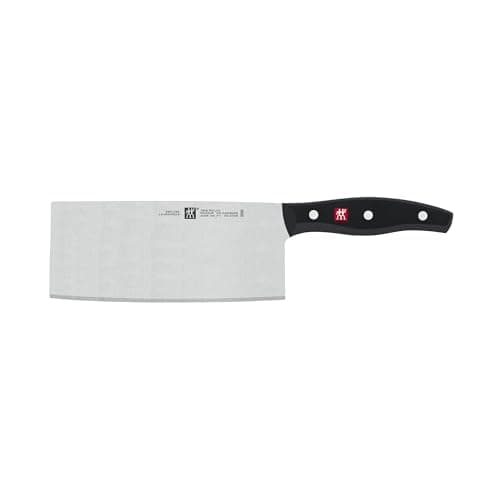
Zwilling Zwilling TWIN Signature 7-Inch Chinese Vegetable Cleaver
Zwilling TWIN Signature 7-Inch Chinese Vegetable Cleaver

The best vegetable cleaver here for people who will not hand wash a knife. Precision stamped from a single piece of Zwilling's special formula stainless, FRIODUR ice-hardened to 57 HRC and ground to a 15 degree edge, on a triple-riveted ergonomic handle - made in Germany and dishwasher safe, which no other vegetable cleaver on this page can claim.

Best vegetable cleaver
8.3
$80.00Amazon
03
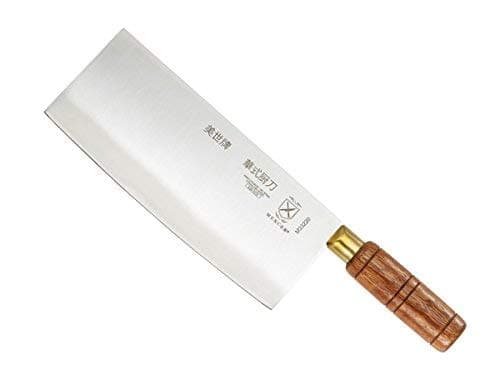
Mercer Culinary Mercer Culinary Chinese Chef's Knife, Wood Handle
Mercer Culinary Chinese Chef's Knife, Wood Handle

The cheapest thing on this page that is unambiguously a real knife, and it finishes a tenth of a point behind the Zwilling at well under half the price. One-piece high-carbon Japanese steel in an 8 by 3.25 inch blade with a rounded hardwood handle - the restaurant-supply caidao, the kind that lives on a Chinese line cook's board and gets sharpened on a brick.

Best value
8.2
$36.90Amazon
04
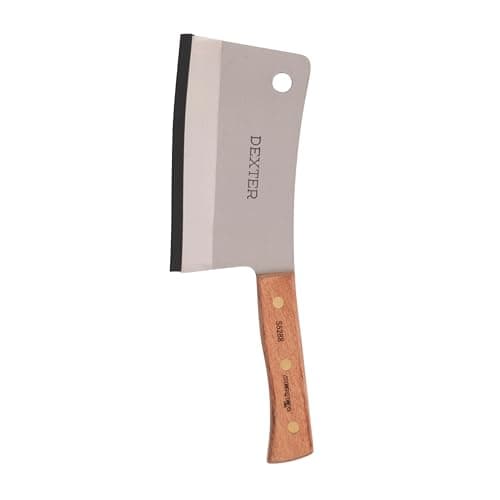
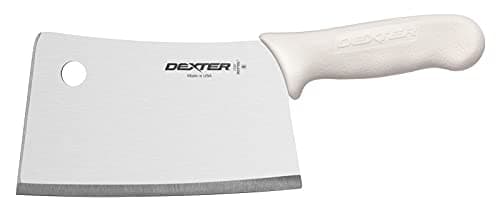
Dexter-Russell Dexter-Russell Traditional 8-Inch Stainless Heavy Duty Cleaver
Dexter-Russell Traditional 8-Inch Stainless Heavy Duty Cleaver

The one on this page that actually splits bone rather than merely surviving it. Dexter's DEXSTEEL stain-free high-carbon blade, individually ground and honed, in an 8-inch heavy-duty pattern that retailers list at well over two pounds, with a natural rosewood handle on brass compression rivets and a hang hole. Made in the USA and built for a butcher's bench, not a kitchen drawer.

Best for bone
8.0
$64.99Amazon
05
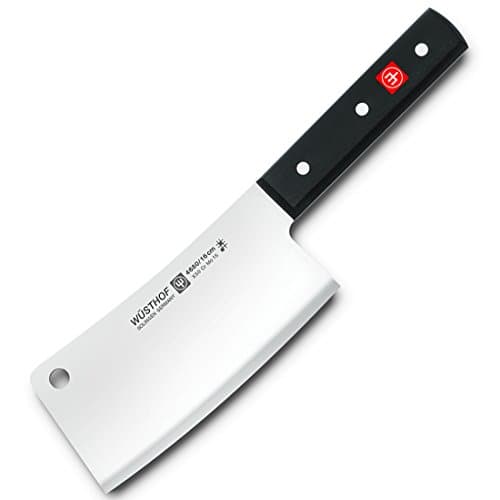
Wusthof Wusthof Classic 6-Inch Cleaver
Wusthof Classic 6-Inch Cleaver

The forged one. A 6 by 2.8 inch blade in Wusthof's high-carbon stainless at 58 HRC, forged in Solingen with the familiar black triple-riveted Classic handle. Wusthof rates it for ribs, racks, bones and hard-skinned fruit, and the shorter, harder, more rigid blade is easier to place accurately than the big American cleaver above - you pay roughly double for that precision.

Best premium German
7.9
$125.00Amazon
06
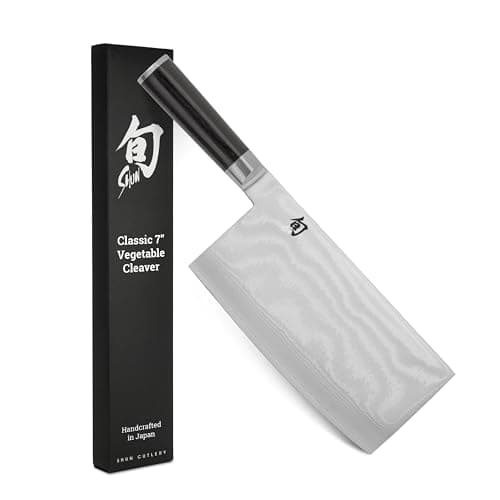
Shun Shun Classic 7-Inch Vegetable Cleaver
Shun Classic 7-Inch Vegetable Cleaver

The sharpest and the prettiest, ranked last by arithmetic rather than by opinion. A VG-MAX cutting core clad in 69 total layers of Damascus, ground to 16 degrees per side, in a 7 by 3.6 inch blade weighing about 11.5 ounces on a full composite tang and ebony-finished PakkaWood. Nothing here cuts a vegetable more cleanly. Nothing here costs close to as much, and Shun itself warns you to keep it away from bone.

Best premium Japanese
7.4
$228.10Amazon

#ad · Live prices from the Amazon Product API, as of Sep 2, 2026. Where we have no verified live price, we show none — a gap beats a number that has rotted.

In detail

The picks, in full

01
Victorinox Victorinox Fibrox Pro 7-Inch Kitchen Cleaver

Best meat cleaver

Victorinox Fibrox Pro 7-Inch Kitchen Cleaver

7 x 2.5 in bladeAbout 1 lbHigh-carbon stainlessNSF, dishwasher safe
8.8/10

The professional answer, at a price that makes the premium meat cleavers hard to justify. A 7 by 2.5 inch high-carbon stainless blade weighted at about a pound, on the same Fibrox handle that made the Victorinox chef's knife the value benchmark on this site - Swiss made, NSF approved, dishwasher safe, with a hang hole. It loses fewer points than anything else here because it does its job and then survives being treated badly.

Cut quality
8.5
Edge maintenance
8.5
Handling
8.5
Durability
9.5
Value
9

Pros

  • About a pound of blade is enough mass for cartilage and small bone without being a two-handed splitter
  • Fibrox is the one handle here that grips reliably when your hands are wet and greasy - which they will be
  • Genuinely dishwasher safe and NSF approved, so it survives a household that does not read care labels
  • Swiss made and priced below most premium chef knives

Cons

  • Stamped, not forged, and it looks it - this is equipment, not an heirloom
  • The softer stainless takes an edge easily and gives it up faster than the 58 HRC German blade below
  • Too heavy and too blunt-shouldered to be your vegetable knife, whatever the product photos suggest

Don't buy this if…

you wanted a cleaver for vegetables - this is the wrong family, and its mass will make you slower at every prep task, not faster.

$66.53View on Amazon

$78.0015% off

Price as of Sep 2, 2026. Prices change — Amazon's at checkout is the one that counts.

#ad · we may earn a commission from this link to Victorinox Fibrox Pro 7-Inch Kitchen Cleaver

02
Zwilling Zwilling TWIN Signature 7-Inch Chinese Vegetable Cleaver

Best vegetable cleaver

Zwilling TWIN Signature 7-Inch Chinese Vegetable Cleaver

7 in bladeFRIODUR ice-hardened57 HRC, 15 degree edgeDishwasher safe
8.3/10

The best vegetable cleaver here for people who will not hand wash a knife. Precision stamped from a single piece of Zwilling's special formula stainless, FRIODUR ice-hardened to 57 HRC and ground to a 15 degree edge, on a triple-riveted ergonomic handle - made in Germany and dishwasher safe, which no other vegetable cleaver on this page can claim.

Cut quality
8.5
Edge maintenance
8.5
Handling
8.5
Durability
8.5
Value
7.5

Pros

  • A published 15 degree edge on 57 HRC ice-hardened steel is genuinely keen geometry for a stamped knife
  • The only vegetable cleaver here that is dishwasher safe, which matters more than it sounds on a knife used daily
  • Stamped construction keeps it light, and light is exactly what a vegetable cleaver should be
  • Made in a company-owned German factory with a lifetime warranty

Cons

  • Stamped, with no bolster and no forged heft - if you want the feel of a forged knife this is not it
  • Costs roughly double the Mercer below for a difference most cooks would struggle to name blind
  • 57 HRC will not hold an edge like the 60-plus Japanese steel further down the page

Don't buy this if…

you will ever swing it at a bone - a thin 15 degree edge is exactly what chips, and this one is not built to be a chopper.

$80.00View on Amazon

$119.9933% off

Price as of Sep 2, 2026. Prices change — Amazon's at checkout is the one that counts.

#ad · we may earn a commission from this link to Zwilling TWIN Signature 7-Inch Chinese Vegetable Cleaver

03
Mercer Culinary Mercer Culinary Chinese Chef's Knife, Wood Handle

Best value

Mercer Culinary Chinese Chef's Knife, Wood Handle

8 x 3.25 in bladeHigh-carbon Japanese steelOne-piece constructionHardwood handle
8.2/10

The cheapest thing on this page that is unambiguously a real knife, and it finishes a tenth of a point behind the Zwilling at well under half the price. One-piece high-carbon Japanese steel in an 8 by 3.25 inch blade with a rounded hardwood handle - the restaurant-supply caidao, the kind that lives on a Chinese line cook's board and gets sharpened on a brick.

Cut quality
8
Edge maintenance
9
Handling
8
Durability
6.5
Value
9.5

Pros

  • Costs less than half of anything else here and gives up remarkably little to do it
  • Mercer builds it as one piece of high-carbon steel, which is the part that matters at this price
  • High-carbon steel takes a keen edge quickly and comes back fast on a stone
  • The 8 by 3.25 inch face is the best scoop on this page for moving prep off the board

Cons

  • A rounded hardwood handle means hand wash and dry, every time, with no exceptions
  • High-carbon steel is more corrosion-prone than the no-stain German blades above - leave it wet and you will see it
  • Mercer publishes no hardness or edge angle for this model, so its geometry is less verifiable than the rest of the field

Don't buy this if…

you want a knife you can leave in the sink - this is the least forgiving thing here about neglect, which is the price of the price.

$36.90View on Amazon

Price as of Sep 2, 2026. Prices change — Amazon's at checkout is the one that counts.

#ad · we may earn a commission from this link to Mercer Culinary Chinese Chef's Knife, Wood Handle

04
Dexter-Russell Dexter-Russell Traditional 8-Inch Stainless Heavy Duty Cleaver

Best for bone

Dexter-Russell Traditional 8-Inch Stainless Heavy Duty Cleaver

8 in heavy-duty bladeDEXSTEEL high-carbonRosewood, brass rivetsMade in USA
8.0/10

The one on this page that actually splits bone rather than merely surviving it. Dexter's DEXSTEEL stain-free high-carbon blade, individually ground and honed, in an 8-inch heavy-duty pattern that retailers list at well over two pounds, with a natural rosewood handle on brass compression rivets and a hang hole. Made in the USA and built for a butcher's bench, not a kitchen drawer.

Cut quality
8.5
Edge maintenance
8
Handling
7
Durability
8
Value
8.5

Pros

  • The mass is the feature - it does the one job the lighter cleavers here genuinely cannot
  • Brass compression rivets through a natural rosewood handle is a joint built to be hit, not glued
  • Individually ground and honed rather than machine-finished in a batch
  • American-made professional cutlery at a mid price rather than a premium one

Cons

  • Over two pounds is a lot of knife - most people will find it two-handed and tiring
  • Dexter explicitly says hand wash and towel dry, and warns that dishwasher detergents stain and pit the blade
  • Hopeless at everything except heavy chopping, so it earns its drawer space only if you break down whole birds or ribs

Don't buy this if…

you buy meat already portioned - this is a butchery tool, and a cleaver you never swing hard is just a heavy inconvenience.

$64.99View on Amazon

$82.2421% off

Price as of Sep 2, 2026. Prices change — Amazon's at checkout is the one that counts.

#ad · we may earn a commission from this link to Dexter-Russell Traditional 8-Inch Stainless Heavy Duty Cleaver

05
Wusthof Wusthof Classic 6-Inch Cleaver

Best premium German

Wusthof Classic 6-Inch Cleaver

6 x 2.8 in bladeForged, 58 HRCHigh-carbon stainlessMade in Solingen
7.9/10

The forged one. A 6 by 2.8 inch blade in Wusthof's high-carbon stainless at 58 HRC, forged in Solingen with the familiar black triple-riveted Classic handle. Wusthof rates it for ribs, racks, bones and hard-skinned fruit, and the shorter, harder, more rigid blade is easier to place accurately than the big American cleaver above - you pay roughly double for that precision.

Cut quality
9
Edge maintenance
9
Handling
8
Durability
8
Value
5.5

Pros

  • 58 HRC forged steel holds an edge longer than any other meat cleaver here
  • At 6 inches it is the most controllable chopper on the page - you can place a cut rather than aim at one
  • Wusthof rates it for ribs, racks and bones, so the bone question is answered by the maker rather than inferred
  • Solingen-forged with a limited lifetime warranty

Cons

  • Roughly double the Victorinox for a smaller blade and less mass behind the swing
  • Wusthof says hand wash and dry immediately, avoid soaking and abrasive sponges - it is not a set-and-forget knife
  • Harder steel at 58 HRC is less tolerant of hitting a bone at a bad angle than the softer Swiss and American blades

Don't buy this if…

your reason for buying a cleaver is heavy bone work - the Dexter has more mass for less money, and mass is what does that job.

$125.00View on Amazon

Price as of Sep 2, 2026. Prices change — Amazon's at checkout is the one that counts.

#ad · we may earn a commission from this link to Wusthof Classic 6-Inch Cleaver

06
Shun Shun Classic 7-Inch Vegetable Cleaver

Best premium Japanese

Shun Classic 7-Inch Vegetable Cleaver

7 x 3.6 in bladeVG-MAX core69-layer Damascus16 degree per side
7.4/10

The sharpest and the prettiest, ranked last by arithmetic rather than by opinion. A VG-MAX cutting core clad in 69 total layers of Damascus, ground to 16 degrees per side, in a 7 by 3.6 inch blade weighing about 11.5 ounces on a full composite tang and ebony-finished PakkaWood. Nothing here cuts a vegetable more cleanly. Nothing here costs close to as much, and Shun itself warns you to keep it away from bone.

Cut quality
9.5
Edge maintenance
8
Handling
8.5
Durability
6.5
Value
4.5

Pros

  • The keenest geometry on the page, on the hardest and finest-grained steel here
  • 3.6 inches of blade height is the most knuckle clearance in the field, which is a real ergonomic gain
  • Full composite tang and an ebony-finished PakkaWood handle, handcrafted in Japan
  • Limited lifetime warranty

Cons

  • Costs multiples of every other vegetable cleaver here, which is what sinks it on the value metric
  • Shun states outright that it is not for joints or bones - the single most restrictive knife on this page
  • PakkaWood and hard Japanese steel together mean hand washing and careful storage, permanently

Don't buy this if…

you want one cleaver to do everything - this is the most specialized tool in the field, and using it outside its brief is how it gets chipped.

$228.10View on Amazon

$289.9521% off

Price as of Sep 2, 2026. Prices change — Amazon's at checkout is the one that counts.

#ad · we may earn a commission from this link to Shun Classic 7-Inch Vegetable Cleaver

The two cleavers are not the same tool

A Chinese vegetable cleaver— a caidao, or in Western catalogs a "Chinese chef's knife" — is a chef's knife with a rectangular blade. It is thin behind the edge, ground keen, and light: the Shun in this list weighs about 11.5 ounces, and the stamped Zwilling less. It slices, dices, minces and shreds, and the tall flat face is a bench scraper that carries a board of prep to the pan in one movement. It is not a chopper. It is a slicer that looks like a chopper.

A Western meat cleaver is the opposite object. Thick-spined, heavy, deliberately obtuse at the edge so the steel does not fold when it hits something hard, and swung rather than pushed. The Dexter in this list is listed by retailers at over two pounds, which is roughly three times the Shun. That mass is the entire mechanism: a meat cleaver works by falling, and the edge is there to concentrate the force, not to be scary-sharp.

The mistake runs in both directions and only one of them is recoverable. Using a heavy cleaver for vegetables is merely tiring and imprecise. Using a thin vegetable cleaver on bone chips it, and a chip means grinding the whole edge back to the depth of the notch — on a hard Japanese blade that is a serious job. If you are choosing between a cleaver and the knife you already own, our chef's knife vs cleaver comparison takes that question apart properly, and the nakiri roundup covers the Japanese vegetable knife that does much of the same work in a smaller package.

What "can it go through bone" actually depends on

Not sharpness, and not price. Three things decide it: mass, edge angle and hardness. Mass supplies the energy, so a heavier blade does more work per swing and needs less force from you. A wider edge angle — the obtuse grind on a meat cleaver, versus the roughly 15 to 16 degrees per side on the vegetable cleavers here — puts more steel immediately behind the apex, so it deforms instead of fracturing. Knife sharpening angles explains why that trade is unavoidable rather than a design choice anyone regrets.

Hardness is the one people get backwards. Harder steel is not tougher; it is the opposite. A blade at 60 HRC resists abrasion and holds a keener edge far longer, and it fractures where a softer blade at 56 to 58 HRC would simply roll over and come back with a few strokes of a rod. That is why the softest blades on this page are the ones cleared for bone, and the hardest one carries an explicit warning against it. Knife steel types, explained covers the hardness-versus-toughness trade in full. It is also why "this cleaver is razor sharp" is a claim to read carefully on a bone cleaver — a razor edge is the wrong edge for that job.

Blade height, weight and knuckle clearance

The reason cooks who switch to a vegetable cleaver rarely switch back is blade height. Between about 3.25 and 3.6 inches of blade means your knuckles never come near the board no matter how low you cut, so the guiding hand can sit flat and confident in a way it cannot behind a 1.8-inch chef's knife. It also means a big flat surface for crushing garlic and for scooping, and a straight edge profile that rewards a push cut rather than a rock chop.

Weight is where the two families separate again. For vegetables, lighter is better, and a stamped blade is not a compromise but the correct answer — stamped vs forged sets out where forging genuinely helps and where it is mostly marketing. For bone, heavier is better up to the point where you cannot control it, which for most home cooks arrives somewhere around a pound and a half. That is the honest case for the Victorinox over the much heavier Dexter in a domestic kitchen: enough mass to work, little enough to steer.

The handle decides how the knife ages

Every cleaver in this list with a wood or resin-impregnated wood handle — the Mercer, the Dexter, the Shun — carries a hand-wash-only instruction from its maker, and Dexter goes further, warning that dishwasher detergents will stain and pit the blade itself. The two with synthetic handles, the Victorinox and the Zwilling, are rated dishwasher safe. That is not a small distinction on a knife you will use for twenty years, and it is the single most reliable predictor of whether a cleaver still looks good in a decade.

Construction matters too, but less than people assume at this size. A one-piece blade or a full tang running the length of the handle is a mechanical joint; a blade pressed into a hollow handle is a bet, and a cleaver is the worst knife in the kitchen to place that bet on because it is the one you hit things with. Full tang vs partial tang covers what the construction actually buys, and knife care and maintenance covers the routine that keeps any of them alive.

Do you actually need one?

Honestly, most kitchens do not. Our position elsewhere on this site is that a kitchen needs three knives — a chef's knife, a paring knife and a serrated bread knife — and a cleaver is not one of them. It earns a place in two specific situations. The first is volume vegetable prep: if you cook Chinese food, or you simply process a lot of produce, a vegetable cleaver is faster and less tiring than a chef's knife and you will reach for it daily. The second is breaking down whole birds, ribs or bone-in cuts at home, where a meat cleaver does in one motion what a chef's knife should never be asked to do at all.

If neither describes you, the money is better spent sharpening what you already own. A sharp chef's knife beats a dull cleaver at every task either can perform, and a decent stone costs less than the cheapest knife on this page.

Two claims to distrust

The first is a Damascus layer count presented as a performance number. The cladding layers on a Damascus-clad blade are a pattern wrapped around a cutting core; the core does the cutting, and 69 layers is not seven times better than ten. Damascus steel knives, explained sets out what the cladding contributes. The Shun above is excellent because of its VG-MAX core and its 16-degree grind, and it is beautiful because of the cladding. Those are two separate facts and only one of them cuts.

The second is a product photo of a cleaver next to a bone. Listing photography for thin vegetable cleavers routinely shows them beside raw meat, sometimes beside ribs, because it reads as capability. Go to the manufacturer's own page instead and look for what they will actually commit to in writing. Shun writes the restriction down; Wusthof and Victorinox write the clearance down. When the maker will not say either way, assume it is a slicer.

If you buy one thing from this page

Decide the family before you look at a price. If it is vegetables, buy the lightest, keenest cleaver you will actually maintain, and buy a board soft enough not to fight it. If it is bone, buy mass and a wide edge and stop worrying about how sharp it is. The one genuinely bad outcome, and the reason this page opens the way it does, is a thin knife bought for a heavy job — it is the only mistake here that ends with a chipped blade rather than a mild disappointment.
How we picked

We did not lab-test these knives

Everyone in this category says they tested twenty knives in a professional kitchen. We have not hands-on tested any of these, and we say so. What we did instead: compiled the published specifications — steel type and hardness (HRC), edge angle, blade geometry, weight and build — applied established sharpening standards, ran the value math (spec quality ÷ live price), and scored each product against a published rubric. The scores are judgments from documented research — not measurements we took, because we do not have a test lab and we will not pretend we do. Where a number came from someone else's work, we name them in Sources.

Questions

Frequently asked

What is the difference between a Chinese cleaver and a meat cleaver?
A Chinese vegetable cleaver(caidao) is a thin, light chef's knife with a rectangular blade, ground keen at roughly 15 to 16 degrees per side, for slicing, dicing and scooping. A Western meat cleaver is a heavy, thick-spined wedge with a deliberately wider edge, swung to break through cartilage and bone. They look alike and are not interchangeable — using the vegetable version on bone chips the edge.
Can a Chinese vegetable cleaver cut through bone?
No, and the makers say so. Shun's own product page for the vegetable cleaver in this list states it "isn't for use on joints or bones; a Meat Cleaver is made for that." A thin blade at a keen angle in hard steel fractures rather than deforms when it meets bone, and repairing a chip means grinding the whole edge down to the depth of the notch.
Do I need a cleaver if I already have a chef's knife?
Probably not. Our three-knife position does not include one. A cleaver earns its place in two cases: high-volume vegetable prep, where a light Chinese cleaver is genuinely faster and less tiring than a chef's knife, and breaking down bone-in cuts at home, which a chef's knife should never be asked to do.
Can cleavers go in the dishwasher?
It depends entirely on the handle and the maker's instruction. The two synthetic-handled cleavers here — the Victorinox Fibrox and the Zwilling — are rated dishwasher safe. The three with wood or PakkaWood handles are hand wash only, and Dexter goes further, warning that dishwasher detergents will stain and pit the blade itself. Knife care and maintenance covers what a cycle actually does to an edge.
How do you sharpen a cleaver?
A vegetable cleaver sharpens exactly like a chef's knife — same stone, same roughly 15-degree angle, and the tall flat blade is arguably easier to hold steady than a curved one. A heavy meat cleaver is different: keep the wider factory angle rather than thinning it, because the obtuse edge is what stops it chipping on bone. Sharpening a bone cleaver to a keen chef's-knife angle is a common and self-defeating mistake — knife sharpening angles explains why.
Why is the cheapest meat cleaver ranked first?
Because the rubric scores job fit against price, and the Victorinox does the job while being dishwasher safe, NSF approved and priced below most chef knives. The forged German cleaver holds an edge longer and the American one has far more mass, but each costs substantially more for an advantage that only shows up in narrow circumstances. Read the metric you care about — if edge retention is the thing, the Wusthof row is the one to look at.
How are these scored if you have not tested them?
We compile each maker's published specifications — blade dimensions, steel and hardness, edge angle, construction, handle material, stated care instructions and country of manufacture — apply established cutlery standards to what those specifications imply, and run the value math against a live price refreshed daily. We do not have a test lab and we do not claim measured sharpness results. The method is at how we review, and every specification above is sourced below.

Keep reading

Receipts

Sources

We do not run a testing lab, and we do not pretend to. Where a spec or a measured number came from someone else's work — a manufacturer's page, a published standard — we name them and link them. Where we could not verify something, we say so on the page rather than quietly leaving it out. Read our full method.