Skip to content
The Edge Bench

Stones, sharpeners & how-to · Sharpening

The best sharpening stones for pocket knives

Folder steels are harder and more wear-resistant than kitchen stainless, which makes this an abrasive problem rather than a grit problem. Five diamond stones ranked on cutting speed, flatness, format and value.

SHARPAL SHARPAL 162N Double-Sided Diamond Stone 8" x 3"

Our top pick · Best overall

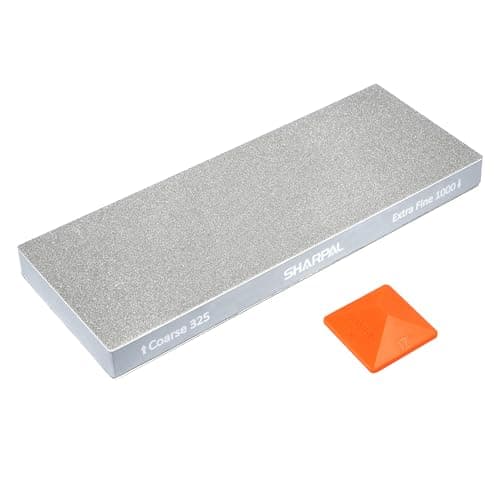
SHARPAL 162N Double-Sided Diamond Stone 8" x 3"

8.8

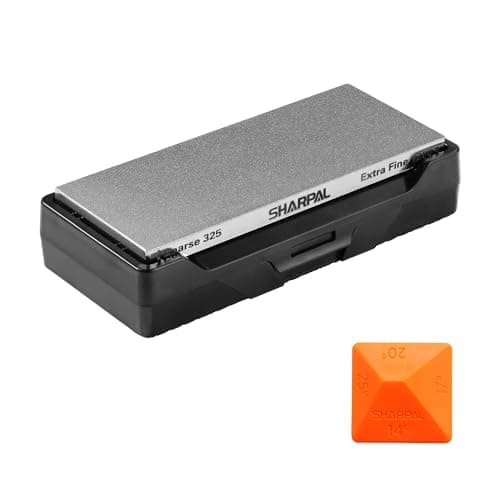
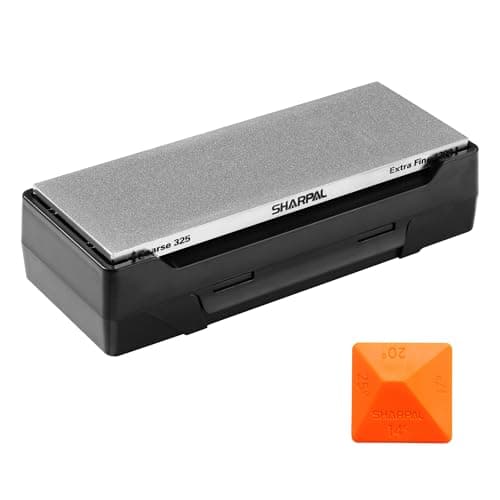
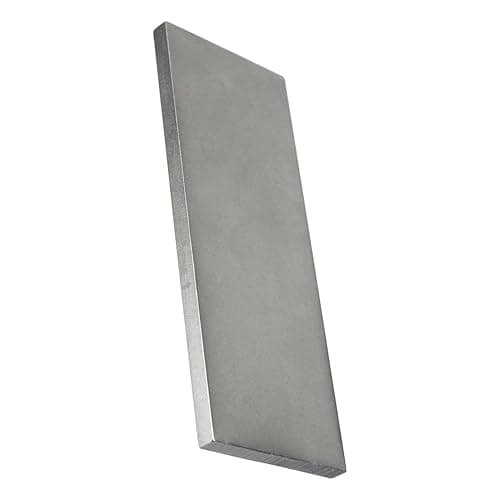
The best stone here for a folder and the most complete single purchase. Coarse and fine monocrystalline diamond on one large flat plate with a non-slip base - the coarse side resets a chipped or badly worn edge, the fine side puts a working edge back, and the 8 x 3 inch face is big enough that the stroke is comfortable rather than cramped.

$69.99Amazon

#ad · Full ranking below

By Stephen V.Updated How we review
#ad

We earn a commission when you buy through our Amazon links, at no extra cost to you. It never changes a verdict, and we say so when the cheaper knife is the better buy. How this works.

Buy the SHARPAL 162N double-sided diamond stone — it is the best sharpening stone for pocket knives, and it is for anyone whose folder is modern stainless rather than plain carbon steel. Coarse and fine diamond on one 8 x 3 inch flat plate covers the whole job on one tool, and diamond is the only abrasive in normal use that does not slow down when the steel gets hard. The budget pick is the SHARPAL 156N, the same double-sided format in a 6 x 2.5 inch body — the cheapest stone here that genuinely does the job, and the one to buy if the stone needs to fit in a pack.

Every stone here was in stock and priced at our last price check. We do not print a number in the prose: the Quick Picks table carries the live price and the date we pulled it, with a Check price button on every row.

This page is separate from best sharpening stones for one reason, and it is a materials reason rather than a marketing one. A pocket knife is usually made of a harder, more wear-resistant steel than a kitchen knife. Kitchen stainless is commonly run in the mid-50s HRC and is mostly chromium-carbide; the powder stainless steels that modern folders use are run higher and carry vanadium carbides, which are harder than the aluminium-oxide particles a conventional water stone cuts with. When the abrasive is softer than what it is trying to cut, the stone stops removing metal and starts polishing it — which feels like a stone that has gone dead and is actually a stone that was never going to work. Diamond is harder than every carbide in every knife steel, so the problem disappears. That is the whole page.

The second difference is the angle. Kitchen knives are ground thin because they cut soft food on a board; a folder is ground for a thumb, a rope, a cardboard box and being carried in a pocket, so the useful bevel is wider. Twenty to twenty-five degrees per side is the normal territory, which is why several stones here pair naturally with a 20/25-degree guide rather than the 15-degree guides sold for Japanese kitchen knives. Knife sharpening angles has the full table, and the short version is that a folder sharpened to a kitchen angle will take a keener edge and lose it the first time it meets a staple.

The method is on how we review: we have not hands-on tested these stones and we do not claim to have. The scores come from published specifications — abrasive type, grit pairing, substrate, working surface dimensions, continuous versus interrupted surface — and from value arithmetic against the live price. Everything sits under the sharpening hub.

The short answer

Quick picks

#KnifeBest forScorePrice
01
SHARPAL SHARPAL 162N Double-Sided Diamond Stone 8" x 3"
SHARPAL 162N Double-Sided Diamond Stone 8" x 3"

The best stone here for a folder and the most complete single purchase. Coarse and fine monocrystalline diamond on one large flat plate with a non-slip base - the coarse side resets a chipped or badly worn edge, the fine side puts a working edge back, and the 8 x 3 inch face is big enough that the stroke is comfortable rather than cramped.

Best overall
8.8
$69.99Amazon
02
DMT DMT D8C Dia-Sharp Bench Stone, Coarse
DMT D8C Dia-Sharp Bench Stone, Coarse

The repair plate, and the flattest surface on this page. DMT's continuous-surface Dia-Sharp is the reference for flatness in this category, and coarse is the grit you reach for when a folder has a chipped tip, a rolled edge or a factory bevel you intend to replace. Buy it as the first half of a two-stone setup, not on its own.

Best for repairs and reprofiling
7.9
Check price →
03
DMT DMT D8F Dia-Sharp Bench Stone, Fine
DMT D8F Dia-Sharp Bench Stone, Fine

The finishing plate, and the most controlled pass available here. Fine diamond on the same continuous hardened-steel substrate as the D8C - flatter than any double-sided plate and correspondingly less forgiving of a wobbly angle. Buy it as the second half of a DMT pair, or on its own if your folders only ever need a touch-up.

Best finishing plate
7.6
$65.29Amazon
04
SHARPAL SHARPAL 168H Dual-Grit Diamond Stone 8" x 3"
SHARPAL 168H Dual-Grit Diamond Stone 8" x 3"

The cheapest way onto a full-size diamond plate. Dual-grit diamond on a large 8 x 3 inch face and a rigid substrate, for meaningfully less than the 162N - the sensible pick if you are not yet sure diamond is the format you want to commit to, and you want the big face rather than the portable one.

Best large-format value
8.5
$44.99Amazon
05
SHARPAL SHARPAL 156N Double-Sided Diamond Stone 6" x 2.5"
SHARPAL 156N Double-Sided Diamond Stone 6" x 2.5"

The budget pick, and the one that actually suits a pocket knife best on format. The same double-sided coarse-and-fine diamond as our winner in a 6 x 2.5 inch body - the right size for a folder blade, a drawer or a pack, and the wrong size if you also intend to sharpen 8-inch chef's knives on it.

Budget pick
8.8
$44.99Amazon

#ad · Live prices from the Amazon Product API, as of November 12, 2026. Where we have no verified live price, we show none — a gap beats a number that has rotted.

In detail

The picks, in full

01
SHARPAL SHARPAL 162N Double-Sided Diamond Stone 8" x 3"

Best overall

SHARPAL 162N Double-Sided Diamond Stone 8" x 3"

Double-sided, coarse + fine diamond8 x 3 in. working surfaceMonocrystalline diamond on a flat substrateNon-slip base included
8.8/10

The best stone here for a folder and the most complete single purchase. Coarse and fine monocrystalline diamond on one large flat plate with a non-slip base - the coarse side resets a chipped or badly worn edge, the fine side puts a working edge back, and the 8 x 3 inch face is big enough that the stroke is comfortable rather than cramped.

Cutting speed on hard steel
9.5
Flatness & substrate
8.5
Grit coverage
9
Format & portability
8
Value
9

Pros

  • Diamond, so high-vanadium powder steels like the ones in modern folders cut rather than polish
  • Two grits on one plate - the whole job without a second purchase
  • An 8 x 3 inch face gives a long stroke and plenty of room for a short folder blade
  • Needs no water, no soaking and no flattening, ever
  • The non-slip base is the difference between a controlled stroke and a sliding one

Cons

  • Diamond plates cut fast and a heavy hand removes more metal than intended
  • The fine side is a working finish rather than a polish - a strop or a fine ceramic finishes the job
  • Interrupted-surface plates like this are less ideal for very short blades than a continuous one
  • Diamond wears in: the first few knives cut noticeably faster than later ones, which is normal

Don't buy this if…

…all you own is plain high-carbon steel - a conventional water stone cuts that perfectly well and leaves a finer finish for less money.

Re-scored on this page's rubric rather than carried over: it is also our top pick on best diamond sharpening stones and the ceramic-knife answer on are ceramic knives worth it. The reason it wins here as well is that a folder and a ceramic blade pose the same question — the abrasive has to be harder than the thing being cut — and diamond is the only answer to it.

Two grits on one plate is what makes it the right single purchase. A pocket knife typically arrives at you either factory-sharp or badly abused, and both states need the coarse side: one to reprofile from a factory bevel you do not want, the other to remove damage. The fine side then sets a usable working edge. If you want more than that, the next step is a strop rather than a finer stone — the fine diamond face plus leather is a faster route to a keen folder edge than buying a 3000-grit water stone that your steel will blunt instead of being cut by.

$69.99View on Amazon

Price as of November 12, 2026. Prices change — Amazon's at checkout is the one that counts.

#ad · we may earn a commission from this link to SHARPAL 162N Double-Sided Diamond Stone 8" x 3"

02
DMT DMT D8C Dia-Sharp Bench Stone, Coarse

Best for repairs and reprofiling

DMT D8C Dia-Sharp Bench Stone, Coarse

Coarse diamond, continuous surface8 in. bench plateHardened steel substrateAlso flattens water stones
7.9/10

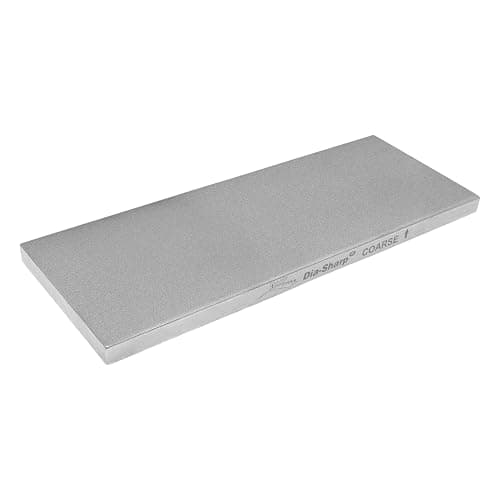
The repair plate, and the flattest surface on this page. DMT's continuous-surface Dia-Sharp is the reference for flatness in this category, and coarse is the grit you reach for when a folder has a chipped tip, a rolled edge or a factory bevel you intend to replace. Buy it as the first half of a two-stone setup, not on its own.

Cutting speed on hard steel
9.5
Flatness & substrate
9.5
Grit coverage
6
Format & portability
7.5
Value
7

Pros

  • A continuous diamond surface, which is the flattest and most consistent format here
  • Hardened steel substrate - it does not dish, cup or need flattening
  • Coarse diamond reprofiles a thick factory bevel faster than anything else on the page
  • A continuous surface suits short folder blades better than an interrupted one
  • Doubles as the flattening plate for any water stones you own

Cons

  • Single grit - this is half a setup and the D8F below is the other half
  • Coarse only. Used alone it leaves an edge that bites and does not refine
  • The most expensive way per stone to cover two grits
  • Removes metal very quickly, which is unforgiving on a thin folder grind

Don't buy this if…

…you want one stone that does everything - the double-sided plates above and below cover two grits for less than this covers one.

Re-scored here; it is the repair pick on best diamond sharpening stones and the tool we point at in how to fix a chipped knife. It takes flatness on this page outright.

Flatness is worth more on a folder than on a chef's knife, and that is not obvious. A short blade on a plate with interruptions can drop into a gap mid-stroke, which rounds the edge you are trying to set. A continuous surface has nowhere to drop. Combine that with a hardened steel substrate that never needs flattening and you have the most predictable stone here — which is exactly what you want when the bevel you are setting is only a couple of millimetres wide. How to flatten a whetstone is the problem this format does not have.

Check price on Amazon →

No buyable offer at the last price check (November 12, 2026). We show nothing rather than a stale number.

#ad · we may earn a commission from this link to DMT D8C Dia-Sharp Bench Stone, Coarse

03
DMT DMT D8F Dia-Sharp Bench Stone, Fine

Best finishing plate

DMT D8F Dia-Sharp Bench Stone, Fine

Fine diamond, continuous surface8 in. bench plateHardened steel substratePairs with the D8C coarse
7.6/10

The finishing plate, and the most controlled pass available here. Fine diamond on the same continuous hardened-steel substrate as the D8C - flatter than any double-sided plate and correspondingly less forgiving of a wobbly angle. Buy it as the second half of a DMT pair, or on its own if your folders only ever need a touch-up.

Cutting speed on hard steel
8.5
Flatness & substrate
9.5
Grit coverage
6
Format & portability
7.5
Value
6.5

Pros

  • The finest diamond surface here, and the one that leaves the most usable working edge
  • Continuous surface again - no gaps for a short blade to catch in
  • Maintenance-free: no soaking, no flattening, no dishing, indefinitely
  • Fine diamond keeps cutting on powder steels where a fine water stone would simply burnish

Cons

  • Single grit and the wrong one if the edge is actually damaged
  • Flatter means less forgiving - an unsteady angle shows up immediately
  • Expensive for one grit when double-sided plates exist
  • Still not a polishing grit; a strop is the next step either way

Don't buy this if…

…your folder is genuinely dull or chipped - a fine plate will take an hour to do what the coarse D8C does in minutes.

Re-scored here; it is also the finishing plate on best knife sharpeners for Japanese knives, which is a different audience with the same requirement — a hard edge and an abrasive that will not give up on it.

The honest framing is that the two DMT plates are one product sold as two. Bought together they are the best setup on this page and cost roughly twice the winner; bought singly, the fine plate alone is enough only if your knives never get damaged, which is not what pockets are like. Its real advantage over the double-sided plates is consistency: a continuous surface on a steel substrate behaves the same on the hundredth knife as on the first.

$65.29View on Amazon

Price as of November 12, 2026. Prices change — Amazon's at checkout is the one that counts.

#ad · we may earn a commission from this link to DMT D8F Dia-Sharp Bench Stone, Fine

04
SHARPAL SHARPAL 168H Dual-Grit Diamond Stone 8" x 3"

Best large-format value

SHARPAL 168H Dual-Grit Diamond Stone 8" x 3"

Dual-grit diamondLarge 8 x 3 in. faceDiamond on a rigid substrateTwo grits in one plate
8.5/10

The cheapest way onto a full-size diamond plate. Dual-grit diamond on a large 8 x 3 inch face and a rigid substrate, for meaningfully less than the 162N - the sensible pick if you are not yet sure diamond is the format you want to commit to, and you want the big face rather than the portable one.

Cutting speed on hard steel
9
Flatness & substrate
7.5
Grit coverage
8.5
Format & portability
8
Value
9.5

Pros

  • Full 8 x 3 inch working face at the lowest price of any large plate here
  • Two grits, so it covers repair and finishing without a second stone
  • Diamond abrasive, so modern folder steels are not a problem
  • Nothing to soak, flatten or replace

Cons

  • SHARPAL publishes a dual-grit pairing rather than two named grit numbers for this plate
  • Less consistent than a continuous-surface DMT plate
  • Diamond at the lower end of the price range tends to shed more in early use
  • No non-slip base specified, so it wants a damp cloth under it

Don't buy this if…

…you want the most predictable surface on the page - the DMT plates are flatter and more consistent, and you are paying for exactly that.

Re-scored here; it is the budget entry into diamond on best diamond sharpening stones. On this page it finishes second, because the thing it gives up against the 162N is documentation rather than capability: a dual-grit pairing without two published grit numbers is a weaker specification, and we score it as one.

It is the right pick in a specific case — you want a full-size plate, you want two grits, and you want to find out whether you will actually sharpen your own knives before spending more. That is a very common position and it deserves a real answer rather than being pushed at the top pick. Best sharpening stones is where to go if the answer turns out to be that you enjoy it.

$44.99View on Amazon

Price as of November 12, 2026. Prices change — Amazon's at checkout is the one that counts.

#ad · we may earn a commission from this link to SHARPAL 168H Dual-Grit Diamond Stone 8" x 3"

05
SHARPAL SHARPAL 156N Double-Sided Diamond Stone 6" x 2.5"

Budget pick

SHARPAL 156N Double-Sided Diamond Stone 6" x 2.5"

Double-sided, coarse + fine6 x 2.5 in. working surfaceNon-slip basePortable format
8.8/10

The budget pick, and the one that actually suits a pocket knife best on format. The same double-sided coarse-and-fine diamond as our winner in a 6 x 2.5 inch body - the right size for a folder blade, a drawer or a pack, and the wrong size if you also intend to sharpen 8-inch chef's knives on it.

Cutting speed on hard steel
9
Flatness & substrate
7.5
Grit coverage
8.5
Format & portability
9.5
Value
9.5

Pros

  • The cheapest stone here, and still a two-grit diamond plate rather than a compromise abrasive
  • Six inches is plenty for a folder - the short blade never runs out of plate
  • Small and light enough to live in a pack or a tool roll, which is where folders live
  • Non-slip base included, so it holds on a camp table as well as a counter

Cons

  • Too small for comfortable work on a long kitchen knife
  • Shorter stroke means more passes and more chances for the angle to drift
  • Same documentation gap as the other SHARPAL plates on exact grit numbers
  • Easy to lose, which is the price of being pocketable

Don't buy this if…

…this will also be your kitchen stone - an 8-inch chef's knife on a 6-inch plate is a frustrating way to spend a Sunday.

Re-scored here; it is the compact pick on best diamond sharpening stones. It finishes level with the winner on the overall and sits below it in the order on a deliberate tie-break: the larger plate is the better single stone for a household that owns kitchen knives too, and most people who buy a pocket-knife stone also own kitchen knives.

If you only sharpen folders, promote it to first without hesitation. A 6 x 2.5 inch plate is better matched to a three-inch blade than an 8 x 3 one, it costs less, and it is the only stone here you would genuinely carry. It is the budget pick in the proper sense: the cheapest product that does the job, where the job is the one the page title names.

$44.99View on Amazon

Price as of November 12, 2026. Prices change — Amazon's at checkout is the one that counts.

#ad · we may earn a commission from this link to SHARPAL 156N Double-Sided Diamond Stone 6" x 2.5"

Why diamond, and not a water stone

Sharpening is one hard material cutting another. A conventional water stone cuts with aluminium-oxide or silicon-carbide particles, and those are hard enough for the chromium-carbide steels that most kitchen knives are made of. Modern folder steels are different: they are run harder, and the wear resistance that makes them hold an edge in a pocket comes largely from vanadium carbides, which are harder than aluminium oxide. When the abrasive cannot cut the carbide, the stone grinds the softer matrix around it and burnishes the rest, and the edge comes off smooth and dull. Diamond is harder than every carbide found in knife steel, so it cuts all of them. That is the whole reason every stone on this page is diamond and none of them is a water stone. Knife steel types explained is the longer version.

The angle a folder actually wants

A kitchen knife is ground thin because it cuts soft things on a soft board. A pocket knife cuts rope, tape, cardboard and the occasional staple, and it gets carried, dropped and pried with. A thinner edge on a folder is keener for one afternoon and chipped by the end of the week. Twenty to twenty-five degrees per side is the useful range, which is a good deal wider than the 15 or 16 degrees a Japanese kitchen knife is ground to — and it is why the 20/25-degree guides on a field sharpener are not a cost-cutting simplification but the correct pair of numbers. Knife sharpening angles has the table. If you want a keener folder, thin the blade behind the edge rather than narrowing the edge itself.

Continuous surface versus interrupted

Diamond plates come two ways. A continuous surface is diamond across the whole face. An interrupted surface has a pattern of recesses, which clears swarf and costs you a uniformly supported stroke. On a long kitchen blade the difference is marginal. On a three-inch folder it is not: a short edge can drop into a recess and get rounded. If your knives are small, that is a real argument for the DMT plates. If you want two grits in one object, the double-sided plates are the trade.

Size: the counter-intuitive part

Bigger stones are generally better, and for pocket knives that is less true than usual. An 8 x 3 inch plate gives a long comfortable stroke, and it is what you want if the same stone will also see an 8-inch chef's knife. A 6 x 2.5 inch plate is better matched to the blade, cheaper, and the only format you would actually take anywhere. Buy the big one if it lives in a kitchen drawer and the small one if it lives in a pack.

Finish with leather, not with a finer stone

The fine side of a diamond plate leaves a working edge with a slight bite, which is the right finish for cutting rope and cardboard. Chasing a mirror polish with ever-finer stones is largely wasted on a folder, and on high-vanadium steel a very fine water stone will burnish rather than cut. A strop is the cheaper and more effective last step — sharpening vs stropping explains what it does and what it does not, and the two ceramic rods and leather strop on the Work Sharp guided field sharpener are a complete finishing stage in one object if you would rather not buy another thing.

How we ranked these

Five metrics, chosen for folder steel rather than kitchen steel. Cutting speed on hard steelreads abrasive type and grit — diamond scores high by construction, which is the point of the page. Flatness & substrate rewards a continuous surface on a rigid base and penalises anything that can dish. Grit coverage is whether one purchase covers repair and finishing. Format & portability reads the working surface against a three-inch blade and against a pack. Value is specification quality against the live price. The overall is the mean of the five to one decimal place. None of these numbers came from a test lab, because we do not have one, and how we review says so in those words.

How we picked

We did not lab-test these knives

Everyone in this category says they tested twenty knives in a professional kitchen. We have not hands-on tested any of these, and we say so. What we did instead: compiled the published specifications — steel type and hardness (HRC), edge angle, blade geometry, weight and build — applied established sharpening standards, ran the value math (spec quality ÷ live price), and scored each product against a published rubric. The scores are judgments from documented research — not measurements we took, because we do not have a test lab and we will not pretend we do. Where a number came from someone else's work, we name them in Sources.
Questions

Frequently asked

What is the best sharpening stone for pocket knives?
The SHARPAL 162N double-sided diamond plate. Coarse and fine diamond on one 8 x 3 inch flat face covers repair and finishing in a single purchase, and diamond is the only abrasive in normal use that cuts the vanadium carbides in modern folder steels instead of polishing them.
Why won't my whetstone sharpen my pocket knife?
Almost always because the abrasive is softer than the carbides in the steel. Powder stainless steels get their wear resistance from vanadium carbides, which are harder than the aluminium oxide in a conventional water stone, so the stone burnishes the edge rather than cutting it. Diamond fixes this.
What angle should I sharpen a pocket knife to?
Twenty to twenty-five degrees per side for general carry. That is wider than a kitchen knife on purpose: a folder meets staples, cardboard and rope, and a 15-degree edge chips rather than dulls. See knife sharpening angles.
What grit do I need for a pocket knife?
A coarse diamond face to reset or repair the bevel and a fine one to finish it. Two grits is enough. Beyond fine diamond, a leather strop does more for a folder edge than another stone, because very fine abrasives burnish high-vanadium steel instead of cutting it.
Do I need a 6-inch or an 8-inch stone?
Six inches if the stone is only ever for folders or will travel — a short blade never runs out of plate and it is cheaper. Eight inches if the same stone will also see kitchen knives, where a longer stroke matters.
Can I use the same stone for kitchen knives and pocket knives?
Yes. A diamond plate handles kitchen stainless perfectly well; it is simply overkill for it. What changes between the two jobs is the angle, not the stone — grind the kitchen knife at its narrower bevel and the folder at its wider one and the plate does not care.
Do diamond stones wear out?
They break in rather than wear out. The first few sharpenings cut noticeably faster because the tallest diamond particles shed, after which the rate settles and stays there for years. A plate that has stopped cutting is almost always loaded with metal and needs cleaning, not replacing.

Keep reading

Receipts

Sources

We do not run a testing lab, and we do not pretend to. Where a spec or a measured number came from someone else's work — a manufacturer's page, a published standard — we name them and link them. Where we could not verify something, we say so on the page rather than quietly leaving it out. Read our full method.