Skip to content
The Edge Bench

Stones, sharpeners & how-to · Sharpening

The best knife sharpeners under $25

Twenty-five dollars does not buy a sharpener that rescues a blunt knife. It buys a tool that stops one going blunt, which for most kitchens is the better purchase anyway.

SHARPAL SHARPAL 119N Diamond Sharpening Steel

Our top pick · Light sharpening with the angle held for you

SHARPAL 119N Diamond Sharpening Steel

8.5

The best thing under $25 and the only pick here that removes steel in a controlled way. A 1200-grit monocrystalline diamond rod with angle guides molded into the handle, so it restores an edge that has gone slightly past honing without the angle wandering - the failure that makes most rod work pointless.

$19.54Amazon

#ad · Full ranking below

By Stephen V.Updated How we review
#ad

We earn a commission when you buy through our Amazon links, at no extra cost to you. It never changes a verdict, and we say so when the cheaper knife is the better buy. How this works.

The SHARPAL 119N diamond sharpening steel is the best knife sharpener under $25, and it is for the person whose knives are slightly dull rather than genuinely blunt. It is a 1200-grit monocrystalline diamond rod with angle guides built into the handle, and it is the only thing in this band that both removes steel and controls the angle while it does so. The budget pick is the KitchenIQ Edge Grip 2-Stage sharpener— coarse carbide and fine ceramic in a pull-through that costs a few dollars, gets a blunt knife cutting again in thirty seconds, and takes a bite out of the edge to do it.

Here is the finding that makes this a different page from best knife sharpeners under $50 rather than a cheaper version of it. Nothing under $25 can properly reset a bevel on a knife that has been allowed to go fully dull. Bevel-setting needs either a clamped guide and coarse diamond or a bench stone with real surface area, and the cheapest tool on the site that does that job sits at roughly forty dollars. What this ceiling genuinely buys is maintenance: keeping an edge that is still mostly there, or refining one.

That is not a disappointing answer. For most households, a maintenance tool used weekly beats a sharpening system used annually, and this page is the cheapest honest route to one. Every pick here was inside the $25 ceiling with a live price at our last price check; we do not print numbers in prose, so the Quick Picks table carries the live price and the date we pulled it.

What $25 buys, in order of how much steel it removes

The four picks are genuinely different tools and it helps to see them as a spectrum rather than a ranking.

A diamond rod removes a little steel, under control.Unlike a smooth or grooved steel, which pushes a rolled edge back into line without cutting, a diamond rod abrades. At 1200 grit it is doing light sharpening — enough to restore an edge that has gone slightly past honing, not enough to reprofile anything.

A carbide pull-through removes a lot of steel, under no control at all. Two tungsten carbide plates scrape a new edge into the blade by force. It works, it is fast, and it is why pull-throughs have a bad reputation: the edge it leaves is coarse and it costs real metal every time.

A strop removes effectively none. Leather and polishing compound align and polish an apex that is already sharp. It is the finishing step most kitchens skip entirely.

An angle guide removes none and improves everything. If you already own a stone, the thing stopping you getting a good edge off it is almost certainly angle consistency, not the stone.

How we ranked them

Five metrics, the same five for each, and they are judgments from published specifications rather than lab tests — how we review says so plainly. Edge quality is the finish the tool can leave. Control is how much say you have in the result. Speed is how fast the job is. Durability is how long the abrasive lasts. Value is what you get for a very small amount of money.

One thing we did not do is rank these against tools outside the band. A $23 diamond rod is not competing with a $70 clamped system and pretending otherwise would be dishonest. Best knife sharpeners is the open page with no ceiling.

The short answer

Quick picks

#KnifeBest forScorePrice
01
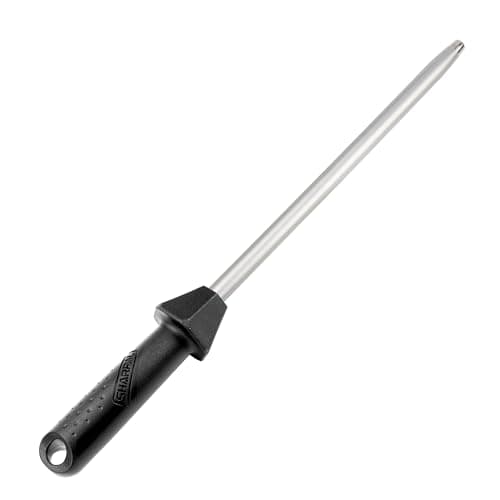
SHARPAL SHARPAL 119N Diamond Sharpening Steel
SHARPAL 119N Diamond Sharpening Steel

The best thing under $25 and the only pick here that removes steel in a controlled way. A 1200-grit monocrystalline diamond rod with angle guides molded into the handle, so it restores an edge that has gone slightly past honing without the angle wandering - the failure that makes most rod work pointless.

Light sharpening with the angle held for you
8.5
$19.54Amazon
02
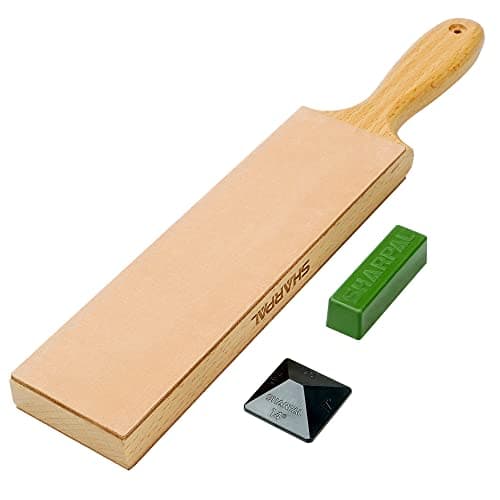
SHARPAL SHARPAL 205H Double-Sided Leather Strop Kit
SHARPAL 205H Double-Sided Leather Strop Kit

The pick that makes an edge you already have noticeably keener, and the step almost every home kitchen skips. A 13-inch cowhide block with a smooth and a suede face, green polishing compound and an angle guide - this is finishing, not sharpening, and it is the cheapest real upgrade in edge quality here.

Finishing an edge that is already sharp
8.3
$19.54Amazon
03
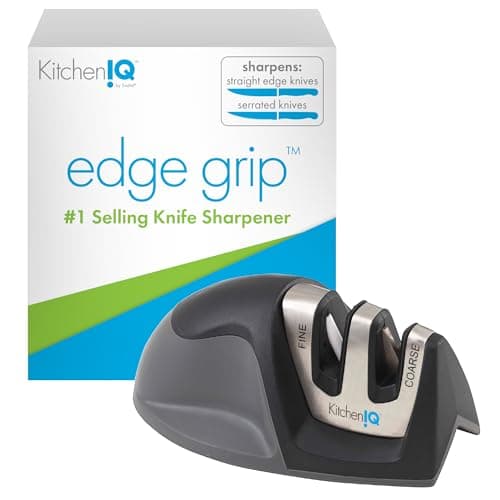
KitchenIQ KitchenIQ Edge Grip 2-Stage Sharpener
KitchenIQ Edge Grip 2-Stage Sharpener

The budget pick, and the only thing in the band that gets a genuinely blunt kitchen knife cutting again tonight. Coarse tungsten carbide to scrape a new edge and fine ceramic to tidy it, in a pull-through that grips the counter edge and costs less than a takeaway coffee.

Budget pick and rescuing a truly dull knife fast
7.3
$9.97Amazon
04
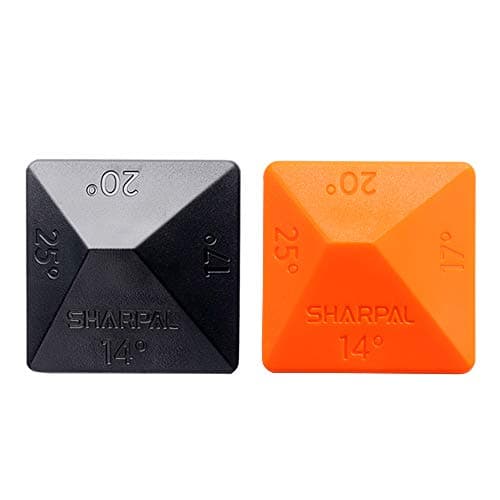
SHARPAL SHARPAL 196N Angle Pyramid Guide (2-pack)
SHARPAL 196N Angle Pyramid Guide (2-pack)

The cheapest thing on the site that measurably improves the edge you already get, and it is not a sharpener at all. A small pyramid with 14, 17, 20 and 25 degree faces that sits on your stone and shows you the angle - which is the actual reason most home whetstone edges disappoint.

Fixing the angle on a stone you already own
7.8
$6.99Amazon

#ad · Live prices from the Amazon Product API, as of November 23, 2026. Where we have no verified live price, we show none — a gap beats a number that has rotted.

In detail

The picks, in full

01
SHARPAL SHARPAL 119N Diamond Sharpening Steel

Light sharpening with the angle held for you

SHARPAL 119N Diamond Sharpening Steel

1200-grit diamond10 in rod, 15 in overallMonocrystalline diamondBuilt-in angle guides
8.5/10

The best thing under $25 and the only pick here that removes steel in a controlled way. A 1200-grit monocrystalline diamond rod with angle guides molded into the handle, so it restores an edge that has gone slightly past honing without the angle wandering - the failure that makes most rod work pointless.

Edge quality
8
Control
8.5
Speed
8.5
Durability
9
Value
8.5

Pros

  • Diamond abrasive actually cuts, so this restores an edge that a smooth steel can no longer help
  • Built-in angle guides solve the real reason home rod work fails - a wandering angle, not a cheap rod
  • 1200 grit is fine enough to leave a usable kitchen edge rather than a scratchy one
  • Monocrystalline diamond on a rod outlasts any coated abrasive in this price class
  • 10-inch rod handles a full-size chef's knife in one stroke, which shorter rods cannot

Cons

  • Still a rod: it cannot reprofile a bevel or rescue a knife that is genuinely blunt
  • Diamond removes metal, so weekly use on a thin knife is more aggressive than a ceramic rod would be
  • A rod's small contact patch means consistency is on you even with guides
  • No coarse option, so chips and rolled tips are out of scope

Don't buy this if…

…your knives are fully blunt - a rod will not save them. Sharpen on a stone or a guided system first, then buy this to make that sharpening last.

It wins the band because it is the only pick that does real work without doing damage. A carbide pull-through is faster and cruder; a strop is finer and cannot sharpen; an angle guide needs a stone you may not own. A 1200-grit diamond rod with guides sits in the middle and covers the most common actual problem in a home kitchen, which is a knife that is 80 per cent sharp and getting worse.

The angle guides are the reason it beats a bare diamond rod at a similar price. Honing and light rod sharpening both fail the same way: the user holds roughly the right angle for the first few strokes and drifts after that, rounding the apex they were trying to sharpen. Molding the guides into the handle removes the failure mode rather than asking you to be careful.

Be clear about what it is not. Diamond on a rod cuts, so this is not a tool for daily use on a thin, hard knife — a ceramic rod is the gentler weekly habit, and best ceramic honing rods is where those are ranked. Use the diamond rod when honing has stopped working, not instead of honing.

$19.54View on Amazon

$22.9915% off

Price as of November 23, 2026. Prices change — Amazon's at checkout is the one that counts.

#ad · we may earn a commission from this link to SHARPAL 119N Diamond Sharpening Steel

02
SHARPAL SHARPAL 205H Double-Sided Leather Strop Kit

Finishing an edge that is already sharp

SHARPAL 205H Double-Sided Leather Strop Kit

13.2 in x 2.44 in blockSmooth + suede cowhide facesGreen polishing compound includedAngle guide included
8.3/10

The pick that makes an edge you already have noticeably keener, and the step almost every home kitchen skips. A 13-inch cowhide block with a smooth and a suede face, green polishing compound and an angle guide - this is finishing, not sharpening, and it is the cheapest real upgrade in edge quality here.

Edge quality
9.5
Control
7.5
Speed
7.5
Durability
8.5
Value
8.5

Pros

  • Delivers the single largest improvement in perceived sharpness of anything in the band, on an edge that is already sharp
  • Two faces plus compound covers both polishing and final alignment without a second purchase
  • A 13-inch block is long enough for a chef's knife in one pass
  • Impossible to damage a knife with - the one tool here with no downside risk
  • Leather and compound last years, so the running cost is nil

Cons

  • It is not a sharpener and cannot be used as one - a dull knife stays dull
  • Needs an edge in good condition to show any benefit at all
  • Technique matters: strop away from the edge or you roll it
  • Compound is messy and gets on everything near it

Don't buy this if…

…you do not already own a way of sharpening - buy the diamond rod above or the pull-through below first, because a strop has nothing to work with on a blunt knife.

It is second on the rubric and it carries the highest edge-quality score on the page, which is worth stating plainly: nothing else under $25 makes a knife feel sharper. The catch is in the word "feel" — stropping refines and aligns an apex that exists. It does not create one.

The right way to think about it is as the last ten per cent. A knife off a 1000-grit stone or off the diamond rod above is sharp; thirty seconds on compound-loaded leather takes it from sharp to the kind of keen that pushes through a tomato skin without pressure. Professional and enthusiast sharpeners treat this as routine and home kitchens almost never do.

Our sharpening vs stropping page sets out the mechanism and the limits properly, including the one real risk: stropping in the wrong direction rolls the edge you were polishing.

$19.54View on Amazon

$22.9915% off

Price as of November 23, 2026. Prices change — Amazon's at checkout is the one that counts.

#ad · we may earn a commission from this link to SHARPAL 205H Double-Sided Leather Strop Kit

03
KitchenIQ KitchenIQ Edge Grip 2-Stage Sharpener

Budget pick and rescuing a truly dull knife fast

KitchenIQ Edge Grip 2-Stage Sharpener

2-stage pull-throughCoarse carbide + fine ceramicEdge-grip basePocket-money price
7.3/10

The budget pick, and the only thing in the band that gets a genuinely blunt kitchen knife cutting again tonight. Coarse tungsten carbide to scrape a new edge and fine ceramic to tidy it, in a pull-through that grips the counter edge and costs less than a takeaway coffee.

Edge quality
5.5
Control
5
Speed
9.5
Durability
7.5
Value
9

Pros

  • The cheapest pick here and the fastest - thirty seconds from blunt to cutting
  • Two stages means the coarse carbide pass is at least tidied by a ceramic pass afterwards
  • The edge-grip base hooks over a counter so both hands are free and the pull is straight
  • Genuinely useful on cheap stamped knives, serving knives and anything you do not care about
  • Already ranked on our under-$50 page, so this is a consistent verdict

Cons

  • Carbide plates scrape rather than abrade - the edge is coarse and it costs real metal every pull
  • No angle control whatsoever: the slot decides, and the slot is not your knife's geometry
  • Will visibly narrow a blade over years of regular use
  • Wrong tool for any knife you value, and emphatically wrong for a hard Japanese knife

Don't buy this if…

…the knife matters to you - carbide takes a bite out of an edge every time, and the diamond rod above does a kinder job on anything worth keeping.

It is the budget pick and it is third, and both of those are honest. It is the cheapest thing on the page that does the job the page is nominally about — making a dull knife cut — and it is the crudest tool here by a wide margin.

Carbide pull-throughs get criticized a lot and most of the criticism is deserved, but the criticism misses who they are for. If a household has four stamped supermarket knives, no interest in sharpening, and a current state of "none of these cut," this fixes that in two minutes for a few dollars and the metal it removes is coming off knives nobody will miss. That is a real use case and we would rather name it than sneer at it.

What it should never touch is a knife you care about. The coarse stage has no angle reference and no fine control, and knife sharpening mistakes covers what that does to a good blade over time. Keep one in the drawer for the knives that deserve it.

$9.97View on Amazon

Price as of November 23, 2026. Prices change — Amazon's at checkout is the one that counts.

#ad · we may earn a commission from this link to KitchenIQ Edge Grip 2-Stage Sharpener

04
SHARPAL SHARPAL 196N Angle Pyramid Guide (2-pack)

Fixing the angle on a stone you already own

SHARPAL 196N Angle Pyramid Guide (2-pack)

14 / 17 / 20 / 25 degree facesSits on the stone2-packWorks with any flat stone
7.8/10

The cheapest thing on the site that measurably improves the edge you already get, and it is not a sharpener at all. A small pyramid with 14, 17, 20 and 25 degree faces that sits on your stone and shows you the angle - which is the actual reason most home whetstone edges disappoint.

Edge quality
7.5
Control
8.5
Speed
6.5
Durability
8
Value
8.5

Pros

  • Addresses the real failure in home freehand sharpening - angle consistency - for a few dollars
  • Four published angles covers Japanese, German and pocket-knife geometries
  • Works with any flat stone you already own, so it upgrades existing kit rather than replacing it
  • Two in the pack, so one can live beside each stone
  • Nothing to wear out and nothing that can damage a blade

Cons

  • Does not sharpen anything on its own - useless without a stone
  • A visual reference rather than a physical clamp, so it shows you the angle instead of holding it
  • Only helps at the start of a stroke; drift along the blade is still yours to manage
  • Lowest score on this page because it is doing the smallest job

Don't buy this if…

…you do not own a sharpening stone - this is an accessory for one. Our beginner stone roundup is the place to start instead.

It finishes last and it is the best few dollars anyone with a whetstone and a disappointing edge can spend. The usual story is a reader who bought a stone, watched a video, produced a knife that was no sharper than before, and concluded that freehand sharpening is hard. Nine times in ten the stone was fine and the angle was not.

A pyramid guide does not hold the blade. It gives you something to set the spine against so you can see what 15 degrees actually looks like, which most people have never calibrated. After a few sessions the reference becomes muscle memory and the guide goes in the drawer.

It is already the fourth pick on the knife sharpening kit a beginner actually needs for exactly this reason, and why is my knife still dull after sharpening is the page that diagnoses the problem it solves.

$6.99View on Amazon

$9.9930% off

Price as of November 23, 2026. Prices change — Amazon's at checkout is the one that counts.

#ad · we may earn a commission from this link to SHARPAL 196N Angle Pyramid Guide (2-pack)

Which one, for your actual situation?

Your good knives have gone slightly dull. The SHARPAL 119N diamond rod. This is the most common case and the rod is the right answer to it.

Every knife in the house is blunt and nobody cares about them. The KitchenIQ. Accept the coarse edge, enjoy being able to cut a tomato.

You already sharpen and want more keenness. The strop kit. Biggest jump in edge quality for the money anywhere in this band.

You own a stone and your results are disappointing. The angle guide. Buy this before buying a better stone.

You want one purchase to handle everything.You will not find it here, and this is the most useful thing on the page. Spend about forty dollars instead — best knife sharpeners under $50 is where the first tool that can genuinely reset a bevel appears.

What this ceiling cannot do, stated once more

No tool at this price can grind a new bevel into a properly dull knife, repair a chip, or fix a broken tip. Those jobs need coarse abrasive and surface area, and both cost money. Anything marketed under $25 as doing them is relying on you not knowing the difference between cutting a fresh edge and scraping one.

The best under-$25 strategy is therefore a maintenance tool here plus one proper sharpening a year, either on a borrowed stone, a guided system, or at a local service — local knife sharpening services covers that route and what it should cost.

The two-tool answer under $25

If you are willing to buy two things inside this ceiling, the diamond rod plus the angle guide is a better kit than either alone: the rod keeps your edges between sharpenings, and the guide makes the sharpenings themselves work. Together they still come in under the price of a single mid-range pull-through, and nothing in that pair can damage a knife.

How we picked

We did not lab-test these knives

Everyone in this category says they tested twenty knives in a professional kitchen. We have not hands-on tested any of these, and we say so. What we did instead: compiled the published specifications — steel type and hardness (HRC), edge angle, blade geometry, weight and build — applied established sharpening standards, ran the value math (spec quality ÷ live price), and scored each product against a published rubric. The scores are judgments from documented research — not measurements we took, because we do not have a test lab and we will not pretend we do. Where a number came from someone else's work, we name them in Sources.

Questions

Frequently asked

Can you buy a knife sharpener that actually works for under $25?
You can buy a maintenance tool that works very well — a diamond rod, a strop, an angle guide. What you cannot buy at this price is something that resets a bevel on a properly blunt knife, because that needs coarse abrasive and real surface area. Our under-$50 page is where that capability starts.
Are cheap pull-through sharpeners bad for knives?
Carbide pull-throughs scrape a new edge rather than abrading one, with no angle reference, so they remove more metal than necessary and leave a coarse edge. On cheap stamped knives that is an acceptable trade. On a knife you value it is not.
Is a diamond rod better than a regular honing steel?
Different, not simply better. A smooth or grooved steel realigns an edge without cutting; a diamond rod abrades lightly, so it can restore an edge that honing no longer helps. The trade is that diamond removes metal, so it is a monthly tool rather than a daily one.
What is the single best thing to spend $25 on for sharper knives?
For most kitchens, the diamond rod with angle guides — because the most common problem is not a blunt knife, it is a good knife that was never maintained. If you already sharpen on a stone, spend it on the strop instead.

Keep reading

Receipts

Sources

We do not run a testing lab, and we do not pretend to. Where a spec or a measured number came from someone else's work — a manufacturer's page, a published standard — we name them and link them. Where we could not verify something, we say so on the page rather than quietly leaving it out. Read our full method.