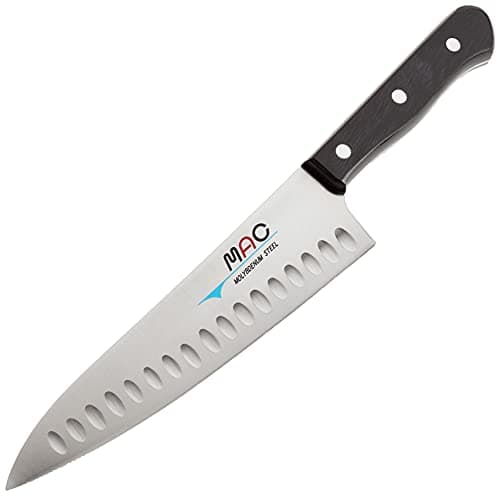
A chef's knife is a hand tool, and the single most useful thing you can do before buying one is hold it. No specification tells you whether a handle suits your grip, whether a knife feels balanced to you, or whether 8 inches or 6 feels right in your hand. That fact should shape where you buy — and it argues for one of two strategies: buy somewhere you can hold it, or buy somewhere with a return window and treat the first week as the fitting.
Everything below is about matching the channel to what you need from it. Nobody is best at everything.
Specialist cutlery shops
Best for: holding a lot of knives in one visit, expert advice, sharpening services, and Japanese knives you will not find elsewhere.
A real cutlery shop is the ideal place to buy a knife and the hardest to find — they cluster in larger cities and are thin on the ground everywhere else. What you get is a wall of knives you can pick up, someone who can tell you what a 240mm gyuto feels like versus a 210mm, and usually an in-house sharpening service that will maintain what they sold you. Prices are typically higher than online and that is not unreasonable given what the visit is worth.
How to find one:search for "cutlery shop" or "kitchen supply store" rather than "knife shop", which surfaces hunting and tactical retailers. Asking a local chef or butcher where they buy is faster and more reliable than any search.
Restaurant supply stores
Best for: commercial-grade knives at genuinely low prices, in person, today.
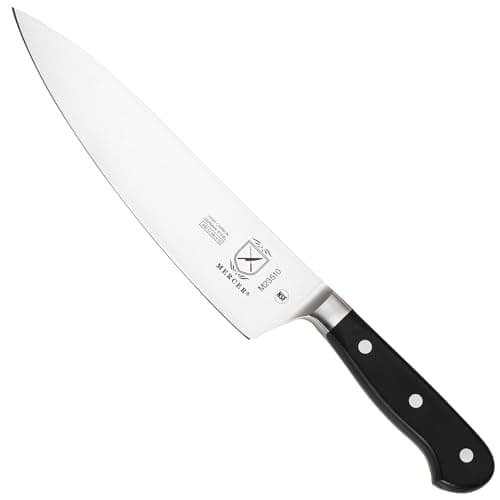
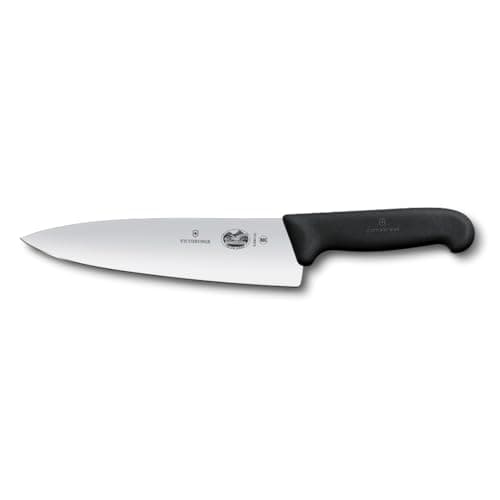
Many restaurant suppliers sell to the public, and they carry precisely the knives that commercial kitchens use — Victorinox, Mercer, Dexter-Russell — at commercial prices. This is the best-value in-person option in most towns, and it is chronically overlooked by home cooks who assume they cannot shop there. What you will not find is premium Japanese cutlery or much advice; the staff sell equipment, not knives specifically.
Department stores and cookware chains
Best for: handling mainstream German and Japanese brands, and buying sets.
The most accessible option, and a genuinely useful one for the handling problem — a cookware chain will have Wusthof, Zwilling, Shun and Global out on a counter for you to pick up. The selection is narrow, weighted to sets rather than individual knives, and pricing rarely competes with online. A reasonable strategy is to visit one to find out what fits your hand, then buy that specific knife wherever it is best priced.
Online marketplaces
Best for: price, selection and return windows.
The keenest pricing and the widest selection, with the caveat that the same results are full of house brands with unverifiable specifications. The return policy is the genuine advantage: you can order, hold the knife, use it once and send it back — which solves the handling problem without leaving your kitchen. We cover how to read a listing and vet a seller in the best chef knives on Amazon.
Direct from the manufacturer
Best for: guaranteed authenticity, full line access, and warranty service.
Buying from the maker removes counterfeit risk entirely, gets you the full range rather than the two models a retailer chose to stock, and puts you directly in the warranty and sharpening program. Direct-to-consumer brands like Made In and Misen sell exclusively or primarily this way, and it is how their pricing works. Established makers usually price direct at full retail, so you trade money for certainty.
Specialist online knife retailers
Best for: Japanese knives, expert product descriptions and free sharpening.
A handful of specialist online retailers cover Japanese cutlery in depth, with detailed specifications, real photographs of the grind and choil, and often a free initial sharpening. If you want a knife that a department store has never heard of, this is where it lives. Expect to pay retail, and expect the descriptions to be considerably more informative than anything a marketplace listing will tell you.
What about "chef knives near me"?
That search almost always returns department stores and, oddly, sharpening services. If you genuinely want to buy locally, the higher-yield searches are "restaurant supply store", "cutlery shop" and "kitchen supply". And if the goal behind the search is really "I need this today", a restaurant supplier is the option most likely to have a genuinely good knife in stock at a fair price.
The strategy that works best
Handle first, buy second, and do not feel obliged to do both in the same place. Visit a cookware chain or a restaurant supplier to find out what length and handle shape suit you — which is genuinely the hard part and the part no website solves — then buy that specific knife through whichever channel gives you the best combination of price and confidence. If you cannot get to a shop at all, order from somewhere with a generous return window and treat the first week as the fitting room.
What to check before you pay
The specific line, not the brand.Wusthof Classic and Wusthof Gourmet are different constructions; Zwilling Pro and Henckels International are different companies' tiers under one parent. Confirm which one is in the box.
Stated steel and hardness. A named alloy and an HRC figure mean the maker is claiming something checkable. Adjectives do not.
Who is selling it.For an expensive Japanese knife in particular, an authorized retailer or the maker's own storefront removes an entire category of risk.
The return policy. A knife that does not suit your hand is a knife you will not use, and no amount of specification compensates.
Second-hand knives
A worthwhile market if you know what to look for. A vintage forged German knife can be excellent value, and steel does not age. What to inspect: how much blade width remains (repeated sharpening narrows a knife, and a heavily worn blade has a changed profile), whether a step has formed at the heel behind a full bolster, cracks or gaps in the handle scales, and any bluish discoloration near the edge that suggests it was overheated on a grinder. All of those are visible; steel quality is not, so buy known brands.
Budget for the whole setup
Whichever channel you use, a knife alone is not the purchase. A honing rod matched to your steel, a board that does not destroy edges and storage that keeps edges from knocking add up to less than most people spend upgrading from a good knife to a slightly better one, and they do more for your cutting.