Skip to content
The Edge Bench

Decision guides · Buying Guides

The best cutting boards under $100

A hundred dollars does not buy end grain from an established maker, so the decision is which softer-than-steel material you want. Six boards ranked on edge kindness first, with the published hardness figures that decide it.

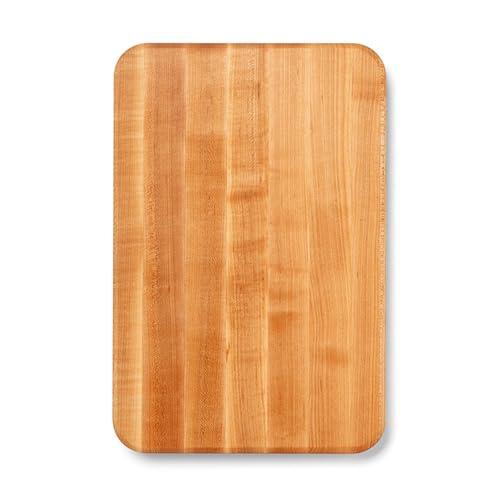
John Boos John Boos Chop-N-Slice Maple 18 x 12 x 1.25

Our top pick · Best overall under $100

John Boos Chop-N-Slice Maple 18 x 12 x 1.25

8.6

The best cutting board under $100 and the one still on the counter in twenty years. Edge-grain Northern Hard Rock Maple, 1.25 inches thick, 8 pounds, eased corners, finger grips, oil finish, made in the USA. Hard maple is the hardest wood on this page at a published 1,450 lbf Janka - still far softer than steel - and the thickness and weight are what you are paying for.

$59.95Amazon

#ad · Full ranking below

By Stephen V.Updated How we review
#ad

We earn a commission when you buy through our Amazon links, at no extra cost to you. It never changes a verdict, and we say so when the cheaper knife is the better buy. How this works.

Buy the John Boos Chop-N-Slice 18"x12" — it is the best cutting board under $100 and the one that will still be in your kitchen in twenty years. Edge-grain Northern Hard Rock Maple, 1.25 inches thick, 8 pounds, eased corners, finger grips, an oil finish and manufacture in the USA. It is heavy enough to stay put without a cloth under it and thick enough to be flattened and re-oiled for decades. The budget pick is the OXO Good Grips plastic utility board, which costs almost nothing, goes in the dishwasher, and is the board raw chicken should be landing on regardless of what else is on your counter.

Every board here was in stock and inside the $100 ceiling at our last price check. We do not print a number in the prose, because prices move and a sentence cannot: the Quick Picks table carries the live price and the date we pulled it, with a Check price button on every row.

Why the board matters more than the knife

The surface a blade lands on hundreds of times per meal is the largest single influence on how long an edge survives, and it is the part of the setup people think about least. If you have spent money on a good knife and you cut on glass, you have wasted it. Best cutting boards for knives is the open version of this page, with no price ceiling.

The principle is one sentence long. A cutting surface softer than knife steel lets the edge sink in fractionally and come out unharmed. A surface harderthan knife steel abrades the apex on every stroke, rounding it in a way no honing rod can undo. Wood and soft plastics are softer than steel. Glass, stone, ceramic and — critically — bamboo are not, or not by enough. Bamboo is a grass rather than a timber, it is harder than the hardwoods used for good boards, it contains abrasive silica, and the glue lines between its strips are harder again. It is the only common board material we actively tell people to avoid.

What $100 actually buys, and what it does not

This is the honest frame for the whole page, and it is the reason this is a band page rather than a shorter version of the open one.

End grain is out of reach.End-grain construction — the cut ends of the wood fibers facing upward, so the blade enters between them like bristles in a brush — is the kindest surface a hardwood board can have, and it is the most expensive to make because it is dozens of small blocks glued together. No established board maker sells one inside this ceiling. There are unbranded end-grain listings under $100, and we have deliberately not ranked them: they publish no species grade, no glue specification and no maker, which is exactly the information that tells you whether a glued-up board will survive its first year. If end grain is the requirement, the open page's top pick is where that money goes.

What you get instead is edge grain, and that is genuinely fine. Edge grain presents the long sides of the fibers, so the blade cuts across them rather than between them. It is less kind to an edge than end grain, far kinder than any hard surface, and it is what the great majority of good boards in real kitchens actually are.

And the softest surface in the band is not wood. The Japanese synthetic rubber board ranked third here is softer than every hardwood on this page, which is why Japanese professional kitchens standardized on that material rather than on maple.

The number that decides it: published Janka hardness

Hardwood boards are usually sold on looks, and the specification that actually matters is published for every species. The Janka hardness test measures the force needed to embed a steel ball halfway into the wood, and The Wood Database publishes the standard figures:

Black walnut, 1,010 lbf. Teak, 1,070 lbf. Hard maple, 1,450 lbf.Hard maple — the default American butcher-block species and the material of this page's top pick — is roughly 40 percent harder than walnut. All three are dramatically softer than knife steel, so all three are good board woods, but the ordering is real and it is not a matter of opinion: a walnut or teak surface abrades an edge slightly less than a maple one.

Why, then, does the maple board win this page? Because edge kindness is one of five metrics and maple is harder in the way that makes a board last. A 1.25-inch, 8-pound hard maple slab from a 19th-century American butcher-block maker scars less, stays flatter, takes re-sanding better and holds still under heavy work. The walnut board here has the kinder surface and a much smaller working area, and the entry below says so. If the only thing you care about is edge wear, skip to the rubber board.

Four materials, four different arguments

Hardwood (maple, teak, walnut). Softer than steel, self-healing to a degree, pleasant to work on, and the only option that improves with maintenance. The price is that it needs mineral oil or board cream every month or two, must never be soaked or put in a dishwasher, and will split along its glue lines if neglected.

Soft synthetic rubber. The kindest surface to an edge of anything in this band, resurfaceable, non-porous and indifferent to acids. It is also expensive for its size, scars visibly fast because it is soft, and looks like what it is: a professional tool.

Polypropylene. Soft, cheap, dishwasher safe and therefore the right answer for raw protein. It is a consumable rather than an heirloom and it scars into grooves that eventually harbor residue.

Wood-fiber composite.Dishwasher safe, needs no oiling, will not warp or crack — and it is harder than hardwood, so it dulls edges faster than anything else here. That trade is the entire product, and it is a reasonable one for someone who will not maintain wood.

The method is on how we review: we have not hands-on tested these boards and we do not claim to have. Boards are scored on published material and construction, the hardness that material implies relative to knife steel, usable working area, hygiene and maintenance requirements, and value against the live price. The two boards here that also appear on the open page carry their existing scores unchanged, because the rubric is identical — re-scoring the same board against the same five metrics to produce a different number would be dishonest. Everything sits under the guides hub.

The short answer

Quick picks

#KnifeBest forScorePrice
01
John Boos John Boos Chop-N-Slice Maple 18 x 12 x 1.25
John Boos Chop-N-Slice Maple 18 x 12 x 1.25

The best cutting board under $100 and the one still on the counter in twenty years. Edge-grain Northern Hard Rock Maple, 1.25 inches thick, 8 pounds, eased corners, finger grips, oil finish, made in the USA. Hard maple is the hardest wood on this page at a published 1,450 lbf Janka - still far softer than steel - and the thickness and weight are what you are paying for.

Best overall under $100
8.6
$59.95Amazon
02
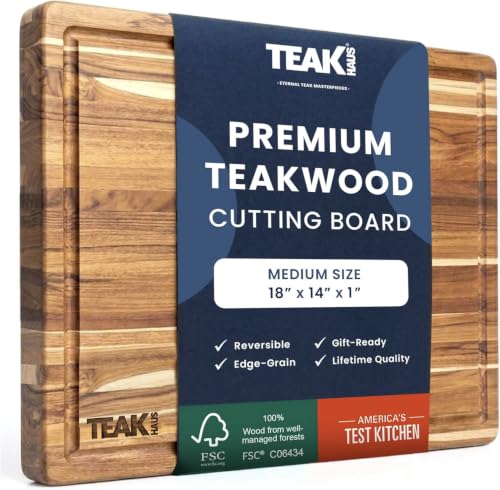
Teakhaus Teakhaus Edge-Grain Teak 18 x 14 x 1 (Medium)
Teakhaus Edge-Grain Teak 18 x 14 x 1 (Medium)

The kindest hardwood surface in this band with a full-size working area, and the pick if you want a wooden board you will actually maintain. Edge-grain teak at a published 1,070 lbf Janka - meaningfully softer than hard maple - FSC certified, 18 x 14 inches with a juice groove, grip handles and reversible, at one inch thick and light for its footprint.

Kindest hardwood surface
8.5
$55.00Amazon
03
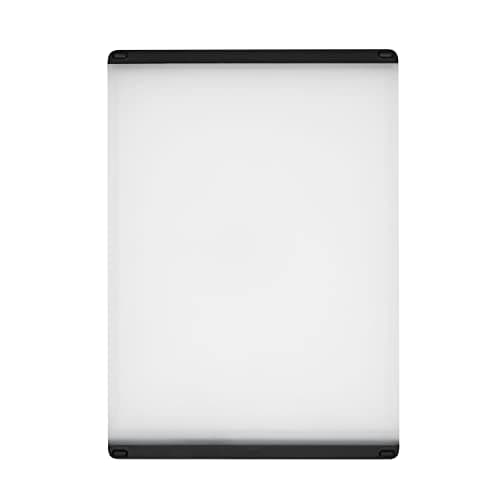
OXO OXO Good Grips Plastic Utility Cutting Board
OXO Good Grips Plastic Utility Cutting Board

The budget pick, and the board every kitchen should own regardless of what else is on the counter - because raw meat belongs on something you can put through a dishwasher. Soft polypropylene is genuinely kind to an edge, the non-slip edges keep it planted, and it costs almost nothing.

Budget pick and raw-meat board
8.4
$20.94Amazon
04
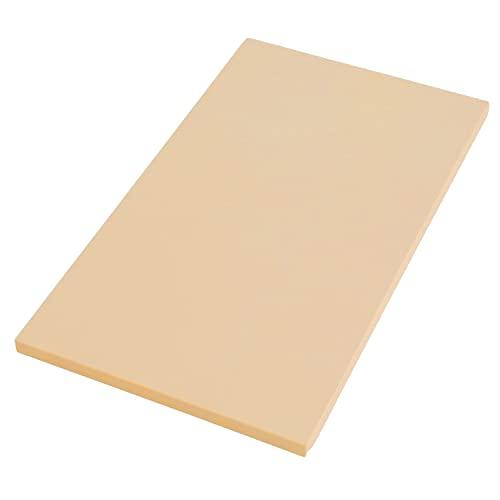
Asahi Asahi Cookin' Cut Rubber Cutting Board 15.7 x 9.1 x 0.5
Asahi Cookin' Cut Rubber Cutting Board 15.7 x 9.1 x 0.5

The softest surface in the band by a clear margin, and the pick if edge preservation is the only thing you care about. Synthetic rubber, made in Japan - the material Japanese professional kitchens standardized on instead of hardwood, because it is gentler on a keen edge than any wood and can be sanded flat when it eventually scars.

Best for hard Japanese knives
8.3
$86.99Amazon
05
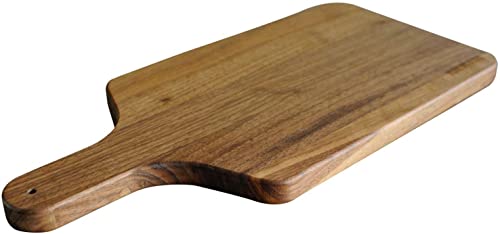
Virginia Boys Kitchens Virginia Boys Kitchens Walnut Board (8 x 17, with handle)
Virginia Boys Kitchens Walnut Board (8 x 17, with handle)

The kindest wood on the page, in the narrowest format. American black walnut at a published 1,010 lbf Janka - the softest hardwood here - made in the USA from sustainable hardwood, 8 by 17 inches including the handle. Buy it as a second board for herbs, bread and serving rather than as your main prep surface.

Softest hardwood, best second board
7.9
$67.95Amazon
06
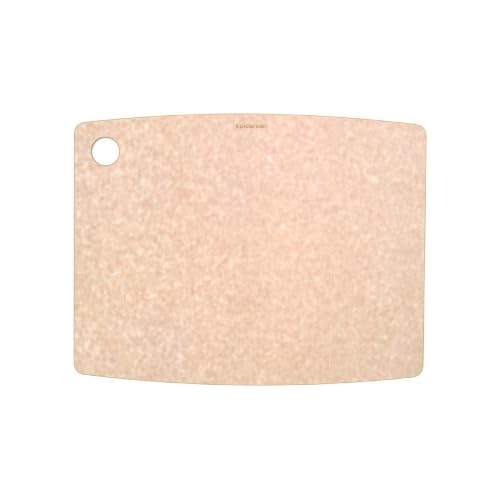
Epicurean Epicurean Kitchen Series Cutting Board 14.5 x 11.25
Epicurean Kitchen Series Cutting Board 14.5 x 11.25

The low-maintenance option: a compressed wood-fiber composite that is dishwasher safe, needs no oiling, and will not warp or crack. The trade is real - it is harder than hardwood and therefore less kind to an edge - but for someone who will not maintain wood it is a sensible compromise rather than a bad board.

Best low-maintenance board
7.6
$33.99Amazon

#ad · Live prices from the Amazon Product API, as of November 20, 2026. Where we have no verified live price, we show none — a gap beats a number that has rotted.

In detail

The picks, in full

01
John Boos John Boos Chop-N-Slice Maple 18 x 12 x 1.25

Best overall under $100

John Boos Chop-N-Slice Maple 18 x 12 x 1.25

Edge-grain Northern Hard Rock Maple18 x 12 x 1.25 in, 8 lbJanka ~1,450 lbfMade in the USA
8.6/10

The best cutting board under $100 and the one still on the counter in twenty years. Edge-grain Northern Hard Rock Maple, 1.25 inches thick, 8 pounds, eased corners, finger grips, oil finish, made in the USA. Hard maple is the hardest wood on this page at a published 1,450 lbf Janka - still far softer than steel - and the thickness and weight are what you are paying for.

Edge kindness
8
Grip & stability
9
Handling
7.5
Build
9.5
Value
9

Pros

  • 8 pounds and 1.25 inches thick - it stays put under heavy work without a cloth underneath
  • Thick enough to be sanded flat and re-oiled repeatedly, which is what makes a board last decades rather than years
  • John Boos has been making American butcher block since the 1880s and publishes species, grain, thickness and weight
  • Eased corners and finger grips, so an 8-pound board is still liftable with wet hands
  • 18 x 12 inches is a genuinely usable working area - large enough to break down a chicken on

Cons

  • Hard maple is the hardest wood here at a published 1,450 lbf, so it abrades an edge slightly more than the teak or walnut boards
  • Needs mineral oil or board cream every month or two, and will dry and split along its glue lines if neglected
  • Never dishwasher safe and must never be soaked
  • 8 pounds is heavy to lift one-handed and awkward to store upright

Don't buy this if…

…you will not oil it - a neglected hardwood board cracks along its glue lines and that is terminal, so buy the poly or composite board instead and keep the money.

It wins on the two metrics that separate a board you keep from a board you replace: build and stability. Boos publishes the species (Northern Hard Rock Maple), the grain (edge grain), the thickness, the weight and the finish, and says the board is made in the USA — that is more disclosure than most board listings carry, and it is what lets us score it rather than guess at it.

The thickness is the specification people under-rate. A 1.25-inch slab can be scraped and sanded flat several times over its life and re-oiled indefinitely, so knife scars are a maintenance item rather than the end of the board. A half-inch board cannot be resurfaced at all. That is the difference between a twenty-year board and a three-year one, and it is most of why this costs what it costs.

Where it honestly loses: hard maple at a published 1,450 lbf Janka is the hardest surface in this band apart from the composite, and if edge wear is the only thing you are optimizing, the teak board below and the rubber board below that are both kinder. Pair it with a honing rod rather than worrying about it — best honing steels and how often to sharpen knives are the two pages that put board hardness in proportion.

$59.95View on Amazon

Price as of November 20, 2026. Prices change — Amazon's at checkout is the one that counts.

#ad · we may earn a commission from this link to John Boos Chop-N-Slice Maple 18 x 12 x 1.25

02
Teakhaus Teakhaus Edge-Grain Teak 18 x 14 x 1 (Medium)

Kindest hardwood surface

Teakhaus Edge-Grain Teak 18 x 14 x 1 (Medium)

Edge-grain teak, FSC certified18 x 14 x 1 in, reversibleJanka ~1,070 lbfJuice groove + grip handles
8.5/10

The kindest hardwood surface in this band with a full-size working area, and the pick if you want a wooden board you will actually maintain. Edge-grain teak at a published 1,070 lbf Janka - meaningfully softer than hard maple - FSC certified, 18 x 14 inches with a juice groove, grip handles and reversible, at one inch thick and light for its footprint.

Edge kindness
8.5
Grip & stability
7.5
Handling
9
Build
8.5
Value
9

Pros

  • A published 1,070 lbf Janka against hard maple's 1,450 - a real, documented reduction in how hard the surface is
  • The largest working area on this page at 18 x 14 inches, and reversible so one side can stay groove-free
  • Teak's natural oil content means it tolerates less frequent treatment than maple
  • Light for its size, with cut-in grip handles - the easiest big board here to lift and wash
  • FSC certified, which is a chain-of-custody standard rather than a marketing adjective

Cons

  • One inch thick and light, so it moves on a counter more than the 8-pound Boos - it wants a damp cloth underneath
  • Thinner stock means less resurfacing life than a 1.25-inch board
  • Teak's silica content is often raised as a concern for woodworking tools; it is harmless to kitchen knives but it is why teak dulls saw blades
  • Still a hardwood board: no dishwasher, no soaking, and oiling is reduced rather than eliminated

Don't buy this if…

…you chop hard and hate a board that shifts - the Boos above is three times the weight and stays exactly where you put it.

It finishes second by a tenth of a point and it is the right board for a lot of people who will buy the Boos instead. The trade between them is clean and worth stating plainly: the Boos is heavier, thicker, harder and will outlive it; the Teakhaus has a bigger working surface, a softer surface, lower maintenance and is far easier to pick up and carry to a sink.

The maintenance point is the practical one. Teak is a naturally oily, rot-resistant species — that is the reason it is used for boat decks — and in a kitchen that translates into a board that forgives a missed oiling in a way hard maple does not. If the reason you do not own a wooden board is that you know you will not look after it, this is the hardwood to try before giving up and buying plastic.

One honest note on the published figures. Janka values for teak vary by source and by whether the timber is native or plantation-grown; The Wood Database publishes 1,070 lbf and other charts run from roughly 1,000 to 1,155. We use the published 1,070 and treat the spread as real uncertainty rather than quoting the most flattering number.

$55.00View on Amazon

Price as of November 20, 2026. Prices change — Amazon's at checkout is the one that counts.

#ad · we may earn a commission from this link to Teakhaus Edge-Grain Teak 18 x 14 x 1 (Medium)

03
OXO OXO Good Grips Plastic Utility Cutting Board

Budget pick and raw-meat board

OXO Good Grips Plastic Utility Cutting Board

PolypropyleneNon-slip edgesDishwasher safeLight and thin
8.4/10

The budget pick, and the board every kitchen should own regardless of what else is on the counter - because raw meat belongs on something you can put through a dishwasher. Soft polypropylene is genuinely kind to an edge, the non-slip edges keep it planted, and it costs almost nothing.

Edge kindness
9
Grip & stability
8
Handling
9
Build
6
Value
10

Pros

  • Soft plastic is genuinely kind to a knife edge - softer than every hardwood on this page
  • Dishwasher safe - the right answer for raw protein, and the one thing no wooden board can do
  • Non-slip edges keep it stable without a cloth
  • Cheap enough to own two and color-code them
  • By far the lowest price in the band, which leaves the rest of the budget for a knife or a rod

Cons

  • Scars quickly and those grooves eventually harbor residue - it is a two-to-three-year board, not a lifetime one
  • Light enough to move if you are working hard
  • Consumable by design: there is no resurfacing or restoring it
  • Thin, so it offers no cushioning under heavy chopping

Don't buy this if…

…you want one board for everything - this is the hygiene board, and a wooden one alongside it is a better setup than either alone.

Scores carried unchanged from best cutting boards for knives, because the rubric on this page is identical to that one and re-scoring the same board against the same five metrics to produce a different number would be dishonest.

It sits third on a page about buying a good board, and that placement is not a compromise. Soft polypropylene is kinder to an edge than hard maple — the plastic is softer than the wood — and it goes in a dishwasher, which settles the raw-meat question permanently. What it does not do is last or feel like anything. The honest recommendation for most kitchens under $100 is the Boos or the Teakhaus for everything plus this for chicken, which together still come in under the ceiling.

$20.94View on Amazon

Price as of November 20, 2026. Prices change — Amazon's at checkout is the one that counts.

#ad · we may earn a commission from this link to OXO Good Grips Plastic Utility Cutting Board

04
Asahi Asahi Cookin' Cut Rubber Cutting Board 15.7 x 9.1 x 0.5

Best for hard Japanese knives

Asahi Cookin' Cut Rubber Cutting Board 15.7 x 9.1 x 0.5

Synthetic rubber surface15.7 x 9.1 x 0.5 inMade in JapanResurfaceable
8.3/10

The softest surface in the band by a clear margin, and the pick if edge preservation is the only thing you care about. Synthetic rubber, made in Japan - the material Japanese professional kitchens standardized on instead of hardwood, because it is gentler on a keen edge than any wood and can be sanded flat when it eventually scars.

Edge kindness
10
Grip & stability
8.5
Handling
7.5
Build
8.5
Value
7

Pros

  • Softer than wood, so the lowest edge wear of anything on this page - this is the whole reason it exists
  • The right board for a thin, hard Japanese edge at 60-61 HRC, where a hard surface does real damage
  • Non-porous surface, straightforward to sanitize, and completely indifferent to acids
  • Can be sanded back flat when the surface scars, so it is not a consumable like the poly board
  • Dense and grippy for its size - it does not slide the way a light plastic board does

Cons

  • The smallest working area in the band - 15.7 x 9.1 inches is a prep board, not a board you break down a chicken on
  • Half an inch thick, so there is limited material to resurface and no cushioning
  • Expensive for what looks like a black plastic mat, and the most expensive board per square inch here
  • Heat-sensitive: not a dishwasher board, and hot pans will mark it

Don't buy this if…

…you want one board for the whole kitchen - this is a specialist surface for a specialist knife, and the footprint is too small to be a primary board.

This is the pick with the clearest buyer. If you own a Japanese chef's knifeat 60–61 HRC with a 15-degree edge, the board is doing more damage to it than anything else in your kitchen, because a thin hard edge has less material behind the apex to survive abrasion. Japanese professional kitchens went to soft synthetic boards for exactly that reason, and the big-format version of this material is the Hasegawa Karugaru — which sits above this band, on best cutting boards for knives.

What keeps it to fourth is footprint and price. It is a 15.7 by 9.1 inch board at half an inch thick, which is a prep surface rather than a primary board, and it costs close to the ceiling. Score it as what it is: the kindest surface available under $100, in the smallest useful size.

Availability note: this is a specialist import, and at our last price check it was in stock but not deeply stocked. If it has gone, the Teakhaus is the next-kindest surface in the band and the Hasegawa is the same material one size up and one price band higher.

$86.99View on Amazon

Price as of November 20, 2026. Prices change — Amazon's at checkout is the one that counts.

#ad · we may earn a commission from this link to Asahi Cookin' Cut Rubber Cutting Board 15.7 x 9.1 x 0.5

05
Virginia Boys Kitchens Virginia Boys Kitchens Walnut Board (8 x 17, with handle)

Softest hardwood, best second board

Virginia Boys Kitchens Walnut Board (8 x 17, with handle)

Solid American black walnut8 x 17 in incl. handleJanka ~1,010 lbfMade in the USA
7.9/10

The kindest wood on the page, in the narrowest format. American black walnut at a published 1,010 lbf Janka - the softest hardwood here - made in the USA from sustainable hardwood, 8 by 17 inches including the handle. Buy it as a second board for herbs, bread and serving rather than as your main prep surface.

Edge kindness
9
Grip & stability
7
Handling
7.5
Build
8.5
Value
7.5

Pros

  • A published 1,010 lbf Janka is the softest wood on this page - the kindest hardwood surface to an edge here
  • Solid walnut rather than a glued-up block, so there are no glue lines for a blade to meet
  • Made in the USA from sustainable hardwood, with the species published rather than sold as generic 'wood'
  • The integrated handle makes it genuinely good at the serving-board job a big slab is bad at
  • Walnut darkens and hides knife marks far better than pale maple

Cons

  • 8 inches wide including the handle is narrow - the smallest usable prep area of any wooden board here
  • Solid-slab construction is more prone to cupping with moisture than a glued-up edge-grain board
  • Still needs oiling, no dishwasher, no soaking
  • Priced like a primary board while being sized like a secondary one, which is why it scores where it does

Don't buy this if…

…this would be your only board - it is too narrow to dice an onion and a pepper side by side, and the Boos or the Teakhaus is the board to build a kitchen around.

It has the best edge-kindness score of any wooden board on this page and finishes fifth, which looks wrong until you look at the dimensions. A board is a working area before it is a material, and 8 inches of width — part of which is a handle — is not enough to prep a meal on. Scoring it any higher would mean pretending that edge wear is the only thing a board does.

Taken as what it actually is — a small, handsome, American-made solid walnut board for bread, herbs, cheese and carrying things to a table — it is a good buy, and it is the right companion to the Boos rather than a competitor to it. Walnut at a published 1,010 lbf is the softest hardwood in this band, so for the jobs it does, it treats an edge better than anything except the rubber board.

One construction caveat stated honestly: a single solid slab has no glue lines, which is a genuine advantage for a blade, and is more likely to cup across its width with uneven moisture than a glued-up edge-grain panel. Oil both faces, not just the top. Knife care and maintenance covers the board side of looking after an edge.

$67.95View on Amazon

$75.009% off

Price as of November 20, 2026. Prices change — Amazon's at checkout is the one that counts.

#ad · we may earn a commission from this link to Virginia Boys Kitchens Walnut Board (8 x 17, with handle)

06
Epicurean Epicurean Kitchen Series Cutting Board 14.5 x 11.25

Best low-maintenance board

Epicurean Kitchen Series Cutting Board 14.5 x 11.25

Wood-fiber composite14.5 x 11.25 inDishwasher safeMade in the USA
7.6/10

The low-maintenance option: a compressed wood-fiber composite that is dishwasher safe, needs no oiling, and will not warp or crack. The trade is real - it is harder than hardwood and therefore less kind to an edge - but for someone who will not maintain wood it is a sensible compromise rather than a bad board.

Edge kindness
6
Grip & stability
6
Handling
9
Build
8
Value
9

Pros

  • Dishwasher safe with no oiling, warping or cracking - the lowest-maintenance board on this page
  • Non-porous and easy to sanitize
  • Thin and light, easy to store and handle
  • Far kinder to knives than glass, stone, ceramic or bamboo
  • Made in the USA, and cheap enough to be a second or third board

Cons

  • Harder than hardwood - it dulls edges faster than every other board on this page
  • Thin and light enough to slide without a cloth underneath
  • Dark surface makes it hard to see what you are doing with dark food
  • Cannot be resurfaced, so scarring is permanent

Don't buy this if…

…edge preservation is your priority - this board trades some of it for convenience, and that trade is the whole product.

Scores carried unchanged from best cutting boards for knives, for the same reason as the OXO above: identical rubric, identical board, so the number does not move.

It is last on a knife site for one reason, and it is the reason stated in its own verdict: the composite is harder than hardwood. It is still a long way from glass or stone, and it is a genuinely clever product — dishwasher safe, dimensionally stable, no maintenance at all. But this page ranks on how kindly a surface treats steel, and on that single axis it finishes behind maple, teak, walnut, rubber and soft plastic. If your honest answer is that you will never oil a board, buy it knowingly.

$33.99View on Amazon

Price as of November 20, 2026. Prices change — Amazon's at checkout is the one that counts.

#ad · we may earn a commission from this link to Epicurean Kitchen Series Cutting Board 14.5 x 11.25

Which board should you actually buy under $100?

One board for everything.The John Boos Chop-N-Slice 18"x12". Thick, heavy, American hard maple, resurfaceable for decades.

One board, and you want the biggest surface and the least upkeep.The Teakhaus. Softer wood than maple, larger working area, reversible, and teak's natural oil content forgives a missed treatment.

You own a hard Japanese knife. The Asahi rubber board. The softest surface in the band, and the material Japanese professional kitchens chose over hardwood for exactly this reason.

You cook a lot of chicken. The OXO, every time, in addition to whatever else is on the counter. Raw protein belongs on a surface that goes in a dishwasher.

You will never maintain a board. The Epicurean. It is the hardest surface here and it knows it; what you get back is a board that cannot be ruined.

The best under-$100 setup is two boards, not one. The Boos or the Teakhaus as the main prep surface, plus the OXO for raw meat, comes to less than a single mid-priced end-grain board and covers both jobs properly.

What actually kills a board (and what does not)

Soaking kills a wooden board.Not washing — soaking. Water swells the fibers unevenly, and when they dry the glue lines on a laminated board take the stress. Wash with a cloth, rinse quickly, stand it on edge to dry.

The dishwasher kills a wooden board faster. Heat plus prolonged moisture plus alkaline detergent is the worst combination you can put a hardwood panel through. Only the OXO and the Epicurean on this page are dishwasher safe, and that is their actual advantage.

Knife marks do not kill a board. This is the thing people worry about wrongly. Scoring is normal, and on a board thick enough to resurface it is a maintenance item rather than damage. It is also not a hygiene problem on wood: wood is a poor environment for bacteria compared with scored plastic, which is the one real argument for replacing a heavily grooved poly board rather than a scarred wooden one.

Letting it dry out does kill a board. Mineral oil or board cream every month or two, both faces. A dry hardwood board shrinks, cups and eventually splits along a glue line, and at that point it is finished.

Board hardness in proportion

It is worth keeping this honest. Board material is the largest single influence on edge life among things you choose, and it is still smaller than how often you hone. A hard maple board and twenty seconds on a honing rod every few uses will leave your knives sharper than a walnut board and no maintenance at all. Sharpening vs honing is the distinction, and why knives go dull puts board abrasion alongside the other causes rather than above all of them.

The one place board choice genuinely dominates is at the hard end of the steel range. A 60–61 HRC Japanese blade ground to 15 degrees has very little material behind the apex, so abrasion and micro-chipping from a hard surface do disproportionate damage — which is the entire argument for the rubber board. Knife hardness HRC explained is the background, and best Japanese chef knives for beginners is where those knives are ranked.

Why we did not rank an end-grain board

The pos-5 autocomplete variant for this query is “best end grain cutting board under 100”, so this needs a direct answer: there are end-grain boards listed under $100, and we have not ranked any of them.

End grain is the kindest hardwood construction there is, and it is also the most demanding to build. Dozens of small blocks are glued across their faces, and the board lives or dies on the species grade, the moisture content at glue-up and the adhesive. An established maker publishes those things or stands behind them; the sub-$100 end-grain listings we found publish a photograph, a size and a species name. A glued-up board that fails does not dull your knife, it comes apart in your kitchen, and we are not willing to put a recommendation behind one we cannot specify. Above this ceiling the position changes completely — the top pick on best cutting boards for knives is end-grain walnut from a named maker, and that is where the money goes if end grain is the requirement.

How we ranked these

Five metrics, the same five the open cutting-board page uses, applied to what a board actually does. Edge kindnessreads the published material and, for wood, the published Janka hardness of the species — walnut 1,010 lbf, teak 1,070, hard maple 1,450, with soft rubber and polypropylene below all three and the wood-fiber composite above them. Grip & stability reads weight, thickness and published non-slip features. Handling reads usable working area, weight to lift and how it washes. Build reads construction, thickness available for resurfacing, country of manufacture and what the maker publishes about it. Valueis specification quality against the live price. The overall is the mean of the five to one decimal place, and the two boards that also appear on the open page carry their existing numbers unchanged rather than being quietly re-scored. We have no test lab and claim no hands-on testing — how we review says so in those words.
How we picked

We did not lab-test these knives

Everyone in this category says they tested twenty knives in a professional kitchen. We have not hands-on tested any of these, and we say so. What we did instead: compiled the published specifications — steel type and hardness (HRC), edge angle, blade geometry, weight and build — applied established sharpening standards, ran the value math (spec quality ÷ live price), and scored each product against a published rubric. The scores are judgments from documented research — not measurements we took, because we do not have a test lab and we will not pretend we do. Where a number came from someone else's work, we name them in Sources.

Questions

Frequently asked

What is the best cutting board under $100?
The John Boos Chop-N-Slice 18"x12": edge-grain Northern Hard Rock Maple, 1.25 inches thick, 8 pounds, made in the USA. It is heavy enough to stay put under real work and thick enough to be sanded flat and re-oiled for decades, which is what separates a board you keep from a board you replace.
Can you get an end-grain cutting board under $100?
Not from an established maker. End-grain listings do appear under $100, and we do not rank them because they publish no species grade, moisture specification or adhesive detail — which is exactly what determines whether a glued-up board survives. Inside this ceiling, edge grain from a named maker is the better bet.
Is maple or walnut better for a cutting board?
Walnut is kinder to a knife edge; maple lasts better. The Wood Database publishes black walnut at 1,010 lbf Janka and hard maple at 1,450, so maple is roughly 40 percent harder — both are far softer than knife steel, so both are good board woods. Maple scars less, stays flatter and resurfaces better, which is why the maple board wins this page.
Is teak a good cutting board material?
Yes. The Wood Database publishes teak at 1,070 lbf Janka, softer than hard maple, and teak's natural oil content means it tolerates less frequent oiling than maple does. Published Janka figures for teak vary from roughly 1,000 to 1,155 depending on source and on whether the timber is native or plantation-grown.
Are plastic cutting boards bad for knives?
No — soft polypropylene is kinder to an edge than hard maple, because the plastic is softer than the wood. The real argument against plastic is hygiene over time: it scars into grooves that harbor residue and cannot be resurfaced, so it is a consumable. Keep one for raw meat, because it goes in the dishwasher and no wooden board does.
Why should I avoid bamboo cutting boards?
Bamboo is a grass rather than a timber. It is meaningfully harder than the hardwoods used for good boards, it contains abrasive silica, and boards are made by gluing strips together, so the blade periodically meets a glue line harder than the surrounding material. It dulls knives noticeably faster than maple or walnut while feeling perfectly pleasant to use, which is what makes it a trap rather than an obvious mistake.
How often should I oil a wooden cutting board?
Every month or two with food-grade mineral oil or a board cream, on both faces. A board that dries out shrinks and cups, and eventually splits along a glue line — at which point it is finished. Never soak it and never put it in a dishwasher.

Keep reading

Receipts

Sources

We do not run a testing lab, and we do not pretend to. Where a spec or a measured number came from someone else's work — a manufacturer's page, a published standard — we name them and link them. Where we could not verify something, we say so on the page rather than quietly leaving it out. Read our full method.