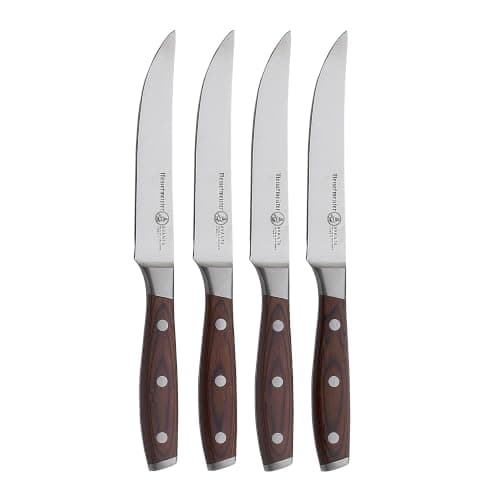
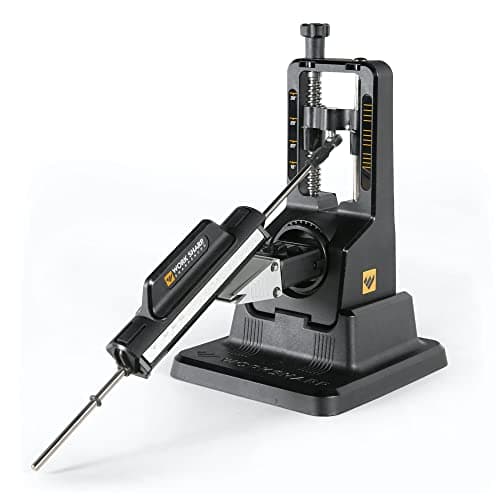
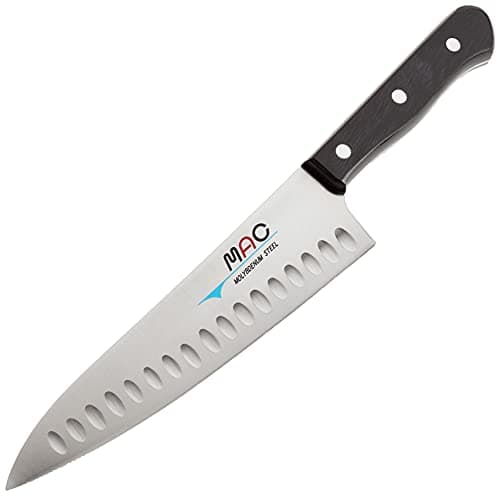
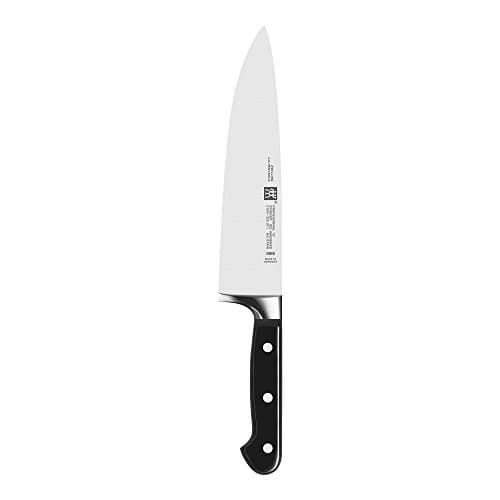
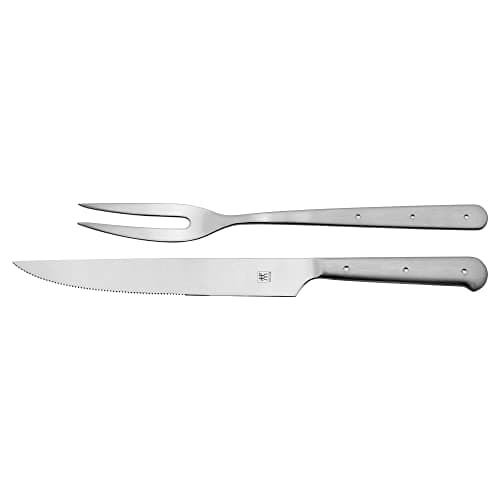
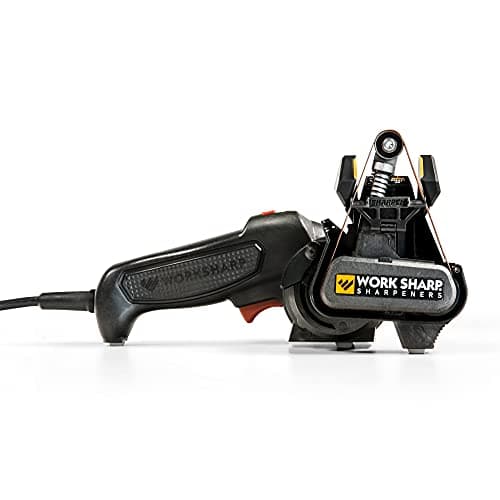
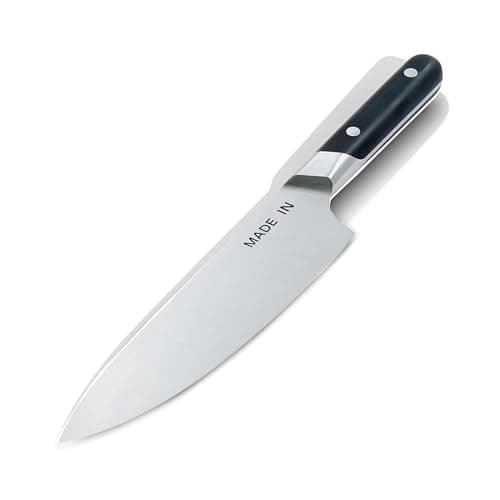
This is the band where the money starts buying something real. Below fifty dollars you are choosing the best of the honest budget tools; here you can buy a forged knife made in a company-owned factory, a Japanese blade with genuinely harder steel, or a sharpening system that produces a whetstone-grade edge without the whetstone learning curve. The step up in quality between the two bands is larger than the step up in price, which is why this is the band most gifters should aim at if they can.
The trap changes shape too. Under fifty it is the cheap block set; here it is prestige. It is very easy to spend this much on a knife that is chosen for the name on the blade rather than for the person holding it — and the usual casualty is someone who is hard on their tools receiving a hard, thin, expensive Japanese blade that chips inside a year. Match the knife to how they cook, not to how impressive the box is. Our Japanese versus German comparison settles that question in about two minutes, and it is the single most useful thing a gifter can read first.
As everywhere on this site, no price appears in our text. The band is the premise of the page, and the live figure under each pick — pulled from Amazon and stamped with the date we checked it — is the only number that means anything. Everything below was inside the line at that check.
The one question that decides which knife to give
Are they careful with their tools, or not? That single answer routes the whole decision. A careful cook who hand-washes and hones gets more from harder Japanese steel — keener, lighter, longer between sharpenings. A cook who chops through chicken bones, leaves knives in the sink and cuts on whatever surface is nearest should be given a tough German forging, because the alternative is an expensive blade with a chipped edge by spring. It is not a question about their taste, it is a question about their habits, and you almost certainly already know the answer.
Where the money actually goes in this band
Three things separate a knife here from one at half the price: forging rather than stamping, a company-owned factory with published specifications, and a finer edge angle out of the box. All three are real. What you do notget is a step change in how well it cuts once both knives are sharp — that is the honest finding running through our expensive-knives analysis. You are buying durability, balance and a knife that sharpens well for twenty years, not a different cutting experience.
The gift that is not a knife
If they already own a knife they like, do not buy a second one. The two best presents for that person are a sharpening system, which makes the knife they love perform like new, and a steak knife set, which fills the gap almost every kitchen has. Both are on this page for that reason. The same logic drives our gifts for home cookslist, where the assumption is that the chef's knife slot is already filled.
Matching the gift to the person
- They cook constantly and look after their things. The gateway Japanese knife.
- They cook constantly and are rough on equipment. The forged German, or the French-forged pick at the top.
- They already own a knife they love. The guided sharpener.
- They entertain. The steak knife set, or the gift-boxed carving set.
- Their whole drawer is blunt and they do not care. The electric sharpener.
What we would skip
Skip mid-size block sets in this band — the same spread-thin arithmetic applies as it does under fifty dollars, just with better marketing. Skip Damascus-patterned knives chosen purely for the pattern, because the cladding is decoration around a core and the core does the cutting, which our Damascus explainer lays out. And skip buying at the very top of the band if it means the recipient gets a knife and nothing to maintain it with: a slightly cheaper knife plus a honing rod is the better gift almost every time.
How we picked
We did not lab-test these knives
Everyone in this category says they tested twenty knives in a professional kitchen. We have not hands-on tested any of these, and we say so. What we did instead: compiled the published specifications — steel type and hardness (HRC), edge angle, blade geometry, weight and build — applied established sharpening standards, ran the value math (spec quality ÷ live price), and scored each product against a published rubric. The scores are judgments from documented research — not measurements we took, because we do not have a test lab and we will not pretend we do. Where a number came from someone else's work, we name them in Sources.